5G For Everyone - Why the vivo G2 Is the Smartest Budget Play Today
Overview
The Entry-Level 5G Disruptor
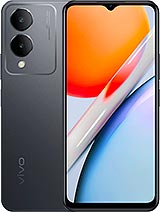
The vivo G2 is a budget 5G smartphone featuring the Mediatek Dimensity 6020 for fast connectivity and a 90Hz IPS LCD for smooth scrolling, aimed at cost-conscious users seeking 5G on a budget. Released in early 2024, it competes with other entry-level titans by focusing on connectivity and efficiency rather than raw camera power. This device represents the brand's attempt to democratize high-speed mobile internet without requiring the typical flagship premium.
From our perspective as value hunters, we see the handset as a calculated trade-off. In an era where 5G is becoming a utility rather than a luxury, the choice to use the 7nm Dimensity 6020 is brilliant. It isn't a powerhouse for 4K video editing, but for the average person scrolling through social media or managing a small business via mobile apps, the efficiency and signal stability are exactly what the market demands. We are looking at a tool designed for reliability, not a toy for enthusiasts.
The Heart of the Machine: Performance Analysis
The Mediatek Dimensity 6020 chipset is the core of this value proposition. Built on a 7nm process, this octa-core processor brings two Cortex-A76 performance cores clocked at 2.2 GHz. These cores allow the phone to handle app launches and multitasking with a snappiness that was once exclusive to the mid-range. While the Mali-G57 MC2 GPU won't satisfy hardcore gamers looking to max out settings in heavy titles, it provides enough graphical muscle for casual gaming and smooth UI animations.
One often overlooked detail is the inclusion of UFS 2.2 storage. Many competitors in the sub-200 EUR bracket still rely on slower eMMC 5.1 storage. The upgrade to UFS 2.2 means that app installations are significantly faster, and the system feels less prone to the "stutter" that plagues older budget hardware. When you pair this with up to 8GB of RAM, the device maintains a level of fluid performance that ensures longevity over a two or three-year ownership cycle.
Visuals and Fluidity: The 90Hz Advantage
Display technology is where [budget phones](/trend/best-budget-phones-2026/) usually fall flat, but the 90Hz refresh rate on the IPS LCD panel is a welcome addition. This higher refresh rate makes every interaction—from scrolling through a news feed to swiping between home screens—feel more responsive than on a standard 60Hz panel. Although the resolution is capped at 720 x 1612 pixels, the resulting 269 ppi density is sufficient for daily tasks. You won't notice individual pixels unless you hold the phone uncomfortably close to your face.
The 840 nits (HBM) peak brightness is another critical win. Most budget LCDs struggle under direct sunlight, often washing out and becoming unreadable. This handset reaches levels high enough to remain functional during a bright afternoon commute. This capability is a major selling point for delivery drivers or outdoor workers who rely on their screens in varying lighting conditions.
Where the Corners Were Cut
No budget phone is perfect, and the camera system is where the economic reality hits hardest. The single 13 MP main camera is a basic sensor meant for documentation rather than creative photography. It has the hardware potential for decent daylight shots with accurate colors, but the lack of an ultrawide or macro lens limits versatility. Parents trying to capture fast-moving toddlers might find the PDAF (Phase Detection Auto Focus) struggling in anything but ideal lighting.
The charging speed is another point of contention. At 15W, charging the large 5000 mAh battery is a slow process, likely taking over two hours to reach 100%. While the reverse wired charging is a neat trick for emergency-powering a pair of wireless earbuds, the primary charging speed feels outdated compared to the 33W or 45W standards seen in slightly more expensive competitors. You will need to get into the habit of overnight charging to avoid being tethered to a wall during the day.
Long-Term Economics: Resale and Durability
Historically, the G-series from this brand has maintained decent resale value in Southeast Asian and emerging markets due to the perceived reliability of their hardware. Because this model includes 5G (SA/NSA) support, it is effectively future-proofed against the 4G phase-outs occurring in many regions. An investor in this technology can expect a higher residual value in two years compared to a 4G-only device purchased at the same price point.
The build quality, while plastic, is robust. The 186g weight suggests a device that can survive the occasional bump, and the lack of a glass back means fewer worries about catastrophic shattering. For the budget economist, the lower cost of replacement parts for LCD screens and plastic frames is a hidden benefit of this design choice. Repairability is often easier and cheaper for these components than for curved OLED panels.
The Out-of-Box Reality
The unboxing experience remains comprehensive. Unlike premium brands that have stripped away essentials, you can expect the 15W charger and a USB Type-C cable in the box. This saves the consumer an additional 15 to 20 EUR right out of the gate. The pre-installed screen protector is a nice touch that adds immediate value and protection for the glass front.
Accessory compatibility is expected to be high. Since the chassis shares design DNA with other models in the brand's 2024 lineup, finding protective cases and replacement screen protectors will be easy. The side-mounted fingerprint sensor is integrated into the power button, providing a natural and ergonomic way to unlock the device while maintaining a clean back panel aesthetic.
Who is this for?
This handset is built for the pragmatic user. It is ideal for students who need a reliable 5G connection for research and social media, or for elder users who want a simple, large-screen device with a battery that won't die before dinner. It is also an excellent secondary "work" phone for professionals who need a separate line for calls and basic tasks without spending flagship money.
If you are a mobile photographer or a high-end gamer, you will find the limitations frustrating. However, if your priority is staying connected on the fastest networks available without overextending your budget, this model hits the sweet spot of modern essentials. It proves that you don't need to spend 1000 EUR to participate in the 5G era.
Value Conclusion
The vivo G2 is a masterclass in prioritized engineering. By focusing on the Mediatek Dimensity 6020 and 5G connectivity while sacrificing camera complexity, the brand has created a specialized tool for the connectivity-first consumer. It isn't trying to be a "flagship killer"; it is trying to be the best possible phone for 160 EUR, and in that mission, it succeeds brilliantly. For anyone looking for maximum utility per dollar, the vivo G2 stands as one of the most logical purchases in the early 2024 market.
Technical Specifications
| LAUNCH | |
|---|---|
| Announced | 2024, January 19 |
| Status | Available. Released 2024, January 19 |
| PLATFORM | |
| OS | Android 13, OriginOS 3 |
| Chipset | Mediatek Dimensity 6020 (7 nm) |
| CPU | Octa-core (2x2.2 GHz Cortex-A76 & 6x2.0 GHz Cortex-A55) |
| GPU | Mali-G57 MC2 |
| BODY | |
| Dimensions | 163.7 x 75.4 x 8.1 mm (6.44 x 2.97 x 0.32 in) |
| Weight | 186 g (6.56 oz) |
| Build | Glass front, plastic frame, plastic back |
| SIM | Nano-SIM + Nano-SIM |
| DISPLAY | |
| Type | IPS LCD, 90Hz, 840 nits (HBM) |
| Size | 6.56 inches, 103.4 cm2 (~83.8% screen-to-body ratio) |
| Resolution | 720 x 1612 pixels, 20:9 ratio (~269 ppi density) |
| MEMORY | |
| Card slot | No |
| Internal | 128GB 4GB RAM, 128GB 6GB RAM, 128GB 8GB RAM, 256GB 8GB RAM |
| Info | UFS 2.2 |
| MAIN CAMERA | |
| Single | 13 MP, f/2.2, (wide), PDAF Anti-stroboscopic sensor |
| Features | LED flash, panorama |
| Video | 1080p@30fps |
| SELFIE CAMERA | |
| Single | 5 MP, f/1.8, (wide) |
| Video | Yes |
| SOUND | |
| Loudspeaker | Yes |
| 3.5mm jack | Yes |
| COMMS | |
| WLAN | Wi-Fi 802.11 a/b/g/n/ac, dual-band |
| Bluetooth | 5.1, A2DP, LE, aptX HD |
| Positioning | GPS, GLONASS, BDS |
| NFC | No |
| Radio | FM radio |
| USB | USB Type-C 2.0, OTG |
| NETWORK | |
| Technology | GSM / HSPA / LTE / 5G |
| 2G bands | GSM 850 / 900 / 1800 / 1900 |
| 3G bands | HSDPA 850 / 900 / 2100 |
| 4G bands | 1, 3, 5, 8, 28, 34, 38, 39, 40, 41 |
| 5G bands | 1, 5, 8, 28, 41, 77, 78 SA/NSA |
| Speed | HSPA, LTE, 5G |
| FEATURES | |
| Sensors | Fingerprint (side-mounted), accelerometer, proximity, compass |
| BATTERY | |
| Type | 5000 mAh |
| Charging | 15W wired Reverse wired |
| MISC | |
| Colors | Black |
| Models | V2318A |
| Price | About 160 EUR |