5G Speed for Next to Nothing - Why the Tecno Pop 9 Is the New Efficiency King
Overview
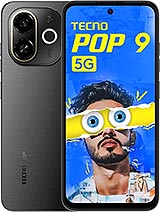
The Tecno Pop 9 is an entry-level 5G smartphone featuring a Mediatek Dimensity 6300 for future-proof connectivity and a 120Hz IPS LCD for smooth scrolling, aimed at cost-conscious users in emerging markets. Released in October 2024, it competes with other budget-friendly devices by offering modern network standards at a price point previously reserved for 4G-only hardware. This device signals a shift where high-speed mobile data is no longer a luxury but a baseline expectation for the mass market.
When we analyze the internal architecture, the Mediatek Dimensity 6300 chipset stands out as a strategic choice for this price bracket. Built on a 6nm process, this silicon utilizes two Cortex-A76 performance cores clocked at 2.4 GHz and six Cortex-A55 efficiency cores at 2.0 GHz. For the user, this translates to a snappy interface that handles messaging, social media navigation, and light productivity apps without the crippling stutter common in older budget chips. The Mali-G57 MC2 GPU provides enough graphical power to run popular titles like Mobile Legends or Free Fire on moderate settings, proving that entry-level gaming has moved past the 'unplayable' era.
From a financial perspective, the inclusion of a 5G modem at this cost is a significant win for long-term value. Many budget buyers keep their devices for three or more years. By supporting both SA/NSA 5G bands, the handset ensures the user won't be forced to upgrade simply because 4G infrastructure begins to see reduced investment from carriers. This is a rare instance where a budget purchase actually protects the buyer against near-term obsolescence.
The 6.6-inch IPS LCD is a study in calculated compromises. We see a 120Hz refresh rate, which makes the Android 14 interface feel far more expensive than it is. Animations are fluid, and scrolling through news feeds is remarkably smooth. However, the 720 x 1612 resolution is where the cost-cutting becomes visible. With a pixel density of approximately 267 ppi, text isn't as razor-sharp as on a 1080p display. In our assessment, this is a fair trade. Most users prioritize the 'feel' of speed—provided by the high refresh rate—over the microscopic clarity of higher resolutions.
Storage is another area where the device balances the books. Starting with 64GB or 128GB paired with 4GB RAM, the device relies heavily on the efficiency of the Android 14 operating system. While 4GB of RAM is the bare minimum for a modern Android experience, the lean software skin helps keep background processes from choking the system. We recommend opting for the 128GB variant, as the microSDXC slot is excellent for media, but internal storage speed is vital for app performance.
Comparing this model to the broader market, the 100 EUR price tag is almost aggressive. For this amount, you usually expect a weak Unisoc processor or a recycled Helio G-series chip. Instead, we get a modern 6nm 5G platform. The inclusion of an Infrared port and NFC is practically unheard of at this level. These features turn the phone into a universal remote and a digital wallet, adding utility that exceeds its hardware cost. The IP54 rating also adds a layer of 'insurance' against light rain and dust, which is a common failure point for ultra-budget devices.
We must address the 18W charging speed. In an era where 33W or 65W is common, 18W feels sluggish when refueling a massive 5000 mAh cell. A full charge will take nearly two hours. However, the economist’s view is that the lower wattage actually preserves battery health over time by reducing heat stress. For the target demographic who likely charges their phone overnight, this bottleneck is less of a daily friction point and more of a technical footnote.
The primary rivals for the Tecno Pop 9 in October 2024 are the [Itel P55 5G](/why-the-itel-p55-5g-is-the-most-disruptive-value-play-in-the-5g-market/) and the [Xiaomi Redmi 13C 5G](/xiaomi-the-brutal-economics-behind-the-redmi-13c-5g-value-proposition/). The Itel model often uses the slightly older Dimensity 6080, which doesn't quite match the efficiency of the 6300 in the Tecno. While the Redmi 13C 5G offers a similar 720p screen and 5G connectivity, it frequently lacks the dual speakers and IR blaster found here.
Another competitor is the [Samsung Galaxy A15 5G](/samsung-galaxy-a15-5g-the-high-value-play-for-longevity-seekers/), but that device usually sits at a 40-50% price premium. While the Samsung offers a better screen (Super AMOLED), the value hunter will find it hard to justify that extra cost when the core performance—scrolling, 5G speeds, and battery life—remains so similar to what this handset offers for significantly less money.
Running Android 14 out of the box is a major plus. Historically, [budget phones](/trend/best-budget-phones-2026/) shipped with year-old software. By launching with the latest version available in late 2024, the device gains a longer lifespan. While Tecno hasn't matched the five-year update promises of flagship brands, the hardware is capable enough to stay relevant for the next 24 to 36 months of security patches.
The interface is less cluttered than in previous years, though some pre-installed applications remain. These can mostly be disabled or uninstalled, leaving a clean environment for the user. We find that the Cortex-A76 cores handle the system UI with ease, avoiding the 'dead' zones in touch response that plagued the Pop series in its early 4G days.
The 48 MP main sensor is the headline feature here. It uses a 1/2.0-inch sensor size, which is surprisingly large for a $100 phone. This hardware potential allows for decent light gathering in daytime conditions. The f/1.8 aperture (inferred from common 48MP modules in this class) helps with natural background blur. However, the Auxiliary lens is largely ornamental, acting as a depth helper rather than a secondary focal length.
Video recording is capped at 1080p@30fps. This is a limitation of the ISP (Image Signal Processor) in the Dimensity 6300. While you won't be shooting cinematic masterpieces, the footage is stable enough for social media sharing and video calls. The 8 MP selfie camera, supported by a Dual-LED flash, ensures that video calls in low-light environments—like a dimly lit room—are actually visible, a small but vital feature for the budget-conscious professional.
The construction consists of a glass front and a plastic back and frame. While plastic doesn't scream 'luxury,' it is much more impact-resistant than glass. In the event of a drop, the plastic frame is more likely to dent than shatter. At 189g, it has enough weight to feel substantial without being a brick in the pocket. The IP54 certification is the real star here; protecting the internals from 'water splashes' and 'dust' means the phone is less likely to die from a spilled drink or a dusty job site.
The side-mounted fingerprint sensor is integrated into the power button. This is a more reliable and faster technology than the cheap under-display optical sensors found in slightly more expensive mid-rangers. It provides an instant unlock that feels consistent. For a device built on the 'Good Enough' test, the Tecno Pop 9 doesn't just pass; it challenges the definition of what a budget phone should be.
The $100 Experience
When we analyze the internal architecture, the Mediatek Dimensity 6300 chipset stands out as a strategic choice for this price bracket. Built on a 6nm process, this silicon utilizes two Cortex-A76 performance cores clocked at 2.4 GHz and six Cortex-A55 efficiency cores at 2.0 GHz. For the user, this translates to a snappy interface that handles messaging, social media navigation, and light productivity apps without the crippling stutter common in older budget chips. The Mali-G57 MC2 GPU provides enough graphical power to run popular titles like Mobile Legends or Free Fire on moderate settings, proving that entry-level gaming has moved past the 'unplayable' era.
From a financial perspective, the inclusion of a 5G modem at this cost is a significant win for long-term value. Many budget buyers keep their devices for three or more years. By supporting both SA/NSA 5G bands, the handset ensures the user won't be forced to upgrade simply because 4G infrastructure begins to see reduced investment from carriers. This is a rare instance where a budget purchase actually protects the buyer against near-term obsolescence.
Daily Driver Feasibility
The 6.6-inch IPS LCD is a study in calculated compromises. We see a 120Hz refresh rate, which makes the Android 14 interface feel far more expensive than it is. Animations are fluid, and scrolling through news feeds is remarkably smooth. However, the 720 x 1612 resolution is where the cost-cutting becomes visible. With a pixel density of approximately 267 ppi, text isn't as razor-sharp as on a 1080p display. In our assessment, this is a fair trade. Most users prioritize the 'feel' of speed—provided by the high refresh rate—over the microscopic clarity of higher resolutions.
Storage is another area where the device balances the books. Starting with 64GB or 128GB paired with 4GB RAM, the device relies heavily on the efficiency of the Android 14 operating system. While 4GB of RAM is the bare minimum for a modern Android experience, the lean software skin helps keep background processes from choking the system. We recommend opting for the 128GB variant, as the microSDXC slot is excellent for media, but internal storage speed is vital for app performance.
Price vs. Performance
Comparing this model to the broader market, the 100 EUR price tag is almost aggressive. For this amount, you usually expect a weak Unisoc processor or a recycled Helio G-series chip. Instead, we get a modern 6nm 5G platform. The inclusion of an Infrared port and NFC is practically unheard of at this level. These features turn the phone into a universal remote and a digital wallet, adding utility that exceeds its hardware cost. The IP54 rating also adds a layer of 'insurance' against light rain and dust, which is a common failure point for ultra-budget devices.
We must address the 18W charging speed. In an era where 33W or 65W is common, 18W feels sluggish when refueling a massive 5000 mAh cell. A full charge will take nearly two hours. However, the economist’s view is that the lower wattage actually preserves battery health over time by reducing heat stress. For the target demographic who likely charges their phone overnight, this bottleneck is less of a daily friction point and more of a technical footnote.
The Competition
The primary rivals for the Tecno Pop 9 in October 2024 are the [Itel P55 5G](/why-the-itel-p55-5g-is-the-most-disruptive-value-play-in-the-5g-market/) and the [Xiaomi Redmi 13C 5G](/xiaomi-the-brutal-economics-behind-the-redmi-13c-5g-value-proposition/). The Itel model often uses the slightly older Dimensity 6080, which doesn't quite match the efficiency of the 6300 in the Tecno. While the Redmi 13C 5G offers a similar 720p screen and 5G connectivity, it frequently lacks the dual speakers and IR blaster found here.
Another competitor is the [Samsung Galaxy A15 5G](/samsung-galaxy-a15-5g-the-high-value-play-for-longevity-seekers/), but that device usually sits at a 40-50% price premium. While the Samsung offers a better screen (Super AMOLED), the value hunter will find it hard to justify that extra cost when the core performance—scrolling, 5G speeds, and battery life—remains so similar to what this handset offers for significantly less money.
Software Support
Running Android 14 out of the box is a major plus. Historically, [budget phones](/trend/best-budget-phones-2026/) shipped with year-old software. By launching with the latest version available in late 2024, the device gains a longer lifespan. While Tecno hasn't matched the five-year update promises of flagship brands, the hardware is capable enough to stay relevant for the next 24 to 36 months of security patches.
The interface is less cluttered than in previous years, though some pre-installed applications remain. These can mostly be disabled or uninstalled, leaving a clean environment for the user. We find that the Cortex-A76 cores handle the system UI with ease, avoiding the 'dead' zones in touch response that plagued the Pop series in its early 4G days.
Camera: Usable or Potato?
The 48 MP main sensor is the headline feature here. It uses a 1/2.0-inch sensor size, which is surprisingly large for a $100 phone. This hardware potential allows for decent light gathering in daytime conditions. The f/1.8 aperture (inferred from common 48MP modules in this class) helps with natural background blur. However, the Auxiliary lens is largely ornamental, acting as a depth helper rather than a secondary focal length.
Video recording is capped at 1080p@30fps. This is a limitation of the ISP (Image Signal Processor) in the Dimensity 6300. While you won't be shooting cinematic masterpieces, the footage is stable enough for social media sharing and video calls. The 8 MP selfie camera, supported by a Dual-LED flash, ensures that video calls in low-light environments—like a dimly lit room—are actually visible, a small but vital feature for the budget-conscious professional.
Long-Term Durability
The construction consists of a glass front and a plastic back and frame. While plastic doesn't scream 'luxury,' it is much more impact-resistant than glass. In the event of a drop, the plastic frame is more likely to dent than shatter. At 189g, it has enough weight to feel substantial without being a brick in the pocket. The IP54 certification is the real star here; protecting the internals from 'water splashes' and 'dust' means the phone is less likely to die from a spilled drink or a dusty job site.
The side-mounted fingerprint sensor is integrated into the power button. This is a more reliable and faster technology than the cheap under-display optical sensors found in slightly more expensive mid-rangers. It provides an instant unlock that feels consistent. For a device built on the 'Good Enough' test, the Tecno Pop 9 doesn't just pass; it challenges the definition of what a budget phone should be.
Technical Specifications
| LAUNCH | |
|---|---|
| Announced | 2024, September 24 |
| Status | Available. Released 2024, October 08 |
| PLATFORM | |
| OS | Android 14 |
| Chipset | Mediatek Dimensity 6300 (6 nm) |
| CPU | Octa-core (2x2.4 GHz Cortex-A76 & 6x2.0 GHz Cortex-A55) |
| GPU | Mali-G57 MC2 |
| BODY | |
| Dimensions | 165 x 77 x 8 mm (6.50 x 3.03 x 0.31 in) |
| Weight | 189 g (6.67 oz) |
| Build | Glass front, plastic back, plastic frame |
| SIM | Nano-SIM + Nano-SIM |
| Info | IP54 dust protected and water resistant (water splashes) |
| DISPLAY | |
| Type | IPS LCD, 120Hz |
| Size | 6.6 inches, 104.6 cm2 (~82.4% screen-to-body ratio) |
| Resolution | 720 x 1612 pixels, 20:9 ratio (~267 ppi density) |
| MEMORY | |
| Card slot | microSDXC |
| Internal | 64GB 4GB RAM, 128GB 4GB RAM |
| MAIN CAMERA | |
| Single | 48 MP, (wide), 1/2.0", 0.8µm, AF Auxiliary lens |
| Features | Dual-LED flash, HDR |
| Video | 1080p@30fps |
| SELFIE CAMERA | |
| Single | 8 MP |
| Features | Dual-LED flash |
| Video | Yes |
| SOUND | |
| Loudspeaker | Yes, with dual speakers |
| 3.5mm jack | Yes |
| COMMS | |
| WLAN | Yes |
| Bluetooth | Yes |
| Positioning | GPS |
| NFC | Yes |
| Infrared port | Yes |
| Radio | Unspecified |
| USB | USB Type-C |
| NETWORK | |
| Technology | GSM / HSPA / LTE / 5G |
| 2G bands | GSM 850 / 900 / 1800 / 1900 |
| 3G bands | HSDPA 900 / 2100 |
| 4G bands | LTE |
| 5G bands | SA/NSA |
| Speed | HSPA, LTE, 5G |
| FEATURES | |
| Sensors | Fingerprint (side-mounted); unspecified sensors |
| BATTERY | |
| Type | 5000 mAh |
| Charging | 18W wired |
| MISC | |
| Colors | Aurora Cloud, Azure Sky, Midnight Shadow |
| Models | KL4 |
| Price | About 100 EUR |