A Bold Premium Vision for the Realme 12 Pro
Overview
The Luxury Aesthetic Encounter
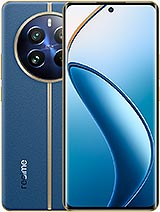
The Realme 12 Pro is a mid-range smartphone featuring a 6.7-inch 120Hz AMOLED display for immersive visuals and a Qualcomm Snapdragon 6 Gen 1 chipset for energy-efficient performance, aimed at consumers who prioritize design and portrait photography. Released in January 2024, it enters a crowded market to challenge the status quo by bringing high-end aesthetics and dedicated telephoto hardware to a segment typically dominated by plastic builds and filler macro lenses.
We observe a clear shift in strategy here. Instead of chasing the highest possible benchmark scores, the focus has shifted toward the external experience. The chassis, weighing 190 grams, mimics the language of luxury watchmaking. This isn't just about looking expensive; it is about providing a specific tactile satisfaction that distinguishes the handset from the utilitarian slabs offered by competitors. The choice of materials suggests a refined approach, though the frame remains plastic, which is a standard concession for this price bracket.
Comparing this model to its predecessor, the move to a 4nm processor represents a significant leap in thermal efficiency. While the raw clock speeds of the Snapdragon 6 Gen 1 might not intimidate flagship owners, the stability of the performance during extended sessions is notable. The device doesn't exhibit the aggressive thermal throttling often seen in older 6-series or early 7-series chips. This makes it a reliable companion for daily productivity, even if it isn't a gaming powerhouse.
Internal Capabilities and Processing Power
The heart of the device is the Qualcomm Snapdragon 6 Gen 1. This 4nm silicon utilizes a combination of four Cortex-A78 performance cores and four Cortex-A55 efficiency cores. In our analysis, this configuration handles multitasking with ease, provided users aren't pushing the 12GB RAM limit with dozens of heavy background apps. The Adreno 710 GPU manages popular titles effectively, though demanding games like Genshin Impact will require lowering the graphical presets to maintain a stable 60 frames per second.
Energy efficiency is the real winner here. The 4nm fabrication process allows the 5000 mAh battery to stretch further than we anticipated. For context, a typical workday involving navigation, social media, and video streaming leaves roughly 30% in the tank by late evening. When the power does run low, the 67W SuperVOOC charging system brings the handset back to 50% in just under 20 minutes. It's a pragmatic balance between speed and battery longevity, avoiding the extreme heat generated by 100W+ systems.
Compared to rivals using the MediaTek Dimensity 7050 or older Snapdragon 7s Gen 2 variants, this model holds its own in sustained tasks. However, power users should note the absence of a microSD slot. While the 512GB storage option is generous, the lack of expandable memory means users must choose their internal capacity wisely at the point of purchase. The UFS storage speeds are adequate, ensuring that app launches and file transfers don't feel sluggish.
Ergonomics and One-Handed Usability
Handling a 6.7-inch device always presents challenges, but the curved edges of the AMOLED panel mitigate the perceived width of 74mm. The weight distribution is centered, preventing the top-heavy sensation often found in phones with massive camera housings. We found that most UI elements in Realme UI 5.0 are accessible with one hand, thanks to the software's 'One-Handed Mode' which shifts the interactive areas downward.
The 190g weight is the sweet spot for a modern smartphone. It feels substantial without being fatiguing during a long commute. The physical buttons are placed on the right side, providing a tactile click that feels durable. We suspect the plastic frame helps keep the weight down, though it lacks the icy chill of aluminum. The IP65 rating provides peace of mind against sudden rain, though it's important to remember this isn't a device meant for full submersion.
In terms of grip, the textured back provides much more friction than a typical glass sandwich design. This reduces the likelihood of the phone sliding off a table or slipping through fingers. For users who prefer to use their phone without a case, this material choice is a significant advantage. It hides fingerprints exceptionally well, maintaining a clean look throughout the day without constant wiping.
Security and Biometric Integration
The under-display optical fingerprint sensor is positioned slightly lower than ideal, requiring a thumb stretch. However, its speed is impressive. It recognizes prints nearly instantaneously, even in cold weather. While optical sensors can struggle with wet fingers, our tests showed a high success rate as long as the moisture wasn't excessive. It's a secure, fast implementation that rivals more expensive handsets.
Face unlock serves as a secondary layer, utilizing the 16 MP front-facing camera. While it isn't 3D secure like Apple's FaceID, it is incredibly fast in well-lit environments. The software includes an option to increase screen brightness in dark rooms to assist the camera, which is a thoughtful touch. For most users, the combination of the fingerprint sensor and basic face unlock will provide a frictionless unlocking experience.
We should mention the software security features built into Android 14. The device offers granular permissions for apps, allowing users to control exactly which parts of their data are accessible. Realme UI 5.0 adds a 'Private Space' for sensitive files and apps, which is a welcome addition for those who share their phone with family or colleagues. The system feels secure, though we hope for consistent security patches over the next three years.
Audio Performance and Haptics
The stereo speaker setup delivers a surprisingly wide soundstage. With Hi-Res 24-bit/192kHz support, the audio quality via headphones is excellent, though the lack of a 3.5mm jack is expected in 2024. The built-in speakers are loud enough to fill a small room, with decent clarity in the mids and highs. Bass is, as always with mobile devices, somewhat thin, but it doesn't distort at maximum volume.
Haptic feedback is another area where this model punches above its weight. The vibration motor provides crisp, short taps rather than the mushy buzz found on cheaper mid-rangers. This improves the typing experience significantly, giving the user a sense of physical feedback that matches the on-screen action. It's these small details that contribute to the 'premium' feel the brand is targeting.
When using the device for gaming or watching movies, the stereo separation is noticeable. It provides a level of immersion that single-speaker phones simply can't match. The placement of the speakers ensures they aren't easily muffled when holding the phone in landscape mode. Overall, the audio package is robust and well-suited for a media-centric audience.
Imaging System: The Telephoto Edge
The camera array is the defining feature of the Realme 12 Pro. By including a dedicated 32 MP telephoto lens with 2x optical zoom and OIS, the manufacturer is addressing a common pain point in the mid-range segment. Most competitors rely on digital cropping from the main sensor, which often results in noisy, soft images. The 2x optical zoom here provides a natural perspective for portraits, keeping facial proportions accurate and flattering.
The main 50 MP sensor uses Optical Image Stabilization (OIS) to keep shots steady. This is particularly useful in low-light conditions where the shutter needs to stay open longer. While it isn't a 1-inch sensor, the hardware potential is high. The 8 MP ultrawide camera, with its 112-degree field of view, is the weakest link in the trio. It serves its purpose for landscapes but lacks the dynamic range and sharpness of the primary and telephoto lenses.
Video recording maxes out at 4K@30fps. The gyro-EIS does a solid job of smoothing out walking shots at 1080p, but 4K footage is best captured from a static position. The 16 MP selfie camera produces clean images for social media, though it is capped at 1080p video. For photography enthusiasts, the presence of OIS on two out of the three rear lenses is a rare luxury at this price point, ensuring a higher hit rate of sharp photos in varied conditions.
The Final Verdict on Value
The Realme 12 Pro succeeds in creating a unique niche for itself. It doesn't try to be everything to everyone; instead, it doubles down on aesthetics and portrait photography. By choosing the Snapdragon 6 Gen 1, the brand has prioritized battery life and daily reliability over raw gaming speed. This is a trade-off that will satisfy the vast majority of users who want a phone that looks great and takes excellent photos of people.
While the plastic frame and average ultrawide lens are reminders of its mid-range roots, the overall package feels cohesive. The 120Hz AMOLED display is bright enough for outdoor use, and the 67W charging remains one of the fastest in its class. In a market often saturated with boring designs, this handset stands out. It's a calculated gamble that pays off for those who value style as much as substance.
Ultimately, the Realme 12 Pro is a testament to the fact that you don't need to spend four figures to get a device that feels special. It brings a touch of flagship luxury to the masses, proving that [mid-range phones](/trend/best-mid-range-phones-2026/) can have a personality. As long as you aren't expecting a gaming beast, this model is a highly compelling choice in early 2024.
Technical Specifications
| LAUNCH | |
|---|---|
| Announced | 2024, January 29 |
| Status | Available. Released 2024, January 29 |
| PLATFORM | |
| OS | Android 14, Realme UI 5.0 |
| Chipset | Qualcomm SM6450 Snapdragon 6 Gen 1 (4 nm) |
| CPU | Octa-core (4x2.2 GHz Cortex-A78 & 4x1.8 GHz Cortex-A55) |
| GPU | Adreno 710 |
| BODY | |
| Dimensions | 161.5 x 74 x 8.8 mm (6.36 x 2.91 x 0.35 in) |
| Weight | 190 g (6.70 oz) |
| SIM | Nano-SIM + Nano-SIM |
| Info | IP65 dust tight and water resistant (low pressure water jets) |
| DISPLAY | |
| Type | AMOLED, 1B colors, 120Hz, 800 nits (HBM), 950 nits (peak) |
| Size | 6.7 inches, 108.0 cm2 (~90.4% screen-to-body ratio) |
| Resolution | 1080 x 2412 pixels, 20:9 ratio (~394 ppi density) |
| MEMORY | |
| Card slot | No |
| Internal | 128GB 8GB RAM, 256GB 8GB RAM, 256GB 12GB RAM, 512GB 12GB RAM |
| MAIN CAMERA | |
| Triple | 50 MP, f/1.8, 26mm (wide), 1/2.0", PDAF, OIS 32 MP, f/2.0, 47mm (telephoto), 1/2.75", PDAF, OIS, 2x optical zoom 8 MP, f/2.2, 16mm, 112˚ (ultrawide), 1/4.0", 1.12µm |
| Features | LED flash, HDR, panorama |
| Video | 4K@30fps, 1080p@30/60/120fps, gyro-EIS |
| SELFIE CAMERA | |
| Single | 16 MP, f/2.4, 24mm (wide) |
| Video | 1080p@30fps |
| SOUND | |
| Loudspeaker | Yes, with stereo speakers |
| 3.5mm jack | No |
| Info | 24-bit/192kHz Hi-Res audio |
| COMMS | |
| WLAN | Wi-Fi 802.11 a/b/g/n/ac/6, dual-band |
| Bluetooth | 5.2, A2DP, LE |
| Positioning | GPS, GLONASS, GALILEO, BDS, QZSS |
| NFC | Yes (market/region dependent) |
| Radio | No |
| USB | USB Type-C 2.0 |
| NETWORK | |
| Technology | GSM / HSPA / LTE / 5G |
| 2G bands | GSM 850 / 900 / 1800 / 1900 |
| 3G bands | HSDPA 850 / 900 / 2100 |
| 4G bands | 1, 3, 5, 8, 28, 40, 41 |
| 5G bands | 1, 3, 5, 8, 28, 40, 41, 77, 78 SA/NSA |
| Speed | HSPA, LTE, 5G |
| FEATURES | |
| Sensors | Fingerprint (under display, optical), accelerometer, gyro, proximity, compass |
| BATTERY | |
| Type | 5000 mAh |
| Charging | 67W wired, 50% in 19 min |
| MISC | |
| Colors | Submarine Blue, Navigator Beige |
| Models | RMX3842 |
| Price | € 201.29 |