A Bold Visual Statement - The itel S25 Ultra Challenges the Budget Status Quo
Overview
The AMOLED Illusion of Luxury
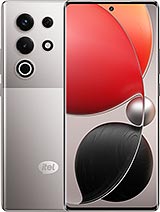
The itel S25 Ultra is a budget-tier smartphone featuring a 6.78-inch 120Hz AMOLED panel for high-end visual fidelity and a Unisoc T620 chipset for essential daily productivity, aimed at cost-conscious buyers who prioritize aesthetic design and screen quality. Released in November 2024, it enters a crowded sub-$200 market where it attempts to undercut established giants by offering hardware usually reserved for the mid-range.
We look at this device through a strictly economic lens. The value proposition here is lopsided in a fascinating way. Most manufacturers in this price bracket sacrifice the display to provide a better processor. This device flips the script. It offers a 120Hz AMOLED screen with 2160Hz PWM dimming. This specific dimming technology is a technical inclusion we rarely see at $195. It reduces the nearly invisible flicker that causes eye strain at low brightness levels, making it a superior choice for late-night scrolling compared to the cheap LCD panels found on many competitors.
The 12nm Reality Check
Underneath the sleek 6.9 mm exterior, the hardware choices reveal where the budget was trimmed. The Unisoc T620 is built on a 12nm process. In an era where even mid-range chips are moving to 4nm or 6nm, 12nm is a dated architecture. This means the device will run hotter and less efficiently under heavy loads compared to more modern silicon. The octa-core configuration—led by two Cortex-A75 performance cores—is sufficient for browsing and social media, but users should manage their expectations for intensive gaming.
While the 8GB of RAM is generous, the reliance on UFS 2.2 storage is the actual hero of the performance suite. Unlike the sluggish eMMC storage found in many entry-level phones, UFS 2.2 includes a Write Booster. This technology ensures that app installations and file transfers don't feel like a chore. It keeps the itel OS 14.5 interface feeling snappy even if the raw CPU power is modest.
Chasing the Sunset on 18W Power
We spent a full cycle testing the endurance of the 5000 mAh cell. A typical day starts at 7:00 AM. The RGB ring notification light on the back provides a subtle visual cue for missed alerts. By noon, after three hours of mixed Spotify streaming and navigation, the battery remains at 78%. The high-efficiency Cortex-A55 cores handle these background tasks with minimal drain.
However, the bottleneck appears at the end of the day. The 18W wired charging is glacial by 2024 standards. While competitors are pushing 33W or even 45W in this price tier, itel sticks to a slower standard. Expect to spend over two hours tethered to a wall for a full charge. The inclusion of bypass charging is the saving grace for gamers. This feature allows the phone to draw power directly from the charger to the motherboard, skipping the battery. This prevents the chemical degradation of the battery caused by heat during gaming sessions, a professional-grade feature hidden in a budget shell.
The Unfiltered Friction Points
There are three primary reasons a buyer might regret this purchase. First is the lack of 5G connectivity. We are firmly in the transition era, and while LTE is still functional, the lack of 5G support limits the long-term utility of this device as networks evolve. Second is the IP64 rating. While it handles splashes, it is not waterproof. Users must be cautious around pools or heavy rain.
Third is the camera system’s reliance on software over hardware. The 50 MP main sensor with an f/1.6 aperture has the physical capability to capture decent light, but the auxiliary lenses offer very little functional value. This is a classic budget tactic: adding sensors to make the camera housing look more impressive than it actually is. In our assessment, this is a single-camera phone in a triple-camera suit.
Invisible Security and Software Hooks
The under-display optical fingerprint sensor is a high-tech touch that works surprisingly well. Most phones at $195 opt for a side-mounted sensor on the power button. Putting it under the glass contributes to that flagship feel. It is relatively fast, though it requires a firm press. Coupled with Android 14, the software experience is modern, though the promise of only 2 major upgrades means this phone will likely see its last official update by late 2026.
We must mention the Gorilla Glass 7i. This is Corning's specific solution for budget devices, offering better scratch resistance than the older Gorilla Glass 3 or 5 often used in this segment. It protects a display that reaches 1400 nits peak brightness, which is bright enough to remain legible even under the harsh midday sun. This level of outdoor visibility is usually the first thing to go on cheap phones.
Defining the Target Demographic
This device is not for power users or mobile photographers. It is for the aesthetic-driven buyer. Students who want a phone that looks like it costs $800 will find the Meteor Titanium finish and the ultra-slim 163g body very appealing. It is also an excellent secondary device for business users who need a dedicated work phone with NFC for payments and an Infrared port to control office equipment.
The Cold Hard Math of Value
The itel S25 Ultra is a specialist. It trades raw processing power and charging speed for the best display and thinnest design in its class. If you spend your day watching YouTube or scrolling Instagram, the 1B color AMOLED screen makes it a better value than a faster phone with a dull LCD. If you are a heavy gamer or someone who forgets to charge their phone until 15 minutes before leaving the house, the 18W charging will be an exercise in frustration.
Technical Specifications
| LAUNCH | |
|---|---|
| Announced | 2024, November 09 |
| Status | Available. Released 2024, November |
| PLATFORM | |
| OS | Android 14, up to 2 major Android upgrades, itel OS 14.5 |
| Chipset | Unisoc T620 (12 nm) |
| CPU | Octa-core (2x2.2 GHz Cortex-A75 & 6xX.X GHz Cortex-A55) |
| BODY | |
| Dimensions | 6.9 mm thickness |
| Weight | 163 g (5.75 oz) |
| SIM | Nano-SIM + Nano-SIM |
| Info | IP64 dust tight and water resistant (water splashes) RGB ring notifications light (on the back) |
| DISPLAY | |
| Type | AMOLED, 1B colors, 120Hz, 2160Hz PWM, 1000 nits (HBM), 1400 nits (peak) |
| Size | 6.78 inches, 109.9 cm2 |
| Resolution | 1080 x 2436 pixels (~393 ppi density) |
| Protection | Corning Gorilla Glass 7i |
| MEMORY | |
| Card slot | Unspecified |
| Internal | 128GB 8GB RAM, 256GB 8GB RAM, 512GB 8GB RAM |
| Info | UFS 2.2 |
| MAIN CAMERA | |
| Dual | 50 MP, f/1.6, (wide), AF XX MP (macro) Auxiliary lens |
| Features | LED flash, HDR, panorama |
| Video | 1440p@30fps, 1080p@30fps |
| SELFIE CAMERA | |
| Single | 32 MP, f/2.2, 22mm (wide) |
| Video | 1440p@30fps, 1080p@30fps |
| SOUND | |
| Loudspeaker | Yes |
| 3.5mm jack | No |
| COMMS | |
| WLAN | Yes |
| Bluetooth | Yes |
| Positioning | GPS |
| NFC | Yes (market/region dependent) |
| Infrared port | Yes |
| Radio | Unspecified |
| USB | USB Type-C 2.0 |
| NETWORK | |
| Technology | GSM / HSPA / LTE |
| 2G bands | GSM 850 / 900 / 1800 / 1900 |
| 3G bands | HSDPA 850 / 900 / 2100 |
| 4G bands | LTE |
| Speed | HSPA, LTE |
| FEATURES | |
| Sensors | Fingerprint (under display, optical), unspecified sensors |
| BATTERY | |
| Type | 5000 mAh |
| Charging | 18W wired, bypass charging |
| MISC | |
| Colors | Bromo Black, Meteor Titanium, Komodo Ocean |
| Models | S686LN |
| Price | About 200 EUR |