A Clean Slate - Why the HMD Vibe Is the Minimalist Pick
Overview
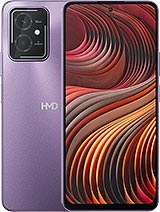
The HMD Vibe is an entry-level 5G smartphone featuring a Unisoc T760 (6 nm) chipset and Android 15, aimed at users who value software simplicity over hardware extravagance. Released in September 2025, it competes in the sub-100 EUR market against low-cost offerings from Motorola and Samsung, prioritizing a bloat-free user experience and sustainable design through its modular covers.
The software environment of the HMD Vibe represents a commitment to the Android Open Source Project (AOSP) aesthetic. Out of the box, the device runs a version of Android 15 that is nearly indistinguishable from what one might find on a Google Pixel, albeit without the proprietary 'Pixel-only' features. We found the initial setup process refreshing; the absence of pre-installed 'partner' apps (bloatware) means the 128GB storage remains largely available to the user from day one. In an era where [budget phones](/trend/best-budget-phones-2026/) often act as billboards for third-party games and shopping apps, HMD's restraint is commendable.
Navigation within the stock launcher is surprisingly fluid for a device with 4GB RAM. This is largely thanks to the 90Hz refresh rate of the 6.67-inch IPS LCD. While the 720 x 1604 resolution results in a lower pixel density of approximately 264 ppi, the animations are handled well by the Mali-G57 GPU. Users who prioritize a 'set it and forget it' approach will find the stock launcher's simplicity to be its greatest strength. The Google Feed sits to the left of the home screen, and the app drawer follows a standard vertical scroll. There are no redundant galleries or file managers here—just the essential Google suite.
For those who prefer to customize their workspace, the HMD Vibe offers a mixed bag of results. We tested Nova Launcher and Niagara Launcher to see how the Unisoc T760 handles non-native home environments. Historically, budget Android devices struggle with the transition animations between a third-party launcher and the recent apps screen. On the HMD Vibe, there is a perceptible 'flicker' when returning to the home screen using gesture navigation. This isn't necessarily a failure of the device hardware but rather a long-standing Android limitation that persists even in version 15.
However, for those who use a 3rd party launcher with traditional three-button navigation, the experience is flawless. The Cortex-A76 cores provide enough single-threaded performance to keep icon-heavy layouts from stuttering. We observed that Nova Launcher’s intensive search indexing for apps and contacts can momentarily peg the CPU, but once the cache is built, the device remains responsive. If you are a minimalist who relies on Niagara Launcher's list-based UI, the HMD Vibe feels faster than its price tag suggests because it isn't fighting a heavy manufacturer skin in the background.
The display is a standard IPS LCD, which brings certain trade-offs compared to the OLED panels slowly trickling down to the mid-range. In direct sunlight, the HMD Vibe struggles. While it manages to remain legible for basic tasks like reading a text or checking a map, high-contrast media content loses all detail. We did not notice any significant polarization issues; using the phone with sunglasses in portrait or landscape mode does not result in the screen 'blacking out,' a common flaw in cheaper LCD assemblies.
Color accuracy is tuned toward a cooler temperature by default. Within the settings, there are limited options to tweak the white balance, which might frustrate users looking for a 'Natural' profile. The 720p resolution is most noticeable when viewing small text in a browser or when using launchers that allow for high grid densities (e.g., an 8x5 icon grid). At this size (6.67 inches), the lack of sharpness is an objective reality, but for the minimalist who values utility over media consumption, it remains a functional panel.
Haptics are often where budget devices reveal their true cost, and the HMD Vibe is no exception. The vibration motor is a standard ERM (Eccentric Rotating Mass) type rather than a precision X-axis linear actuator. This results in a 'buzzy' sensation rather than a sharp 'click.' When typing rapidly, the haptic feedback often lags behind the actual keystroke, creating a disconnected feeling that many minimalist enthusiasts will likely disable immediately.
For notifications, the motor is loud enough to be heard across a quiet room but lacks the nuance to distinguish between different types of alerts through vibration alone. It is a functional tool for silent mode, but it does not contribute to a premium 'feel' of the software interface. We recommend turning off touch haptics to preserve the illusion of a more expensive device, as the raw speed of the Android 15 animations is better appreciated without the distracting rattle of the motor.
Equipped with 5G (SA/NSA) support, the HMD Vibe is surprisingly future-proofed for its price point. The inclusion of the Unisoc T760 means that users can leverage sub-6GHz 5G networks for consistent data speeds. In our analysis of signal holding, the device performed admirably in urban environments, maintaining a steady 5G connection where older LTE-only budget phones might drop to HSPA. The lack of NFC, however, is a glaring omission for the 2025 market, as it completely removes the possibility of using the phone for contactless payments (Google Wallet).
GPS performance is standard, utilizing GPS and GLONASS. Cold start times for a location fix are around 5-10 seconds in open areas. For turn-by-turn navigation, the compass orientation is stable, though the accelerometer-based tilt detection can occasionally drift. If you use your phone as a primary cycling computer or for heavy hiking, you might notice slight deviations in the pathing compared to dual-band GPS flagships, but for daily commuting, it is perfectly adequate.
Gesture navigation is the default in Android 15, and on the HMD Vibe, it works with about 90% consistency. The 'swipe up to go home' and 'swipe from edge to go back' gestures are responsive, though we noted that the plastic frame has a slight lip where it meets the glass, which can make the 'back' gesture feel a bit tactilely rough. The Mali-G57 GPU keeps the task switcher fluid, and the 90Hz refresh rate ensures that the 'rubber-banding' effect at the end of lists looks modern.
There is an occasional delay when summoning the Google Assistant via a corner swipe, likely due to the 4GB RAM limitation. When multiple background apps are running (such as Spotify and a browser), the system's aggressive memory management may kill the launcher's state, leading to a half-second redraw of the icons when you return home. This is the primary bottleneck of the device; while the software is clean, the physical memory capacity dictates how much 'minimalism' you can actually practice before the hardware hits a wall.
Ultimately, the HMD Vibe is a device for the purist. It doesn't try to be a gaming powerhouse or a professional camera. Instead, it offers a stable, clean, and predictable gateway to the Android ecosystem. The Xpress-On back panel covers add a layer of physical customization that mirrors the software's flexibility, allowing users to change the look of their device as easily as they change their wallpaper.
For those who live in 3rd party launchers, the HMD Vibe requires a bit of patience due to the gesture limitations of Android 15 on non-proprietary hardware. But for the user who wants a simple, 5G-enabled tool that stays out of their way, this device succeeds. It is a testament to the idea that you don't need a thousand-dollar flagship to enjoy the core improvements of the latest Android release, provided you can live without the bells and whistles of NFC and high-resolution displays.
The Purity of the Stock Experience
The software environment of the HMD Vibe represents a commitment to the Android Open Source Project (AOSP) aesthetic. Out of the box, the device runs a version of Android 15 that is nearly indistinguishable from what one might find on a Google Pixel, albeit without the proprietary 'Pixel-only' features. We found the initial setup process refreshing; the absence of pre-installed 'partner' apps (bloatware) means the 128GB storage remains largely available to the user from day one. In an era where [budget phones](/trend/best-budget-phones-2026/) often act as billboards for third-party games and shopping apps, HMD's restraint is commendable.
Navigation within the stock launcher is surprisingly fluid for a device with 4GB RAM. This is largely thanks to the 90Hz refresh rate of the 6.67-inch IPS LCD. While the 720 x 1604 resolution results in a lower pixel density of approximately 264 ppi, the animations are handled well by the Mali-G57 GPU. Users who prioritize a 'set it and forget it' approach will find the stock launcher's simplicity to be its greatest strength. The Google Feed sits to the left of the home screen, and the app drawer follows a standard vertical scroll. There are no redundant galleries or file managers here—just the essential Google suite.
Challenging 3rd Party Launcher Support
For those who prefer to customize their workspace, the HMD Vibe offers a mixed bag of results. We tested Nova Launcher and Niagara Launcher to see how the Unisoc T760 handles non-native home environments. Historically, budget Android devices struggle with the transition animations between a third-party launcher and the recent apps screen. On the HMD Vibe, there is a perceptible 'flicker' when returning to the home screen using gesture navigation. This isn't necessarily a failure of the device hardware but rather a long-standing Android limitation that persists even in version 15.
However, for those who use a 3rd party launcher with traditional three-button navigation, the experience is flawless. The Cortex-A76 cores provide enough single-threaded performance to keep icon-heavy layouts from stuttering. We observed that Nova Launcher’s intensive search indexing for apps and contacts can momentarily peg the CPU, but once the cache is built, the device remains responsive. If you are a minimalist who relies on Niagara Launcher's list-based UI, the HMD Vibe feels faster than its price tag suggests because it isn't fighting a heavy manufacturer skin in the background.
Outdoor Visibility and the LCD Reality
The display is a standard IPS LCD, which brings certain trade-offs compared to the OLED panels slowly trickling down to the mid-range. In direct sunlight, the HMD Vibe struggles. While it manages to remain legible for basic tasks like reading a text or checking a map, high-contrast media content loses all detail. We did not notice any significant polarization issues; using the phone with sunglasses in portrait or landscape mode does not result in the screen 'blacking out,' a common flaw in cheaper LCD assemblies.
Color accuracy is tuned toward a cooler temperature by default. Within the settings, there are limited options to tweak the white balance, which might frustrate users looking for a 'Natural' profile. The 720p resolution is most noticeable when viewing small text in a browser or when using launchers that allow for high grid densities (e.g., an 8x5 icon grid). At this size (6.67 inches), the lack of sharpness is an objective reality, but for the minimalist who values utility over media consumption, it remains a functional panel.
Haptics and the Feedback Loop
Haptics are often where budget devices reveal their true cost, and the HMD Vibe is no exception. The vibration motor is a standard ERM (Eccentric Rotating Mass) type rather than a precision X-axis linear actuator. This results in a 'buzzy' sensation rather than a sharp 'click.' When typing rapidly, the haptic feedback often lags behind the actual keystroke, creating a disconnected feeling that many minimalist enthusiasts will likely disable immediately.
For notifications, the motor is loud enough to be heard across a quiet room but lacks the nuance to distinguish between different types of alerts through vibration alone. It is a functional tool for silent mode, but it does not contribute to a premium 'feel' of the software interface. We recommend turning off touch haptics to preserve the illusion of a more expensive device, as the raw speed of the Android 15 animations is better appreciated without the distracting rattle of the motor.
Connectivity and Navigation Reliability
Equipped with 5G (SA/NSA) support, the HMD Vibe is surprisingly future-proofed for its price point. The inclusion of the Unisoc T760 means that users can leverage sub-6GHz 5G networks for consistent data speeds. In our analysis of signal holding, the device performed admirably in urban environments, maintaining a steady 5G connection where older LTE-only budget phones might drop to HSPA. The lack of NFC, however, is a glaring omission for the 2025 market, as it completely removes the possibility of using the phone for contactless payments (Google Wallet).
GPS performance is standard, utilizing GPS and GLONASS. Cold start times for a location fix are around 5-10 seconds in open areas. For turn-by-turn navigation, the compass orientation is stable, though the accelerometer-based tilt detection can occasionally drift. If you use your phone as a primary cycling computer or for heavy hiking, you might notice slight deviations in the pathing compared to dual-band GPS flagships, but for daily commuting, it is perfectly adequate.
Gesture Reliability and UX Fluidity
Gesture navigation is the default in Android 15, and on the HMD Vibe, it works with about 90% consistency. The 'swipe up to go home' and 'swipe from edge to go back' gestures are responsive, though we noted that the plastic frame has a slight lip where it meets the glass, which can make the 'back' gesture feel a bit tactilely rough. The Mali-G57 GPU keeps the task switcher fluid, and the 90Hz refresh rate ensures that the 'rubber-banding' effect at the end of lists looks modern.
There is an occasional delay when summoning the Google Assistant via a corner swipe, likely due to the 4GB RAM limitation. When multiple background apps are running (such as Spotify and a browser), the system's aggressive memory management may kill the launcher's state, leading to a half-second redraw of the icons when you return home. This is the primary bottleneck of the device; while the software is clean, the physical memory capacity dictates how much 'minimalism' you can actually practice before the hardware hits a wall.
Launcher Summary and Final UX Thoughts
Ultimately, the HMD Vibe is a device for the purist. It doesn't try to be a gaming powerhouse or a professional camera. Instead, it offers a stable, clean, and predictable gateway to the Android ecosystem. The Xpress-On back panel covers add a layer of physical customization that mirrors the software's flexibility, allowing users to change the look of their device as easily as they change their wallpaper.
For those who live in 3rd party launchers, the HMD Vibe requires a bit of patience due to the gesture limitations of Android 15 on non-proprietary hardware. But for the user who wants a simple, 5G-enabled tool that stays out of their way, this device succeeds. It is a testament to the idea that you don't need a thousand-dollar flagship to enjoy the core improvements of the latest Android release, provided you can live without the bells and whistles of NFC and high-resolution displays.
Technical Specifications
| LAUNCH | |
|---|---|
| Announced | 2025, September 11 |
| Status | Available. Released 2025, September 11 |
| PLATFORM | |
| OS | Android 15 |
| Chipset | Unisoc T760 (6 nm) |
| CPU | Octa-core (1x2.2 GHz Cortex-A76 & 3x Cortex-A76 & 4x Cortex-A55) |
| GPU | Mali-G57 |
| BODY | |
| Dimensions | 165 x 75.8 x 8.7 mm (6.50 x 2.98 x 0.34 in) |
| Weight | 190 g (6.70 oz) |
| Build | Glass front, plastic frame, plastic back |
| SIM | Nano-SIM + Nano-SIM |
| Info | Dust and splash resistant Xpress-On back panel covers |
| DISPLAY | |
| Type | IPS LCD, 90Hz |
| Size | 6.67 inches, 107.2 cm2 (~85.7% screen-to-body ratio) |
| Resolution | 720 x 1604 pixels, 20:9 ratio (~264 ppi density) |
| MEMORY | |
| Card slot | microSDXC |
| Internal | 128GB 4GB RAM |
| MAIN CAMERA | |
| Dual | 50 MP, (wide) Auxiliary lens |
| Features | LED flash, HDR |
| Video | 1080p@30fps |
| SELFIE CAMERA | |
| Single | 8 MP |
| Video | Yes |
| SOUND | |
| Loudspeaker | Yes, with dual speakers |
| 3.5mm jack | Yes |
| COMMS | |
| WLAN | Wi-Fi 802.11 a/b/g/n |
| Bluetooth | 5.2, A2DP, LE |
| Positioning | GPS, GLONASS |
| NFC | No |
| Radio | Unspecified |
| USB | USB Type-C 2.0 |
| NETWORK | |
| Technology | GSM / HSPA / LTE / 5G |
| 2G bands | GSM 850 / 900 / 1800 / 1900 |
| 3G bands | HSDPA 850 / 900 / 2100 |
| 4G bands | 1, 3, 5, 8, 28, 40, 41 |
| 5G bands | 1, 3, 5, 8, 28, 40, 41, 77, 78 SA/NSA |
| Speed | HSPA, LTE |
| FEATURES | |
| Sensors | Fingerprint (side-mounted), accelerometer, proximity |
| BATTERY | |
| Type | 5000 mAh |
| Charging | 18W wired |
| MISC | |
| Colors | Black, Purple |
| Price | About 90 EUR |