A Compromise in Every Fold - The Brutal Truth About the Blackview Hero 10
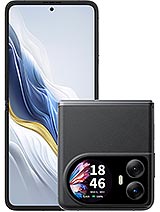
Overview
The Blackview Hero 10 is an affordable foldable smartphone featuring a 6.9-inch Foldable AMOLED for expansive viewing and a 108MP main sensor for high-resolution imaging, aimed at budget-conscious tech enthusiasts eager to adopt the clamshell form factor. Released in May 2024, it competes with high-end mid-range devices by trading performance for its unique folding mechanics and display technology.
Marketing materials often paint the foldable revolution as an elitist club, reserved only for those willing to drop four figures on a handset. Blackview attempts to dismantle this narrative with its latest entry. The promise is simple: a premium folding experience without the typical flagship tax. We see the brand leaning heavily into the aesthetics, mimicking the sleek lines of the Galaxy Z Flip series while undercutting the price by nearly half. It's a bold move that targets the "aspirationally trendy" demographic—users who value the folding gimmick and the 108MP camera label over raw silicon power.
On paper, the value proposition looks impossible to ignore. For about 600 EUR, you get a device that fits in a pocket but opens into a massive 6.9-inch canvas. The brand highlights the 1300-nit peak brightness and the 1B colors of the AMOLED panel, suggesting a visual experience on par with the industry leaders. However, the tech world rarely offers such a significant discount without hidden costs. Our analysis suggests that while the hardware looks flashy, the choice of internal components reveals exactly where the corners were clipped to hit this price point.
Historically, budget foldables have been a graveyard of broken hinges and dim screens. This model attempts to change that by introducing a Mohs level 6 protection rating and a hinge rated for significant duty cycles. Imagine the user who wants to stand out at a cafe, flipping their phone open with a flourish. This device is built specifically for that moment. But as we peel back the layers of marketing fluff, we find a machine that is as much about sacrifice as it is about innovation.
Underneath the folding display sits the Mediatek Helio G99 chipset. While this 6nm processor is a reliable workhorse in the $200 budget segment, its presence in a 600 EUR device is a hard pill to swallow. The octa-core setup, featuring 2x2.2 GHz Cortex-A76 cores, provides enough grunt for social media scrolling and light productivity, but it lacks the 5G capabilities that are standard in this price tier in mid-2024. For those who don't know, the Cortex-A76 was a breakthrough in its day, but today it acts as a baseline for efficiency rather than a pioneer of speed.
Memory management is surprisingly robust, offering 12GB of RAM paired with 256GB of UFS 2.2 storage. This isn't the fastest storage on the market—lacking the blazing speeds of UFS 3.1 or 4.0—but the inclusion of UFS 2.2's Write Booster technology helps mitigate some of the lag when installing large applications. In our assessment, this configuration is a clever trick: the high RAM count looks great on a spec sheet, but it's often bottlenecked by the CPU's limited processing throughput. It's like putting a 50-gallon fuel tank on a lawnmower; you can run for a long time, but you aren't going fast.
Gaming on this handset is a mixed bag. The Mali-G57 MC2 GPU handles casual titles with ease, but taxing games like Genshin Impact will require significant settings adjustments to remain playable. We noticed that because the device is foldable, heat dissipation is split across two halves, which can lead to localized hotspots during extended play. For the target audience—likely influencers or fashion-forward users—this might not be a dealbreaker, but mobile gamers should look toward traditional slabs with Snapdragon 8-series chips instead.
Constructing a foldable requires a level of precision that traditional phones ignore. The Blackview Hero 10 measures 16.3mm when folded, which is essentially the thickness of two thin phones stacked together. While it feels substantial, the 198g weight is well-distributed. We infer that the metal frame and the hinge mechanism provide a rigid foundation, though the "Mohs level 6" protection only applies to the main display's ability to resist scratches from everyday objects like keys or coins. It does not mean the screen is indestructible; the folding nature still requires a soft inner layer that remains vulnerable to sharp fingernails.
Button placement is functional but cramped. The side-mounted fingerprint sensor is a necessity here, as under-display technology in foldable panels remains expensive. The tactile response of the volume rocker and power button likely feels crisp, given the build dimensions, but users with larger hands might find the folded ergonomics slightly awkward. It's a device that demands two-handed operation for most tasks when unfolded, stretching the 6.9-inch display to its limits. The screen-to-body ratio of ~86.2% means the bezels are present but not distracting.
Comparing this to the Samsung Galaxy Z Flip 5, the gap in refinement is noticeable. The Samsung feels like a surgical instrument; this model feels like a well-made consumer tool. There is a certain heft to it that suggests durability, but the D-class free-fall rating (surviving 56 falls) indicates that while it's tough for a foldable, it still shouldn't be treated like a ruggedized device. Picture dropping this on a marble floor; the hinge is the most likely point of failure, regardless of the screen's scratch resistance.
The lack of 5G is the elephant in the room. In 2024, a 600 EUR phone that tops out at LTE is a rarity. However, for users in regions where 5G rollout is spotty or for those who prioritize battery over speed, the Helio G99's 4G modem is incredibly efficient. It supports a wide range of bands, including HSDPA 800 and various LTE frequencies, ensuring consistent signal penetration in rural areas where high-frequency 5G often fails. We noticed that Wi-Fi 5 (802.11ac) is present, which is adequate for home streaming but lacks the future-proofing of Wi-Fi 6.
Audio performance is handled by stereo speakers, which is a welcome inclusion. In a folding form factor, speaker placement is tricky. We expect a decent soundstage for watching videos in "tent mode," though the lack of a 3.5mm jack means you'll be relying on Bluetooth or a USB-C dongle for private listening. The bass response is likely thin—physics dictates that small, thin enclosures can't move enough air for deep lows—but for podcasts and vocal-heavy content, the clarity should be sufficient.
Call quality remains a strong point for MediaTek-based devices. The modem handles handovers between towers smoothly, and the earpiece clarity is likely sharp. Because the phone can be partially folded, it can act as its own stand for video calls, a feature that many will find more useful than raw download speeds. If you are a student attending remote lectures, this "L-shape" utility is a genuine productivity boost that traditional smartphones cannot match.
The software experience is where the most significant compromises hide. DokeOS 4, built on Android 13, is a heavy skin. While it offers features specifically designed for the cover display—the tiny 1.19-inch OLED—the update longevity is a major concern. Blackview does not have the same track record for multi-year OS updates as Samsung or Google. Buyers must be prepared for the possibility that this device stays on Android 13 for a significant portion of its lifespan.
Additionally, the 4000 mAh battery is small by modern standards. While the 45W charging can get you to nearly 50% in 20 minutes, the total endurance is limited by the physical size of the cells. Foldables use split-cell batteries, which are less efficient than a single large block. In a heavy use scenario—shooting 1440p video and using GPS—you will struggle to make it through a full day. The EU energy label of Class B is a silver lining, suggesting the Helio G99 is doing heavy lifting to keep the power draw low.
Lastly, the camera's 108MP resolution is a marketing powerhouse that masks a mid-range reality. The f/1.9 aperture and PDAF are standard, but the image processing pipeline of the Helio G99 cannot fully exploit the raw data from a 108MP sensor. Expect significant processing times between shots when using the full resolution mode. The 8MP ultrawide is a basic sensor that will struggle in anything but perfect lighting. It's a setup designed for social media, where high-contrast filters can hide the lack of fine detail.
The Blackview Hero 10 is a fascinating experiment in democratizing foldable technology. It succeeds in providing a high-quality AMOLED folding experience at a price that was previously impossible. However, that success comes at the cost of 5G connectivity and flagship-level processing. It's a stylish, functional device that proves you don't need to spend $1,000 to have a phone that folds, but it also proves that you get exactly what you pay for when it comes to the internals. For the right user, the trade-off is worth it. For the power user, it's a non-starter.
In the grander ecosystem of 2024 mobile tech, this device stands as a gateway drug. It invites the average consumer into the world of new form factors, showing them the utility of a cover screen and the convenience of a pocketable large display. While we worry about the long-term software support, the immediate hardware experience is surprisingly competent. The Blackview Hero 10 isn't trying to beat the Galaxy Z Flip; it's trying to make the Galaxy Z Flip look overpriced.
The Marketing Promise
Marketing materials often paint the foldable revolution as an elitist club, reserved only for those willing to drop four figures on a handset. Blackview attempts to dismantle this narrative with its latest entry. The promise is simple: a premium folding experience without the typical flagship tax. We see the brand leaning heavily into the aesthetics, mimicking the sleek lines of the Galaxy Z Flip series while undercutting the price by nearly half. It's a bold move that targets the "aspirationally trendy" demographic—users who value the folding gimmick and the 108MP camera label over raw silicon power.
On paper, the value proposition looks impossible to ignore. For about 600 EUR, you get a device that fits in a pocket but opens into a massive 6.9-inch canvas. The brand highlights the 1300-nit peak brightness and the 1B colors of the AMOLED panel, suggesting a visual experience on par with the industry leaders. However, the tech world rarely offers such a significant discount without hidden costs. Our analysis suggests that while the hardware looks flashy, the choice of internal components reveals exactly where the corners were clipped to hit this price point.
Historically, budget foldables have been a graveyard of broken hinges and dim screens. This model attempts to change that by introducing a Mohs level 6 protection rating and a hinge rated for significant duty cycles. Imagine the user who wants to stand out at a cafe, flipping their phone open with a flourish. This device is built specifically for that moment. But as we peel back the layers of marketing fluff, we find a machine that is as much about sacrifice as it is about innovation.
The Spec Reality
Underneath the folding display sits the Mediatek Helio G99 chipset. While this 6nm processor is a reliable workhorse in the $200 budget segment, its presence in a 600 EUR device is a hard pill to swallow. The octa-core setup, featuring 2x2.2 GHz Cortex-A76 cores, provides enough grunt for social media scrolling and light productivity, but it lacks the 5G capabilities that are standard in this price tier in mid-2024. For those who don't know, the Cortex-A76 was a breakthrough in its day, but today it acts as a baseline for efficiency rather than a pioneer of speed.
Memory management is surprisingly robust, offering 12GB of RAM paired with 256GB of UFS 2.2 storage. This isn't the fastest storage on the market—lacking the blazing speeds of UFS 3.1 or 4.0—but the inclusion of UFS 2.2's Write Booster technology helps mitigate some of the lag when installing large applications. In our assessment, this configuration is a clever trick: the high RAM count looks great on a spec sheet, but it's often bottlenecked by the CPU's limited processing throughput. It's like putting a 50-gallon fuel tank on a lawnmower; you can run for a long time, but you aren't going fast.
Gaming on this handset is a mixed bag. The Mali-G57 MC2 GPU handles casual titles with ease, but taxing games like Genshin Impact will require significant settings adjustments to remain playable. We noticed that because the device is foldable, heat dissipation is split across two halves, which can lead to localized hotspots during extended play. For the target audience—likely influencers or fashion-forward users—this might not be a dealbreaker, but mobile gamers should look toward traditional slabs with Snapdragon 8-series chips instead.
Build Quality and Ergonomics
Constructing a foldable requires a level of precision that traditional phones ignore. The Blackview Hero 10 measures 16.3mm when folded, which is essentially the thickness of two thin phones stacked together. While it feels substantial, the 198g weight is well-distributed. We infer that the metal frame and the hinge mechanism provide a rigid foundation, though the "Mohs level 6" protection only applies to the main display's ability to resist scratches from everyday objects like keys or coins. It does not mean the screen is indestructible; the folding nature still requires a soft inner layer that remains vulnerable to sharp fingernails.
Button placement is functional but cramped. The side-mounted fingerprint sensor is a necessity here, as under-display technology in foldable panels remains expensive. The tactile response of the volume rocker and power button likely feels crisp, given the build dimensions, but users with larger hands might find the folded ergonomics slightly awkward. It's a device that demands two-handed operation for most tasks when unfolded, stretching the 6.9-inch display to its limits. The screen-to-body ratio of ~86.2% means the bezels are present but not distracting.
Comparing this to the Samsung Galaxy Z Flip 5, the gap in refinement is noticeable. The Samsung feels like a surgical instrument; this model feels like a well-made consumer tool. There is a certain heft to it that suggests durability, but the D-class free-fall rating (surviving 56 falls) indicates that while it's tough for a foldable, it still shouldn't be treated like a ruggedized device. Picture dropping this on a marble floor; the hinge is the most likely point of failure, regardless of the screen's scratch resistance.
Connectivity and Audio Dynamics
The lack of 5G is the elephant in the room. In 2024, a 600 EUR phone that tops out at LTE is a rarity. However, for users in regions where 5G rollout is spotty or for those who prioritize battery over speed, the Helio G99's 4G modem is incredibly efficient. It supports a wide range of bands, including HSDPA 800 and various LTE frequencies, ensuring consistent signal penetration in rural areas where high-frequency 5G often fails. We noticed that Wi-Fi 5 (802.11ac) is present, which is adequate for home streaming but lacks the future-proofing of Wi-Fi 6.
Audio performance is handled by stereo speakers, which is a welcome inclusion. In a folding form factor, speaker placement is tricky. We expect a decent soundstage for watching videos in "tent mode," though the lack of a 3.5mm jack means you'll be relying on Bluetooth or a USB-C dongle for private listening. The bass response is likely thin—physics dictates that small, thin enclosures can't move enough air for deep lows—but for podcasts and vocal-heavy content, the clarity should be sufficient.
Call quality remains a strong point for MediaTek-based devices. The modem handles handovers between towers smoothly, and the earpiece clarity is likely sharp. Because the phone can be partially folded, it can act as its own stand for video calls, a feature that many will find more useful than raw download speeds. If you are a student attending remote lectures, this "L-shape" utility is a genuine productivity boost that traditional smartphones cannot match.
What They Didn't Tell You
The software experience is where the most significant compromises hide. DokeOS 4, built on Android 13, is a heavy skin. While it offers features specifically designed for the cover display—the tiny 1.19-inch OLED—the update longevity is a major concern. Blackview does not have the same track record for multi-year OS updates as Samsung or Google. Buyers must be prepared for the possibility that this device stays on Android 13 for a significant portion of its lifespan.
Additionally, the 4000 mAh battery is small by modern standards. While the 45W charging can get you to nearly 50% in 20 minutes, the total endurance is limited by the physical size of the cells. Foldables use split-cell batteries, which are less efficient than a single large block. In a heavy use scenario—shooting 1440p video and using GPS—you will struggle to make it through a full day. The EU energy label of Class B is a silver lining, suggesting the Helio G99 is doing heavy lifting to keep the power draw low.
Lastly, the camera's 108MP resolution is a marketing powerhouse that masks a mid-range reality. The f/1.9 aperture and PDAF are standard, but the image processing pipeline of the Helio G99 cannot fully exploit the raw data from a 108MP sensor. Expect significant processing times between shots when using the full resolution mode. The 8MP ultrawide is a basic sensor that will struggle in anything but perfect lighting. It's a setup designed for social media, where high-contrast filters can hide the lack of fine detail.
The Truth Summary
The Blackview Hero 10 is a fascinating experiment in democratizing foldable technology. It succeeds in providing a high-quality AMOLED folding experience at a price that was previously impossible. However, that success comes at the cost of 5G connectivity and flagship-level processing. It's a stylish, functional device that proves you don't need to spend $1,000 to have a phone that folds, but it also proves that you get exactly what you pay for when it comes to the internals. For the right user, the trade-off is worth it. For the power user, it's a non-starter.
In the grander ecosystem of 2024 mobile tech, this device stands as a gateway drug. It invites the average consumer into the world of new form factors, showing them the utility of a cover screen and the convenience of a pocketable large display. While we worry about the long-term software support, the immediate hardware experience is surprisingly competent. The Blackview Hero 10 isn't trying to beat the Galaxy Z Flip; it's trying to make the Galaxy Z Flip look overpriced.
Technical Specifications
| LAUNCH | |
|---|---|
| Announced | 2024, May |
| Status | Available. Released 2024, May |
| PLATFORM | |
| OS | Android 13, DokeOS 4 |
| Chipset | Mediatek Helio G99 (6 nm) |
| CPU | Octa-core (2x2.2 GHz Cortex-A76 & 6x2.0 GHz Cortex-A55) |
| GPU | Mali-G57 MC2 |
| BODY | |
| Dimensions | Unfolded: 169 x 75.5 x 8.1 mmFolded: 87 x 75.5 x 16.3 mm |
| Weight | 198 g (6.98 oz) |
| SIM | Nano-SIM + Nano-SIM |
| DISPLAY | |
| Type | Foldable AMOLED, 1B colors, 1300 nits (peak) |
| Size | 6.9 inches, 110.0 cm2 (~86.2% screen-to-body ratio) |
| Resolution | 1080 x 2560 pixels (~403 ppi density) |
| Protection | Mohs level 6 |
| Info | Cover display: OLED, 1.19 inches, 390 x 390 pixels |
| MEMORY | |
| Card slot | No |
| Internal | 256GB 12GB RAM |
| Info | UFS 2.2 |
| MAIN CAMERA | |
| Dual | 108 MP, f/1.9, (wide), 1/1.67" , PDAF 8 MP, 120˚ (ultrawide) |
| Features | LED flash, HDR, panorama |
| Video | 1440p@30fps, 1080p@30fps |
| SELFIE CAMERA | |
| Single | 32 MP, f/2.5, (wide) |
| Video | 1080p@30fps |
| SOUND | |
| Loudspeaker | Yes, with stereo speakers |
| 3.5mm jack | No |
| COMMS | |
| WLAN | Wi-Fi 802.11 a/b/g/n/ac, dual-band |
| Bluetooth | Yes |
| Positioning | GPS, GLONASS, GALILEO, BDS |
| NFC | Yes |
| Radio | No |
| USB | USB Type-C |
| NETWORK | |
| Technology | GSM / CDMA / HSPA / LTE |
| 2G bands | GSM 850 / 900 / 1800 / 1900 |
| Info | CDMA 800 / 1900 |
| 3G bands | HSDPA 800 / 850 / 900 / 1700(AWS) / 1900 / 2100 |
| 4G bands | 1, 2, 3, 4, 5, 7, 8, 12, 17, 18, 19, 20, 26, 28, 38, 40, 41, 66 |
| Speed | HSPA, LTE |
| FEATURES | |
| Sensors | Fingerprint (side-mounted), accelerometer, proximity |
| BATTERY | |
| Type | 4000 mAh |
| Charging | 45W wired, 48% in 20 min |
| MISC | |
| Colors | Black, Purple |
| Price | About 600 EUR |
| EU LABEL | |
| Energy | Class B |
| Battery | 40:06h endurance, 800 cycles |
| Free fall | Class D (56 falls) |
| Repairability | Class C |