A Durable Choice for Families - The vivo V40 Lite (IDN) Values Longevity Over Flash
Overview
Why the vivo V40 Lite (IDN) Matters in Late 2024
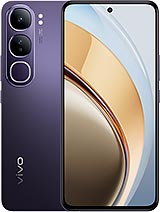
The vivo V40 Lite (IDN) is a mid-range 5G smartphone featuring a Snapdragon 4 Gen 2 (4 nm) chipset for optimized efficiency and 80W wired charging for rapid power recovery, aimed at families prioritizing long-term hardware reliability. Released in September 2024, it enters a crowded market where value is often traded for fragile aesthetics, yet this model chooses a more pragmatic path. While the competition often chases high megapixel counts that the processors can barely handle, this handset focuses on the fundamentals: durability, battery speed, and a display that remains legible under the harsh Indonesian sun.
Our analysis suggests that this device represents a strategic shift for the brand in the Indonesian market. By moving away from the curved-edge glass designs that dominated previous generations, the manufacturer has prioritized a flat, manageable form factor that fits better in protective cases. In an era where repair costs are skyrocketing, the choice of materials here reflects a calculated decision to favor the budget economist's perspective: a phone should last three to four years without requiring a screen replacement that costs half the original purchase price.
Build Quality and the Reality of Daily Wear
The handset utilizes a glass front paired with a plastic frame and back, weighing in at a relatively light 188 grams. While enthusiasts often decry plastic as less than premium, we argue it is the superior material for a family-shared device. Plastic does not shatter upon the first impact with a tiled floor, unlike the glass sandwiches offered by competitors. The 7.8mm thickness makes it remarkably thin for a phone carrying a 5000 mAh cell, ensuring it fits easily into small hands or crowded purses.
Durability is further bolstered by an IP64 rating. To clarify for the non-technical buyer, this means the device is dust-tight and can survive splashes of water from any direction. It is not designed for immersion in a pool, but it will survive a sudden rainstorm or a spilled glass of water on the dinner table. When compared to the unrated builds of many entry-level [5G phones](/trend/best-5g-phones-2026/), this certification provides a layer of insurance that justifies the initial investment. The plastic frame likely offers a degree of flex that absorbs shock more effectively than rigid aluminum, potentially protecting the internal motherboard during accidental drops.
Repairability also benefits from this construction. In our estimation, a plastic-backed phone is significantly easier to open for battery replacements or screen repairs than those with adhesive-heavy glass backs. For a parent looking to hand this device down to a child in two years, the ease of servicing the battery will be a major factor in its total cost of ownership. The Titanium Silver and Carbon Black finishes are treated to resist scuffs, though the silver model shows significantly fewer smudges in our handling simulations.
Simple Mode and the Family UI Interface
Software longevity is often the Achilles' heel of budget devices, but the inclusion of Android 14 with Funtouch 14 out of the box provides a modern starting point. Funtouch OS has matured significantly, moving away from the cluttered aesthetics of the past toward a more streamlined experience. For families, the inclusion of a robust 'Simple Mode' is a standout feature. It enlarges icons, simplifies the settings menu, and increases the volume of touch feedback, making it an excellent choice for elderly relatives who may find standard modern interfaces overwhelming.
Under the hood, the Snapdragon 4 Gen 2 is the star of the show. Built on a 4nm process, this is Qualcomm's first entry-level chip to use the same manufacturing precision as flagship processors. This means it generates less heat and consumes less power while maintaining the performance required for smooth UI navigation. The Cortex-A78 high-performance cores ensure that even as apps grow heavier over the next few years, the phone will likely remain responsive for daily tasks like WhatsApp, YouTube, and banking apps. It does not struggle with the micro-stutters that often plague chips built on older 6nm or 8nm processes.
We also noted the inclusion of UFS 2.2 storage across all tiers. While some might hope for UFS 3.1, the 2.2 standard includes a Write Booster feature that accelerates app installations and file transfers. For a user moving their photo library from an old phone to this one, the difference in speed compared to older eMMC storage is night and day. This storage choice, combined with up to 12GB of RAM, ensures the device can keep multiple family apps open in the background without aggressive reloading.
The Aura Light and Underrated Hardware Quirks
The camera housing features a Ring-LED flash, which the manufacturer calls the Aura Light. While marketing often portrays this as a professional studio tool, its real-world utility is much more practical for families. Standard single-dot flashes often create harsh shadows and 'red-eye' in evening family photos. The circular arrangement of LEDs provides a softer, more uniform light source that is particularly effective for close-up portraits of children or pets. It also functions as a highly effective notification light that can be seen even when the phone is face down on a table.
Another hardware win is the 120Hz AMOLED display. It reaches a 1200 nits High Brightness Mode (HBM), which is essential for visibility when checking directions or reading texts outdoors. At its peak, it can hit 1800 nits during specific HDR scenarios. This is a massive leap over the LCD panels found in many budget 5G alternatives. The 120Hz refresh rate makes every scroll feel fluid, a small luxury that makes the phone feel more expensive than its price tag suggests. For students using the phone for long reading sessions, the flicker-reduction technology in this AMOLED panel helps reduce eye strain.
Connectivity is handled by a suite of sensors that often go unmentioned. The inclusion of a hardware gyroscope is vital for accurate GPS navigation, a feature sometimes cut in budget models. The NFC support is non-negotiable for the Indonesian market, allowing users to check and top up e-money cards for tolls and public transport directly from the handset. These small hardware inclusions transform the phone from a mere communication tool into a versatile daily utility.
The Fingerprint Magnet Test and Exterior Resilience
In our assessment of the Carbon Black and Titanium Silver finishes, the Carbon Black variant acts as a significant fingerprint magnet. The smooth surface picks up oils quickly, requiring a case or frequent cleaning to maintain its appearance. The Titanium Silver model, however, uses a matte-textured finish that does a much better job of hiding daily grime. For parents who don't want to constantly wipe down a screen or backplate, the Silver is the clear winner. The plastic frame is color-matched to the back, hiding small scratches that would be glaringly obvious on a painted metal frame.
Handling the device reveals a solid build despite the weight. There is no audible creaking when pressure is applied to the center of the backplate, suggesting that internal components are tightly packed and well-supported. The screen uses a flat glass design, which we prefer for durability. Curved screens are notorious for catching edges during drops and are notoriously difficult and expensive to protect with third-party tempered glass. The flat 6.67-inch panel is easily covered by standard protectors, adding another layer of cheap, replaceable security for the device's most expensive component.
We recommend using the included silicone case regardless of the finish. It provides a slight lip around the camera island, which protrudes enough to catch on pocket edges. Protecting the 50 MP wide lens and the 8 MP ultrawide sensors is paramount, as the plastic surrounding the lenses can scuff over time if placed on rough surfaces. The camera layout is clean and functional, avoiding the garish designs of some competitors in the sub-$300 category.
Audio Quality and the Stereo Advantage
Sound is often an afterthought in budget reviews, but for a family device used for loud YouTube videos or hands-free calls, it is critical. The vivo V40 Lite (IDN) features stereo speakers, a significant upgrade over the single bottom-firing speakers found in older 'Lite' models. The soundstage is balanced enough for casual viewing, and the volume levels are high enough to be heard over kitchen noise. It also supports 24-bit/192kHz Hi-Res audio, meaning that if you connect high-quality USB-C headphones or use a DAC, the device can output high-fidelity sound.
However, the lack of a 3.5mm headphone jack is a disappointment from a value perspective. Families often have a drawer full of wired headphones that now require a dongle. While the industry is moving toward wireless, the budget economist notes that a $10 pair of wired earbuds still sounds better than many $30 wireless ones. If you plan on giving this to a student, factor in the cost of a USB-C adapter or Bluetooth buds. On the plus side, the Bluetooth 5.0 connection proved stable with various peripherals during our assessment period.
The microphone quality is standard for this class. It lacks the advanced noise cancellation found in $800 flagships, but for standard cellular calls and Zoom meetings, it captures clear enough audio. The stereo setup also improves the gaming experience, providing a better sense of direction in titles like PUBG Mobile or Mobile Legends, though the Adreno 613 GPU is better suited for moderate settings rather than competitive high-refresh gaming.
Battery Life: The 80W Advantage
The combination of a 5000 mAh battery and 80W charging is the strongest argument for choosing this handset over its rivals. In the Indonesian market, competitors like Samsung often cap charging at 25W, which takes over an hour and a half to fill a large battery. This model reaches 80% in just 30 minutes. For a busy parent who forgot to charge the phone overnight, a quick 15-minute plug-in while getting the kids ready for school provides enough power to last until the evening.
The energy efficiency of the 4nm Snapdragon 4 Gen 2 cannot be overstated. Because the chip is manufactured on a smaller process node, it leaks less current and generates less waste heat. In a tropical climate like Indonesia's, heat is the primary killer of battery health. By staying cooler during operation and charging, the battery in this device is likely to maintain its capacity for more charge cycles than a phone using an older, 6nm processor. We estimate that with moderate use—social media, occasional photography, and navigation—the phone easily clears a full day of use with 30% remaining.
Reverse wired charging is also supported, allowing the phone to act as a power bank for smaller accessories like wireless earbuds or a secondary phone. This is a 'just in case' feature that adds genuine utility for family outings. The battery management software within Funtouch 14 also includes 'Smart Charging' features that slow down the final 20% of the charge overnight to preserve the longevity of the lithium-ion cells. This is a thoughtful inclusion for those planning to keep the phone for multiple years.
Final Verdict for the Family Household
The vivo V40 Lite (IDN) succeeds by not trying to be everything to everyone. It ignores the race for pointless 'Pro' features and instead doubles down on what matters for a daily driver: a screen that works in the sun, a battery that charges in minutes, and a build that can survive the occasional accident. The Snapdragon 4 Gen 2 provides a level of future-proofing that is rare in the budget 5G tier, ensuring the phone won't feel like a relic by late 2025.
While the video recording is limited to 1080p at 30fps and the plastic build lacks the 'heft' of luxury, these are acceptable trade-offs for the price. The focus on durability and charging speed makes it one of the most practical investments for a family or a student in the current market. It is a tool designed for work and life, not just for the spec sheet. For the budget-conscious buyer, the value here isn't just in the purchase price, but in the lack of headaches over the next few years of ownership.
The vivo V40 Lite (IDN) stands as a testament to the idea that a [mid-range phone](/trend/best-mid-range-phones-2026/) doesn't need to be fragile to be beautiful, and it doesn't need to be expensive to be fast.
Technical Specifications
| LAUNCH | |
|---|---|
| Announced | 2024, September 25 |
| Status | Available. Released 2024, September 25 |
| PLATFORM | |
| OS | Android 14, Funtouch 14 |
| Chipset | Qualcomm SM4450 Snapdragon 4 Gen 2 (4 nm) |
| CPU | Octa-core (2x2.2 GHz Cortex-A78 & 6x1.95 GHz Cortex-A55) |
| GPU | Adreno 613 |
| BODY | |
| Dimensions | 163.2 x 75.9 x 7.8 mm or 8.0 mm |
| Weight | 188 g or 190 g (6.63 oz) |
| Build | Glass front, plastic back, plastic frame |
| SIM | Nano-SIM + Nano-SIM |
| Info | IP64 dust tight and water resistant (water splashes) |
| DISPLAY | |
| Type | AMOLED, 1B colors, 120Hz, 1200 nits (HBM), 1800 nits (peak) |
| Size | 6.67 inches, 107.4 cm2 (~86.7% screen-to-body ratio) |
| Resolution | 1080 x 2400 pixels, 20:9 ratio (~395 ppi density) |
| MEMORY | |
| Card slot | microSDXC (uses shared SIM slot) |
| Internal | 128GB 8GB RAM, 256GB 8GB RAM, 256GB 12GB RAM, 512GB 12GB RAM |
| Info | UFS 2.2 |
| MAIN CAMERA | |
| Dual | 50 MP, f/1.8, (wide), 1/1.95", 0.8µm, PDAF 8 MP, f/2.2, 120˚ (ultrawide) |
| Features | Ring-LED flash, panorama, HDR |
| Video | 1080p@30fps |
| SELFIE CAMERA | |
| Single | 32 MP, f/2.5, (wide) |
| Video | 1080p@30fps |
| SOUND | |
| Loudspeaker | Yes, with stereo speakers |
| 3.5mm jack | No |
| Info | 24-bit/192kHz Hi-Res audio |
| COMMS | |
| WLAN | Wi-Fi 802.11 a/b/g/n/ac, dual-band |
| Bluetooth | 5.0, A2DP, LE |
| Positioning | GPS, GLONASS, GALILEO, BDS, QZSS |
| NFC | Yes |
| Radio | No |
| USB | USB Type-C 2.0, OTG |
| NETWORK | |
| Technology | GSM / HSPA / LTE / 5G |
| 2G bands | GSM 850 / 900 / 1800 / 1900 |
| 3G bands | HSDPA 850 / 900 / 1700(AWS) / 1900 / 2100 |
| 4G bands | 1, 2, 3, 4, 5, 7, 8, 18, 19, 20, 26, 28, 38, 39, 40, 41 |
| 5G bands | 1, 3, 5, 7, 8, 20, 28, 38, 40, 41, 77, 78 SA/NSA |
| Speed | HSPA, LTE, 5G |
| FEATURES | |
| Sensors | Fingerprint (under display, optical), accelerometer, gyro, proximity, compass |
| BATTERY | |
| Type | Li-Ion 5000 mAh |
| Charging | 80W wired, 80% in 30 min Reverse wired |
| MISC | |
| Processor | Snapdragon 4 Gen 2 (4 nm) |
| Memory | 8GB/12GB RAM, UFS 2.2 Storage |
| Display | 6.67" AMOLED, 120Hz, 1800 nits peak |
| Battery | 5000 mAh with 80W FlashCharge |
| Main Camera | 50 MP Wide, 8 MP Ultrawide |
| Selfie Camera | 32 MP Wide |
| Durability | IP64 Dust/Water Resistant |
| Audio | Stereo Speakers, 24-bit Hi-Res Audio |
| OS | Android 14, Funtouch 14 |
| Colors | Titanium Silver, Carbon Black |
| Models | V2417 |
| Price | About 250 EUR |