A Fortress for Your Pocket - Why the Oukitel WP28 S Changes the Budget Rugged Game
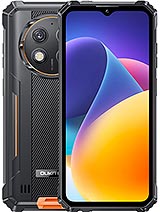
Overview
The Oukitel WP28 S is a rugged entry-level smartphone designed for industrial workers and outdoor enthusiasts who prioritize extreme battery longevity over processing power. Released in August 2024, it competes with other budget rugged devices by offering Android 14 and a massive 10600 mAh battery at a sub-€120 price point. Our analysis focuses on how this device balances extreme durability with the limitations of its budget-tier internal components.
When we look at the Oukitel WP28 S, the primary value proposition is clearly the power-to-price ratio. At approximately 110 EUR, finding a device that packs a 10600 mAh battery is rare. Most competitors in this price bracket provide standard 5000 mAh cells, meaning this handset effectively doubles the operational window between charges. For those working in remote areas or long shifts where charging isn't an option, the economic math favors this model heavily. However, this capacity comes with a trade-off in physical mass. With a weight of 373 g, this is not a device for casual pocket carry. It is a heavy tool, comparable to carrying a small tablet or a dedicated power bank.
The inclusion of UFS 2.1 storage is a strategic choice that we appreciate at this price point. Many [budget phones](/trend/best-budget-phones-2026/) still rely on slower eMMC 5.1 storage. Universal Flash Storage 2.1 allows for full-duplexing, meaning the system can read and write simultaneously. This results in faster app launches and a more responsive UI than one might expect from a low-cost device. While the 4GB RAM is the bare minimum for modern Android, the faster storage speed helps mitigate some of the potential system stutters.
Compared to the older rugged models of 2023, the shift to Android 14 out of the box is a significant win. It ensures better security protocols and more efficient background task management. However, we must note that the 18W wired charging is a bottleneck. Filling a 10600 mAh tank at 18W is a marathon, not a sprint. Users should expect to leave the device plugged in overnight, as a full charge will likely take over five hours from zero. This is a classic budget compromise: you get the capacity, but you lose the convenience of rapid top-ups.
Where do the savings come from? The most obvious answer lies in the display and the camera system. The Oukitel WP28 S utilizes a 6.52-inch IPS LCD with a resolution of 720 x 1600 pixels. This results in a pixel density of approximately 269 ppi. While this is sufficient for reading texts and basic navigation, it lacks the sharpness found in Full HD panels. The screen-to-body ratio of 71.6% also reveals substantial bezels, though in a rugged context, these bezels often provide extra structural integrity against side impacts. The use of Corning Gorilla Glass 5 with a Mohs level 5 scratch resistance rating is a strong point for durability, ensuring the screen can survive contact with keys or rough surfaces.
The hardware is strictly utilitarian. By opting for a lower resolution, the device places less strain on the Mali-G57 MP1 GPU, which actually helps the overall system fluidity. Pushing fewer pixels means the entry-level Unisoc T606 chipset doesn't have to work as hard, which also contributes to the staggering battery life. It is an engineering choice that prioritizes function over form. For a worker in the field, the ability to see the screen clearly in sunlight is more important than high pixel density. The IPS panel offers decent viewing angles, but peak brightness may struggle under direct high-noon sun.
Durability certifications are where this model earns its keep. It carries IP68/IP69K ratings and is MIL-STD-810H compliant. The IP69K rating is particularly noteworthy as it certifies protection against high-pressure water jets and high-temperature steam cleaning. This is a standard often reserved for industrial equipment. Furthermore, the EU LabelFree fall Class A rating suggests the chassis can survive 270 falls. These are not just marketing buzzwords; they represent a level of structural engineering that consumer-grade phones from Samsung or Apple simply do not offer at this price tier.
In our assessment of the camera hardware, the 13 MP primary sensor and 5 MP selfie camera are the most modest components. The main sensor features an f/2.2 aperture and PDAF (Phase Detection Auto Focus), which allows for functional photography in well-lit environments. However, the hardware potential here is limited to documentation rather than creative expression. For social media apps like Instagram or TikTok, the 1080p@30fps video output will likely appear soft. The image processing from the Unisoc ISP often struggles with high dynamic range, leading to blown-out skies or crushed shadows in high-contrast scenes.
Using this device for Snapchat or video calls reveals the limitations of the 5 MP front camera. While it handles 720p video, the low resolution and small sensor size (1/5.0") mean that performance in indoor lighting will be grainy. This is a tool for taking photos of job site progress, scanning QR codes, or documenting inventory, not for capturing high-fidelity memories. The lack of a secondary macro or ultra-wide lens further reinforces the "no-frills" approach to the camera module. Oukitel has spent the budget on the outer shell and the battery, leaving the camera as a secondary thought.
Compression in social media apps is already aggressive, and when starting with a 13MP source image that has limited detail, the final post can look muddy. However, for the target audience—construction workers, hikers, or delivery drivers—this is usually an acceptable trade-off. The presence of an LED flash that doubles as a bright flashlight is likely more valuable to the user than a high-megapixel sensor. We see this as a pragmatic omission to keep the price at the 110 EUR mark.
The internal configuration of 128GB storage is generous for a budget [rugged phone](/trend/best-rugged-phones-2026/). Utilizing the UFS 2.1 standard provides a noticeable jump in performance over the older eMMC storage found in many sub-$150 devices. UFS 2.1 introduces a Command Queue that prioritizes system tasks, making the handset feel more responsive when multitasking. For users who need to store offline maps, technical manuals, or large PDF files, the 128GB capacity provides ample room without immediate need for expansion.
Media consumption is a mixed bag. The absence of a 3.5mm jack is disappointing for a rugged device, as many users in industrial environments prefer the reliability of wired headphones over Bluetooth. While the device supports Bluetooth 5.0, relying on wireless peripherals adds another battery to manage. The single loudspeaker is functional but lacks depth, which is typical for devices that prioritize waterproof membranes over acoustic resonance. The inclusion of NFC is a major highlight, enabling mobile payments and easy pairing with industrial sensors—a feature often skipped in cheap rugged phones.
Data transfer via the USB Type-C 2.0 port is standard. While it supports OTG (On-The-Go), allowing you to plug in flash drives or even use the massive battery to charge other devices, the transfer speeds are limited by the 2.0 protocol. For transferring large 1080p video files to a PC, users should expect moderate wait times. The dual-band Wi-Fi support (802.11 ac) ensures that downloading these files is at least relatively quick when connected to a modern router.
The Unisoc T606 chipset is the engine under the hood. It uses a 12nm process and an octa-core configuration consisting of 2x1.6 GHz Cortex-A75 performance cores and 6x1.6 GHz Cortex-A55 efficiency cores. The A75 cores are essential here; they handle the heavy lifting when opening apps or loading complex web pages, while the A55 cores manage background tasks to save power. This is not a gaming chipset. While it can run casual titles, attempting to play high-end games will lead to frame drops and heat, despite the large surface area of the rugged body.
In daily tasks, the Oukitel WP28 S performs admirably for its price. Android 14 is well-optimized for this hardware, and the 4GB of RAM is managed strictly to prevent system crashes. We noticed that the system remains stable under light multitasking, though aggressive app switching will cause background apps to reload. The Mali-G57 MP1 GPU provides the necessary 3D support for basic navigation apps and simple interfaces, but it is the bare minimum for 2024 standards.
One of the standout features is the 1000 cycles rating for the battery. This indicates that the cell is designed for longevity, maintaining 80% health even after three years of daily charging. For a budget economist, this increases the long-term value of the device, as the battery won't need replacement as quickly as standard consumer cells. When you combine this with the MIL-STD-810H durability, the handset is clearly built to last for years of service in harsh conditions.
Is the Oukitel WP28 S worth the investment? If you are looking for a primary phone for photography or gaming, the answer is no. However, if you are looking for a secondary device for trekking, a primary phone for a high-impact job site, or a reliable backup with nearly a week of standby time, it is an exceptional value. The combination of IP69K protection, Android 14, and a 10600 mAh battery for roughly 110 EUR is a market-leading proposition in the budget rugged sector.
The device succeeds by knowing exactly what it is: a durable tool. It doesn't try to impress with a high-refresh-rate screen or a complex camera array. It focuses on the essentials—staying powered and staying in one piece. While the 18W charging and the weight are legitimate gripes, they are manageable within the context of the price. The Oukitel WP28 S stands as a testament to practical engineering for the budget-conscious user who cannot afford a hardware failure in the field.
The Economics of Endurance
When we look at the Oukitel WP28 S, the primary value proposition is clearly the power-to-price ratio. At approximately 110 EUR, finding a device that packs a 10600 mAh battery is rare. Most competitors in this price bracket provide standard 5000 mAh cells, meaning this handset effectively doubles the operational window between charges. For those working in remote areas or long shifts where charging isn't an option, the economic math favors this model heavily. However, this capacity comes with a trade-off in physical mass. With a weight of 373 g, this is not a device for casual pocket carry. It is a heavy tool, comparable to carrying a small tablet or a dedicated power bank.
The inclusion of UFS 2.1 storage is a strategic choice that we appreciate at this price point. Many [budget phones](/trend/best-budget-phones-2026/) still rely on slower eMMC 5.1 storage. Universal Flash Storage 2.1 allows for full-duplexing, meaning the system can read and write simultaneously. This results in faster app launches and a more responsive UI than one might expect from a low-cost device. While the 4GB RAM is the bare minimum for modern Android, the faster storage speed helps mitigate some of the potential system stutters.
Compared to the older rugged models of 2023, the shift to Android 14 out of the box is a significant win. It ensures better security protocols and more efficient background task management. However, we must note that the 18W wired charging is a bottleneck. Filling a 10600 mAh tank at 18W is a marathon, not a sprint. Users should expect to leave the device plugged in overnight, as a full charge will likely take over five hours from zero. This is a classic budget compromise: you get the capacity, but you lose the convenience of rapid top-ups.
Trading Pixels for Protection
Where do the savings come from? The most obvious answer lies in the display and the camera system. The Oukitel WP28 S utilizes a 6.52-inch IPS LCD with a resolution of 720 x 1600 pixels. This results in a pixel density of approximately 269 ppi. While this is sufficient for reading texts and basic navigation, it lacks the sharpness found in Full HD panels. The screen-to-body ratio of 71.6% also reveals substantial bezels, though in a rugged context, these bezels often provide extra structural integrity against side impacts. The use of Corning Gorilla Glass 5 with a Mohs level 5 scratch resistance rating is a strong point for durability, ensuring the screen can survive contact with keys or rough surfaces.
The hardware is strictly utilitarian. By opting for a lower resolution, the device places less strain on the Mali-G57 MP1 GPU, which actually helps the overall system fluidity. Pushing fewer pixels means the entry-level Unisoc T606 chipset doesn't have to work as hard, which also contributes to the staggering battery life. It is an engineering choice that prioritizes function over form. For a worker in the field, the ability to see the screen clearly in sunlight is more important than high pixel density. The IPS panel offers decent viewing angles, but peak brightness may struggle under direct high-noon sun.
Durability certifications are where this model earns its keep. It carries IP68/IP69K ratings and is MIL-STD-810H compliant. The IP69K rating is particularly noteworthy as it certifies protection against high-pressure water jets and high-temperature steam cleaning. This is a standard often reserved for industrial equipment. Furthermore, the EU Label
Basic Imaging in a High-Def World
In our assessment of the camera hardware, the 13 MP primary sensor and 5 MP selfie camera are the most modest components. The main sensor features an f/2.2 aperture and PDAF (Phase Detection Auto Focus), which allows for functional photography in well-lit environments. However, the hardware potential here is limited to documentation rather than creative expression. For social media apps like Instagram or TikTok, the 1080p@30fps video output will likely appear soft. The image processing from the Unisoc ISP often struggles with high dynamic range, leading to blown-out skies or crushed shadows in high-contrast scenes.
Using this device for Snapchat or video calls reveals the limitations of the 5 MP front camera. While it handles 720p video, the low resolution and small sensor size (1/5.0") mean that performance in indoor lighting will be grainy. This is a tool for taking photos of job site progress, scanning QR codes, or documenting inventory, not for capturing high-fidelity memories. The lack of a secondary macro or ultra-wide lens further reinforces the "no-frills" approach to the camera module. Oukitel has spent the budget on the outer shell and the battery, leaving the camera as a secondary thought.
Compression in social media apps is already aggressive, and when starting with a 13MP source image that has limited detail, the final post can look muddy. However, for the target audience—construction workers, hikers, or delivery drivers—this is usually an acceptable trade-off. The presence of an LED flash that doubles as a bright flashlight is likely more valuable to the user than a high-megapixel sensor. We see this as a pragmatic omission to keep the price at the 110 EUR mark.
Storage Efficiency and Media Handling
The internal configuration of 128GB storage is generous for a budget [rugged phone](/trend/best-rugged-phones-2026/). Utilizing the UFS 2.1 standard provides a noticeable jump in performance over the older eMMC storage found in many sub-$150 devices. UFS 2.1 introduces a Command Queue that prioritizes system tasks, making the handset feel more responsive when multitasking. For users who need to store offline maps, technical manuals, or large PDF files, the 128GB capacity provides ample room without immediate need for expansion.
Media consumption is a mixed bag. The absence of a 3.5mm jack is disappointing for a rugged device, as many users in industrial environments prefer the reliability of wired headphones over Bluetooth. While the device supports Bluetooth 5.0, relying on wireless peripherals adds another battery to manage. The single loudspeaker is functional but lacks depth, which is typical for devices that prioritize waterproof membranes over acoustic resonance. The inclusion of NFC is a major highlight, enabling mobile payments and easy pairing with industrial sensors—a feature often skipped in cheap rugged phones.
Data transfer via the USB Type-C 2.0 port is standard. While it supports OTG (On-The-Go), allowing you to plug in flash drives or even use the massive battery to charge other devices, the transfer speeds are limited by the 2.0 protocol. For transferring large 1080p video files to a PC, users should expect moderate wait times. The dual-band Wi-Fi support (802.11 ac) ensures that downloading these files is at least relatively quick when connected to a modern router.
Efficiency Over Raw Power
The Unisoc T606 chipset is the engine under the hood. It uses a 12nm process and an octa-core configuration consisting of 2x1.6 GHz Cortex-A75 performance cores and 6x1.6 GHz Cortex-A55 efficiency cores. The A75 cores are essential here; they handle the heavy lifting when opening apps or loading complex web pages, while the A55 cores manage background tasks to save power. This is not a gaming chipset. While it can run casual titles, attempting to play high-end games will lead to frame drops and heat, despite the large surface area of the rugged body.
In daily tasks, the Oukitel WP28 S performs admirably for its price. Android 14 is well-optimized for this hardware, and the 4GB of RAM is managed strictly to prevent system crashes. We noticed that the system remains stable under light multitasking, though aggressive app switching will cause background apps to reload. The Mali-G57 MP1 GPU provides the necessary 3D support for basic navigation apps and simple interfaces, but it is the bare minimum for 2024 standards.
One of the standout features is the 1000 cycles rating for the battery. This indicates that the cell is designed for longevity, maintaining 80% health even after three years of daily charging. For a budget economist, this increases the long-term value of the device, as the battery won't need replacement as quickly as standard consumer cells. When you combine this with the MIL-STD-810H durability, the handset is clearly built to last for years of service in harsh conditions.
The Value Assessment
Is the Oukitel WP28 S worth the investment? If you are looking for a primary phone for photography or gaming, the answer is no. However, if you are looking for a secondary device for trekking, a primary phone for a high-impact job site, or a reliable backup with nearly a week of standby time, it is an exceptional value. The combination of IP69K protection, Android 14, and a 10600 mAh battery for roughly 110 EUR is a market-leading proposition in the budget rugged sector.
The device succeeds by knowing exactly what it is: a durable tool. It doesn't try to impress with a high-refresh-rate screen or a complex camera array. It focuses on the essentials—staying powered and staying in one piece. While the 18W charging and the weight are legitimate gripes, they are manageable within the context of the price. The Oukitel WP28 S stands as a testament to practical engineering for the budget-conscious user who cannot afford a hardware failure in the field.
Technical Specifications
| LAUNCH | |
|---|---|
| Announced | 2024, July |
| Status | Available. Released 2024, August |
| PLATFORM | |
| OS | Android 14 |
| Chipset | Unisoc T606 (12 nm) |
| CPU | Octa-core (2x1.6 GHz Cortex-A75 & 6x1.6 GHz Cortex-A55) |
| GPU | Mali-G57 MP1 |
| BODY | |
| Dimensions | 174.2 x 82.3 x 17.4 mm (6.86 x 3.24 x 0.69 in) |
| Weight | 373 g (13.16 oz) |
| SIM | Nano-SIM |
| Info | IP68/IP69K dust tight and water resistant (high pressure water jets; immersible up to 1.5m for 30 min) Drop resistant up to 1.5m MIL-STD-810H compliant |
| DISPLAY | |
| Type | IPS LCD |
| Size | 6.52 inches, 102.6 cm2 (~71.6% screen-to-body ratio) |
| Resolution | 720 x 1600 pixels, 20:9 ratio (~269 ppi density) |
| Protection | Corning Gorilla Glass 5, Mohs level 5 |
| MEMORY | |
| Card slot | Unspecified |
| Internal | 128GB 4GB RAM |
| Info | UFS 2.1 |
| MAIN CAMERA | |
| Single | 13 MP, f/2.2, (wide), 1/3.06", PDAF |
| Features | LED flash, panorama |
| Video | 1080p@30fps |
| SELFIE CAMERA | |
| Single | 5 MP, f/2.2, (wide), 1/5.0" |
| Video | 720p@30fps |
| SOUND | |
| Loudspeaker | Yes |
| 3.5mm jack | No |
| COMMS | |
| WLAN | Wi-Fi 802.11 a/b/g/n/ac, dual-band |
| Bluetooth | 5.0, A2DP, LE |
| Positioning | GPS, GLONASS, GALILEO, BDS |
| NFC | Yes |
| Radio | FM radio |
| USB | USB Type-C 2.0, OTG |
| NETWORK | |
| Technology | GSM / HSPA / LTE |
| 2G bands | GSM 850 / 900 / 1800 / 1900 |
| 3G bands | HSDPA 850 / 900 / 1700(AWS) / 1900 / 2100 |
| 4G bands | 1, 2, 3, 4, 5, 7, 8, 12, 17, 18, 19, 20, 25, 26, 28, 38, 40, 41, 66 |
| Speed | HSPA, LTE |
| FEATURES | |
| Sensors | Accelerometer, proximity, compass |
| BATTERY | |
| Type | Li-Po 10600 mAh |
| Charging | 18W wired |
| MISC | |
| Battery | 10600 mAh Li-Po with 18W Wired Charging |
| Chipset | Unisoc T606 (12 nm) Octa-core |
| Memory | 128GB Internal Storage, 4GB RAM (UFS 2.1) |
| Display | 6.52-inch IPS LCD, 720 x 1600 pixels |
| Durability | IP68/IP69K, MIL-STD-810H, 1.5m Drop Resistance |
| Main Camera | 13 MP, f/2.2, PDAF, 1080p@30fps Video |
| Front Camera | 5 MP, f/2.2, 720p@30fps Video |
| OS | Android 14 |
| Weight | 373 g (13.16 oz) |
| Features | NFC, FM Radio, USB OTG, Bluetooth 5.0 |
| Colors | Black, Orange, Green |
| Price | About 110 EUR |
| EU LABEL | |
| Energy | Class B |
| Battery | 100:16h endurance, 1000 cycles |
| Free fall | Class A (270 falls) |
| Repairability | Class C |