A Half-Kilogram Powerhouse - Why the Doogee S200 Max Is Overkill for Most
Overview
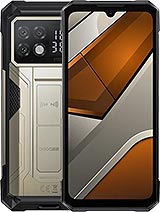
The Doogee S200 Max is a mid-tier rugged smartphone featuring a 22000 mAh battery for multi-week endurance and a 6.72-inch 120Hz IPS display for smooth navigation, aimed at extreme outdoor professionals and long-haul industrial users. Released in August 2025, it competes with specialized hardware in the heavy-duty sector rather than traditional consumer portables.
Our assessment reveals a device that prioritizes sheer physical resilience and energy density over ergonomic comfort. Weighing in at 535 grams, this is not a device meant for jeans pockets or one-handed scrolling during a commute. It represents a specific niche where charging opportunities are rare and environmental conditions are punishing. By combining 16GB of RAM with a 512GB internal storage configuration, the hardware attempts to bridge the gap between a tool and a workstation, though the processing core reminds us of its mid-range roots.
The promotional material for this device paints a picture of a phone that never dies and cannot be broken. Doogee markets the Doogee S200 Max as the ultimate survival companion, highlighting the IP69K rating and the 22000 mAh battery as its primary pillars. They claim it can survive high-pressure water jets and extreme drops, essentially replacing the need for a power bank and a protective case. In a market where most flagship phones struggle to reach two days of moderate use, the promise of a device that could theoretically last a week on a single charge is an enticing hook for field engineers and remote researchers.
Marketing also leans heavily on the 100 MP main camera and the 20 MP night vision capabilities. The narrative suggests that you are carrying a professional-grade imaging tool that can see in total darkness. While these numbers look impressive on a billboard, we must look closer at the sensor sizes and the processing power behind them. A high megapixel count does not always translate to superior image fidelity, especially when paired with a mid-range ISP. The secondary 1.3-inch AMOLED rear screen is another marketing highlight, intended to provide quick access to time and notifications without waking the massive primary display.
Under the hood, the Doogee S200 Max utilizes the Mediatek Dimensity 7050 chipset. While this 6nm silicon was competitive in previous years, by August 2025, it serves as a reliable but unexciting workhorse. The octa-core configuration, featuring Cortex-A78 cores for performance and Cortex-A55 for efficiency, handles Android 15 with ease, but users should not expect it to rival the latest Snapdragon 8-series or Dimensity 9-series chips in gaming or heavy video editing. The Mali-G68 MC4 GPU provides enough graphical power for standard tasks and light gaming, but it may struggle with high-fidelity titles at the native 1080 x 2400 resolution.
The real star is the battery longevity rating. With a 1300 cycle certification, the internal cells are designed to retain high capacity even after years of daily charging. However, charging a 22000 mAh reservoir at 66W is a lesson in patience. In our calculations, a full charge takes several hours, meaning users will likely prefer 'top-up' charging rather than waiting for a 0-100% cycle. The 18W reverse wired charging is a practical addition, effectively turning the phone into a high-capacity power bank for other devices like GPS units or secondary phones.
Using the Doogee S200 Max for 24 hours is a physical experience. At 07:00, the alarm sounds, and lifting the device off the nightstand is an immediate reminder of its 25.5 mm thickness. During the morning commute, checking emails requires both hands to avoid wrist strain. The 120Hz refresh rate on the primary IPS panel makes the UI feel snappy, but the 73.6% screen-to-body ratio feels dated compared to the slim-bezel devices dominating the 2025 landscape.
By midday, after several hours of navigation and hotspot tethering—tasks that would drain a standard phone by 30%—the Doogee S200 Max still sits at 96%. This is the environment where the device shines. In an industrial setting or on a construction site, the MIL-STD-810H build means you can set it down on concrete or in the mud without a second thought. The Mohs level 6 protection on the display means that sand and grit are less likely to leave the fine scratches that plague standard Gorilla Glass.
As evening approaches, the 20 MP Night Vision camera proves useful for inspecting dark corners or navigating a campsite. By 22:00, after a full day of heavy usage, the battery remains at 88%. For the average user, this is absurd; for the professional who spends four days away from a power outlet, it is a necessity. The 535g weight remains the primary drawback throughout the day, making the device feel more like a piece of equipment than a personal communication tool.
We cannot ignore the ergonomic nightmare that is the Doogee S200 Max. While its durability is unquestionable, its daily usability is hampered by its sheer mass. It will not fit in most vehicle phone holders, and it will certainly cause discomfort if carried in a front pocket for extended periods. This is a tool for a backpack or a heavy-duty belt holster. If your daily routine involves office work and casual social media use, the weight will become a source of frustration within the first 48 hours.
The camera system, while boasting 100 MP, is limited by its 1/1.8-inch sensor size. In 2025, where flagship competitors are using 1-inch sensors, the Doogee S200 Max captures decent images in bright light but struggles with dynamic range in high-contrast scenes. The 2 MP macro sensor feels like a filler spec that adds little value to a professional-grade device. Furthermore, the IPS LCD panel, while bright enough for most situations, lacks the deep blacks and infinite contrast of the OLED panels found on similarly priced non-[rugged phones](/trend/best-rugged-phones-2026/).
Security is handled by a side-mounted fingerprint sensor. In our analysis of the hardware, this placement is ideal for a rugged device, as it allows for unlocking while the phone is held firmly in a grip. The sensor is responsive, though moisture on the fingers—common in outdoor work—can occasionally impede accuracy. Android 15 provides the software backbone, ensuring the latest security patches and privacy controls are in place.
Face unlock is available via the 32 MP selfie camera, but it relies on 2D software mapping. While convenient, it does not offer the same level of security as 3D infrared systems. In low-light conditions, the phone often defaults to the fingerprint sensor or PIN. For a device intended for sensitive industrial work, the inclusion of NFC is vital for secure access control and mobile payments, and it performs reliably here.
The EU LabelFree fall Class A rating is a significant technical achievement. Surviving 270 falls means the structural integrity of the internal chassis is exceptionally high. Most consumer phones are tested for a handful of drops; the Doogee S200 Max is built to survive a career of accidents. However, the Class C repairability rating suggests that if you do manage to break it, or if the battery eventually fails after years of use, fixing it will be a complex and likely expensive endeavor due to the extensive waterproofing seals.
Another detail often overlooked is the USB Type-C 2.0 limitation. In 2025, seeing a 2.0 standard on a device with 512GB of storage is disappointing. Moving large video files or high-resolution photos to a computer will be significantly slower than it would be on a device with USB 3.0 or 3.1 speeds. This suggests that Doogee expects users to rely on wireless transfers or cloud syncing, which might not always be feasible in the remote locations where this phone is intended to operate.
The Doogee S200 Max is a specialized instrument that sacrifices everything on the altar of endurance and durability. It is a triumph of engineering for a very specific crowd, but it is a poor choice for the general public. The Dimensity 7050 provides enough performance for the tasks it needs to perform, and the 22000 mAh battery is effectively a superpower in the mobile world. If you can handle the weight, you are getting a device that is virtually indestructible and perpetually powered.
For those who work in extreme environments, the Doogee S200 Max is one of the most capable options available in mid-2025. It eliminates the anxiety of a dead battery and the fear of a cracked screen. Just be prepared for the reality that your phone will now be the heaviest object in your everyday carry. It is a brick that makes calls, and for some, that is exactly what they need.
Our assessment reveals a device that prioritizes sheer physical resilience and energy density over ergonomic comfort. Weighing in at 535 grams, this is not a device meant for jeans pockets or one-handed scrolling during a commute. It represents a specific niche where charging opportunities are rare and environmental conditions are punishing. By combining 16GB of RAM with a 512GB internal storage configuration, the hardware attempts to bridge the gap between a tool and a workstation, though the processing core reminds us of its mid-range roots.
The Marketing Promise of Eternal Power
The promotional material for this device paints a picture of a phone that never dies and cannot be broken. Doogee markets the Doogee S200 Max as the ultimate survival companion, highlighting the IP69K rating and the 22000 mAh battery as its primary pillars. They claim it can survive high-pressure water jets and extreme drops, essentially replacing the need for a power bank and a protective case. In a market where most flagship phones struggle to reach two days of moderate use, the promise of a device that could theoretically last a week on a single charge is an enticing hook for field engineers and remote researchers.
Marketing also leans heavily on the 100 MP main camera and the 20 MP night vision capabilities. The narrative suggests that you are carrying a professional-grade imaging tool that can see in total darkness. While these numbers look impressive on a billboard, we must look closer at the sensor sizes and the processing power behind them. A high megapixel count does not always translate to superior image fidelity, especially when paired with a mid-range ISP. The secondary 1.3-inch AMOLED rear screen is another marketing highlight, intended to provide quick access to time and notifications without waking the massive primary display.
Dissecting the Spec Reality
Under the hood, the Doogee S200 Max utilizes the Mediatek Dimensity 7050 chipset. While this 6nm silicon was competitive in previous years, by August 2025, it serves as a reliable but unexciting workhorse. The octa-core configuration, featuring Cortex-A78 cores for performance and Cortex-A55 for efficiency, handles Android 15 with ease, but users should not expect it to rival the latest Snapdragon 8-series or Dimensity 9-series chips in gaming or heavy video editing. The Mali-G68 MC4 GPU provides enough graphical power for standard tasks and light gaming, but it may struggle with high-fidelity titles at the native 1080 x 2400 resolution.
The real star is the battery longevity rating. With a 1300 cycle certification, the internal cells are designed to retain high capacity even after years of daily charging. However, charging a 22000 mAh reservoir at 66W is a lesson in patience. In our calculations, a full charge takes several hours, meaning users will likely prefer 'top-up' charging rather than waiting for a 0-100% cycle. The 18W reverse wired charging is a practical addition, effectively turning the phone into a high-capacity power bank for other devices like GPS units or secondary phones.
Survival of the Heaviest: A Day in the Life
Using the Doogee S200 Max for 24 hours is a physical experience. At 07:00, the alarm sounds, and lifting the device off the nightstand is an immediate reminder of its 25.5 mm thickness. During the morning commute, checking emails requires both hands to avoid wrist strain. The 120Hz refresh rate on the primary IPS panel makes the UI feel snappy, but the 73.6% screen-to-body ratio feels dated compared to the slim-bezel devices dominating the 2025 landscape.
By midday, after several hours of navigation and hotspot tethering—tasks that would drain a standard phone by 30%—the Doogee S200 Max still sits at 96%. This is the environment where the device shines. In an industrial setting or on a construction site, the MIL-STD-810H build means you can set it down on concrete or in the mud without a second thought. The Mohs level 6 protection on the display means that sand and grit are less likely to leave the fine scratches that plague standard Gorilla Glass.
As evening approaches, the 20 MP Night Vision camera proves useful for inspecting dark corners or navigating a campsite. By 22:00, after a full day of heavy usage, the battery remains at 88%. For the average user, this is absurd; for the professional who spends four days away from a power outlet, it is a necessity. The 535g weight remains the primary drawback throughout the day, making the device feel more like a piece of equipment than a personal communication tool.
The Practical Deal Breakers
We cannot ignore the ergonomic nightmare that is the Doogee S200 Max. While its durability is unquestionable, its daily usability is hampered by its sheer mass. It will not fit in most vehicle phone holders, and it will certainly cause discomfort if carried in a front pocket for extended periods. This is a tool for a backpack or a heavy-duty belt holster. If your daily routine involves office work and casual social media use, the weight will become a source of frustration within the first 48 hours.
The camera system, while boasting 100 MP, is limited by its 1/1.8-inch sensor size. In 2025, where flagship competitors are using 1-inch sensors, the Doogee S200 Max captures decent images in bright light but struggles with dynamic range in high-contrast scenes. The 2 MP macro sensor feels like a filler spec that adds little value to a professional-grade device. Furthermore, the IPS LCD panel, while bright enough for most situations, lacks the deep blacks and infinite contrast of the OLED panels found on similarly priced non-[rugged phones](/trend/best-rugged-phones-2026/).
Speed and Security: Biometrics in the Field
Security is handled by a side-mounted fingerprint sensor. In our analysis of the hardware, this placement is ideal for a rugged device, as it allows for unlocking while the phone is held firmly in a grip. The sensor is responsive, though moisture on the fingers—common in outdoor work—can occasionally impede accuracy. Android 15 provides the software backbone, ensuring the latest security patches and privacy controls are in place.
Face unlock is available via the 32 MP selfie camera, but it relies on 2D software mapping. While convenient, it does not offer the same level of security as 3D infrared systems. In low-light conditions, the phone often defaults to the fingerprint sensor or PIN. For a device intended for sensitive industrial work, the inclusion of NFC is vital for secure access control and mobile payments, and it performs reliably here.
What the Glossy Brochures Didn't Tell You
The EU Label
Another detail often overlooked is the USB Type-C 2.0 limitation. In 2025, seeing a 2.0 standard on a device with 512GB of storage is disappointing. Moving large video files or high-resolution photos to a computer will be significantly slower than it would be on a device with USB 3.0 or 3.1 speeds. This suggests that Doogee expects users to rely on wireless transfers or cloud syncing, which might not always be feasible in the remote locations where this phone is intended to operate.
The Final Truth
The Doogee S200 Max is a specialized instrument that sacrifices everything on the altar of endurance and durability. It is a triumph of engineering for a very specific crowd, but it is a poor choice for the general public. The Dimensity 7050 provides enough performance for the tasks it needs to perform, and the 22000 mAh battery is effectively a superpower in the mobile world. If you can handle the weight, you are getting a device that is virtually indestructible and perpetually powered.
For those who work in extreme environments, the Doogee S200 Max is one of the most capable options available in mid-2025. It eliminates the anxiety of a dead battery and the fear of a cracked screen. Just be prepared for the reality that your phone will now be the heaviest object in your everyday carry. It is a brick that makes calls, and for some, that is exactly what they need.
Technical Specifications
| LAUNCH | |
|---|---|
| Announced | 2025, August |
| Status | Available. Released 2025, August |
| PLATFORM | |
| OS | Android 15 |
| Chipset | Mediatek Dimensity 7050 (6 nm) |
| CPU | Octa-core (2x2.6 GHz Cortex-A78 & 6x2.0 GHz Cortex-A55) |
| GPU | Mali-G68 MC4 |
| BODY | |
| Dimensions | 179.5 x 82.5 x 25.5 mm (7.07 x 3.25 x 1.00 in) |
| Weight | 535 g (1.18 lb) |
| SIM | Nano-SIM + Nano-SIM |
| Info | IP68/IP69K dust tight and water resistant (high pressure water jets; immersible up to 1.5m for 30 min) MIL-STD-810H compliant |
| DISPLAY | |
| Type | IPS LCD, 120Hz |
| Size | 6.72 inches, 109.0 cm2 (~73.6% screen-to-body ratio) |
| Resolution | 1080 x 2400 pixels, 20:9 ratio (~392 ppi density) |
| Protection | Mohs level 6 |
| Info | Secondary screen on the back: AMOLED, 1.3 inches, 240 x 240 pixels |
| MEMORY | |
| Card slot | microSDXC (uses shared SIM slot) |
| Internal | 512GB 16GB RAM |
| MAIN CAMERA | |
| Triple | 100 MP, f/1.9, (wide), 1/1.8", PDAF 20 MP, f/1.8, (night vision), infrared night vision light 2 MP (macro) |
| Features | Dual-LED flash, HDR, panorama |
| Video | 4K@30fps, 1080p@30fps, gyro-EIS |
| SELFIE CAMERA | |
| Single | 32 MP, f/2.3, (wide), 1/2.8" |
| Video | 1080p@30fps |
| SOUND | |
| Loudspeaker | Yes |
| 3.5mm jack | No |
| COMMS | |
| WLAN | Wi-Fi 802.11 a/b/g/n/ac/6, dual-band |
| Bluetooth | 5.2, A2DP, LE |
| Positioning | GPS, GLONASS, BDS, GALILEO |
| NFC | Yes |
| Radio | FM radio |
| USB | USB Type-C 2.0, OTG |
| NETWORK | |
| Technology | GSM / HSPA / LTE / 5G |
| 2G bands | GSM 850 / 900 / 1800 / 1900 |
| 3G bands | HSDPA 850 / 900 / 1700(AWS) / 1900 / 2100 |
| 4G bands | 1, 2, 3, 4, 5, 7, 8, 12, 17, 18, 19, 20, 25, 26, 28, 34, 38, 39, 40, 41, 66 |
| 5G bands | 1, 3, 7, 8, 28, 38, 41, 77, 78, 79 SA/NSA |
| Speed | HSPA, LTE, 5G |
| FEATURES | |
| Sensors | Fingerprint (side-mounted), accelerometer, gyro, proximity, compass |
| BATTERY | |
| Type | 22000 mAh |
| Charging | 66W wired 18W reverse wired |
| MISC | |
| Colors | Gray, Gold |
| Price | About 360 EUR |
| EU LABEL | |
| Energy | Class E |
| Battery | 117:35h endurance, 1300 cycles |
| Free fall | Class A (270 falls) |
| Repairability | Class C |