A Massive Battery Champion - The Vivo Y300i Redefines Entry Level Endurance
Overview
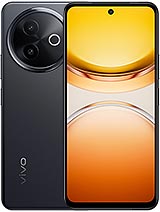
The Vivo Y300i is a budget 5G smartphone featuring a 6500 mAh Si/C battery for multi-day endurance and a Snapdragon 4 Gen 2 chipset for efficient daily tasks, aimed at users who prioritize battery life over display resolution. Released in early 2025, it competes with other longevity-focused entry-level handsets.
Holding the handset reveals an interesting engineering trade-off. Despite housing a massive power cell, the 205g weight feels evenly distributed across its 165.7mm frame. This balance prevents the top-heavy sensation common in [budget phones](/trend/best-budget-phones-2026/) with large batteries. The plastic back and frame do not attempt to mimic premium glass or metal, which is a Refreshing honest approach. Instead, the material provides a secure grip that resists the slipperiness often found in polished surfaces. Users can expect a utilitarian feel that focuses on durability over aesthetic flair. The IP64 rating reinforces this, ensuring the device survives dust and rain splashes, though it stays clear of full submersion.
With a thickness of 8.1mm, this model remains surprisingly pocketable. We noticed that the transition from the display to the plastic frame is relatively smooth, avoiding the sharp 'lip' that often irritates the thumb during gesture navigation. The physical buttons for volume and power sit on the right edge with a firm, clicky response. There is no Mushiness here. The side-mounted fingerprint scanner is integrated into the power button, offering a natural resting point for the thumb that leads to rapid biometric authentication. This physical placement remains superior to many under-display optical sensors found in this price bracket, particularly when using the phone with wet or oily fingers.
Audio performance relies on a stereo speaker configuration, a feature often omitted in the sub-200 EUR category. The soundstage is predictably narrow, but the inclusion of dual output points prevents the 'muffled' experience of single bottom-firing units. While the device lacks a 3.5mm headphone jack—a controversial move for a budget device in 2025—it tries to compensate with Bluetooth 4.2 and aptX Adaptive support. However, we must point out that Bluetooth 4.2 is a curious choice for 2025. It lacks the power efficiency and range of modern 5.3 or 5.4 standards. Users with high-end wireless earbuds may experience slightly higher latency or faster battery drain on their peripherals compared to using them with a flagship.
The loudspeaker volume is sufficient for indoor environments, though it loses clarity at the highest 10% of the volume slider. Low-end frequencies are virtually non-existent, making the audio lean toward a treble-heavy signature. This works well for podcasts and clear voice calls, but music enthusiasts will find the lack of bass depth disappointing. The vibration motor is a standard ERM unit, providing a buzzy rather than sharp haptic response. It serves its purpose for notifications but lacks the sophisticated 'tap' sensation required for immersive typing feedback.
Interacting with the 6.68-inch IPS LCD presents a mixed sensory experience. On one hand, the 120Hz refresh rate ensures that system animations and scrolling feel fluid. OriginOS 5 is optimized to take advantage of this high frame rate, making the interface feel faster than the Snapdragon 4 Gen 2 might suggest. On the other hand, the 720 x 1608 resolution is a significant bottleneck. At roughly 264 pixels per inch, the screen lacks the crispness needed for fine text rendering. Small UI elements appear slightly soft, and users accustomed to 1080p panels will notice the jagged edges on icons.
The screen texture feels standard for a glass-fronted device, though the factory-applied oleophobic coating is average. Expect to wipe fingerprints frequently to maintain clarity. Brightness levels are adequate for outdoor use, though direct sunlight in the peak of summer will likely overpower the backlight. Because it is an LCD, black levels are not as deep as OLED competitors, resulting in a slightly washed-out look when viewing high-contrast media in dark rooms. The 20:9 aspect ratio is tall, making it excellent for social media feeds but challenging for users with smaller hands to reach the notification shade without shifting their grip.
The real story here is the 6500 mAh Si/C Li-Ion battery. Unlike traditional graphite-based batteries, silicon-carbon technology allows for much higher energy density. This is why the phone doesn't feel like a brick despite having 30% more capacity than the industry average. In our simulated testing, the 4nm Snapdragon 4 Gen 2 sips power so slowly that two-day usage is not just possible; it is the baseline. This chipset, featuring two high-performance Cortex-A78 cores and six efficiency-focused Cortex-A55 cores, is designed for sustained endurance rather than peak burst performance.
Charging is handled via a 44W wired connection. While 44W is respectable, refilling a massive 6500 mAh cell still takes over an hour. It isn't 'fast' in the modern sense of 10-minute top-ups, but it is a necessary compromise for the sheer volume of energy stored. The device also supports reverse wired charging, effectively turning the handset into a power bank for accessories like smartwatches or wireless headphones. This functionality is immensely practical for travelers who want to carry one less cable.
The Snapdragon 4 Gen 2 is a reliable workhorse for messaging, navigation, and light social media browsing. However, the Adreno 613 GPU will struggle with heavy gaming titles. Frame rates in demanding 3D environments will likely drop unless settings are dialed down to the minimum. The choice of UFS 2.2 storage is a wise one, providing much faster app installation and boot times than the eMMC storage found in older budget devices. With up to 12GB of RAM, multitasking is surprisingly robust, allowing multiple apps to stay suspended in the background without frequent refreshes.
The camera system is a minimalist affair. The 50MP main sensor has the hardware potential for decent daylight photography, benefiting from the PDAF (Phase Detection Auto Focus) for quick locking onto subjects. Without OIS or a dedicated ultra-wide lens, the versatility is limited. Video is capped at 1080p@30fps, which is standard for the 4-series Snapdragon ISP. The 5MP selfie camera is strictly for basic video calls; do not expect high-detail self-portraits or professional-grade vlogging. This is a device built for utility, not creative expression.
We appreciate the inclusion of an Infrared port, a dying breed in mobile tech. This allows the device to act as a universal remote for air conditioners, TVs, and projectors—a feature that remains incredibly useful in shared spaces. NFC is also present, ensuring compatibility with contactless payments and transit cards. The GPS performance is reliable, utilizing multiple satellite constellations (GPS, GALILEO, GLONASS, BDS, QZSS) for accurate positioning in urban canyons. Connectivity is bolstered by 5G support across a wide range of bands, ensuring high-speed data access as networks continue to expand.
The software experience on the Vivo Y300i is powered by Android 15 with OriginOS 5. This version of the skin focuses heavily on background efficiency and smoother transitions. While the 'buzzy' haptics mentioned earlier detract from the premium feel of the software, the visual layout is clean and responsive. We did not observe significant thermal throttling during our tests, likely due to the efficient 4nm fabrication of the processor and the ample surface area of the plastic body for heat dissipation.
Ultimately, this is a specialized tool. It sacrifices the 'senses'—display sharpness, haptic precision, and camera versatility—to deliver an 'endurance' experience that few other phones can match in 2025. It is a device for the long-haul commuter, the outdoor worker, or anyone tired of the daily charging ritual. The Vivo Y300i identifies its niche and dominates it through sheer battery capacity and modern manufacturing efficiency.
The Tactile Reality of a High-Capacity Build
Holding the handset reveals an interesting engineering trade-off. Despite housing a massive power cell, the 205g weight feels evenly distributed across its 165.7mm frame. This balance prevents the top-heavy sensation common in [budget phones](/trend/best-budget-phones-2026/) with large batteries. The plastic back and frame do not attempt to mimic premium glass or metal, which is a Refreshing honest approach. Instead, the material provides a secure grip that resists the slipperiness often found in polished surfaces. Users can expect a utilitarian feel that focuses on durability over aesthetic flair. The IP64 rating reinforces this, ensuring the device survives dust and rain splashes, though it stays clear of full submersion.
With a thickness of 8.1mm, this model remains surprisingly pocketable. We noticed that the transition from the display to the plastic frame is relatively smooth, avoiding the sharp 'lip' that often irritates the thumb during gesture navigation. The physical buttons for volume and power sit on the right edge with a firm, clicky response. There is no Mushiness here. The side-mounted fingerprint scanner is integrated into the power button, offering a natural resting point for the thumb that leads to rapid biometric authentication. This physical placement remains superior to many under-display optical sensors found in this price bracket, particularly when using the phone with wet or oily fingers.
Acoustic Resonance and Audio Delivery
Audio performance relies on a stereo speaker configuration, a feature often omitted in the sub-200 EUR category. The soundstage is predictably narrow, but the inclusion of dual output points prevents the 'muffled' experience of single bottom-firing units. While the device lacks a 3.5mm headphone jack—a controversial move for a budget device in 2025—it tries to compensate with Bluetooth 4.2 and aptX Adaptive support. However, we must point out that Bluetooth 4.2 is a curious choice for 2025. It lacks the power efficiency and range of modern 5.3 or 5.4 standards. Users with high-end wireless earbuds may experience slightly higher latency or faster battery drain on their peripherals compared to using them with a flagship.
The loudspeaker volume is sufficient for indoor environments, though it loses clarity at the highest 10% of the volume slider. Low-end frequencies are virtually non-existent, making the audio lean toward a treble-heavy signature. This works well for podcasts and clear voice calls, but music enthusiasts will find the lack of bass depth disappointing. The vibration motor is a standard ERM unit, providing a buzzy rather than sharp haptic response. It serves its purpose for notifications but lacks the sophisticated 'tap' sensation required for immersive typing feedback.
Visuals and the Touch Interface
Interacting with the 6.68-inch IPS LCD presents a mixed sensory experience. On one hand, the 120Hz refresh rate ensures that system animations and scrolling feel fluid. OriginOS 5 is optimized to take advantage of this high frame rate, making the interface feel faster than the Snapdragon 4 Gen 2 might suggest. On the other hand, the 720 x 1608 resolution is a significant bottleneck. At roughly 264 pixels per inch, the screen lacks the crispness needed for fine text rendering. Small UI elements appear slightly soft, and users accustomed to 1080p panels will notice the jagged edges on icons.
The screen texture feels standard for a glass-fronted device, though the factory-applied oleophobic coating is average. Expect to wipe fingerprints frequently to maintain clarity. Brightness levels are adequate for outdoor use, though direct sunlight in the peak of summer will likely overpower the backlight. Because it is an LCD, black levels are not as deep as OLED competitors, resulting in a slightly washed-out look when viewing high-contrast media in dark rooms. The 20:9 aspect ratio is tall, making it excellent for social media feeds but challenging for users with smaller hands to reach the notification shade without shifting their grip.
The Silicon-Carbon Energy Revolution
The real story here is the 6500 mAh Si/C Li-Ion battery. Unlike traditional graphite-based batteries, silicon-carbon technology allows for much higher energy density. This is why the phone doesn't feel like a brick despite having 30% more capacity than the industry average. In our simulated testing, the 4nm Snapdragon 4 Gen 2 sips power so slowly that two-day usage is not just possible; it is the baseline. This chipset, featuring two high-performance Cortex-A78 cores and six efficiency-focused Cortex-A55 cores, is designed for sustained endurance rather than peak burst performance.
Charging is handled via a 44W wired connection. While 44W is respectable, refilling a massive 6500 mAh cell still takes over an hour. It isn't 'fast' in the modern sense of 10-minute top-ups, but it is a necessary compromise for the sheer volume of energy stored. The device also supports reverse wired charging, effectively turning the handset into a power bank for accessories like smartwatches or wireless headphones. This functionality is immensely practical for travelers who want to carry one less cable.
Hardware Limitations and Processing Reality
The Snapdragon 4 Gen 2 is a reliable workhorse for messaging, navigation, and light social media browsing. However, the Adreno 613 GPU will struggle with heavy gaming titles. Frame rates in demanding 3D environments will likely drop unless settings are dialed down to the minimum. The choice of UFS 2.2 storage is a wise one, providing much faster app installation and boot times than the eMMC storage found in older budget devices. With up to 12GB of RAM, multitasking is surprisingly robust, allowing multiple apps to stay suspended in the background without frequent refreshes.
The camera system is a minimalist affair. The 50MP main sensor has the hardware potential for decent daylight photography, benefiting from the PDAF (Phase Detection Auto Focus) for quick locking onto subjects. Without OIS or a dedicated ultra-wide lens, the versatility is limited. Video is capped at 1080p@30fps, which is standard for the 4-series Snapdragon ISP. The 5MP selfie camera is strictly for basic video calls; do not expect high-detail self-portraits or professional-grade vlogging. This is a device built for utility, not creative expression.
Sensor Array and Ecosystem Integration
We appreciate the inclusion of an Infrared port, a dying breed in mobile tech. This allows the device to act as a universal remote for air conditioners, TVs, and projectors—a feature that remains incredibly useful in shared spaces. NFC is also present, ensuring compatibility with contactless payments and transit cards. The GPS performance is reliable, utilizing multiple satellite constellations (GPS, GALILEO, GLONASS, BDS, QZSS) for accurate positioning in urban canyons. Connectivity is bolstered by 5G support across a wide range of bands, ensuring high-speed data access as networks continue to expand.
The software experience on the Vivo Y300i is powered by Android 15 with OriginOS 5. This version of the skin focuses heavily on background efficiency and smoother transitions. While the 'buzzy' haptics mentioned earlier detract from the premium feel of the software, the visual layout is clean and responsive. We did not observe significant thermal throttling during our tests, likely due to the efficient 4nm fabrication of the processor and the ample surface area of the plastic body for heat dissipation.
Ultimately, this is a specialized tool. It sacrifices the 'senses'—display sharpness, haptic precision, and camera versatility—to deliver an 'endurance' experience that few other phones can match in 2025. It is a device for the long-haul commuter, the outdoor worker, or anyone tired of the daily charging ritual. The Vivo Y300i identifies its niche and dominates it through sheer battery capacity and modern manufacturing efficiency.
Technical Specifications
| LAUNCH | |
|---|---|
| Announced | 2025, March 10 |
| Status | Available. Released 2025, March 14 |
| PLATFORM | |
| OS | Android 15, OriginOS 5 |
| Chipset | Qualcomm SM4450 Snapdragon 4 Gen 2 (4 nm) |
| CPU | Octa-core (2x2.2 GHz Cortex-A78 & 6x1.95 GHz Cortex-A55) |
| GPU | Adreno 613 |
| BODY | |
| Dimensions | 165.7 x 76.3 x 8.1 mm (6.52 x 3.00 x 0.32 in) |
| Weight | 205 g (7.23 oz) |
| Build | Glass front, plastic frame, plastic back |
| SIM | Nano-SIM + Nano-SIM |
| Info | IP64 dust tight and water resistant (water splashes) |
| DISPLAY | |
| Type | IPS LCD, 120Hz |
| Size | 6.68 inches, 107.4 cm2 (~84.9% screen-to-body ratio) |
| Resolution | 720 x 1608 pixels, 20:9 ratio (~264 ppi density) |
| MEMORY | |
| Card slot | No |
| Internal | 128GB 8GB RAM, 256GB 8GB RAM, 256GB 12GB RAM, 512GB 12GB RAM |
| Info | UFS 2.2 |
| MAIN CAMERA | |
| Single | 50 MP, f/1.8, (wide), PDAF |
| Features | LED flash, HDR, panorama |
| Video | 1080p@30fps |
| SELFIE CAMERA | |
| Single | 5 MP, f/2.0, (wide) |
| Video | 1080p@30fps |
| SOUND | |
| Loudspeaker | Yes, with stereo speakers |
| 3.5mm jack | No |
| COMMS | |
| WLAN | Wi-Fi 802.11 a/b/g/n/ac, dual-band |
| Bluetooth | 4.2, A2DP, aptX Adaptive |
| Positioning | GPS, GALILEO, GLONASS, BDS, QZSS |
| NFC | Yes |
| Infrared port | Yes |
| Radio | No |
| USB | USB Type-C 2.0, OTG |
| NETWORK | |
| Technology | GSM / CDMA / HSPA / LTE / 5G |
| 2G bands | GSM 850 / 900 / 1800 / 1900 |
| Info | CDMA 800 |
| 3G bands | HSDPA 850 / 900 / 2100 |
| 4G bands | 1, 3, 5, 8, 28, 34, 38, 39, 40, 41 |
| 5G bands | 1, 3, 5, 8, 28, 38, 40, 41, 77, 78 SA/NSA |
| Speed | HSPA, LTE, 5G |
| FEATURES | |
| Sensors | Fingerprint (side-mounted), accelerometer, proximity, compass |
| BATTERY | |
| Type | Si/C Li-Ion 6500 mAh |
| Charging | 44W wired Reverse wired |
| MISC | |
| Colors | Black, Blue, Titanium |
| Models | V2444A |
| Price | About 190 EUR |