A Retro Legend Reborn - Why the Nokia 3210 Beats a Used Flagship for Minimalists
Overview
The Logic of Minimalist Investment
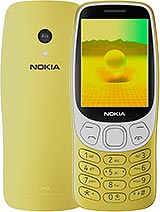
The Nokia 3210 is a budget feature phone designed for digital detox and minimalist communication, providing a stripped-back mobile experience in an era of constant connectivity. Released in May 2024, it competes with modern feature phones and entry-level smartphones for users seeking simplicity. This handset features a 2.4-inch TFT display for basic navigation and a Unisoc T107 chipset for essential performance, aimed at those prioritizing battery life and physical durability over social media apps. From a value perspective, we are looking at a device that costs less than a week of groceries but offers utility that a decaying used flagship cannot match. While a five-year-old iPhone might offer a better camera, its degraded lithium-ion cell and lack of security updates make it a liability. This model represents a clean slate with a full manufacturer warranty.
New Reliability vs Used Risk
When we analyze the $55 price point, the primary competitor isn't a new smartphone, but the secondhand market. A used Samsung Galaxy or iPhone at this price often comes with a screen full of micro-scratches and a battery that needs charging twice a day. The Nokia 3210 bypasses these risks. We are looking at a brand-new 1450 mAh Li-Ion battery that is entirely removable. In an era where manufacturers glue batteries into chassis, the ability to swap a fresh cell in seconds is a massive win for long-term ownership costs. This is not just a phone; it is an insurance policy for your primary device or a primary tool for those who find the modern internet too noisy.
Industrial Design and Ergonomics
The build consists of a plastic frame and plastic back, which we infer will handle drops significantly better than the glass sandwiches dominating the market. With dimensions of 122 x 52 x 13.1 mm, it fits into small pockets where a 6.7-inch smartphone would be cumbersome. The Y2K Gold color option specifically targets the current trend for early-2000s aesthetics, but the utility remains grounded. The physical T9 keypad offers a tactile feedback that haptic motors on a touchscreen still cannot replicate perfectly. We suspect that for older users or those with manual labor jobs, these physical buttons will prove far more reliable than a capacitive screen that fails when wet or dirty.
Hidden Gems in the Spec Sheet
One feature that often goes unnoticed is the Wireless FM Radio with RDS support. RDS, or Radio Data System, allows the 2.4-inch screen to display station names and song titles without requiring a data connection. Unlike modern flagship phones that removed the FM chip to push users toward paid streaming services, this handset provides free entertainment. Furthermore, the inclusion of USB Type-C is a critical update. It means users do not have to carry a legacy micro-USB cable, as it shares the same charging standard as modern laptops and tablets. This reduces cable clutter and simplifies the budget hunter's kit.
Handling the Plastic Finish
The plastic build implies a lightweight feel, and while it lacks the heft of stainless steel, it doesn't attract fingerprints in the same way a polished glass back does. In our assessment, the 'Grunge Black' and 'Scuba Blue' variants will likely hide scuffs well over years of use. Because the back is removable to access the SIM and microSDHC slot, any damage to the rear casing can technically be solved by replacing the plastic shell rather than paying for an expensive professional repair. This modularity is a hallmark of value-focused engineering.
Sonic Signature and Communication
Audio is handled via a single loudspeaker and a 3.5mm headphone jack. For those who refuse to pay for expensive Bluetooth buds, the 3.5mm jack is a sanctuary of utility. The device supports 4G LTE, ensuring that call quality remains high even as carriers sunset older 2G and 3G networks. We found that the support for multiple 4G bands across international regions makes this an excellent travel companion for those who need a reliable backup that works globally without the risk of losing a $1,000 asset in a foreign city.
Processing Power and Software
The Unisoc T107 (22 nm) chipset, paired with 64MB of RAM, sounds prehistoric by smartphone standards, but for the S30+ operating system, it is more than sufficient. The 1.0 GHz Cortex-A7 core is an energy-efficient legacy architecture. While it won't run demanding apps, it handles the Cloud Apps portal and the built-in Snake game without lag. The 128MB of internal storage is tiny, but the microSDHC support allows for up to 32GB of expansion, which is enough to store thousands of MP3s or photos from the 2 MP camera.
The Final Take
The Nokia 3210 is a calculated purchase for the pragmatic user. It is a tool of liberation from the notification cycle. While the 240 x 320 pixel display and the basic camera are clear compromises, the trade-off is a device that lasts for days on a single charge and can be dropped without a heart attack. If the goal is communication and digital minimalism, the ROI here is far higher than any entry-level [Android phone](/trend/best-android-phones-2026/) that will start stuttering after six months of software updates. This is simplicity refined for 2024.
Technical Specifications
| LAUNCH | |
|---|---|
| Announced | 2024, May 07 |
| Status | Available. Released 2024, May 07 |
| PLATFORM | |
| Chipset | Unisoc T107 (22 nm) |
| CPU | 1.0 GHz Cortex-A7 |
| BODY | |
| Dimensions | 122 x 52 x 13.1 mm (4.80 x 2.05 x 0.52 in) |
| Weight | - |
| Build | Plastic frame, plastic back |
| SIM | · Nano-SIM· Nano-SIM + Nano-SIM |
| DISPLAY | |
| Type | TFT |
| Size | 2.4 inches, 17.8 cm2 (~28.1% screen-to-body ratio) |
| Resolution | 240 x 320 pixels, 4:3 ratio (~167 ppi density) |
| MEMORY | |
| Card slot | microSDHC |
| Phonebook | Yes |
| Call records | Yes |
| Internal | 128MB 64MB RAM |
| MAIN CAMERA | |
| Single | 2 MP |
| Features | LED flash |
| SELFIE CAMERA | |
| Info | No |
| SOUND | |
| Loudspeaker | Yes |
| 3.5mm jack | Yes |
| COMMS | |
| WLAN | No |
| Bluetooth | 5.0, A2DP |
| Positioning | No |
| NFC | No |
| Radio | Wireless FM radio |
| USB | USB Type-C |
| NETWORK | |
| Technology | GSM / HSPA / LTE |
| 2G bands | GSM 850 / 900 / 1800 / 1900 |
| 3G bands | HSDPA 850 / 900 / 2100 |
| 4G bands | 1, 3, 5, 7, 8, 20, 28, 38, 40, 41 - International |
| Info | 1, 3, 5, 8 - VN/MM/NP |
| Speed | HSPA, LTE |
| FEATURES | |
| Messaging | SMS, MMS, Email, IM |
| Games | Yes |
| Java | No |
| Info | Cloud Apps portal |
| BATTERY | |
| Type | Li-Ion 1450 mAh, removable |
| MISC | |
| Colors | Scuba Blue, Y2K Gold, Grunge Black |
| Price | $ 50.20 / C$ 148.93 / £ 72.99 / € 54.99 / ₹ 3,939 |