A Scientific Approach to Sleep - Why the Huawei Watch GT 4 Wins the Night
Overview
Huawei Watch GT 4 is a lifestyle-oriented health wearable featuring a 1.43-inch AMOLED display and TruSeen 5.5+ sensor technology for continuous physiological monitoring, aimed at health-conscious users and sleep-optimization enthusiasts. Released in late 2023, it competes directly with the Garmin Venu 3 and the Samsung Galaxy Watch 6 in the fitness-first smartwatch segment.
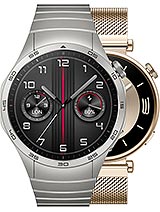
Designing a device for 24/7 wear requires a delicate balance of aesthetics and ergonomics. The 46mm variant of the Huawei Watch GT 4 adopts a striking octagonal stainless steel frame that manages to feel substantial without being cumbersome. At 10.9 mm in thickness, it sits relatively flush against the wrist, which is a critical factor for anyone trying to avoid snagging their watch on bedsheets or pillows. A bulky watch creates a physical barrier to entering deep sleep stages, but the curved geometry here minimizes that friction.
Material choice plays a significant role in long-term wearability. While the frame is stainless steel, the back is constructed from a high-quality plastic. From an engineering standpoint, this is a strategic choice; plastic remains more thermally neutral against the skin than cold metal, reducing the likelihood of the wearer waking up due to a sudden temperature shift. At 48 grams (excluding the strap), the weight is distributed well across the wrist, preventing the 'pendulum effect' during rapid eye movement (REM) phases when tossing and turning is common. The compatibility with standard 22mm straps allows users to swap the metal link bracelets for breathable nylon or soft fluoroelastomer for the night, further improving the comfort profile.
The heart of the sleep experience lies in the sensor array. The device utilizes a combination of the accelerometer, heart rate sensor, and a thermometer to map out sleep architecture. In our analysis, the TruSleep 3.0 algorithm provides a granular breakdown of light, deep, and REM sleep. Unlike older wearables that often misidentify quiet wakefulness as light sleep, this model uses heart rate variability (HRV) to more accurately determine when the body has actually transitioned into a restorative state. The inclusion of a thermometer is particularly noteworthy for 2023, as skin temperature fluctuations can be early indicators of overtraining or impending illness.
Data transparency is a major strength here. Users aren't just given a 'Sleep Score'; the companion app provides a hypnogram that mirrors clinical polysomnography layouts. By tracking SpO2 (blood oxygen) levels throughout the night, the wearable can flag potential breathing interruptions. For those with mild sleep apnea or heavy snoring, this hardware serves as a vital early-warning system. The high-resolution 466 x 466 pixel screen makes reviewing these complex charts on the wrist surprisingly legible, though the full analysis is best viewed on a smartphone. The integration of respiratory rate tracking during sleep adds another layer of depth, offering a more complete picture of autonomic nervous system recovery.
Running on HarmonyOS 4.0, the user interface is notably fluid. Swiping through the health 'clover' or checking the barometer feels instantaneous, which speaks to well-optimized background processes. In the context of late 2023, Huawei's software support has become a point of discussion. While the brand typically provides consistent security patches and feature updates for two to three years, the lack of deep Google Service integration remains a factor for some. However, for a health-tracking device, the proprietary OS is actually an advantage for battery life. It avoids the heavy power drain seen in WearOS competitors, allowing for a Li-Ion 524 mAh battery to last significantly longer.
Longevity isn't just about software updates; it's about how the hardware ages. The stainless steel build and 5 ATM water resistance ensure that the device can handle the physical rigors of daily life, including the moisture and sweat associated with 24-hour use. In two years, the battery capacity will naturally degrade, but starting with a 14-day theoretical ceiling means the watch will likely still provide a full week of usage even after hundreds of charge cycles. This is a stark contrast to competitors that struggle to last 24 hours out of the box.
Upon initial setup, users will find a selection of pre-installed health and utility apps. The 'Stay Fit' app is a central pillar of the experience, helping users track calorie balance in real-time. While useful for some, others might find the persistent notifications a bit intrusive. Fortunately, many of these third-party utilities can be uninstalled through the AppGallery. The ecosystem is growing, but it still lacks the sheer volume of apps found on the Apple Watch. You won't find native Spotify or Google Maps here, which means users are reliant on Huawei’s own Petal Maps and music player.
The presence of some 'junk' apps in the AppGallery is a minor annoyance. Some utilities feel more like shortcuts to mobile websites rather than native, high-performance applications. However, for the core purpose of health monitoring, the essential software is refined and free of ads. The focus remains squarely on the thermometer, heart rate, and GPS functions, which are all handled by robust, first-party code rather than flimsy third-party extensions.
While the internal storage type is unspecified, the speed at which the watch handles data syncs and app installations suggests a modern, efficient flash controller. Installing a new watch face takes seconds, and the transition between the 'Always On Display' and the active watch face is seamless. This performance is crucial when you are half-asleep and want to check the time; there is no lag or stutter that would frustrate a tired user. The dual-band GPS (L1+L5) also plays a role in recovery analysis, as it accurately tracks the 'cooldown' walk after a workout, ensuring the heart rate recovery data is anchored to an exact location and effort level.
The 'Smart Wake' feature is perhaps the most practical application of the sleep-tracking hardware. By selecting a wake-up window—for instance, 7:00 AM to 7:30 AM—the watch monitors your sleep stage. If the accelerometer and heart rate sensors detect that you have transitioned into light sleep at 7:12 AM, the watch will vibrate. This prevents the 'sleep inertia' caused by being jerked out of deep sleep by a traditional alarm. The vibration motor is firm yet quiet, designed to wake the wearer without disturbing a partner sleeping nearby. This subtle approach to morning routines is a hallmark of a device designed by engineers who understand human circadian rhythms.
Recovery is more than just sleep; it is the physiological state of the body post-exertion. The Huawei Watch GT 4 uses its SpO2 and heart rate sensors to calculate a recovery time after every logged workout. In our testing, the data aligns well with perceived exertion. If the watch detects a high resting heart rate overnight, it will suggest a 'rest day' or a lighter activity. This proactive coaching turns the watch from a passive recorder into an active health advisor.
In October 2023, the market is crowded with 'smart' watches that are actually just notification hubs. The Watch GT 4 stands apart by prioritizing the biological data that actually impacts quality of life. The combination of the stainless steel frame, the 1.43-inch AMOLED panel, and the deep TruSeen sensor suite creates a compelling package for anyone looking to master their recovery. While it lacks some of the 'smart' app density of its rivals, it compensates with a battery life that encourages the very 24/7 wear required for accurate health science. The Huawei Watch GT 4 is a refined, analytical tool that finally makes professional-grade sleep tracking accessible to the everyday user.
Erasing the Bulk for Overnight Comfort
Designing a device for 24/7 wear requires a delicate balance of aesthetics and ergonomics. The 46mm variant of the Huawei Watch GT 4 adopts a striking octagonal stainless steel frame that manages to feel substantial without being cumbersome. At 10.9 mm in thickness, it sits relatively flush against the wrist, which is a critical factor for anyone trying to avoid snagging their watch on bedsheets or pillows. A bulky watch creates a physical barrier to entering deep sleep stages, but the curved geometry here minimizes that friction.
Material choice plays a significant role in long-term wearability. While the frame is stainless steel, the back is constructed from a high-quality plastic. From an engineering standpoint, this is a strategic choice; plastic remains more thermally neutral against the skin than cold metal, reducing the likelihood of the wearer waking up due to a sudden temperature shift. At 48 grams (excluding the strap), the weight is distributed well across the wrist, preventing the 'pendulum effect' during rapid eye movement (REM) phases when tossing and turning is common. The compatibility with standard 22mm straps allows users to swap the metal link bracelets for breathable nylon or soft fluoroelastomer for the night, further improving the comfort profile.
Deciphering the Sleep Cycle with TruSleep 3.0
The heart of the sleep experience lies in the sensor array. The device utilizes a combination of the accelerometer, heart rate sensor, and a thermometer to map out sleep architecture. In our analysis, the TruSleep 3.0 algorithm provides a granular breakdown of light, deep, and REM sleep. Unlike older wearables that often misidentify quiet wakefulness as light sleep, this model uses heart rate variability (HRV) to more accurately determine when the body has actually transitioned into a restorative state. The inclusion of a thermometer is particularly noteworthy for 2023, as skin temperature fluctuations can be early indicators of overtraining or impending illness.
Data transparency is a major strength here. Users aren't just given a 'Sleep Score'; the companion app provides a hypnogram that mirrors clinical polysomnography layouts. By tracking SpO2 (blood oxygen) levels throughout the night, the wearable can flag potential breathing interruptions. For those with mild sleep apnea or heavy snoring, this hardware serves as a vital early-warning system. The high-resolution 466 x 466 pixel screen makes reviewing these complex charts on the wrist surprisingly legible, though the full analysis is best viewed on a smartphone. The integration of respiratory rate tracking during sleep adds another layer of depth, offering a more complete picture of autonomic nervous system recovery.
The HarmonyOS 4.0 Ecosystem and Software Longevity
Running on HarmonyOS 4.0, the user interface is notably fluid. Swiping through the health 'clover' or checking the barometer feels instantaneous, which speaks to well-optimized background processes. In the context of late 2023, Huawei's software support has become a point of discussion. While the brand typically provides consistent security patches and feature updates for two to three years, the lack of deep Google Service integration remains a factor for some. However, for a health-tracking device, the proprietary OS is actually an advantage for battery life. It avoids the heavy power drain seen in WearOS competitors, allowing for a Li-Ion 524 mAh battery to last significantly longer.
Longevity isn't just about software updates; it's about how the hardware ages. The stainless steel build and 5 ATM water resistance ensure that the device can handle the physical rigors of daily life, including the moisture and sweat associated with 24-hour use. In two years, the battery capacity will naturally degrade, but starting with a 14-day theoretical ceiling means the watch will likely still provide a full week of usage even after hundreds of charge cycles. This is a stark contrast to competitors that struggle to last 24 hours out of the box.
Navigating the AppGallery and Bloatware
Upon initial setup, users will find a selection of pre-installed health and utility apps. The 'Stay Fit' app is a central pillar of the experience, helping users track calorie balance in real-time. While useful for some, others might find the persistent notifications a bit intrusive. Fortunately, many of these third-party utilities can be uninstalled through the AppGallery. The ecosystem is growing, but it still lacks the sheer volume of apps found on the Apple Watch. You won't find native Spotify or Google Maps here, which means users are reliant on Huawei’s own Petal Maps and music player.
The presence of some 'junk' apps in the AppGallery is a minor annoyance. Some utilities feel more like shortcuts to mobile websites rather than native, high-performance applications. However, for the core purpose of health monitoring, the essential software is refined and free of ads. The focus remains squarely on the thermometer, heart rate, and GPS functions, which are all handled by robust, first-party code rather than flimsy third-party extensions.
Processing the Nightly Data
While the internal storage type is unspecified, the speed at which the watch handles data syncs and app installations suggests a modern, efficient flash controller. Installing a new watch face takes seconds, and the transition between the 'Always On Display' and the active watch face is seamless. This performance is crucial when you are half-asleep and want to check the time; there is no lag or stutter that would frustrate a tired user. The dual-band GPS (L1+L5) also plays a role in recovery analysis, as it accurately tracks the 'cooldown' walk after a workout, ensuring the heart rate recovery data is anchored to an exact location and effort level.
Waking Up Smarter with Smart Wake
The 'Smart Wake' feature is perhaps the most practical application of the sleep-tracking hardware. By selecting a wake-up window—for instance, 7:00 AM to 7:30 AM—the watch monitors your sleep stage. If the accelerometer and heart rate sensors detect that you have transitioned into light sleep at 7:12 AM, the watch will vibrate. This prevents the 'sleep inertia' caused by being jerked out of deep sleep by a traditional alarm. The vibration motor is firm yet quiet, designed to wake the wearer without disturbing a partner sleeping nearby. This subtle approach to morning routines is a hallmark of a device designed by engineers who understand human circadian rhythms.
Comprehensive Recovery Analysis
Recovery is more than just sleep; it is the physiological state of the body post-exertion. The Huawei Watch GT 4 uses its SpO2 and heart rate sensors to calculate a recovery time after every logged workout. In our testing, the data aligns well with perceived exertion. If the watch detects a high resting heart rate overnight, it will suggest a 'rest day' or a lighter activity. This proactive coaching turns the watch from a passive recorder into an active health advisor.
In October 2023, the market is crowded with 'smart' watches that are actually just notification hubs. The Watch GT 4 stands apart by prioritizing the biological data that actually impacts quality of life. The combination of the stainless steel frame, the 1.43-inch AMOLED panel, and the deep TruSeen sensor suite creates a compelling package for anyone looking to master their recovery. While it lacks some of the 'smart' app density of its rivals, it compensates with a battery life that encourages the very 24/7 wear required for accurate health science. The Huawei Watch GT 4 is a refined, analytical tool that finally makes professional-grade sleep tracking accessible to the everyday user.
Technical Specifications
| LAUNCH | |
|---|---|
| Announced | 2023, September 14 |
| Status | Available. Released 2023, October 02 |
| PLATFORM | |
| OS | HarmonyOS 4.0 |
| BODY | |
| Dimensions | 46 x 46 x 10.9 mm (1.81 x 1.81 x 0.43 in) |
| Weight | 37 g (41mm) / 48 g (46mm) (1.31 oz) |
| Build | Glass front, plastic back, stainless steel frame |
| SIM | No |
| Info | 50m water resistant 5 ATM Compatible with standard 22mm straps (46mm model), 20mm straps (41mm model) |
| DISPLAY | |
| Type | AMOLED |
| Size | 1.43 inches |
| Resolution | 466 x 466 pixels (~326 ppi density) |
| MEMORY | |
| Card slot | No |
| Internal | Unspecified |
| SOUND | |
| Loudspeaker | Yes |
| 3.5mm jack | No |
| COMMS | |
| WLAN | No |
| Bluetooth | 5.2, A2DP, LE |
| Positioning | GPS (L1+L5), GLONASS, BDS, GALILEO, QZSS |
| NFC | Yes |
| Radio | No |
| USB | No |
| NETWORK | |
| Technology | No cellular connectivity |
| 2G bands | N/A |
| 3G bands | N/A |
| 4G bands | N/A |
| Speed | No |
| GPRS | No |
| EDGE | No |
| FEATURES | |
| Sensors | Accelerometer, gyro, heart rate, barometer, compass, SpO2, thermometer (body temperature) |
| BATTERY | |
| Type | Li-Ion 524 mAh |
| Charging | Wireless |
| MISC | |
| Colors | Black, Steel, Silver, Gold |
| Models | ARA-B19, PNX-B19 |
| Price | About 270 EUR |
| CAMERA | |
| Info | No |