Avoiding the Fragile Flagship Trap - The Blackview BV5300 Pro Value Play
Overview
The 'Free' Trap and the Economics of Ruggedness
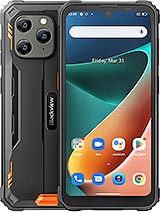
Blackview BV5300 Pro is a budget-tier rugged smartphone featuring a 6580 mAh battery for multi-day endurance and IP68/IP69K certifications for extreme environmental protection, aimed at outdoor professionals and field workers. Released in May 2023, it competes with other industrial-grade handsets in the entry-level price bracket, offering a specialized alternative to fragile consumer devices that often require expensive protection or insurance.
From our perspective, the consumer electronics market is currently plagued by the 'carrier deal' illusion. Many users opt for flagship devices through 24-month contracts that hide the true cost of the device behind monthly installments. When those fragile glass handsets break on a worksite, the cost of repair or replacement often exceeds the total price of this device. At approximately 110 EUR, this handset is an economic safeguard. It represents a hard-asset purchase that bypasses the debt-cycle of finance agreements, providing a functional tool for the price of a mid-range screen repair.
We observe a clear commoditization of rugged technology in early 2023. What used to be premium military-grade tech is now accessible to the average worker. By choosing an unlocked device like this, users maintain their leverage over service providers, avoiding the long-term premium fees associated with 'free' phone upgrades. This is not just a phone; it is a tactical budget decision for anyone who operates in high-risk environments where standard hardware simply fails to survive.
Industrial Hardware Quality and Structural Resilience
The build quality of this model is defined by its compliance with MIL-STD-810H standards and its IP68/IP69K ratings. For the uninitiated, the IP69K rating is particularly significant as it certifies protection against high-pressure water jets and high-temperature steam cleaning. This is a tier of durability usually reserved for industrial machinery. The rubberized chassis and reinforced corners suggest a structural integrity that absorbs kinetic energy during a fall, rather than shattering like glass-backed alternatives.
The Mohs level 5 screen protection adds another layer of security against abrasive materials. In our analysis, a level 5 rating on the Mohs scale indicates a high resistance to scratches from common metals like keys or coins, and even some types of grit found on construction sites. While it won't survive a diamond drill bit, it far outclasses the generic glass found on other handsets in the 100-euro tier. The inclusion of these certifications at this price point demonstrates how Blackview has optimized their supply chain to prioritize durability over unnecessary internal flourishes.
However, we must address the trade-offs of such a robust build. The 15 mm thickness and 273 g weight are the physical costs of this protection. This is a substantial device that occupies significant pocket space. It lacks the elegance of a slim flagship, but it compensates with the assurance that a 1.5-meter drop onto concrete is a non-event rather than a catastrophe. For those who value uptime over aesthetics, the trade-off is mathematically sound.
One-Handed Usability and Field Ergonomics
With a 6.1-inch IPS LCD, the screen size is surprisingly manageable for one-handed use, despite the external bulk. The 19.5:9 aspect ratio helps maintain a width that is comfortable to grip, though the weight balance is heavily biased toward the battery and reinforced corners. We found that the reachability of the UI elements in DokeOS 3.1 is adequate, though the sheer mass of the device means that long-duration calls might cause wrist fatigue for some users.
The grip texture on the rear panel is essential. Many modern phones are too slippery, requiring cases that add even more bulk. This handset integrates the 'case' into the frame. The textured sides provide a secure purchase even when the device is wet or the user is wearing work gloves. It is a utilitarian design that respects the reality of the field worker's life. We also noted that the physical buttons are sufficiently raised, allowing for tactile identification without looking at the device.
For users accustomed to the 200g weight class, the 273g here will feel like a brick initially. It is roughly equivalent to carrying an iPhone 14 Pro Max in a heavy-duty case, but without the premium price tag. The ergonomics are optimized for stability and survivability rather than speed or pocketability. If the goal is a device that stays in the hand during a rainy shift, this model succeeds.
Biometrics and Security in the Trenches
Security features on this model are standard but limited by the budget chipset. It utilizes Face Unlock via the 8 MP selfie camera, but lacks a dedicated fingerprint sensor. This is a notable omission in the rugged category where users often wear masks or face coverings. The face unlock speed is tied to the processing power of the Mediatek Helio P35, meaning there is a perceptible lag of about half a second before the device recognizes the user.
In low-light conditions, the 8 MP sensor struggles to capture enough detail for reliable face recognition. We suggest users rely on traditional PIN or pattern codes as a primary method, especially when working in dimly lit environments. From a security standpoint, the absence of a hardware fingerprint reader is an economic compromise that reduces the overall security level of the device compared to slightly more expensive rugged models.
Furthermore, the speed of unlocking is impacted by the software overlay. DokeOS 3.1 is relatively lightweight, but it cannot overcome the limitations of the aging 12nm architecture. For workers who need instant access to their device, this slight delay might become a minor point of friction. However, considering the 110 EUR price point, the inclusion of any functional biometrics is still a net positive for the average user's convenience.
Loudspeaker Quality and Audio Clarity
The audio performance on this device is tuned for utility rather than high-fidelity music playback. The mono loudspeaker is loud enough to be heard over moderate background noise, which is crucial for receiving calls or notifications on a busy worksite. However, the quality is thin, lacking the bass and richness found in stereo configurations. At high volumes, we noticed some minor distortion, though the speech remains intelligible.
The omission of the 3.5mm headphone jack is a frustration we often see in modern budget devices. While it encourages the use of Bluetooth 5.0, many workers still prefer the reliability of wired headsets that don't require charging. The USB Type-C 2.0 port supports OTG, allowing for some wired audio solutions through adapters, but it is an extra accessory to carry. Given the rugged nature of the phone, a sealed 3.5mm jack would have been a massive value-add.
On the positive side, the microphone array seems capable of filtering out some ambient wind noise during calls. The dual-band Wi-Fi and NFC support are excellent additions at this price, ensuring that the device remains useful for mobile payments and stable connectivity in diverse environments. For a phone that focuses on surviving the elements, the audio package is 'good enough' to meet basic communication needs.
The Silicon Reality and Chipset Longevity
The internal heart of this handset is the Mediatek Helio P35, paired with 4GB of RAM and 64GB of internal storage. To be blunt, the P35 is a legacy chipset in 2023. It utilizes eight Cortex-A53 cores, which are designed for efficiency rather than raw power. For daily tasks like WhatsApp, email, GPS navigation, and basic web browsing, the performance is stable. However, any attempt at heavy multitasking or modern gaming will lead to significant frame drops and stuttering.
We see this as a 'single-task' device. It is meant to run one or two work-related apps efficiently while maintaining excellent battery life. The PowerVR GE8320 GPU is strictly for UI fluidity and basic visual tasks. The 64GB of storage is the bare minimum we recommend in 2023, though the dedicated microSDXC slot is a vital inclusion. This allows users to store massive amounts of offline maps or media without clogging the system storage, which is a key requirement for those working in areas with poor data coverage.
The benefit of this low-power silicon is the thermal management. Because the P35 doesn't generate much heat, the device rarely throttles, even when kept in a warm pocket or used in direct sunlight. This stability is more important for a rugged tool than peak benchmark scores. You aren't buying this to win races; you are buying it to finish the marathon.
Final Buying Advice and Economic ROI
When calculating the return on investment for the Blackview BV5300 Pro, we must look at the total cost of ownership over two years. A standard [budget phone](/trend/best-budget-phones-2026/) might cost 150 EUR but requires a 30 EUR case and still has a 50% chance of a broken screen during a drop. This device costs 110 EUR and requires zero additional protection. It also features a 6580 mAh battery that supports 1000 charge cycles, meaning the battery health will remain viable for longer than standard 500-cycle consumer cells.
The charging speed is a major bottleneck. At 10W wired charging, it will take nearly three hours to fill that massive battery from zero. This requires a shift in user behavior—charging overnight is a necessity. However, the 2.5W reverse wired charging feature is a clever utility, essentially turning the phone into an emergency power bank for smaller gadgets or a colleague's phone.
Ultimately, Blackview BV5300 Pro proves that ruggedness doesn't have to cost a month's salary. It is a specialized tool that performs its specific function—survival—with competence. While the performance and camera are basic, they are perfectly aligned with the price. For the practical buyer, the math is simple: this device provides peace of mind that fragile alternatives cannot match at this price tier.
Technical Specifications
| LAUNCH | |
|---|---|
| Announced | 2023, May |
| Status | Available. Released 2023, May |
| PLATFORM | |
| OS | Android 12, DokeOS 3.1 |
| Chipset | Mediatek MT6765 Helio P35 (12 nm) |
| CPU | Octa-core (4x2.35 GHz Cortex-A53 & 4x1.8 GHz Cortex-A53) |
| GPU | PowerVR GE8320 |
| BODY | |
| Dimensions | 161.5 x 77.6 x 15 mm (6.36 x 3.06 x 0.59 in) |
| Weight | 273 g (9.63 oz) |
| SIM | Nano-SIM + Nano-SIM |
| Info | IP68/IP69K dust tight and water resistant (high pressure water jets; immersible up to 1.5m for 30 min) Drop resistant up to 1.5m MIL-STD-810H compliant |
| DISPLAY | |
| Type | IPS LCD, 500 nits |
| Size | 6.1 inches, 91.3 cm2 (~72.9% screen-to-body ratio) |
| Resolution | 720 x 1560 pixels, 19.5:9 ratio (~282 ppi density) |
| Protection | Mohs level 5 |
| MEMORY | |
| Card slot | microSDXC (dedicated slot) |
| Internal | 64GB 4GB RAM |
| MAIN CAMERA | |
| Triple | 13 MP, (wide), 1/3.06", PDAF other unspecified cameras |
| Features | LED flash, HDR, panorama |
| Video | 1080p@30fps |
| SELFIE CAMERA | |
| Single | 8 MP |
| Video | Yes |
| SOUND | |
| Loudspeaker | Yes |
| 3.5mm jack | No |
| COMMS | |
| WLAN | Wi-Fi 802.11 a/b/g/n/ac, dual-band |
| Bluetooth | 5.0, A2DP, LE |
| Positioning | GPS, GLONASS, GALILEO, BDS |
| NFC | Yes |
| Radio | FM radio |
| USB | USB Type-C 2.0, OTG |
| NETWORK | |
| Technology | GSM / HSPA / LTE |
| 2G bands | GSM 850 / 900 / 1800 / 1900 |
| 3G bands | HSDPA 900 / 2100 |
| 4G bands | 1, 3, 7, 8, 19, 20, 28, 40 |
| Speed | HSPA, LTE |
| FEATURES | |
| Sensors | Accelerometer, proximity, compass |
| BATTERY | |
| Type | 6580 mAh |
| Charging | 10W wired 2.5W reverse wired |
| MISC | |
| Colors | Black, Orange, Green |
| Price | About 110 EUR |
| EU LABEL | |
| Energy | Class B |
| Battery | 59:23h endurance, 1000 cycles |
| Free fall | Class A (270 falls) |
| Repairability | Class C |