Battery Endurance Outshines Price - Why the Oscal Modern 8 Is the New Budget Champion
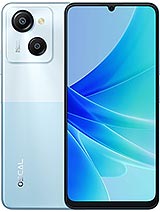
Overview
The Oscal Modern 8 is an entry-level smartphone featuring a 6000 mAh battery for extreme longevity and 8GB of RAM for efficient multitasking. Released in May 2024, it competes with other high-value devices like the Redmi 13C and Moto G24 by offering superior power capacity and higher base memory configurations for the sub-100 EUR segment.
We rarely see a battery of this scale in this price bracket. While most competitors stick to the 5000 mAh standard, this handset pushes the boundary by including a cell that is 20% larger than the industry average. This extra volume translates into real-world utility for users who are away from a wall socket for extended periods. For delivery drivers or hikers, this capacity provides a significant safety net. In our analysis of the hardware efficiency, the combination of a low-resolution 720p screen and the 12nm chipset allows this model to likely stretch into a third day of light usage. It's a logistical win for the budget-conscious consumer who values uptime over peak performance.
However, there is a bottleneck to consider regarding the 18W charging speed. A 6000 mAh tank is large, and filling it at 18W is a slow process. To put this in perspective, a full charge from zero to 100% will likely take over two and a half hours. This isn't a device meant for quick mid-day top-ups; it's a device meant to be charged overnight. The tradeoff for having such a massive power reservoir is the patience required to replenish it. Compared to the previous generation, which often featured smaller batteries and even slower 10W charging, this is still a step in the right direction for the series.
Under the hood, the device utilizes the Unisoc Tiger T616 chipset. This is an octa-core processor built on a 12nm process. It features two performance-oriented Cortex-A75 cores and six efficiency-focused Cortex-A55 cores. For those unfamiliar with ARM architecture, the A75 cores are responsible for handling heavy lifting, like opening complex web pages or switching between apps, while the A55 cores handle background tasks to save energy. In May 2024, this chipset remains a stable choice for budget hardware, though it's clearly outclassed by the 6nm Snapdragon or Helio G99 chips found in slightly more expensive phones.
Graphics are handled by the Mali-G57 MP1. This is a single-core GPU configuration designed for basic 3D tasks. Imagine trying to play modern titles like Genshin Impact; the experience will likely be characterized by low frame rates and reduced graphical fidelity. However, for casual titles like Subway Surfers or Candy Crush, the hardware performs admirably. The real highlight here is the 8GB of physical RAM. Having this much memory at this price point prevents the aggressive closing of background apps, which is a common frustration on [budget phones](/trend/best-budget-phones-2026/) with only 4GB of RAM.
The screen is a 6.75-inch IPS LCD. IPS technology stands for In-Plane Switching, which allows for better viewing angles and more accurate colors compared to older TN panels. At this size, the 720 x 1600 resolution results in a pixel density of roughly 260 ppi. To the discerning eye, this means text might appear slightly soft, and fine details in high-definition video won't be as sharp as they would on a 1080p panel. It's a clear cost-cutting measure, but one that helps extend that massive battery life.
Surprisingly, the manufacturer included a 90Hz refresh rate. In the current market, 60Hz is still common in ultra-budget tiers. The 90Hz upgrade means the screen updates 90 times per second rather than 60, making animations and scrolling through social media feeds look significantly smoother. While the chipset might occasionally struggle to maintain a constant 90 frames per second during heavy multitasking, the inclusion of this feature elevates the user experience above many of its rivals that still feel sluggish due to standard refresh rates.
Software-wise, the device runs DokeOS 4 based on Android 13. One of the highlights is the inclusion of a dedicated Workspace Mode. This allows users to separate their work apps and personal data into two distinct virtual environments, enhancing privacy for those who use their phone for professional purposes. The system also includes a privacy dashboard, which provides a clear view of which apps have accessed the microphone, camera, or location in the last 24 hours. These indicators are crucial for maintaining digital security in an era where data harvesting is prevalent.
Biometric security is handled by a side-mounted fingerprint sensor integrated into the power button. This placement is generally preferred over rear-mounted sensors as it allows for unlocking the phone while it is sitting flat on a desk. Additionally, the software includes an 'Offline Finding' capability inherent to the Android ecosystem, though it lacks the advanced hardware-based UWB (Ultra-Wideband) tracking found in flagships. For a 100 EUR device, the security suite is comprehensive and meets modern standards for data protection.
The internal storage options are generous, offering up to 256GB. While the exact UFS version isn't specified, the T616 chipset typically supports UFS 2.1 or 2.2, which offers significantly faster read and write speeds than the older eMMC storage found in many cheaper handsets. Faster storage means apps install quicker and the phone feels more responsive when loading large files or photos. This makes a tangible difference in daily use, reducing the 'hang time' when you tap an icon.
One major advantage for budget-conscious users is the dedicated microSDXC slot. Unlike many modern phones that force you to choose between a second SIM card or more storage, this model allows you to use two Nano-SIMs and a memory card simultaneously. This is ideal for users who consume a lot of offline media, such as downloaded movies or large music libraries, as you can add up to 1TB of additional space without relying on expensive cloud subscriptions. It's a practical inclusion that highlights the value-first philosophy of the series.
This is a 4G LTE device, supporting a wide range of global bands including 1, 3, 7, 8, 20, and 40. In many regions, particularly Southeast Asia, support for Band 1, 3, 8, and 40 is essential for a stable connection on major operators. Band 40, in particular, is used for high-capacity data in urban areas, ensuring that the handset maintains respectable download speeds even in crowded environments. The 12nm modem is reliable, though it lacks the blazing-fast speeds and low latency of newer 5G alternatives.
WiFi and Bluetooth connectivity are present, though it lacks the newest WiFi 6 or 7 standards. For the average home user with a standard router, this won't be an issue. The presence of a 3.5mm headphone jack is another nod to the budget audience. It allows for the use of inexpensive wired headphones, avoiding the latency issues and charging requirements of wireless buds. It's these small, legacy features that often make budget phones more versatile for everyday users than their 'courageous' flagship counterparts.
The target audience for this device is quite specific. It is an ideal secondary phone for travelers who need a reliable GPS and a battery that won't die mid-journey. It's also a strong contender for students or teenagers who need a large screen for media consumption but don't require high-end gaming performance. The ruggedness implied by its 214g weight and 9.1mm thickness suggests it can handle a bit more daily abuse than thinner, more fragile devices.
Delivery drivers and gig workers will find the most value here. The ability to run navigation apps for an entire 8-10 hour shift without needing a car charger is a rare luxury in this price segment. While it isn't a photography powerhouse, the 50MP main sensor is more than adequate for scanning documents, taking quick reference photos, or capturing casual memories in well-lit environments. It's a utility tool first and a lifestyle accessory second.
The Oscal Modern 8 successfully carves out a niche by focusing on what budget users actually need: battery life and enough RAM to keep the system moving. It doesn't pretend to be a flagship, and it doesn't waste money on gimmicky features. By prioritizing a massive 6000 mAh cell and a smooth 90Hz display over a 1080p resolution, the manufacturers have made a smart economic decision that benefits the end-user. At roughly 100 EUR, the hardware package is incredibly competitive, offering a level of longevity that is hard to find elsewhere in the market today. For the value hunter, the Oscal Modern 8 is a sensible, high-endurance choice that delivers on its core promises.
The Massive 6000 mAh Endurance Advantage
We rarely see a battery of this scale in this price bracket. While most competitors stick to the 5000 mAh standard, this handset pushes the boundary by including a cell that is 20% larger than the industry average. This extra volume translates into real-world utility for users who are away from a wall socket for extended periods. For delivery drivers or hikers, this capacity provides a significant safety net. In our analysis of the hardware efficiency, the combination of a low-resolution 720p screen and the 12nm chipset allows this model to likely stretch into a third day of light usage. It's a logistical win for the budget-conscious consumer who values uptime over peak performance.
However, there is a bottleneck to consider regarding the 18W charging speed. A 6000 mAh tank is large, and filling it at 18W is a slow process. To put this in perspective, a full charge from zero to 100% will likely take over two and a half hours. This isn't a device meant for quick mid-day top-ups; it's a device meant to be charged overnight. The tradeoff for having such a massive power reservoir is the patience required to replenish it. Compared to the previous generation, which often featured smaller batteries and even slower 10W charging, this is still a step in the right direction for the series.
Performance Trade-offs with the Unisoc Tiger T616
Under the hood, the device utilizes the Unisoc Tiger T616 chipset. This is an octa-core processor built on a 12nm process. It features two performance-oriented Cortex-A75 cores and six efficiency-focused Cortex-A55 cores. For those unfamiliar with ARM architecture, the A75 cores are responsible for handling heavy lifting, like opening complex web pages or switching between apps, while the A55 cores handle background tasks to save energy. In May 2024, this chipset remains a stable choice for budget hardware, though it's clearly outclassed by the 6nm Snapdragon or Helio G99 chips found in slightly more expensive phones.
Graphics are handled by the Mali-G57 MP1. This is a single-core GPU configuration designed for basic 3D tasks. Imagine trying to play modern titles like Genshin Impact; the experience will likely be characterized by low frame rates and reduced graphical fidelity. However, for casual titles like Subway Surfers or Candy Crush, the hardware performs admirably. The real highlight here is the 8GB of physical RAM. Having this much memory at this price point prevents the aggressive closing of background apps, which is a common frustration on [budget phones](/trend/best-budget-phones-2026/) with only 4GB of RAM.
Display Resolution Versus Smoothness
The screen is a 6.75-inch IPS LCD. IPS technology stands for In-Plane Switching, which allows for better viewing angles and more accurate colors compared to older TN panels. At this size, the 720 x 1600 resolution results in a pixel density of roughly 260 ppi. To the discerning eye, this means text might appear slightly soft, and fine details in high-definition video won't be as sharp as they would on a 1080p panel. It's a clear cost-cutting measure, but one that helps extend that massive battery life.
Surprisingly, the manufacturer included a 90Hz refresh rate. In the current market, 60Hz is still common in ultra-budget tiers. The 90Hz upgrade means the screen updates 90 times per second rather than 60, making animations and scrolling through social media feeds look significantly smoother. While the chipset might occasionally struggle to maintain a constant 90 frames per second during heavy multitasking, the inclusion of this feature elevates the user experience above many of its rivals that still feel sluggish due to standard refresh rates.
Privacy and Security Features
Software-wise, the device runs DokeOS 4 based on Android 13. One of the highlights is the inclusion of a dedicated Workspace Mode. This allows users to separate their work apps and personal data into two distinct virtual environments, enhancing privacy for those who use their phone for professional purposes. The system also includes a privacy dashboard, which provides a clear view of which apps have accessed the microphone, camera, or location in the last 24 hours. These indicators are crucial for maintaining digital security in an era where data harvesting is prevalent.
Biometric security is handled by a side-mounted fingerprint sensor integrated into the power button. This placement is generally preferred over rear-mounted sensors as it allows for unlocking the phone while it is sitting flat on a desk. Additionally, the software includes an 'Offline Finding' capability inherent to the Android ecosystem, though it lacks the advanced hardware-based UWB (Ultra-Wideband) tracking found in flagships. For a 100 EUR device, the security suite is comprehensive and meets modern standards for data protection.
Storage Speed and Expansion Utility
The internal storage options are generous, offering up to 256GB. While the exact UFS version isn't specified, the T616 chipset typically supports UFS 2.1 or 2.2, which offers significantly faster read and write speeds than the older eMMC storage found in many cheaper handsets. Faster storage means apps install quicker and the phone feels more responsive when loading large files or photos. This makes a tangible difference in daily use, reducing the 'hang time' when you tap an icon.
One major advantage for budget-conscious users is the dedicated microSDXC slot. Unlike many modern phones that force you to choose between a second SIM card or more storage, this model allows you to use two Nano-SIMs and a memory card simultaneously. This is ideal for users who consume a lot of offline media, such as downloaded movies or large music libraries, as you can add up to 1TB of additional space without relying on expensive cloud subscriptions. It's a practical inclusion that highlights the value-first philosophy of the series.
Connectivity and Signal Performance
This is a 4G LTE device, supporting a wide range of global bands including 1, 3, 7, 8, 20, and 40. In many regions, particularly Southeast Asia, support for Band 1, 3, 8, and 40 is essential for a stable connection on major operators. Band 40, in particular, is used for high-capacity data in urban areas, ensuring that the handset maintains respectable download speeds even in crowded environments. The 12nm modem is reliable, though it lacks the blazing-fast speeds and low latency of newer 5G alternatives.
WiFi and Bluetooth connectivity are present, though it lacks the newest WiFi 6 or 7 standards. For the average home user with a standard router, this won't be an issue. The presence of a 3.5mm headphone jack is another nod to the budget audience. It allows for the use of inexpensive wired headphones, avoiding the latency issues and charging requirements of wireless buds. It's these small, legacy features that often make budget phones more versatile for everyday users than their 'courageous' flagship counterparts.
Who Is This For?
The target audience for this device is quite specific. It is an ideal secondary phone for travelers who need a reliable GPS and a battery that won't die mid-journey. It's also a strong contender for students or teenagers who need a large screen for media consumption but don't require high-end gaming performance. The ruggedness implied by its 214g weight and 9.1mm thickness suggests it can handle a bit more daily abuse than thinner, more fragile devices.
Delivery drivers and gig workers will find the most value here. The ability to run navigation apps for an entire 8-10 hour shift without needing a car charger is a rare luxury in this price segment. While it isn't a photography powerhouse, the 50MP main sensor is more than adequate for scanning documents, taking quick reference photos, or capturing casual memories in well-lit environments. It's a utility tool first and a lifestyle accessory second.
Final Value Assessment
The Oscal Modern 8 successfully carves out a niche by focusing on what budget users actually need: battery life and enough RAM to keep the system moving. It doesn't pretend to be a flagship, and it doesn't waste money on gimmicky features. By prioritizing a massive 6000 mAh cell and a smooth 90Hz display over a 1080p resolution, the manufacturers have made a smart economic decision that benefits the end-user. At roughly 100 EUR, the hardware package is incredibly competitive, offering a level of longevity that is hard to find elsewhere in the market today. For the value hunter, the Oscal Modern 8 is a sensible, high-endurance choice that delivers on its core promises.
Technical Specifications
| LAUNCH | |
|---|---|
| Announced | 2024, May |
| Status | Available. Released 2024, May |
| PLATFORM | |
| OS | Android 13, DokeOS 4 |
| Chipset | Unisoc Tiger T616 (12 nm) |
| CPU | Octa-core (2x2.0 GHz Cortex-A75 & 6x1.8 GHz Cortex-A55) |
| GPU | Mali-G57 MP1 |
| BODY | |
| Dimensions | 167.8 x 77.4 x 9.1 mm (6.61 x 3.05 x 0.36 in) |
| Weight | 214 g (7.55 oz) |
| SIM | Nano-SIM + Nano-SIM |
| DISPLAY | |
| Type | IPS LCD, 90Hz, 450 nits (typ) |
| Size | 6.75 inches, 110.0 cm2 (~84.7% screen-to-body ratio) |
| Resolution | 720 x 1600 pixels, 20:9 ratio (~260 ppi density) |
| MEMORY | |
| Card slot | microSDXC (dedicated slot) |
| Internal | 128GB 8GB RAM, 256GB 8GB RAM |
| MAIN CAMERA | |
| Dual | 50 MP, f/1.8, 23mm (wide), 1/2.76", PDAF Auxiliary lens |
| Features | LED flash, HDR, panorama |
| Video | 1080p@30fps |
| SELFIE CAMERA | |
| Single | 8 MP, (wide), 1/4.0" |
| Video | Yes |
| SOUND | |
| Loudspeaker | Yes |
| 3.5mm jack | Yes |
| COMMS | |
| WLAN | Yes |
| Bluetooth | Yes |
| Positioning | GPS, GLONASS, GALILEO, BDS |
| NFC | No |
| Radio | Unspecified |
| USB | USB Type-C |
| NETWORK | |
| Technology | GSM / HSPA / LTE |
| 2G bands | GSM 850 / 900 / 1800 / 1900 |
| 3G bands | HSDPA 900 / 2100 |
| 4G bands | 1, 3, 7, 8, 19, 20, 28, 40, 41 |
| Speed | HSPA, LTE |
| FEATURES | |
| Sensors | Fingerprint (side-mounted), accelerometer, proximity |
| BATTERY | |
| Type | 6000 mAh |
| Charging | 18W wired |
| MISC | |
| Colors | Wisteria Purple, Ripple Blue, Ash Gray |
| Price | About 100 EUR |