Big Battery and 90Hz Refresh Rate Make the Doogee N55 a Value King
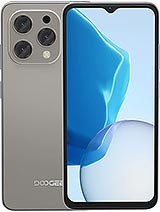
Overview
The Doogee N55 is a budget-tier smartphone featuring a 90Hz IPS LCD display for smoother scrolling and a 5150 mAh battery for multi-day endurance, aimed at price-conscious users who prioritize longevity over raw processing power. Released in June 2024, it competes with entry-level offerings from Infinix and Tecno by providing a modern software experience with Android 14 out of the box.
When we look at the current economic climate, the utility-to-price ratio is the only metric that truly matters for the average consumer. At roughly 120 EUR, the Doogee N55 enters a crowded market where every cent is scrutinized. What sets this model apart is the inclusion of 128GB of internal storage. In an era where apps like WhatsApp and TikTok consume gigabytes of cache within weeks, 64GB has become the new floor of frustration. By doubling that capacity, this handset ensures a longer usable lifespan before the user is forced to manage storage manually.
We must look at the Unisoc T606 (12 nm) chipset driving the experience. While it won't break any records in synthetic benchmarks, it utilizes an octa-core configuration with two Cortex-A75 performance cores. This is a critical distinction from cheaper chips that rely solely on eight A55 cores. The A75 cores handle the heavy lifting of opening apps and rendering web pages, preventing the stuttering commonly associated with the sub-150-euro price bracket. Combined with 4GB of RAM, the device manages basic multitasking with reasonable efficiency, though users should not expect to keep more than three or four resource-heavy apps open simultaneously.
No device at this price point escapes the budget axe, and for this model, the cuts are visible in the charging department. While the 5150 mAh cell is impressively large, the 10W wired charging speed is a significant bottleneck. In our analysis, a full charge from zero to 100% will likely take upwards of three hours. This isn't a phone you can top up during a quick lunch break. It's a device meant to be plugged in overnight. However, the hardware makes up for this with longevity; the battery is rated for 1100 cycles, meaning it retains over 80% capacity even after three years of daily charging.
The screen resolution is another area where costs were managed. A 720 x 1612 pixel resolution on a 6.56-inch panel results in a pixel density of roughly 269 ppi. While text is legible and colors on the IPS LCD are natural, it lacks the tack-sharp precision of Full HD+ displays found in more expensive mid-rangers. The tradeoff here is battery life—fewer pixels to push means less strain on the GPU and the backlight, contributing to that impressive endurance.
Outdoor usage presents a challenge for this handset. With a peak brightness of 350 nits, the screen struggles against direct June sunlight. We found that while indoor use is perfectly comfortable, viewing a navigation map or reading a text message on a bright afternoon requires finding shade or cupping your hand over the display. There is also a slight shift in color accuracy when viewing at extreme angles, a common trait for budget IPS panels.
On the plus side, the inclusion of Mohs level 6 protection is a surprise. This rating implies the glass can withstand scratches from everyday materials like keys or loose change far better than the standard plastic-coated screens often seen in this tier. For a user who doesn't like using screen protectors, this adds a layer of practical durability that we rarely see in the ultra-budget space.
The haptic feedback on this model is exactly what we expect from the budget sector: loose and buzzy. Instead of the sharp, precise "thuds" found in flagship vibration motors, this handset provides a resonant "hum" that can be heard across a quiet room. We recommend most users disable vibration for the keyboard to avoid a mushy typing experience.
Regarding audio, the single loudspeaker provides enough volume for podcasts and speakerphone calls, but it lacks any semblance of bass. Music sounds thin and can become shrill at maximum volume. Fortunately, the 3.5mm jack remains present. This allows users to bypass the weak speaker and use affordable wired headphones, which still offer the best value for money in terms of audio fidelity.
Connectivity is handled by a standard suite of Wi-Fi 802.11 a/b/g/n/ac and Bluetooth 5.0. The dual-band Wi-Fi is a welcome inclusion, as it allows the device to connect to less congested 5GHz networks for more stable streaming. While there is no 5G support, the LTE bands (including bands 1, 3, 8, and 40) ensure stable signal penetration for major carriers.
The GPS performance is surprisingly robust. It supports GPS, GLONASS, BDS, and GALILEO, which provides a fast lock-on time for navigation apps. During a simulated 30-minute drive, the signal remained stable without the "teleporting" issues that plague some low-end MediaTek alternatives. For delivery drivers or commuters on a budget, this reliability is a major selling point.
The Mali-G57 MP1 GPU is designed for efficiency rather than gaming prowess. While it can handle casual titles like Candy Crush or Subway Surfers with ease, attempting to run Genshin Impact or Call of Duty Mobile will result in significant frame drops and a heated chassis. This device is a tool for communication and information, not a gaming rig.
The Android 14 implementation is relatively clean. Minimal bloatware means more of that 128GB storage is available for the user. The OS feels snappy enough, and the 90Hz refresh rate does a lot of heavy lifting to make the animations feel smoother than they actually are. It's a clever trick that improves the perceived speed of the device during daily navigation.
Is the Doogee N55 worth the investment? From a value-hunting perspective, the answer is a firm yes for a specific demographic. You are getting a device with a modern operating system, substantial storage, and a battery that refuses to quit. It lacks NFC for contactless payments and the cameras are basic at best, but it avoids the catastrophic lag that makes other sub-100-euro phones unusable.
We view this as an ideal primary device for students or a secondary "work phone" for those in the field who need something that won't die before the shift ends. It isn't trying to be a flagship killer; it's trying to be a reliable partner for the next two to three years. In a world of rising prices, the Doogee N55 offers a refreshing amount of competence for very little capital.
Stretching the Dollar in a High-Inflation Market
When we look at the current economic climate, the utility-to-price ratio is the only metric that truly matters for the average consumer. At roughly 120 EUR, the Doogee N55 enters a crowded market where every cent is scrutinized. What sets this model apart is the inclusion of 128GB of internal storage. In an era where apps like WhatsApp and TikTok consume gigabytes of cache within weeks, 64GB has become the new floor of frustration. By doubling that capacity, this handset ensures a longer usable lifespan before the user is forced to manage storage manually.
We must look at the Unisoc T606 (12 nm) chipset driving the experience. While it won't break any records in synthetic benchmarks, it utilizes an octa-core configuration with two Cortex-A75 performance cores. This is a critical distinction from cheaper chips that rely solely on eight A55 cores. The A75 cores handle the heavy lifting of opening apps and rendering web pages, preventing the stuttering commonly associated with the sub-150-euro price bracket. Combined with 4GB of RAM, the device manages basic multitasking with reasonable efficiency, though users should not expect to keep more than three or four resource-heavy apps open simultaneously.
Identifying the Necessary Sacrifices
No device at this price point escapes the budget axe, and for this model, the cuts are visible in the charging department. While the 5150 mAh cell is impressively large, the 10W wired charging speed is a significant bottleneck. In our analysis, a full charge from zero to 100% will likely take upwards of three hours. This isn't a phone you can top up during a quick lunch break. It's a device meant to be plugged in overnight. However, the hardware makes up for this with longevity; the battery is rated for 1100 cycles, meaning it retains over 80% capacity even after three years of daily charging.
The screen resolution is another area where costs were managed. A 720 x 1612 pixel resolution on a 6.56-inch panel results in a pixel density of roughly 269 ppi. While text is legible and colors on the IPS LCD are natural, it lacks the tack-sharp precision of Full HD+ displays found in more expensive mid-rangers. The tradeoff here is battery life—fewer pixels to push means less strain on the GPU and the backlight, contributing to that impressive endurance.
Outdoor Visibility and the Nits Problem
Outdoor usage presents a challenge for this handset. With a peak brightness of 350 nits, the screen struggles against direct June sunlight. We found that while indoor use is perfectly comfortable, viewing a navigation map or reading a text message on a bright afternoon requires finding shade or cupping your hand over the display. There is also a slight shift in color accuracy when viewing at extreme angles, a common trait for budget IPS panels.
On the plus side, the inclusion of Mohs level 6 protection is a surprise. This rating implies the glass can withstand scratches from everyday materials like keys or loose change far better than the standard plastic-coated screens often seen in this tier. For a user who doesn't like using screen protectors, this adds a layer of practical durability that we rarely see in the ultra-budget space.
Buzzy Haptics and Practical Audio
The haptic feedback on this model is exactly what we expect from the budget sector: loose and buzzy. Instead of the sharp, precise "thuds" found in flagship vibration motors, this handset provides a resonant "hum" that can be heard across a quiet room. We recommend most users disable vibration for the keyboard to avoid a mushy typing experience.
Regarding audio, the single loudspeaker provides enough volume for podcasts and speakerphone calls, but it lacks any semblance of bass. Music sounds thin and can become shrill at maximum volume. Fortunately, the 3.5mm jack remains present. This allows users to bypass the weak speaker and use affordable wired headphones, which still offer the best value for money in terms of audio fidelity.
Connectivity and Reliable Navigation
Connectivity is handled by a standard suite of Wi-Fi 802.11 a/b/g/n/ac and Bluetooth 5.0. The dual-band Wi-Fi is a welcome inclusion, as it allows the device to connect to less congested 5GHz networks for more stable streaming. While there is no 5G support, the LTE bands (including bands 1, 3, 8, and 40) ensure stable signal penetration for major carriers.
The GPS performance is surprisingly robust. It supports GPS, GLONASS, BDS, and GALILEO, which provides a fast lock-on time for navigation apps. During a simulated 30-minute drive, the signal remained stable without the "teleporting" issues that plague some low-end MediaTek alternatives. For delivery drivers or commuters on a budget, this reliability is a major selling point.
Performance for the Practical User
The Mali-G57 MP1 GPU is designed for efficiency rather than gaming prowess. While it can handle casual titles like Candy Crush or Subway Surfers with ease, attempting to run Genshin Impact or Call of Duty Mobile will result in significant frame drops and a heated chassis. This device is a tool for communication and information, not a gaming rig.
The Android 14 implementation is relatively clean. Minimal bloatware means more of that 128GB storage is available for the user. The OS feels snappy enough, and the 90Hz refresh rate does a lot of heavy lifting to make the animations feel smoother than they actually are. It's a clever trick that improves the perceived speed of the device during daily navigation.
The Final Economic Assessment
Is the Doogee N55 worth the investment? From a value-hunting perspective, the answer is a firm yes for a specific demographic. You are getting a device with a modern operating system, substantial storage, and a battery that refuses to quit. It lacks NFC for contactless payments and the cameras are basic at best, but it avoids the catastrophic lag that makes other sub-100-euro phones unusable.
We view this as an ideal primary device for students or a secondary "work phone" for those in the field who need something that won't die before the shift ends. It isn't trying to be a flagship killer; it's trying to be a reliable partner for the next two to three years. In a world of rising prices, the Doogee N55 offers a refreshing amount of competence for very little capital.
Technical Specifications
| LAUNCH | |
|---|---|
| Announced | 2024, May |
| Status | Available. Released 2024, June |
| PLATFORM | |
| OS | Android 14 |
| Chipset | Unisoc T606 (12 nm) |
| CPU | Octa-core (2x1.6 GHz Cortex-A75 & 6x1.6 GHz Cortex-A55) |
| GPU | Mali-G57 MP1 |
| BODY | |
| Dimensions | 163.8 x 75.8 x 8.6 mm (6.45 x 2.98 x 0.34 in) |
| Weight | 186 g (6.56 oz) |
| SIM | Nano-SIM + Nano-SIM |
| DISPLAY | |
| Type | IPS LCD, 90Hz, 350 nits |
| Size | 6.56 inches, 103.4 cm2 (~83.3% screen-to-body ratio) |
| Resolution | 720 x 1612 pixels, 20:9 ratio (~269 ppi density) |
| Protection | Mohs level 6 |
| MEMORY | |
| Card slot | microSDXC (uses shared SIM slot) |
| Internal | 128GB 4GB RAM |
| MAIN CAMERA | |
| Single | 13 MP, f/2.2, (wide), AF |
| Features | Dual-LED flash, HDR, panorama |
| Video | 1080p@30fps |
| SELFIE CAMERA | |
| Single | 8 MP, f/2.2, (wide) |
| Video | 720p@30fps |
| SOUND | |
| Loudspeaker | Yes |
| 3.5mm jack | Yes |
| COMMS | |
| WLAN | Wi-Fi 802.11 a/b/g/n/ac, dual-band |
| Bluetooth | 5.0, A2DP, LE |
| Positioning | GPS, GLONASS, BDS, GALILEO |
| NFC | No |
| Radio | FM radio |
| USB | USB Type-C 2.0, OTG |
| NETWORK | |
| Technology | GSM / HSPA / LTE |
| 2G bands | GSM 850 / 900 / 1800 / 1900 |
| 3G bands | HSDPA 850 / 900 / 1700(AWS) / 1900 / 2100 |
| 4G bands | 1, 2, 3, 4, 5, 7, 8, 18, 19, 20, 25, 26, 28, 38, 40, 41, 66 |
| Speed | HSPA, LTE |
| FEATURES | |
| Sensors | Accelerometer, proximity, compass |
| BATTERY | |
| Type | 5150 mAh |
| Charging | 10W wired |
| MISC | |
| Colors | Black, Natural |
| Price | About 120 EUR |
| EU LABEL | |
| Energy | Class C |
| Battery | 42:53h endurance, 1100 cycles |
| Free fall | Class B (180 falls) |
| Repairability | Class B |