Big Power in a Tiny Footprint - Why the Doogee T20mini Pro Is a Budget Masterstroke
Overview
The Economics of the Eight-Inch Frame
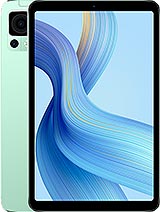
The Doogee T20mini Pro is a budget-friendly compact tablet featuring a Unisoc T606 chipset for efficient multitasking and a 256GB eMMC 5.1 storage capacity for ample media files, aimed at students and travelers. Released in late 2023, it competes with other sub-10-inch devices by offering high memory configurations at an aggressive price point. In a market where most manufacturers focus on oversized 11-inch slates that require two hands and a backpack, this hardware targets a specific niche of portability. It fits comfortably in one hand, making it a pragmatic choice for e-book readers and commuters who find larger tablets cumbersome.
Price-to-spec ratios are the primary metric for our analysis. Finding 8GB of physical RAM in a device at this price tier is unusual. Most competitors in the sub-$200 bracket still attempt to sell 4GB or 6GB units, often relying on slow "virtual RAM" to pad the numbers. This slate provides the raw overhead needed for Android 13 to operate without the constant app-killing cycles that plague cheaper hardware. The inclusion of 256GB of internal storage is equally impressive. For the value hunter, this means no immediate need to purchase a microSD card, though the option remains available via the shared SIM slot.
Identifying the Compromise
Every budget device has a "tell"—a specific area where the manufacturer saved costs to meet a price target. For this tablet, the most glaring bottleneck is the charging speed. We are looking at a 10W wired charging protocol paired with a 5060 mAh battery. In 2023, where even entry-level smartphones are pushing 18W or 33W, 10W is objectively slow. Charging this device from zero to full will likely take over three hours. It is clearly designed for overnight charging cycles rather than quick top-ups between meetings.
The display brightness is another area of calculated compromise. At 350 nits, the IPS LCD panel provides sufficient clarity for indoor environments like offices, classrooms, or airplanes. However, attempt to use it in direct sunlight, and the screen will struggle to overcome reflections. This is a common trade-off in the budget sector, but users who intend to use the slate as an outdoor navigation tool should be aware of this limitation. The 1200 x 1920 resolution is the saving grace here, offering a 270 ppi density that makes text look crisp and reduces eye strain during long reading sessions.
Digital Fortresses and Permission Gates
Security on the device relies primarily on the features baked into Android 13. Since there is no mention of a dedicated fingerprint sensor in the hardware configuration, users will likely rely on PIN, Pattern, or basic 2D Face Unlock via the 5MP front camera. While 2D face unlock is convenient for quick access, we do not recommend it for sensitive banking apps as it lacks the depth-sensing hardware found in premium flagships. However, the software provides a robust Privacy Dashboard, allowing users to see exactly which apps are accessing the microphone or camera in real-time.
Clipboard auto-clear is another standard Android 13 feature present here. If you copy a password or sensitive text, the system wipes it after a set period, preventing third-party apps from snooping on your data. For those looking to keep work and personal life separate, the software supports multiple user profiles. This is particularly useful if the slate is shared within a family, ensuring that a child's gaming apps don't interfere with a parent's email or documents.
The Speed of Silicon and Sand
The storage technology used here is eMMC 5.1. For those unfamiliar with the term, eMMC is the precursor to the UFS storage found in high-end phones. While eMMC 5.1 is slower than UFS 3.1, it remains a reliable and cost-effective standard for budget tablets. It handles sequential reads and writes well enough that booting the OS and opening apps feels responsive. The real benefit is the microSDXC support. Because the device uses a shared SIM slot, you can choose between dual-SIM 4G connectivity or expanding your storage up to 1TB. This versatility is a hallmark of the "Value Hunter" philosophy.
Wireless data transfers are handled by Wi-Fi 5 (802.11ac). While not the latest Wi-Fi 6 standard, it provides more than enough bandwidth for 1080p streaming on platforms like YouTube or Netflix. The Bluetooth 5.0 radio ensures a stable connection for wireless earbuds, though the presence of a 3.5mm headphone jack means you aren't forced to spend extra on Bluetooth accessories if you prefer the reliability of a wired connection.
Staying Linked in the Concrete Jungle
One of the most surprising inclusions at this price point is the 4G LTE connectivity. Many mini-tablets are Wi-Fi only, turning them into expensive paperweights the moment you leave a hotspot. This model supports a wide array of LTE bands (1, 3, 5, 7, 8, 20, 28, etc.), which ensures global compatibility for travelers. Having a dedicated data connection on an 8.4-inch device turns it into a highly capable navigation tool or a secondary communication hub when your primary phone is charging.
The GPS suite is comprehensive, including GPS, GLONASS, GALILEO, and BDS. In our experience with similar Unisoc-powered hardware, signal acquisition is generally reliable in urban environments. The inclusion of a compass and gyro sensor is a massive win for hikers or city explorers. Many budget tablets omit the compass, leading to "jumping" maps where the device doesn't know which direction you are facing. This slate avoids that frustration, providing a hardware experience that punches above its weight class.
Measuring the Mali-G57 Muscle
The Unisoc T606 chipset is the engine under the hood. It utilizes a 12nm process and an octa-core configuration consisting of two Cortex-A75 cores for performance and six Cortex-A55 cores for efficiency. In practical terms, this means the device handles web browsing, social media, and document editing with ease. When it comes to gaming, the Mali-G57 MP1 GPU is designed for casual titles. You can play games like *Subway Surfers*, *Among Us*, or *Brawl Stars* flawlessly. However, heavy hitters like *Genshin Impact* will require the lowest graphical settings to maintain a playable frame rate.
Thermal management on the device appears stable due to the lower clock speeds of the T606. During extended video playback, the 316g chassis remains cool to the touch. The 8GB of RAM ensures that background processes don't interfere with your active task, which is the biggest pain point on cheaper 4GB tablets. While this is not a "gaming tablet" by modern standards, it is a highly capable multimedia machine that doesn't suffer from the stuttering issues common in the entry-level market.
The Final Economic Calculation
When we look at the total package, the value proposition is clear. You are getting a high-resolution FHD+ display, massive storage, and cellular connectivity in a form factor that is increasingly rare. Most manufacturers have abandoned the 8-inch segment to avoid competing with large-screen smartphones, but for those who find a 6.7-inch phone too small for spreadsheets and a 10-inch tablet too big for the bus, this is the perfect middle ground.
Is it the fastest? No. Does it charge quickly? Absolutely not. But at this price, those flaws are manageable. The Doogee T20mini Pro is an exercise in prioritized spending. By investing in RAM, storage, and screen resolution while cutting costs on charging speed and camera sensors, the brand has created a device that feels much more expensive than it actually is. For students on a budget or professionals looking for a secondary travel slate, this is currently one of the smartest buys on the market. The Doogee T20mini Pro represents the peak of budget utility for late 2023.
Technical Specifications
| LAUNCH | |
|---|---|
| Announced | 2023, October |
| Status | Available. Released 2023, November |
| PLATFORM | |
| OS | Android 13 |
| Chipset | Unisoc T606 (12 nm) |
| CPU | Octa-core (2x1.6 GHz Cortex-A75 & 6x1.6 GHz Cortex-A55) |
| GPU | Mali-G57 MP1 |
| BODY | |
| Dimensions | 202.5 x 125.8 x 7.4 mm (7.97 x 4.95 x 0.29 in) |
| Weight | 316 g (11.15 oz) |
| SIM | Nano-SIM + Nano-SIM |
| Info | Stylus support |
| DISPLAY | |
| Type | IPS LCD, 350 nits |
| Size | 8.4 inches, 204.6 cm2 (~80.3% screen-to-body ratio) |
| Resolution | 1200 x 1920 pixels, 16:10 ratio (~270 ppi density) |
| MEMORY | |
| Card slot | microSDXC (uses shared SIM slot) |
| Internal | 256GB 8GB RAM |
| Info | eMMC 5.1 |
| MAIN CAMERA | |
| Single | 13 MP |
| Features | LED flash |
| Video | 1080p@30/60fps |
| SELFIE CAMERA | |
| Single | 5 MP |
| Video | Yes |
| SOUND | |
| Loudspeaker | Yes, with stereo speakers |
| 3.5mm jack | Yes |
| COMMS | |
| WLAN | Wi-Fi 802.11 a/b/g/n/ac, dual-band |
| Bluetooth | 5.0, A2DP, LE |
| Positioning | GPS, GLONASS, GALILEO, BDS |
| NFC | No |
| Radio | FM radio |
| USB | USB Type-C 2.0 |
| NETWORK | |
| Technology | GSM / HSPA / LTE |
| 2G bands | GSM 850 / 900 / 1800 / 1900 |
| 3G bands | HSDPA 850 / 900 / 1900 / 2100 |
| 4G bands | 1, 3, 5, 7, 8, 20, 28, 34, 38, 39, 40, 41 |
| Speed | HSPA, LTE |
| FEATURES | |
| Sensors | Accelerometer, gyro, compass |
| BATTERY | |
| Type | 5060 mAh |
| Charging | 10W wired |
| MISC | |
| Colors | Black, Purple, Green |