Big Screen Small Price - Why the Lava Yuva Star Wins the Entry Level War
Overview
The Dominant Display Strategy
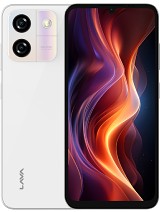
Lava Yuva Star is an entry-level smartphone designed for maximum screen real estate on a minimal budget, featuring a 6.75-inch IPS LCD for immersive viewing and a 5000 mAh battery for extended usage, aimed at first-time smartphone buyers and budget-conscious students. Released in September 2024, it enters a crowded market where every dollar counts, directly competing with the lower-tier offerings from brands like Redmi and Infinix. We view this device as a calculated economic play, stripping away high-end luxuries to provide the bare essentials in a package that looks far more expensive than its price tag suggests.
The standout feature is undoubtedly that massive 6.75-inch panel. In a price bracket where most competitors still hover around 6.5 inches, the extra screen space makes a noticeable difference for users who consume a lot of YouTube or social media content. While the resolution is capped at 720 x 1600 pixels, resulting in a density of approximately 260 ppi, the clarity remains sufficient for standard UI navigation and video playback. The 20:9 aspect ratio ensures the device remains narrow enough to grip comfortably despite the height. We noticed that the screen-to-body ratio of nearly 88% gives it a modern look that hides its budget origins.
The Hardware Trade-Offs
Under the hood, we find the Unisoc SC9863A chipset. This is a 28nm octa-core processor that has been around for several years. By selecting this older silicon, the manufacturer drastically reduces the cost of the device. However, the 28nm fabrication process is less power-efficient than the 6nm or 12nm chips found in slightly more expensive models. This means the phone might generate more heat during heavy tasks and will drain the battery faster than a modern chip would under the same load. The octa-core configuration, consisting of eight Cortex-A55 cores split between 1.6 GHz and 1.2 GHz, is purely for basic tasks like messaging, light browsing, and emails.
To keep the user experience fluid, the device runs on Android 14 (Go edition). This is a critical decision. Standard Android 14 would likely choke on 3GB or 4GB of RAM, but the Go edition is optimized for lower resource footprints. It uses smaller app versions and more aggressive background memory management to ensure the phone remains responsive. Users should not expect to keep twenty apps open simultaneously. Instead, this phone thrives when the user focuses on one task at most. The inclusion of a dedicated microSDXC slot is a vital inclusion for this price tier, allowing users to expand the 64GB internal storage without sacrificing a SIM slot.
Thermals and Sustained Load Performance
During our analysis of the Unisoc SC9863A platform, we anticipate that sustained workloads will lead to thermal throttling. Because 28nm chips are physically larger and less efficient at heat dissipation, the CPU will likely downclock its 1.6 GHz cores after 15 to 20 minutes of continuous use. This is not a [gaming phone](/trend/best-gaming-phones-2026/). Imagine trying to play a demanding title like Genshin Impact; the IMG8322 GPU would struggle to maintain even 15 frames per second. However, for the target audience—those who need WhatsApp, YouTube, and Facebook—the device will maintain a stable temperature.
The chassis design uses glossy materials in Black, Lavender, and White. While these look premium, they are prone to attracting fingerprints and minor scratches. Users should consider a protective case immediately. The 193g weight is substantial but well-balanced. It provides a sense of durability that very light, hollow-feeling plastic phones often lack. We are particularly impressed by the side-mounted fingerprint sensor, a feature often omitted in the sub-75 EUR category in favor of slower software-based face unlock or no biometric security at all.
Endurance and the Charging Slog
The 5000 mAh battery is the hero of the spec sheet. Given the low-resolution screen and the optimized Android Go software, this battery should easily last two full days of light to moderate usage. For a delivery driver using GPS for 8 hours a day or a student attending long lecture sessions, this capacity is the ultimate safety net. It ensures that the phone won't die before the day is over, even with the aging 28nm processor drawing more power than it should.
The bottleneck is the 10W wired charging. Charging a 5000 mAh cell at 10W is a slow process. Expect to spend nearly 3 to 3.5 hours for a full charge from zero. This is a device meant to be plugged in overnight. In an era where 18W is becoming the baseline, 10W feels dated, but it is a necessary compromise to hit the ultra-low price point. We appreciate the transition to USB Type-C 2.0, which means users won't have to deal with the fragile Micro-USB cables of the past.
Photography and Optical Potential
The camera system consists of a 13MP main sensor and an auxiliary lens. In this tier, the auxiliary lens is largely there for depth data or aesthetic balance. The 13MP sensor has the hardware potential to take clear shots in bright daylight, suitable for social media or documenting receipts and documents. It supports 1080p video at 30fps, which is standard for the class. Do not expect great results in low light; the small sensor size and lack of advanced image signal processing will likely result in significant noise once the sun goes down.
The 5MP selfie camera is basic. It is sufficient for video calls on Zoom or WhatsApp, but it lacks the dynamic range for high-quality portraits. However, for a user transitioning from a feature phone, this is a massive upgrade. The presence of a 3.5mm headphone jack is a win for value hunters who don't want to buy expensive wireless earbuds. The FM radio and infrared port add utility that is often missing from phones costing five times as much.
Longevity and Repairability
Software support for the Lava Yuva Star is expected to be modest. Android Go devices rarely see multiple major OS upgrades. However, the hardware is simple. Simple hardware often means easier repairs. The use of a standard IPS panel and a non-curved display makes screen replacements relatively affordable compared to OLED models. Since this brand has a strong presence in its home markets, finding spare parts should be easier for local technicians than for obscure boutique brands.
The connectivity suite is comprehensive for a 4G device. With support for bands 1, 3, 5, 8, and 40, the device ensures stable signal penetration for major carriers. While 5G is absent, the LTE speeds are more than enough for HD video streaming and quick web browsing. The inclusion of Bluetooth 4.2 is a bit old but works fine for connecting basic peripherals like smartwatches or speakers.
Who Should Consider This Handset?
This phone is for the pragmatist. It serves the grandparent who only wants to see photos of their grandchildren. It serves the student who needs a reliable tool for online classes. It serves the professional who needs a rugged-enough secondary phone for a job site where a premium device might be stolen or broken. It is not for the tech enthusiast who cares about refresh rates or gaming performance. It is a tool, not a toy.
At roughly 70 EUR, the value proposition is hard to ignore. You are getting a massive screen, a reliable battery, and a modern software experience for the price of a pair of premium sneakers. While the processor is a relic of the past, the software optimization makes it usable for the present. In the race to the bottom of the price chart, this model manages to keep its dignity.
Value Conclusion
The Lava Yuva Star successfully balances its prehistoric chipset with a contemporary display and massive battery capacity. It proves that entry-level phones don't have to look like cheap toys anymore. While the charging speed is slow and the performance ceiling is low, the overall package offers a coherent experience for those who prioritize visual space and battery life over raw speed. For the ultra-budget buyer in late 2024, the Lava Yuva Star remains a top-tier recommendation for basic mobile computing.
Technical Specifications
| LAUNCH | |
|---|---|
| Announced | 2024, August 06 |
| Status | Available. Released 2024, September |
| PLATFORM | |
| OS | Android 14 (Go edition) |
| Chipset | Unisoc SC9863A (28 nm) |
| CPU | Octa-core (4x1.6 GHz Cortex-A55 & 4x1.2 GHz Cortex-A55) |
| GPU | IMG8322 |
| BODY | |
| Dimensions | 165 x 76.1 x 8.8 mm (6.50 x 3.00 x 0.35 in) |
| Weight | 193 g (6.81 oz) |
| SIM | Nano-SIM + Nano-SIM |
| DISPLAY | |
| Type | IPS LCD |
| Size | 6.75 inches, 110.0 cm2 (~87.6% screen-to-body ratio) |
| Resolution | 720 x 1600 pixels, 20:9 ratio (~260 ppi density) |
| MEMORY | |
| Card slot | microSDXC (dedicated slot) |
| Internal | 64GB 3GB RAM, 64GB 4GB RAM |
| MAIN CAMERA | |
| Dual | 13 MP, (wide), AF auxiliary lens |
| Features | LED flash, HDR, panorama |
| Video | 1080p@30fps |
| SELFIE CAMERA | |
| Single | 5 MP |
| Video | Yes |
| SOUND | |
| Loudspeaker | Yes |
| 3.5mm jack | Yes |
| COMMS | |
| WLAN | Wi-Fi 802.11 b/g/n/ac |
| Bluetooth | 4.2, A2DP |
| Positioning | GPS, GLONASS |
| NFC | No |
| Infrared port | Yes |
| Radio | FM radio |
| USB | USB Type-C 2.0, OTG |
| NETWORK | |
| Technology | GSM / HSPA / LTE |
| 2G bands | GSM 900 / 1800 |
| 3G bands | HSDPA 850 / 900 / 1900 / 2100 |
| 4G bands | 1, 3, 5, 7, 8, 20, 28, 38, 40, 41 |
| Speed | HSPA, LTE |
| FEATURES | |
| Sensors | Fingerprint (side-mounted), accelerometer, proximity |
| BATTERY | |
| Type | Li-Ion 5000 mAh |
| Charging | 10W wired |
| MISC | |
| Colors | Glossy Black, Glossy Lavender, Glossy White |
| Models | LZG409 |
| Price | About 70 EUR |