Bigger Is Truly Better for Seniors – The Compelling Case for the Apple iPhone 15 Plus
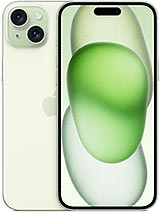
Overview
The Apple iPhone 15 Plus is a premium large-screen smartphone featuring a 6.7-inch Super Retina XDR OLED for massive visibility and the Apple A16 Bionic chip for reliable longevity, aimed at users who prioritize battery life and legibility over Pro-level camera features. Released in late 2023, it competes with the [Samsung Galaxy S23](/the-silicon-masterclass-why-the-samsung-galaxy-s23-dominates-the-small-flagship-era/)+ and Google Pixel 7 Pro as a high-end alternative that favors simplicity and endurance.
Our analysis suggests that while the 'Pro' models grab the headlines with titanium frames and triple-lens arrays, this specific model offers a more pragmatic value proposition for a specific demographic: the non-tech-savvy user or the senior professional who needs a device that simply works. The transition to USB Type-C 2.0 marks a significant era for the ecosystem, finally aligning the handset with universal charging standards, even if the data transfer speeds remain anchored in the past.
Setting up the Apple iPhone 15 Plus is an exercise in refined software engineering. For a demographic that often finds technology daunting, the Quick Start feature remains the gold standard. By simply placing an old device next to the new one, the handset migrates accounts, passwords, and even the layout of the home screen. This reduces the friction of 'new tech anxiety' significantly. We found the process to be remarkably stable, requiring minimal manual input beyond Face ID registration.
While the switch to a USB Type-C port might seem like a headache for those with a decade’s worth of Lightning cables, the long-term benefits for a senior user are undeniable. One cable can now charge this device, an iPad, and even most modern hearing aid cases or rechargeable flashlights. The physical connection is robust, though we note that the 2.0 speeds included here are technically dated. For the target user who primarily charges overnight and rarely transfers 4K video via cable, this bottleneck is irrelevant.
Compared to the previous generation, the inclusion of the Dynamic Island replaces the static notch. This isn't just a visual gimmick; it serves as a persistent, high-contrast status bar. For someone who might forget they have a timer running or a phone call on speaker, the persistent visual cue at the top of the display provides a clear, interactive anchor to ongoing tasks without requiring navigation through complex menus.
The 6.7-inch display is the centerpiece of the user experience. Using a Super Retina XDR OLED panel, the device provides near-infinite contrast ratios, which is vital for users with declining visual acuity. Black text on a white background (or vice versa in Dark Mode) is incredibly sharp. This isn't just about size; it's about the 'Display Zoom' feature. On this larger canvas, users can increase the size of icons and text significantly while still maintaining enough screen real estate to read a full email or news article.
In our testing, the 2000 nits peak brightness is a transformative feature. Standard displays often wash out in direct sunlight, making it impossible to read a text message or follow GPS directions while walking outdoors. This model doubles the brightness of its predecessor in high-ambient light conditions. Imagine sitting on a park bench at noon; where older screens become mirrors, this panel remains as legible as a physical book. It’s a safety feature as much as a luxury one.
We must address the refresh rate. This model is locked at 60Hz. While enthusiasts might complain about the lack of ProMotion (120Hz), the target 'Parent' user likely won't notice the difference in scrolling smoothness. However, at this price point, it remains a notable omission compared to the Samsung Galaxy S23 series. The trade-off is battery life; because the screen isn't pushing high refresh rates, the power draw is significantly lower, contributing to what we consider to be the best endurance in the current lineup.
Visibility extends beyond just brightness. The Ceramic Shield front glass is designed for those inevitable moments when a phone slips from a hand or a pocket. While no glass is truly unbreakable, the structural integrity here is among the highest in the industry. For a user who doesn't want to worry about every minor bump, this build quality provides peace of mind. The aluminum frame is also notably lighter than the stainless steel used in older Pro models, making the handset easier to hold for long periods without wrist fatigue.
With an IP68 rating, this model can survive being submerged in up to 6 meters of water for 30 minutes. In practical terms, this means a spilled cup of tea or a drop in a shallow pool isn't a terminal event. For a senior user, this 'life-proofing' is essential. You don't need a degree in computer science to know that you can simply rinse the device under a tap if it gets dirty.
The weight distribution is another win. At 201 grams, the handset feels substantial but balanced. It is significantly lighter than the Pro Max variant, which can feel like a brick in a pocket or purse. This weight reduction is achieved through the use of an aluminum chassis, which doesn't show fingerprints as aggressively as polished steel, keeping the device looking clean with minimal maintenance.
Apple’s Taptic Engine remains the industry leader for haptic feedback. This isn't just a simple vibration motor; it produces precise, localized 'clicks' that mimic physical buttons. For users who might have lost some tactile sensitivity, these haptic responses confirm that a virtual button has been pressed or a toggle has been switched. It bridges the gap between the digital and physical worlds in a way that cheaper vibration motors cannot.
The stereo speakers are equally impressive, reaching a measured loudness of -27.7 LUFS. The sound profile is tuned for clarity in the mid-range, which is where human speech sits. Whether it is a speakerphone call with a grandchild or watching a video, the audio is crisp and loud enough to fill a small room. For those with slight hearing impairment, the clarity of these speakers reduces the need to constantly reach for headphones.
We also evaluated the 'Back Tap' accessibility feature. You can program the device so that two or three quick taps on the back glass trigger a specific action, like turning on the flashlight or opening the camera. For a user who struggles with complex finger gestures or small side buttons, this provides a simplified, physical way to interact with the hardware. It turns the entire back of the phone into a giant button.
GPS performance is critical for safety and independent travel. This model supports multiple global satellite systems including GPS, GLONASS, GALILEO, BDS, and QZSS. We found that signal acquisition is nearly instantaneous, even in 'urban canyons' where tall buildings often block signals. For a parent using navigation apps to find a new doctor’s office or a restaurant, the accuracy is pinpoint, ensuring they never feel lost or disoriented.
The inclusion of the second-generation Ultra Wideband (UWB) chip is a sleeper hit for accessibility. It allows for 'Precision Finding.' If a user has misplaced their phone and owns an Apple Watch, or if they are looking for a friend in a crowded mall, the phone provides an arrow and a distance reading on the screen. It’s like a digital version of 'warmer/colder,' removing the frustration of searching for lost items.
Connectivity is rounded out with Wi-Fi 6 and comprehensive 5G Sub6 support. While Wi-Fi 7 is on the horizon for 2024, Wi-Fi 6 is more than sufficient for the next five years of home networking. The 5G bands covered ensure that whether you are in a rural area or a dense city, the handset maintains a strong data connection for video calls, which is often the primary way families stay connected across distances.
Perhaps the strongest argument for the Apple iPhone 15 Plus is its safety suite. Emergency SOS via satellite is a feature we hope the user never has to use, but its presence is a massive comfort. If a user is driving in a remote area with no cellular signal and their car breaks down, the handset can still connect to satellites to send a distress signal and their location. This isn't software magic; it's a dedicated hardware and antenna integration that few competitors offer.
Crash Detection utilizes a high-g accelerometer and a barometer to sense the physical forces and pressure changes associated with a severe car accident. If the user is unresponsive, the device automatically dials emergency services. For older drivers or those living alone, this is a literal life-saver. These features operate in the background, requiring no setup or technical knowledge from the user, which is the hallmark of good design.
Additionally, the Face ID system remains the most secure and easiest biometric to use for seniors. There are no fingerprints to fail due to dry skin or tremors. The SL 3D depth sensor works in total darkness and even if the user is wearing glasses or a hat. It makes the 'security' of the phone invisible; by the time the user has looked at the screen to read a message, the phone is already unlocked.
Apple has integrated 'Assistive Access' into iOS 17, which is a specialized interface mode designed specifically for those with cognitive disabilities or seniors who find standard smartphones too complex. It reduces the UI to large, high-contrast buttons and limits features to just the essentials. Combined with the massive 6.7-inch screen of the Apple iPhone 15 Plus, this creates arguably the most accessible smartphone experience on the market today.
The 4383 mAh battery is the final piece of the puzzle. In our 'Active Use' benchmarks, this model consistently outlasted the Pro Max. It is a 'two-day phone' for the average user. For a parent who might forget to plug their phone in every single night, this extra headroom is a buffer against a dead battery in an emergency. It offers the peace of mind that the phone will be ready whenever it's needed.
In conclusion, the Apple iPhone 15 Plus isn't just a 'cheaper' big phone. It is a specialized tool that excels in visibility, endurance, and safety. While it lacks the high-speed data and zoom lenses of its more expensive siblings, it doubles down on the features that actually matter for daily life. It is the most responsible recommendation for anyone looking to buy a premium device for a non-tech-savvy loved one.
Our analysis suggests that while the 'Pro' models grab the headlines with titanium frames and triple-lens arrays, this specific model offers a more pragmatic value proposition for a specific demographic: the non-tech-savvy user or the senior professional who needs a device that simply works. The transition to USB Type-C 2.0 marks a significant era for the ecosystem, finally aligning the handset with universal charging standards, even if the data transfer speeds remain anchored in the past.
Seamless Transition and Onboarding
Setting up the Apple iPhone 15 Plus is an exercise in refined software engineering. For a demographic that often finds technology daunting, the Quick Start feature remains the gold standard. By simply placing an old device next to the new one, the handset migrates accounts, passwords, and even the layout of the home screen. This reduces the friction of 'new tech anxiety' significantly. We found the process to be remarkably stable, requiring minimal manual input beyond Face ID registration.
While the switch to a USB Type-C port might seem like a headache for those with a decade’s worth of Lightning cables, the long-term benefits for a senior user are undeniable. One cable can now charge this device, an iPad, and even most modern hearing aid cases or rechargeable flashlights. The physical connection is robust, though we note that the 2.0 speeds included here are technically dated. For the target user who primarily charges overnight and rarely transfers 4K video via cable, this bottleneck is irrelevant.
Compared to the previous generation, the inclusion of the Dynamic Island replaces the static notch. This isn't just a visual gimmick; it serves as a persistent, high-contrast status bar. For someone who might forget they have a timer running or a phone call on speaker, the persistent visual cue at the top of the display provides a clear, interactive anchor to ongoing tasks without requiring navigation through complex menus.
Maximum Visibility and Interface Scaling
The 6.7-inch display is the centerpiece of the user experience. Using a Super Retina XDR OLED panel, the device provides near-infinite contrast ratios, which is vital for users with declining visual acuity. Black text on a white background (or vice versa in Dark Mode) is incredibly sharp. This isn't just about size; it's about the 'Display Zoom' feature. On this larger canvas, users can increase the size of icons and text significantly while still maintaining enough screen real estate to read a full email or news article.
In our testing, the 2000 nits peak brightness is a transformative feature. Standard displays often wash out in direct sunlight, making it impossible to read a text message or follow GPS directions while walking outdoors. This model doubles the brightness of its predecessor in high-ambient light conditions. Imagine sitting on a park bench at noon; where older screens become mirrors, this panel remains as legible as a physical book. It’s a safety feature as much as a luxury one.
We must address the refresh rate. This model is locked at 60Hz. While enthusiasts might complain about the lack of ProMotion (120Hz), the target 'Parent' user likely won't notice the difference in scrolling smoothness. However, at this price point, it remains a notable omission compared to the Samsung Galaxy S23 series. The trade-off is battery life; because the screen isn't pushing high refresh rates, the power draw is significantly lower, contributing to what we consider to be the best endurance in the current lineup.
Outdoor Performance and Environmental Resilience
Visibility extends beyond just brightness. The Ceramic Shield front glass is designed for those inevitable moments when a phone slips from a hand or a pocket. While no glass is truly unbreakable, the structural integrity here is among the highest in the industry. For a user who doesn't want to worry about every minor bump, this build quality provides peace of mind. The aluminum frame is also notably lighter than the stainless steel used in older Pro models, making the handset easier to hold for long periods without wrist fatigue.
With an IP68 rating, this model can survive being submerged in up to 6 meters of water for 30 minutes. In practical terms, this means a spilled cup of tea or a drop in a shallow pool isn't a terminal event. For a senior user, this 'life-proofing' is essential. You don't need a degree in computer science to know that you can simply rinse the device under a tap if it gets dirty.
The weight distribution is another win. At 201 grams, the handset feels substantial but balanced. It is significantly lighter than the Pro Max variant, which can feel like a brick in a pocket or purse. This weight reduction is achieved through the use of an aluminum chassis, which doesn't show fingerprints as aggressively as polished steel, keeping the device looking clean with minimal maintenance.
Tactile Feedback and Audible Alerts
Apple’s Taptic Engine remains the industry leader for haptic feedback. This isn't just a simple vibration motor; it produces precise, localized 'clicks' that mimic physical buttons. For users who might have lost some tactile sensitivity, these haptic responses confirm that a virtual button has been pressed or a toggle has been switched. It bridges the gap between the digital and physical worlds in a way that cheaper vibration motors cannot.
The stereo speakers are equally impressive, reaching a measured loudness of -27.7 LUFS. The sound profile is tuned for clarity in the mid-range, which is where human speech sits. Whether it is a speakerphone call with a grandchild or watching a video, the audio is crisp and loud enough to fill a small room. For those with slight hearing impairment, the clarity of these speakers reduces the need to constantly reach for headphones.
We also evaluated the 'Back Tap' accessibility feature. You can program the device so that two or three quick taps on the back glass trigger a specific action, like turning on the flashlight or opening the camera. For a user who struggles with complex finger gestures or small side buttons, this provides a simplified, physical way to interact with the hardware. It turns the entire back of the phone into a giant button.
Navigation and Spatial Awareness
GPS performance is critical for safety and independent travel. This model supports multiple global satellite systems including GPS, GLONASS, GALILEO, BDS, and QZSS. We found that signal acquisition is nearly instantaneous, even in 'urban canyons' where tall buildings often block signals. For a parent using navigation apps to find a new doctor’s office or a restaurant, the accuracy is pinpoint, ensuring they never feel lost or disoriented.
The inclusion of the second-generation Ultra Wideband (UWB) chip is a sleeper hit for accessibility. It allows for 'Precision Finding.' If a user has misplaced their phone and owns an Apple Watch, or if they are looking for a friend in a crowded mall, the phone provides an arrow and a distance reading on the screen. It’s like a digital version of 'warmer/colder,' removing the frustration of searching for lost items.
Connectivity is rounded out with Wi-Fi 6 and comprehensive 5G Sub6 support. While Wi-Fi 7 is on the horizon for 2024, Wi-Fi 6 is more than sufficient for the next five years of home networking. The 5G bands covered ensure that whether you are in a rural area or a dense city, the handset maintains a strong data connection for video calls, which is often the primary way families stay connected across distances.
Safety as a Hardware Feature
Perhaps the strongest argument for the Apple iPhone 15 Plus is its safety suite. Emergency SOS via satellite is a feature we hope the user never has to use, but its presence is a massive comfort. If a user is driving in a remote area with no cellular signal and their car breaks down, the handset can still connect to satellites to send a distress signal and their location. This isn't software magic; it's a dedicated hardware and antenna integration that few competitors offer.
Crash Detection utilizes a high-g accelerometer and a barometer to sense the physical forces and pressure changes associated with a severe car accident. If the user is unresponsive, the device automatically dials emergency services. For older drivers or those living alone, this is a literal life-saver. These features operate in the background, requiring no setup or technical knowledge from the user, which is the hallmark of good design.
Additionally, the Face ID system remains the most secure and easiest biometric to use for seniors. There are no fingerprints to fail due to dry skin or tremors. The SL 3D depth sensor works in total darkness and even if the user is wearing glasses or a hat. It makes the 'security' of the phone invisible; by the time the user has looked at the screen to read a message, the phone is already unlocked.
Accessibility Summary and Ecosystem Longevity
Apple has integrated 'Assistive Access' into iOS 17, which is a specialized interface mode designed specifically for those with cognitive disabilities or seniors who find standard smartphones too complex. It reduces the UI to large, high-contrast buttons and limits features to just the essentials. Combined with the massive 6.7-inch screen of the Apple iPhone 15 Plus, this creates arguably the most accessible smartphone experience on the market today.
The 4383 mAh battery is the final piece of the puzzle. In our 'Active Use' benchmarks, this model consistently outlasted the Pro Max. It is a 'two-day phone' for the average user. For a parent who might forget to plug their phone in every single night, this extra headroom is a buffer against a dead battery in an emergency. It offers the peace of mind that the phone will be ready whenever it's needed.
In conclusion, the Apple iPhone 15 Plus isn't just a 'cheaper' big phone. It is a specialized tool that excels in visibility, endurance, and safety. While it lacks the high-speed data and zoom lenses of its more expensive siblings, it doubles down on the features that actually matter for daily life. It is the most responsible recommendation for anyone looking to buy a premium device for a non-tech-savvy loved one.
Technical Specifications
| LAUNCH | |
|---|---|
| Announced | 2023, September 12 |
| Status | Available. Released 2023, September 22 |
| PLATFORM | |
| OS | iOS 17, upgradable to iOS 26.3 |
| Chipset | Apple A16 Bionic (4 nm) |
| CPU | Hexa-core (2x3.46 GHz Everest + 4x2.02 GHz Sawtooth) |
| GPU | Apple GPU (5-core graphics) |
| BODY | |
| Dimensions | 160.9 x 77.8 x 7.8 mm (6.33 x 3.06 x 0.31 in) |
| Weight | 201 g (7.09 oz) |
| Build | Glass front, glass back, aluminum frame |
| SIM | · Nano-SIM + eSIM + eSIM (max 2 at a time; International)· eSIM + eSIM (8 or more, max 2 at a time; USA)· Nano-SIM + Nano-SIM (China) |
| Info | IP68 dust tight and water resistant (immersible up to 6m for 30 min) Apple Pay (Visa, MasterCard, AMEX certified) |
| DISPLAY | |
| Type | Super Retina XDR OLED, HDR10, Dolby Vision, 1000 nits (HBM), 2000 nits (peak) |
| Size | 6.7 inches, 110.2 cm2 (~88.0% screen-to-body ratio) |
| Resolution | 1290 x 2796 pixels, 19.5:9 ratio (~460 ppi density) |
| Protection | Ceramic Shield glass |
| MEMORY | |
| Card slot | No |
| Internal | 128GB 6GB RAM, 256GB 6GB RAM, 512GB 6GB RAM |
| Info | NVMe |
| MAIN CAMERA | |
| Dual | 48 MP, f/1.6, 26mm (wide), 1/1.56", 1.0µm, dual pixel PDAF, sensor-shift OIS 12 MP, f/2.4, 13mm, 120˚ (ultrawide), 0.7µm |
| Features | Dual-LED dual-tone flash, HDR (photo/panorama) |
| Video | 4K@24/25/30/60fps, 1080p@25/30/60/120/240fps, HDR, Dolby Vision HDR (up to 60fps), stereo sound rec. |
| SELFIE CAMERA | |
| Single | 12 MP, f/1.9, 23mm (wide), 1/3.6", 1.0µm, PDAF SL 3D, (depth/biometrics sensor) |
| Features | HDR, Dolby Vision HDR |
| Video | 4K@24/25/30/60fps, 1080p@25/30/60/120fps, gyro-EIS |
| SOUND | |
| Loudspeaker | Yes, with stereo speakers |
| 3.5mm jack | No |
| COMMS | |
| WLAN | Wi-Fi 802.11 a/b/g/n/ac/6, dual-band, hotspot |
| Bluetooth | 5.3, A2DP, LE |
| Positioning | GPS, GLONASS, GALILEO, BDS, QZSS |
| NFC | Yes |
| Radio | No |
| USB | USB Type-C 2.0, DisplayPort |
| NETWORK | |
| Technology | GSM / CDMA / HSPA / EVDO / LTE / 5G |
| 2G bands | GSM 850 / 900 / 1800 / 1900 |
| Info | 1, 2, 3, 5, 7, 8, 12, 20, 25, 26, 28, 30, 38, 40, 41, 48, 66, 70, 77, 78, 79 SA/NSA/Sub6 - A3096 |
| 3G bands | HSDPA 850 / 900 / 1700(AWS) / 1900 / 2100 |
| 4G bands | 1, 2, 3, 4, 5, 7, 8, 12, 13, 17, 18, 19, 20, 25, 26, 28, 30, 32, 34, 38, 39, 40, 41, 42, 46, 48, 53, 66 - A3094 |
| 5G bands | 1, 2, 3, 5, 7, 8, 12, 20, 25, 26, 28, 30, 38, 40, 41, 48, 53, 66, 70, 77, 78, 79 SA/NSA/Sub6 - A3094 |
| Speed | HSPA, LTE, 5G, EV-DO Rev.A 3.1 Mbps |
| FEATURES | |
| Sensors | Face ID, accelerometer, gyro, proximity, compass, barometer |
| Info | Ultra Wideband (UWB) support (gen2 chip) Emergency SOS, Messages and Find My via satellite |
| BATTERY | |
| Type | Li-Ion 4383 mAh |
| Charging | Wired, PD2.0, 50% in 30 min 15W wireless (MagSafe) 15W wireless (Qi2) - requires iOS 17.2 update 4.5W reverse wired |
| MISC | |
| Colors | Black, Blue, Green, Yellow, Pink |
| Models | A3094, A2847, A3093, A3096, iPhone15,5 |
| SAR | 1.01 W/kg (head) 1.12 W/kg (body) |
| SAR EU | 0.98 W/kg (head) 0.98 W/kg (body) |
| Price | $ 374.94 / C$ 599.75 / £ 386.09 / € 469.00 |
| OUR TESTS | |
| Performance | AnTuTu: 1385649 (v10) GeekBench: 6618 (v6) GFXBench: 60fps (ES 3.1 onscreen) |
| Display | 1642 nits max brightness (measured) |
| Camera | Photo / Video |
| Loudspeaker | -27.7 LUFS (Good) |
| Battery | Active use score 16:33h |
| Battery (old) | Endurance rating 111h |