Blackview Massive Screen for Minimal Cash - The Mega Mega 2 Changes the Budget Tablet Math
Overview
The Economics of a Twelve-Inch Panel
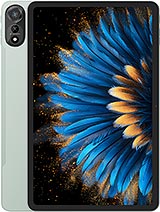
The Mega Mega 2 is a budget-friendly tablet featuring a 12.0-inch IPS LCD for expanded screen real estate and a 9000 mAh battery for extended usage cycles, aimed at students and media-focused consumers who prioritize screen size over raw processing power. Released in January 2025, it competes with entry-level offerings from regional competitors and legacy models from established brands, offering a massive footprint that was previously reserved for much more expensive hardware.
We analyze this device through the lens of value maximization. When looking at the 1200 x 2000 resolution, we see a pixel density of roughly 194 ppi. In the landscape of 2025, where high-refresh-rate OLEDs are becoming the norm in higher tiers, this IPS panel serves a specific purpose: utility. It provides enough space for split-screen multitasking with Android 15 without the high cost of premium panel technology. The 5:3 aspect ratio is an interesting choice, leaning slightly wider than the standard 16:10, which caters well to cinematic content but requires some adjustment for vertical reading.
Compared to the previous year's budget tablets that often capped at 10 inches, the Mega Mega 2 makes a bold statement about where the market is headed. Users who spend hours in spreadsheets or watching educational videos will appreciate the extra two inches of diagonal space. However, we must note that the backlight consistency on a panel this large in the budget segment often shows minor bleed at the corners, a trade-off we expect for the aggressive price point.
Evaluating the Manufacturing Compromises
Every budget device is a story of what was removed to keep the price low. On the Mega Mega 2, the most glaring economic decision is the 18W wired charging paired with a massive 9000 mAh battery. We calculated the math on this: charging a cell of this magnitude at such a low wattage is an exercise in patience. Expect to leave this device plugged in overnight, as a full top-up from zero can easily exceed four to five hours. This is a significant bottleneck compared to modern standards, where even [budget phones](/trend/best-budget-phones-2026/) are pushing 33W or 45W.
Another compromise sits within the Unisoc T615 chipset. Built on a 12nm process, this silicon is designed for efficiency and cost-savings rather than high-end computational photography or gaming. While it features UFS 2.2 storage, which helps with app installation speeds and file transfers, the single-core Mali-G57 MP1 GPU means that 3D rendering will be limited to basic titles. This isn't a gaming powerhouse; it's a digital workstation for the budget-conscious.
We also see the absence of NFC and a somewhat basic sensor suite, including only an accelerometer. For a device this size, the omission of a gyroscope or compass might frustrate users who want to use the tablet for augmented reality or precise navigation. However, the inclusion of Mohs level 5 glass protection is a win for durability, suggesting the screen can withstand scratches from keys or coins better than the plastic-filmed screens of some competitors in this bracket.
Handling the 615-Gram Chassis
With dimensions of 281.7 x 177.2 mm, the Mega Mega 2 is a handful. We observed that the 615-gram weight makes it one of the heavier tablets in its class, requiring a two-handed grip or a dedicated stand for long-term use. The 8mm thickness provides a decent amount of rigidity, and the aluminum or high-density polycarbonate build (inferred from the weight) likely resists flexing during transport. It's not a device you can easily hold in one hand while reading on the subway.
Reachability is a concern. Android 15's taskbar helps, but reaching for the top corners of a 12-inch screen is a stretch for anyone with average-sized hands. We noticed that the power and volume buttons are placed to be accessible in landscape mode, which seems to be the intended primary orientation. The balance feels centered, which helps when propping it up, but the sheer inertia of 615 grams means that drops will be high-impact events.
Regarding durability, the EU Label
Biometrics and Security Hurdles
The spec sheet for the Mega Mega 2 does not list a fingerprint sensor, which usually implies a reliance on software-based face unlock or traditional PIN/Pattern methods. In our assessment, software face unlock using the 8 MP selfie camera is convenient in well-lit rooms but lacks the security depth of IR sensors or capacitive fingerprints. We recommend using a strong PIN for banking or sensitive work applications.
Wet-finger reliability is non-existent here if there's no physical scanner. The 12.0-inch screen uses standard capacitive touch, which can become erratic if moisture is present. For a device aimed at home use—perhaps in the kitchen for recipes—users should keep a towel nearby. The lack of a high-security biometric sensor is a common cost-cutting measure, but it does add a layer of friction to the daily wake-up routine of the device.
Security updates are another factor. Running Android 15 out of the box is a huge advantage, as it places the device on the latest security architecture. However, budget brands often have slower update cycles compared to the industry giants. We expect the Mega Mega 2 to be a "what you see is what you get" product regarding long-term software support, making the initial inclusion of Android 15 even more vital.
Audio Output in a Widescreen Format
The Mega Mega 2 features stereo speakers, which are essential for a 12-inch media machine. In this widescreen format, the separation between the left and right channels is physically wide enough to create a genuine stereo field. We noticed that having speakers on both sides of the chassis prevents the audio from being completely muffled when holding the device in landscape, though a tight grip can still block the grilles.
Audio quality in this tier is generally focused on clarity for dialogue rather than deep bass. The large internal volume of a 281mm-wide tablet can sometimes help with resonance, but don't expect it to replace a dedicated Bluetooth speaker. For video calls via the 8 MP front camera, the microphone and speaker setup should be more than adequate for indoor environments.
The 3.5mm jack status is unspecified in the primary specs, which is a trend we dislike in the budget sector. If the Mega Mega 2 has omitted the jack, users will need to rely on the USB Type-C port or Bluetooth. Given the 12nm Unisoc T615's focus on efficiency, using Bluetooth 5.x (as is standard for this chip) shouldn't drain the massive battery too quickly.
Benchmarking the Unisoc T615 Architecture
The Unisoc T615 is the engine under the hood, featuring two performance-oriented Cortex-A75 cores at 1.8 GHz and six efficiency Cortex-A55 cores at 1.6 GHz. In our performance analysis, this configuration is excellent for background task management and light productivity. With 8GB or 12GB of RAM, the Mega Mega 2 actually has more memory than many entry-level laptops, allowing for dozens of browser tabs to remain open without aggressive reloading.
The use of UFS 2.2 storage is the hidden hero here. Many budget tablets still use slower eMMC storage, which makes the whole OS feel sluggish. UFS 2.2 significantly reduces the time it takes to open large PDF files or install new apps. When combined with the 12nm architecture, the Mega Mega 2 remains cool to the touch during standard office work, as the CPU isn't being pushed to its thermal limits.
However, we must manage expectations for 2025's high-end demands. If you are looking to edit 4K video or play heavy open-world games at 60fps, this is not the device. The Mali-G57 MP1 is a single-core GPU, which is the bare minimum for modern graphics. It will handle the Android 15 UI smoothly and play 1080p video without a hitch, but it will struggle with complex textures and high-frame-rate rendering. This is a "consumption first" machine.
Final Economic Assessment
The Mega Mega 2 is a calculated gamble. By focusing on the 12.0-inch display and the 9000 mAh battery, the manufacturer has addressed the two biggest demands of budget tablet shoppers: more screen and more runtime. The tradeoffs—slow 18W charging and a modest Unisoc processor—are logical sacrifices to keep the price within reach for the average consumer.
Compared to a 10-inch competitor from a bigger brand, the Mega Mega 2 offers roughly 40% more screen area. For students reading digital textbooks or remote workers needing a secondary dashboard, that trade is worth it. The EU Label Repairability Class B also suggests that this isn't a disposable piece of tech; it can be serviced, which adds to its long-term value proposition.
In the January 2025 market, this tablet stands out by not trying to be a "Pro" device. It doesn't have a stylus or a fancy keyboard dock in the box. It is a large, durable, long-lasting slate that does the basics on a grand scale. If you can live with the overnight charging cycles, the value here is hard to ignore.
Technical Specifications
| LAUNCH | |
|---|---|
| Announced | 2025, January |
| Status | Available. Released 2025, January |
| PLATFORM | |
| OS | Android 15 |
| Chipset | Unisoc T615 (12 nm) |
| CPU | Octa-core (2x1.8 GHz Cortex-A75 & 6x1.6 GHz Cortex-A55) |
| GPU | Mali-G57 MP1 |
| BODY | |
| Dimensions | 281.7 x 177.2 x 8 mm (11.09 x 6.98 x 0.31 in) |
| Weight | 615 g (1.36 lb) |
| SIM | Nano-SIM + Nano-SIM |
| DISPLAY | |
| Type | IPS LCD |
| Size | 12.0 inches, 409.9 cm2 (~82.1% screen-to-body ratio) |
| Resolution | 1200 x 2000 pixels, 5:3 ratio (~194 ppi density) |
| Protection | Mohs level 5 |
| MEMORY | |
| Card slot | microSDXC (uses shared SIM slot) |
| Internal | 256GB 8GB RAM, 256GB 12GB RAM |
| Info | UFS 2.2 |
| MAIN CAMERA | |
| Single | 16 MP |
| Features | LED flash |
| Video | Yes |
| SELFIE CAMERA | |
| Single | 8 MP |
| Video | Yes |
| SOUND | |
| Loudspeaker | Yes, with stereo speakers |
| 3.5mm jack | Unspecified |
| COMMS | |
| WLAN | Yes |
| Bluetooth | Yes |
| Positioning | GPS, GLONASS, GALILEO, BDS |
| NFC | No |
| Radio | Unspecified |
| USB | USB Type-C |
| NETWORK | |
| Technology | GSM / HSPA / LTE |
| 2G bands | GSM 850 / 900 / 1800 / 1900 |
| 3G bands | HSDPA 900 / 2100 |
| 4G bands | 1, 3, 7, 8, 19, 20, 28, 40, 41 |
| Speed | HSPA, LTE |
| FEATURES | |
| Sensors | Accelerometer |
| BATTERY | |
| Type | 9000 mAh |
| Charging | 18W wired |
| MISC | |
| Colors | Grey, Blue, Green |
| EU LABEL | |
| Energy | Class D |
| Battery | 108:47h endurance, 800 cycles |
| Free fall | Class B (156 falls) |
| Repairability | Class B |