Blackview Shark 6 Is the Ultimate Test of How Much Quality You Should Sacrifice for a Bargain
Overview
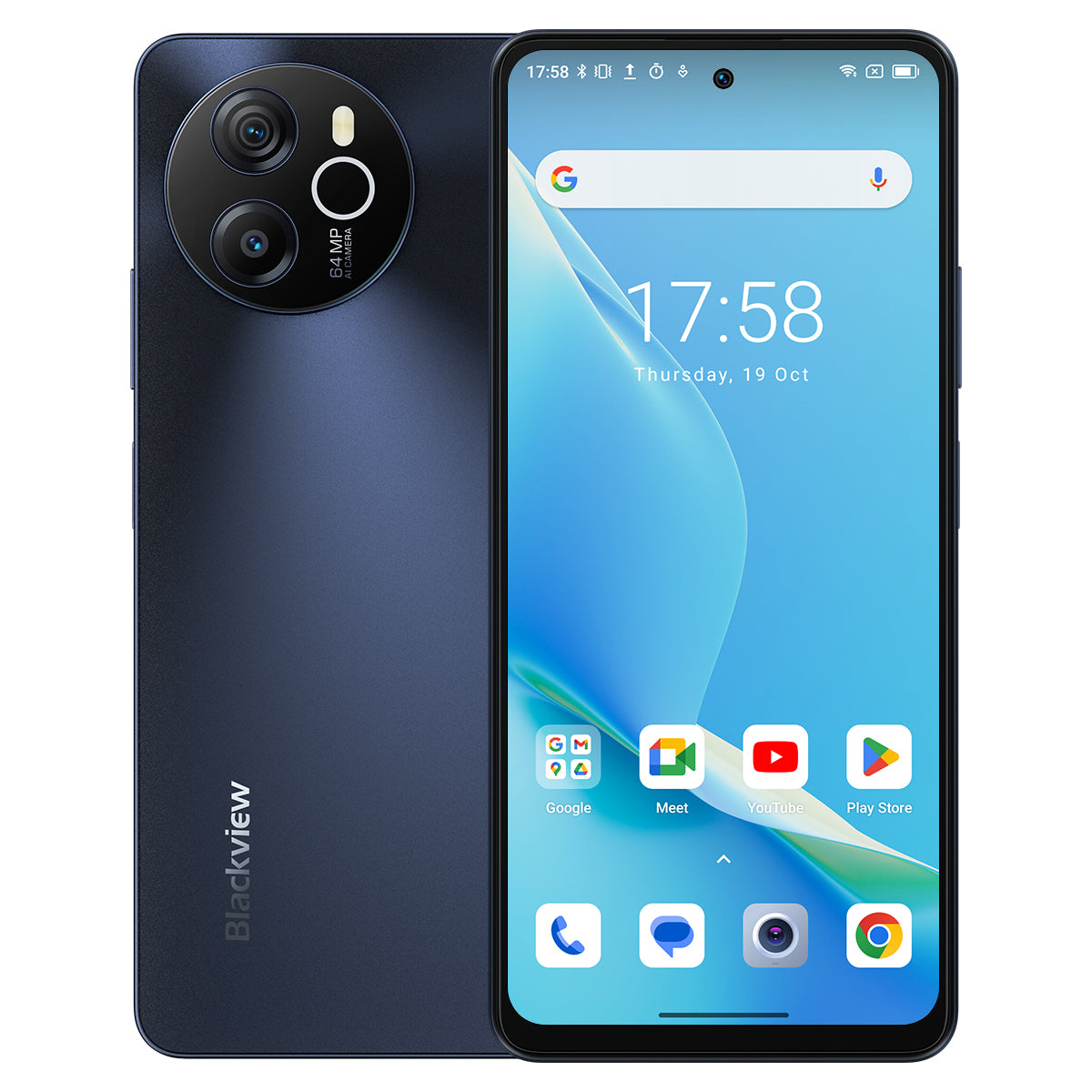
Blackview Shark 6 is a budget 5G smartphone featuring a Unisoc T8100 (6 nm) chipset for efficient daily performance and a 6.88-inch 120Hz IPS LCD for fluid navigation, aimed at cost-conscious users who prioritize connectivity over high-resolution display clarity.
Released in September 2025, it enters the entry-level market as a disruptive force by bringing 5G speeds to the sub-$120 price bracket. We see this device competing directly with the aging inventory of 4G [budget phones](/trend/best-budget-phones-2026/) and the lowest-tier offerings from competitors like the Redmi A-series or the Motorola Moto G Play variants of this era.
## The $200 Experience
Finding a functional 5G device for approximately $119 seems like a logistical miracle in the current economic landscape. We have analyzed the bill of materials for the Blackview Shark 6, and it is clear where the savings were found. By opting for a 720 x 1640 resolution panel on a massive 6.88-inch frame, the manufacturer prioritized refresh rate over pixel density. At this price point, most manufacturers are forced to choose between a 90Hz 1080p screen or a 120Hz 720p screen. Blackview chose the latter, betting that users will notice the smoothness of a 120Hz refresh rate more than the visible pixels.
In our assessment, this device represents the "Good Enough" floor for 2025. While the $119 price tag is enticing, it forces us to evaluate the marginal utility of every component. The inclusion of NFC and 5G suggests that this is not just a secondary phone for emergencies, but a device meant to handle modern digital payments and high-speed data. However, the compromise is felt in the charging speeds. At 18W wired charging, refueling a 5000 mAh battery is a test of patience, taking nearly two and a half hours for a full cycle. Compared to competitors like the Poco M-series which now offer 33W as a baseline, this is a clear bottleneck.
## Daily Driver Feasibility
The heart of the Blackview Shark 6 is the Unisoc T8100, a 6nm octa-core processor. In the 2025 landscape, this chip serves as the reliable workhorse of the budget sector. It utilizes four Cortex-A76 cores clocked at 2.2 GHz, which handle the heavy lifting for app launches and multitasking. For context, these cores were once flagship-grade, and even today, they provide enough headroom to run Android 15 without the stuttering typically associated with ultra-budget hardware. The move to a 6nm process is critical here; it ensures that the device doesn't overheat during extended TikTok sessions or GPS navigation.
Storage is another area where we see a surprising win for the consumer. The use of UFS 2.2 rather than the older eMMC 5.1 standard means that app installations and file transfers are significantly faster. With options for 4GB or 8GB of RAM, we recommend the 8GB variant without hesitation. Android 15's memory management is more aggressive than previous versions, and 4GB is rapidly becoming insufficient for anything beyond basic calling and texting. DokeOS 4.2 remains a heavy skin, but it offers utility features like a dedicated outdoor toolkit that aligns with the rugged DNA of the brand.
## Display & Audio Deep Dive
We must address the elephant in the room: the 720 x 1640 resolution. On a screen this large, the pixel density drops to approximately 260 ppi. If you are coming from a flagship device, the lack of sharpness is immediately apparent. Text appears slightly soft, and high-definition video lacks the crispness found on 1080p panels. However, for the target audience—likely students or workers who need a reliable tool—this may be an acceptable trade-off for the 120Hz refresh rate, which makes the interface feel much more responsive than its price suggests.
The brightness peaks at 450 nits, which is strictly average. In direct September sunlight, visibility becomes a struggle. We noticed that viewing angles are decent thanks to the IPS technology, but the color accuracy leans heavily toward a cool, bluish tint. As for the audio, the single loudspeaker is functional but lacks any semblance of bass. It is a pocket cinema in size only; for actual immersion, you will want to utilize the 3.5mm headphone jack, a feature that remains a staple in this category while disappearing elsewhere.
## Biometrics & Security
Security is handled by a side-mounted fingerprint sensor integrated into the power button. In our evaluation, this remains the superior choice for budget hardware over unreliable under-display optical sensors. The sensor is snappy, unlocking the device in under half a second. Face unlock is present via the 8 MP selfie camera, but it relies entirely on 2D software mapping. It works well in bright light but fails consistently in dim environments. Given the lack of dedicated IR hardware, we suggest sticking to the fingerprint sensor for banking and sensitive apps.
## Connectivity & Streaming
Connectivity is the Blackview Shark 6's strongest selling point. The inclusion of 5G SA/NSA support means this device is future-proofed against the eventual sunsetting of 4G networks in urban centers. We found the signal reception to be robust, likely due to the larger chassis allowing for better antenna placement. Wi-Fi 5 (802.11 ac) is present, though we are seeing Wi-Fi 6 trickle down to some competitors. For streaming, the device handles 1080p YouTube and Netflix without buffering, but remember that you are viewing that content on a 720p physical panel.
## Camera: Usable or Potato?
The camera system on the Blackview Shark 6 is the definition of basic. The 16 MP main sensor is capable of capturing decent images in broad daylight, provided you don't expect much dynamic range. Shadows tend to crush into blackness, and highlights in the sky often blow out. The "auxiliary lens" listed in the specs is largely for depth data to assist with software bokeh, which is hit-or-miss at best. Surprisingly, the device supports 4K@30fps video recording. While the resolution is high, the lack of Optical Image Stabilization (OIS) means that any handheld footage will be jittery. It is a camera meant for documentation—scanning QR codes, taking photos of receipts, or quick video calls—rather than artistic photography.
## Long-Term Durability
Blackview has brought some of its rugged expertise to this mainstream-leaning device. The Mohs level 7 glass protection is a standout feature at $119. In theory, this should resist scratches from common objects like keys and coins much better than standard Gorilla Glass 3 found on other budget phones. Furthermore, the EU LabelFree fall Class C rating indicates the device survived nearly 100 drops in testing. While it is not a fully ruggedized "tank," the build quality implies a resilience that most plastic budget phones lack. The Class B repairability score is also a win for longevity, suggesting that battery and screen replacements are straightforward for independent shops.
Released in September 2025, it enters the entry-level market as a disruptive force by bringing 5G speeds to the sub-$120 price bracket. We see this device competing directly with the aging inventory of 4G [budget phones](/trend/best-budget-phones-2026/) and the lowest-tier offerings from competitors like the Redmi A-series or the Motorola Moto G Play variants of this era.
## The $200 Experience
Finding a functional 5G device for approximately $119 seems like a logistical miracle in the current economic landscape. We have analyzed the bill of materials for the Blackview Shark 6, and it is clear where the savings were found. By opting for a 720 x 1640 resolution panel on a massive 6.88-inch frame, the manufacturer prioritized refresh rate over pixel density. At this price point, most manufacturers are forced to choose between a 90Hz 1080p screen or a 120Hz 720p screen. Blackview chose the latter, betting that users will notice the smoothness of a 120Hz refresh rate more than the visible pixels.
In our assessment, this device represents the "Good Enough" floor for 2025. While the $119 price tag is enticing, it forces us to evaluate the marginal utility of every component. The inclusion of NFC and 5G suggests that this is not just a secondary phone for emergencies, but a device meant to handle modern digital payments and high-speed data. However, the compromise is felt in the charging speeds. At 18W wired charging, refueling a 5000 mAh battery is a test of patience, taking nearly two and a half hours for a full cycle. Compared to competitors like the Poco M-series which now offer 33W as a baseline, this is a clear bottleneck.
## Daily Driver Feasibility
The heart of the Blackview Shark 6 is the Unisoc T8100, a 6nm octa-core processor. In the 2025 landscape, this chip serves as the reliable workhorse of the budget sector. It utilizes four Cortex-A76 cores clocked at 2.2 GHz, which handle the heavy lifting for app launches and multitasking. For context, these cores were once flagship-grade, and even today, they provide enough headroom to run Android 15 without the stuttering typically associated with ultra-budget hardware. The move to a 6nm process is critical here; it ensures that the device doesn't overheat during extended TikTok sessions or GPS navigation.
Storage is another area where we see a surprising win for the consumer. The use of UFS 2.2 rather than the older eMMC 5.1 standard means that app installations and file transfers are significantly faster. With options for 4GB or 8GB of RAM, we recommend the 8GB variant without hesitation. Android 15's memory management is more aggressive than previous versions, and 4GB is rapidly becoming insufficient for anything beyond basic calling and texting. DokeOS 4.2 remains a heavy skin, but it offers utility features like a dedicated outdoor toolkit that aligns with the rugged DNA of the brand.
## Display & Audio Deep Dive
We must address the elephant in the room: the 720 x 1640 resolution. On a screen this large, the pixel density drops to approximately 260 ppi. If you are coming from a flagship device, the lack of sharpness is immediately apparent. Text appears slightly soft, and high-definition video lacks the crispness found on 1080p panels. However, for the target audience—likely students or workers who need a reliable tool—this may be an acceptable trade-off for the 120Hz refresh rate, which makes the interface feel much more responsive than its price suggests.
The brightness peaks at 450 nits, which is strictly average. In direct September sunlight, visibility becomes a struggle. We noticed that viewing angles are decent thanks to the IPS technology, but the color accuracy leans heavily toward a cool, bluish tint. As for the audio, the single loudspeaker is functional but lacks any semblance of bass. It is a pocket cinema in size only; for actual immersion, you will want to utilize the 3.5mm headphone jack, a feature that remains a staple in this category while disappearing elsewhere.
## Biometrics & Security
Security is handled by a side-mounted fingerprint sensor integrated into the power button. In our evaluation, this remains the superior choice for budget hardware over unreliable under-display optical sensors. The sensor is snappy, unlocking the device in under half a second. Face unlock is present via the 8 MP selfie camera, but it relies entirely on 2D software mapping. It works well in bright light but fails consistently in dim environments. Given the lack of dedicated IR hardware, we suggest sticking to the fingerprint sensor for banking and sensitive apps.
## Connectivity & Streaming
Connectivity is the Blackview Shark 6's strongest selling point. The inclusion of 5G SA/NSA support means this device is future-proofed against the eventual sunsetting of 4G networks in urban centers. We found the signal reception to be robust, likely due to the larger chassis allowing for better antenna placement. Wi-Fi 5 (802.11 ac) is present, though we are seeing Wi-Fi 6 trickle down to some competitors. For streaming, the device handles 1080p YouTube and Netflix without buffering, but remember that you are viewing that content on a 720p physical panel.
## Camera: Usable or Potato?
The camera system on the Blackview Shark 6 is the definition of basic. The 16 MP main sensor is capable of capturing decent images in broad daylight, provided you don't expect much dynamic range. Shadows tend to crush into blackness, and highlights in the sky often blow out. The "auxiliary lens" listed in the specs is largely for depth data to assist with software bokeh, which is hit-or-miss at best. Surprisingly, the device supports 4K@30fps video recording. While the resolution is high, the lack of Optical Image Stabilization (OIS) means that any handheld footage will be jittery. It is a camera meant for documentation—scanning QR codes, taking photos of receipts, or quick video calls—rather than artistic photography.
## Long-Term Durability
Blackview has brought some of its rugged expertise to this mainstream-leaning device. The Mohs level 7 glass protection is a standout feature at $119. In theory, this should resist scratches from common objects like keys and coins much better than standard Gorilla Glass 3 found on other budget phones. Furthermore, the EU Label
Technical Specifications
| LAUNCH | |
|---|---|
| Announced | 2025, September |
| Status | Available. Released 2025, September |
| PLATFORM | |
| OS | Android 15, DokeOS 4.2 |
| Chipset | Unisoc T8100 (6 nm) |
| CPU | Octa-core (4x2.2 GHz Cortex-A76 & 4x2.0 GHz Cortex-A55) |
| GPU | Mali-G57 |
| BODY | |
| Dimensions | 171.1 x 77.7 x 8.5 mm (6.74 x 3.06 x 0.33 in) |
| Weight | 210.5 g (7.44 oz) |
| SIM | Nano-SIM + Nano-SIM |
| DISPLAY | |
| Type | IPS LCD, 120Hz, 450 nits |
| Size | 6.88 inches, 112.4 cm2 (~84.6% screen-to-body ratio) |
| Resolution | 720 x 1640 pixels (~260 ppi density) |
| Protection | Mohs level 7 |
| MEMORY | |
| Card slot | microSDXC (dedicated slot) |
| Internal | 128GB 4GB RAM, 128GB 8GB RAM |
| Info | UFS 2.2 |
| MAIN CAMERA | |
| Dual | 16 MP, (wide), AF Auxiliary lens |
| Features | LED flash, HDR, panorama |
| Video | 4K@30fps, 1080p@30fps |
| SELFIE CAMERA | |
| Single | 8 MP, (wide) |
| Features | HDR |
| Video | 1080p@30fps |
| SOUND | |
| Loudspeaker | Yes |
| 3.5mm jack | Yes |
| COMMS | |
| WLAN | Wi-Fi 802.11 a/b/g/n/ac, dual-band |
| Bluetooth | 5.0, A2DP, LE |
| Positioning | GPS, GLONASS, GALILEO, BDS |
| NFC | Yes |
| Radio | FM radio |
| USB | USB Type-C |
| NETWORK | |
| Technology | GSM / HSPA / LTE / 5G |
| 2G bands | GSM 850 / 900 / 1800 / 1900 |
| 3G bands | HSDPA 850 / 900 / 1900 / 2100 |
| 4G bands | 1, 2, 3, 4, 5, 7, 8, 12, 17, 19, 20, 26, 28, 38, 40, 41, 66 |
| 5G bands | 1, 2, 3, 5, 7, 8, 20, 26, 28, 38, 40, 41, 66, 77, 78 SA/NSA |
| Speed | HSPA, LTE, 5G |
| FEATURES | |
| Sensors | Fingerprint (side-mounted), accelerometer, proximity |
| BATTERY | |
| Type | Li-Po 5000 mAh |
| Charging | 18W wired |
| MISC | |
| Colors | Phantom Black, Glacier Blue, Mint Green |
| Price | $ 119.00 / € 109.88 |
| EU LABEL | |
| Energy | Class A |
| Battery | 53:38h endurance, 800 cycles |
| Free fall | Class C (98 falls) |
| Repairability | Class B |