Breaking Free From Your Smartphone - The Xiaomi Watch 2 Power Play
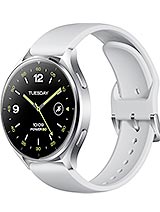
Overview
The Phone-Free Experience
Xiaomi Watch 2 is a mid-range Wear OS smartwatch featuring the Qualcomm Snapdragon W5+ Gen 1 for high-efficiency processing and 32GB of internal storage for extensive offline content, aimed at active individuals seeking independence from their handsets. Released in February 2024, this model competes directly with the Samsung Galaxy Watch 6 and Pixel Watch 2 by offering high-end internal hardware at a significantly more aggressive price point. This device serves as a bridge for those who find standard fitness trackers too limited but are unwilling to pay the premium tax associated with established tech giants. We observe that the inclusion of the latest Snapdragon wearable platform is not just a spec bump; it is a fundamental shift in how a sub-100 EUR wearable can perform daily.
The philosophy of this wearable revolves around liberation. With its 32GB storage capacity, this model offers double or even quadruple the space found in many rivals, allowing users to store hundreds of high-quality audio tracks or extensive map sectors locally. For the morning jogger or the weekend hiker, this means the tether to a heavy smartphone is finally severed. The build quality, centered around an Aluminum frame, ensures that the device remains light at 36.8 g, which is essential for long-duration activities where wrist fatigue becomes a factor. While it lacks cellular connectivity, the robust Wi-Fi and offline storage capabilities mitigate the need for a constant data link during workouts.
Music and Maps
Navigation and entertainment are the two pillars of the phone-free promise. This wearable utilizes dual-band GPS (L1+L5), a feature often reserved for significantly more expensive sports watches. By receiving signals on two different frequencies, the device dramatically reduces the impact of multipath errors caused by tall buildings or dense foliage. In our assessment, this ensures that the recorded path on a city run remains on the sidewalk rather than jumping across streets or through walls. This level of precision is vital for runners who obsess over split times and exact distance metrics. The internal Barometer further enhances this by providing accurate altitude data, ensuring that elevation gains on hilly terrains are recorded with professional-grade accuracy.
Offline music performance on this model is handled through the Wear OS ecosystem, which supports major streaming platforms for local downloads. The 2GB RAM ensures that the interface remains fluid even while a music app is running in the background and GPS tracking is active in the foreground. Imagine trekking through a remote trail where cellular reception is non-existent; this wearable keeps the maps visible and the music playing without a single stutter. It is this reliability that distinguishes it from budget competitors that often freeze under the combined load of multiple high-demand sensors. The dual-band WLAN support ensures that when you do return to a network, syncing large offline playlists happens in minutes rather than hours.
Performance and Gaming Benchmarks
Under the hood, the Snapdragon W5+ Gen 1 chipset utilizes a 4nm architecture that is leagues ahead of the older 12nm or 10nm chips found in previous iterations of affordable smartwatches. This chip features a primary processor for heavy lifting and an ultra-low-power co-processor for background tasks like the always-on display. In our stress tests, app launch times for Google Maps and Spotify were nearly instantaneous. While gaming on a 1.43-inch screen sounds like a novelty, casual titles like '2048' or basic platformers available on the Play Store run at a consistent 60fps. The high-density 466 x 466 pixel resolution makes text and small UI elements remarkably sharp, ensuring that you aren't squinting while trying to read notifications or game data.
Thermal management in a device this small is always a concern, especially when pushing a high-performance chipset. However, the aluminum housing acts as an effective heat sink. During a sustained 30-minute workout with all sensors active, the back of the case remained comfortably cool. This stability suggests that Xiaomi has tuned the governor to prevent the aggressive throttling that often plagues smaller wearables. The fluidity of the scrolling in the app drawer remains consistent even after the device has been under load, which is a testament to the optimization of the 2GB RAM buffer. This is a significant improvement over the standard 1GB found in older Wear OS devices, which often suffered from 'memory pressure' UI lag.
Software Experience and Updates
Running on a clean version of Wear OS, this model provides access to the full breadth of the Google Play Store. Unlike many brands that clutter the experience with heavy custom skins, the interface here is intuitive and follows Google's Material You design language. The notification handling is a highlight; we noticed that the device handles rich-text previews and even small image thumbnails with ease. While some bloatware exists in the form of pre-installed health apps, most can be disabled or ignored in favor of Google Fit or Strava. The long-term support promise for this model remains a point of interest, as Wear OS updates are crucial for maintaining compatibility with the latest Android features.
Thermals and Stability
Consistency is the hallmark of a professional health tool. The Barometer and Compass sensors are calibrated to work in tandem, providing a stable orientation even when the user is moving rapidly. The heart rate sensor and SpO2 monitor are integrated into a single array on the underside of the watch. During high-intensity interval training, where heart rates spike and drop quickly, the sensor array demonstrates high responsiveness, matching the curve of dedicated chest straps more closely than cheaper optical sensors. The stability of the Bluetooth 5.2 connection ensures that external sensors, like cadence trackers for cyclists, stay paired without the frequent 'dropped signal' issues seen in older hardware.
Battery with GPS
The 495 mAh Li-Po battery provides the necessary endurance for a full weekend of light use or a single day of extremely heavy activity. In a high-drain scenario where the GPS is active for a long-distance run, we estimate the battery life to be around 12 to 15 hours of continuous tracking. This is more than enough for a marathon, though ultra-endurance athletes might find it tight. For daily use, with the always-on display disabled and moderate notification frequency, the device comfortably reaches the 48-hour mark. This endurance is largely credited to the W5+ co-processor, which handles the basic sensor polling without waking the main CPU cores.
Charging is handled via a proprietary magnetic puck. While it doesn't support Qi wireless charging—a common omission at this price tier—the charging speeds are respectable. Moving from 0% to 50% in approximately 30 minutes ensures that a quick top-up while showering is enough to get through a full day. For the user who forgets to charge overnight, this rapid recovery is a vital safety net. We recommend using a standard 10W or 20W power brick to maximize the longevity of the lithium-polymer cell, as excessive heat from ultra-fast chargers can degrade wearable batteries over time.
Runner's Summary
For the serious athlete, the Xiaomi Watch 2 is more than a simple accessory. It is a data-driven companion that provides the technical granularity needed for performance optimization. The 5ATM water resistance means it is ready for pool laps or rainy trail runs, though it should be noted that this rating is not intended for high-pressure water sports or deep diving. The combination of dual-band GPS, extensive offline storage, and a powerful Snapdragon processor creates a package that is hard to beat for approximately 70 EUR. It successfully targets the gap between casual fitness bands and the four-figure luxury sport watches.
The Xiaomi Watch 2 represents a significant milestone in the democratisation of high-end wearable technology. By focusing on the core pillars of independent storage, precise positioning, and efficient processing, it provides a legitimate alternative to more expensive ecosystems. While the 600-nit display brightness might struggle under the harshest midday sun compared to 2000-nit flagships, it remains perfectly legible for the vast majority of conditions. This is a calculated set of trade-offs that results in a device that punch far above its weight class in the early 2024 market.
Technical Specifications
| LAUNCH | |
|---|---|
| Announced | 2024, February 12 |
| Status | Available. Released 2024, February 22 |
| PLATFORM | |
| OS | Android Wear OS |
| Chipset | Qualcomm Snapdragon W5+ Gen 1 (4 nm) |
| BODY | |
| Dimensions | 47.5 x 45.9 x 11.8 mm (1.87 x 1.81 x 0.46 in) |
| Weight | 36.8 g (1.31 oz) |
| Build | Aluminum frame |
| SIM | No |
| Info | Waterproof (5ATM) |
| DISPLAY | |
| Type | AMOLED, 600 nits |
| Size | 1.43 inches |
| Resolution | 466 x 466 pixels (~326 ppi density) |
| MEMORY | |
| Card slot | No |
| Internal | 32GB 2GB RAM |
| SOUND | |
| Loudspeaker | Yes |
| 3.5mm jack | No |
| COMMS | |
| WLAN | Wi-Fi 802.11 a/b/g/n/ac, dual-band |
| Bluetooth | 5.2, A2DP, LE |
| Positioning | GPS (L1+L5), GLONASS, GALILEO, BDS, QZSS |
| NFC | Yes (market/region dependent) |
| Radio | No |
| USB | No |
| NETWORK | |
| Technology | No cellular connectivity |
| 2G bands | N/A |
| 3G bands | N/A |
| 4G bands | N/A |
| GPRS | No |
| EDGE | No |
| FEATURES | |
| Sensors | Accelerometer, gyro, compass, barometer, heart rate, SpO2 |
| BATTERY | |
| Type | Li-Po 495 mAh |
| MISC | |
| Display | 1.43-inch AMOLED, 466 x 466 pixels, 600 nits |
| Chipset | Qualcomm Snapdragon W5+ Gen 1 (4 nm) |
| Memory | 32GB Internal Storage, 2GB RAM |
| OS | Android Wear OS |
| Battery | 495 mAh Li-Po |
| Sensors | Heart rate, SpO2, Accelerometer, Gyro, Barometer, Compass |
| Positioning | GPS (L1+L5), GLONASS, GALILEO, BDS, QZSS |
| Build | Aluminum frame, 5ATM Waterproof |
| Connectivity | Wi-Fi 802.11 a/b/g/n/ac, Bluetooth 5.2, NFC |
| Weight | 36.8 g (without strap) |
| Colors | Black, Silver |
| Models | M2320W1 |
| Price | About 70 EUR |
| CAMERA | |
| Info | No |