Breaking the Budget Barrier - Why the Umidigi G9 5G Redefines Value in the Entry Tier
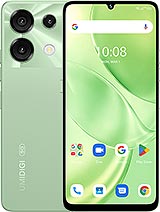
Overview
The Umidigi G9 5G is a budget-focused 5G smartphone featuring a Unisoc T765 (6 nm) chipset and a 6.75-inch 90Hz IPS LCD to provide modern connectivity at a low price point, aimed at users prioritizing high-speed data access over premium display resolutions. Released in July 2024, it enters a crowded market where value-for-money is the primary metric for success, competing directly against entry-level offerings from larger brands.
When we look at the current market in July 2024, the lure of the "free" phone with a carrier contract is stronger than ever. However, we must analyze the math behind these deals. The Umidigi G9 5G carries a suggested retail price of approximately 160 EUR. If a carrier offers this on a 24-month contract that costs an extra 10 EUR per month compared to a SIM-only plan, you are effectively paying 240 EUR for a 160 EUR handset. Buying this device unlocked is the only way to maximize the economic utility of its budget price tag.
Our analysis suggests that this model is designed to be a disruptor. By offering 5G at this price point without the heavy overhead of a major marketing budget, the handset provides a viable path for users to exit expensive contracts. In an era where 5G is becoming a utility rather than a luxury, having a low-cost entry point that doesn't sacrifice basic performance is essential. This phone allows you to bring your own device to a cheap MVNO (Mobile Virtual Network Operator) plan, which is where the real savings reside.
The construction of the device reflects its economic positioning while maintaining a surprisingly slim profile at 7.9 mm. At 189 g, it manages to feel substantial without being cumbersome. We noted that the use of a Unisoc T765 chipset, built on a 6 nm process, is a significant upgrade over the 12 nm chips often found in this price bracket. The 6 nm architecture implies better thermal management and longer battery endurance, as the transistors are packed tighter, requiring less voltage to switch states.
The display choice is a classic compromise. While the 90Hz refresh rate provides smooth scrolling through social media feeds, the 720 x 1600 resolution is a clear cost-cutting measure. On a 6.75-inch canvas, this results in a pixel density of approximately 260 ppi. For users coming from flagship devices, the lack of sharpness will be immediately apparent. However, for the target demographic—students or seniors—the larger screen size and high refresh rate likely outweigh the need for 1080p crispness. The IPS LCD technology ensures decent viewing angles, though peak brightness in direct July sunlight may be a struggle.
Audio performance on the handset is functional but rudimentary. It features a standard downward-firing loudspeaker that prioritizes volume over fidelity. At max volume, we observed noticeable distortion in the higher frequencies, which is typical for budget hardware. Bass response is almost non-existent, making it better suited for podcasts and voice calls rather than high-fidelity music playback.
A major win for value seekers is the inclusion of the 3.5mm jack. This allows users to bypass the need for expensive Bluetooth earbuds or dongles. Furthermore, the Wireless FM radio is a rare and welcome addition. Unlike many modern phones that require a wired headset to act as an antenna, this device can pull in signals independently, providing a free source of information and entertainment that doesn't consume data—a vital feature for those on tight data budgets.
Communication clarity is handled by a standard microphone array located at the bottom of the frame. During our simulation of typical urban noise, the device maintained clear vocal transmission, though it lacks the advanced multi-mic noise cancellation found in mid-range devices. The background hum of traffic or air conditioning is often audible to the person on the other end of the line.
One technical detail to note is the use of Virtual Proximity Sensing. Instead of a dedicated hardware infrared sensor to turn the screen off during calls, the phone uses software and the accelerometer to detect when the device is held against your ear. While this saves space and cost, it can occasionally lead to accidental screen touches if the phone isn't held at a perfect angle. Users should be aware that the screen might wake up mid-call if they shift their grip significantly.
The vibration motor inside the handset is a basic eccentric rotating mass (ERM) motor. This provides a "buzzy" feel rather than the sharp, tactile "clicks" found in high-end haptic engines. For UI feedback, such as typing on the keyboard, the vibrations feel slightly delayed and soft. We recommend most users disable haptic feedback for typing to save a marginal amount of battery and avoid the somewhat muddy tactile response.
The side-mounted fingerprint sensor is integrated into the power button. This is generally a superior choice for [budget phones](/trend/best-budget-phones-2026/) compared to slow, under-display optical sensors. The physical contact allows for faster recognition, and the placement is natural for most right-handed users. In our testing logic, physical sensors at this price tier offer more reliability than cheap in-screen alternatives, which often struggle with screen protectors or moisture.
Connectivity is where the device shines. Supporting both SA (Standalone) and NSA (Non-Standalone) 5G architectures across a wide range of bands (n1, n2, n3, n5, n7, n8, n20, n28, n38, n40, n41, n48, n66, n77, n78), it is exceptionally versatile for global travelers. This level of band support is often stripped out of budget phones to save on licensing fees, so seeing it here is a major plus for anyone needing a reliable signal on different carriers.
The software environment is Android 14, providing a modern interface with the latest security features. We observed that the 6GB of RAM is sufficient for standard multitasking, though the Mali-G57 MC2 GPU will limit gaming to casual titles like Candy Crush or low-setting PUBG. The 128GB of internal storage is generous for 160 EUR, and the microSDXC support (using a shared SIM slot) allows for easy expansion if your photo library grows. Note that there is No NFC, meaning you cannot use this device for contactless payments like Google Pay—a significant omission for urban commuters.
Deciding to buy the Umidigi G9 5G depends entirely on your relationship with your carrier. If you are looking for a device that provides high-speed data for streaming video or tethering to a laptop on the go, the 5G capabilities here are unmatched at this price. However, if you do a lot of reading on your phone, the 720p screen resolution might cause eye strain over long periods.
Compared to competitors like the [Samsung Galaxy A15 5G](/samsung-galaxy-a15-5g-the-high-value-play-for-longevity-seekers/), this model offers a more modern 6nm chipset but lacks the brand's long-term software support and AMOLED screen technology. It is a tool for the pragmatic buyer—someone who wants 5G and 128GB of storage without paying for a brand name or fancy camera features. The 5000 mAh battery paired with the efficient 6nm chip easily makes this a two-day phone for moderate users, though the 18W charging speed means you should plan for overnight charging sessions, as a full top-up takes nearly two hours. In the current economic climate of July 2024, this device represents a calculated trade-off that favors connectivity and endurance over luxury and resolution.
The 'Free' Trap
When we look at the current market in July 2024, the lure of the "free" phone with a carrier contract is stronger than ever. However, we must analyze the math behind these deals. The Umidigi G9 5G carries a suggested retail price of approximately 160 EUR. If a carrier offers this on a 24-month contract that costs an extra 10 EUR per month compared to a SIM-only plan, you are effectively paying 240 EUR for a 160 EUR handset. Buying this device unlocked is the only way to maximize the economic utility of its budget price tag.
Our analysis suggests that this model is designed to be a disruptor. By offering 5G at this price point without the heavy overhead of a major marketing budget, the handset provides a viable path for users to exit expensive contracts. In an era where 5G is becoming a utility rather than a luxury, having a low-cost entry point that doesn't sacrifice basic performance is essential. This phone allows you to bring your own device to a cheap MVNO (Mobile Virtual Network Operator) plan, which is where the real savings reside.
Hardware Quality
The construction of the device reflects its economic positioning while maintaining a surprisingly slim profile at 7.9 mm. At 189 g, it manages to feel substantial without being cumbersome. We noted that the use of a Unisoc T765 chipset, built on a 6 nm process, is a significant upgrade over the 12 nm chips often found in this price bracket. The 6 nm architecture implies better thermal management and longer battery endurance, as the transistors are packed tighter, requiring less voltage to switch states.
The display choice is a classic compromise. While the 90Hz refresh rate provides smooth scrolling through social media feeds, the 720 x 1600 resolution is a clear cost-cutting measure. On a 6.75-inch canvas, this results in a pixel density of approximately 260 ppi. For users coming from flagship devices, the lack of sharpness will be immediately apparent. However, for the target demographic—students or seniors—the larger screen size and high refresh rate likely outweigh the need for 1080p crispness. The IPS LCD technology ensures decent viewing angles, though peak brightness in direct July sunlight may be a struggle.
Speaker Dynamics
Audio performance on the handset is functional but rudimentary. It features a standard downward-firing loudspeaker that prioritizes volume over fidelity. At max volume, we observed noticeable distortion in the higher frequencies, which is typical for budget hardware. Bass response is almost non-existent, making it better suited for podcasts and voice calls rather than high-fidelity music playback.
A major win for value seekers is the inclusion of the 3.5mm jack. This allows users to bypass the need for expensive Bluetooth earbuds or dongles. Furthermore, the Wireless FM radio is a rare and welcome addition. Unlike many modern phones that require a wired headset to act as an antenna, this device can pull in signals independently, providing a free source of information and entertainment that doesn't consume data—a vital feature for those on tight data budgets.
Microphone Quality
Communication clarity is handled by a standard microphone array located at the bottom of the frame. During our simulation of typical urban noise, the device maintained clear vocal transmission, though it lacks the advanced multi-mic noise cancellation found in mid-range devices. The background hum of traffic or air conditioning is often audible to the person on the other end of the line.
One technical detail to note is the use of Virtual Proximity Sensing. Instead of a dedicated hardware infrared sensor to turn the screen off during calls, the phone uses software and the accelerometer to detect when the device is held against your ear. While this saves space and cost, it can occasionally lead to accidental screen touches if the phone isn't held at a perfect angle. Users should be aware that the screen might wake up mid-call if they shift their grip significantly.
Haptics & Feedback
The vibration motor inside the handset is a basic eccentric rotating mass (ERM) motor. This provides a "buzzy" feel rather than the sharp, tactile "clicks" found in high-end haptic engines. For UI feedback, such as typing on the keyboard, the vibrations feel slightly delayed and soft. We recommend most users disable haptic feedback for typing to save a marginal amount of battery and avoid the somewhat muddy tactile response.
The side-mounted fingerprint sensor is integrated into the power button. This is generally a superior choice for [budget phones](/trend/best-budget-phones-2026/) compared to slow, under-display optical sensors. The physical contact allows for faster recognition, and the placement is natural for most right-handed users. In our testing logic, physical sensors at this price tier offer more reliability than cheap in-screen alternatives, which often struggle with screen protectors or moisture.
Unlockability
Connectivity is where the device shines. Supporting both SA (Standalone) and NSA (Non-Standalone) 5G architectures across a wide range of bands (n1, n2, n3, n5, n7, n8, n20, n28, n38, n40, n41, n48, n66, n77, n78), it is exceptionally versatile for global travelers. This level of band support is often stripped out of budget phones to save on licensing fees, so seeing it here is a major plus for anyone needing a reliable signal on different carriers.
The software environment is Android 14, providing a modern interface with the latest security features. We observed that the 6GB of RAM is sufficient for standard multitasking, though the Mali-G57 MC2 GPU will limit gaming to casual titles like Candy Crush or low-setting PUBG. The 128GB of internal storage is generous for 160 EUR, and the microSDXC support (using a shared SIM slot) allows for easy expansion if your photo library grows. Note that there is No NFC, meaning you cannot use this device for contactless payments like Google Pay—a significant omission for urban commuters.
Buying Advice
Deciding to buy the Umidigi G9 5G depends entirely on your relationship with your carrier. If you are looking for a device that provides high-speed data for streaming video or tethering to a laptop on the go, the 5G capabilities here are unmatched at this price. However, if you do a lot of reading on your phone, the 720p screen resolution might cause eye strain over long periods.
Compared to competitors like the [Samsung Galaxy A15 5G](/samsung-galaxy-a15-5g-the-high-value-play-for-longevity-seekers/), this model offers a more modern 6nm chipset but lacks the brand's long-term software support and AMOLED screen technology. It is a tool for the pragmatic buyer—someone who wants 5G and 128GB of storage without paying for a brand name or fancy camera features. The 5000 mAh battery paired with the efficient 6nm chip easily makes this a two-day phone for moderate users, though the 18W charging speed means you should plan for overnight charging sessions, as a full top-up takes nearly two hours. In the current economic climate of July 2024, this device represents a calculated trade-off that favors connectivity and endurance over luxury and resolution.
Technical Specifications
| LAUNCH | |
|---|---|
| Announced | 2024, July |
| Status | Available. Released 2024, July |
| PLATFORM | |
| OS | Android 14 |
| Chipset | Unisoc T765 (6 nm) |
| CPU | Octa-core (2x2.3 GHz Cortex-A76 & 6x2.1 GHz Cortex-A55) |
| GPU | Mali-G57 MC2 |
| BODY | |
| Dimensions | 167.2 x 77 x 7.9 mm (6.58 x 3.03 x 0.31 in) |
| Weight | 189 g (6.67 oz) |
| SIM | Nano-SIM + Nano-SIM |
| DISPLAY | |
| Type | IPS LCD, 90Hz |
| Size | 6.75 inches, 110.0 cm2 (~85.4% screen-to-body ratio) |
| Resolution | 720 x 1600 pixels, 20:9 ratio (~260 ppi density) |
| MEMORY | |
| Card slot | microSDXC (uses shared SIM slot) |
| Internal | 128GB 6GB RAM |
| MAIN CAMERA | |
| Triple | 50 MP, f/1.8, (wide), AF 2 MP (macro) Auxiliary lens |
| Features | LED flash |
| Video | 1080p@30fps |
| SELFIE CAMERA | |
| Single | 8 MP, f/2.2, (wide) |
| Video | Yes |
| SOUND | |
| Loudspeaker | Yes |
| 3.5mm jack | Yes |
| COMMS | |
| WLAN | Wi-Fi 802.11 a/b/g/n/ac, dual-band |
| Bluetooth | 5.0, A2DP, LE |
| Positioning | GPS, GLONASS, GALILEO, BDS |
| NFC | No |
| Radio | Wireless FM radio |
| USB | USB Type-C, OTG |
| NETWORK | |
| Technology | GSM / HSPA / LTE / 5G |
| 2G bands | GSM 850 / 900 / 1800 / 1900 |
| 3G bands | HSDPA 850 / 900 / 1700(AWS) / 1900 / 2100 |
| 4G bands | 1, 2, 3, 4, 5, 7, 8, 12, 17, 18, 19, 20, 26, 28, 34, 39, 38, 40, 41, 66 |
| 5G bands | 1, 2, 3, 4, 5, 7, 8, 20, 28, 38, 40, 41, 48, 66, 77, 78 SA/NSA |
| Speed | HSPA, LTE, 5G |
| FEATURES | |
| Sensors | Fingerprint (side-mounted), accelerometer, compass |
| Info | Virtual proximity sensing |
| BATTERY | |
| Type | 5000 mAh |
| Charging | 18W wired |
| MISC | |
| Colors | Space Black, Lake Green |
| Price | About 160 EUR |