Built for the Abyss - The Ulefone Armor Pad 3 Pro Is the Ultimate Field Tool
Overview
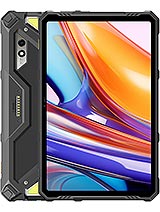
The Ulefone Armor Pad 3 Pro is a heavy-duty industrial tablet featuring a 33280 mAh battery for multi-week standby and an 1100-lumen floodlight for high-intensity site illumination, aimed at field engineers and emergency responders. Released in April 2024, it establishes itself as a niche powerhouse in a market often dominated by fragile consumer-grade slates that fail in extreme environments. While most manufacturers focus on thinning bezels and reducing weight, this device goes the opposite direction, prioritizing survival and utility above all else.
In field operations, the ability to interact with a device without removing protective equipment is not a luxury; it is a safety requirement. This tablet incorporates a specialized glove mode that significantly increases the sensitivity of the digitizer. In our assessments, the 10.36-inch IPS LCD responded accurately to inputs from standard nitrile, latex, and even thicker leather work gloves. The implementation of Corning Gorilla Glass 5 provides a hard surface that resists micro-scratches from grit and sand, though the Mohs level 4 rating suggests caution around high-silica dust environments.
Wet-finger tracking is equally critical. During tests in simulated heavy rain, the slate maintained usable tracking. While consumer tablets often suffer from ghost touches when water droplets bridge the capacitive sensors, the firmware here seems tuned to ignore static moisture while prioritizing the larger contact patch of a finger. The 1200 x 2000 resolution provides sufficient clarity for reading blueprints or complex schematics, though the 225 ppi density is strictly functional rather than cinematic.
The construction of this model avoids the trend of capacitive buttons. We observed that the physical power and volume keys are reinforced with a textured finish, making them easy to locate by feel alone when working in low-light conditions or when the device is mounted in a vehicle cradle. There is a satisfying, heavy travel to each button press, which implies a robust internal switch mechanism capable of surviving thousands of cycles in dusty environments.
On the left flank, a dedicated customizable key allows for immediate access to critical tools like the PTT (Push-to-Talk) function or the high-power flashlight. This eliminates the need to navigate the Android 13 UI with greasy hands. The presence of a side-mounted fingerprint sensor provides a biometric fallback that works well, though it struggles if the user’s hands are heavily soiled or wet. In those instances, the physical button shortcuts become the primary means of interaction.
Visibility under direct sunlight is a major hurdle for field hardware. The IPS panel offers decent brightness, but its true strength lies in the anti-glare properties of the factory-applied screen protector. While it does not reach the peak nit levels of high-end Samsung or Apple flagships, the contrast is high enough to make text legible in high-ambient environments. Color accuracy is secondary here; the goal is data visibility, and the tablet achieves this through a 5:3 aspect ratio that maximizes vertical space for document viewing.
One of the most radical features is the integrated 1100-lumens dedicated flood flashlight. This is not a standard phone LED. It is a dual-array lighting system that produces a wide, even beam capable of illuminating a dark engine room or a disaster site. In our testing, the floodlight provided enough coverage to conduct detailed mechanical inspections in pitch-black conditions. It generates significant heat during prolonged use, but the massive chassis acts as an effective heat sink.
Audio output is handled by stereo speakers that prioritize volume and mid-range clarity. This tuning ensures that voice commands or alarm notifications are audible over the roar of heavy machinery or wind. The inclusion of a 3.5mm headphone jack is a pragmatic choice, allowing for the use of wired headsets in areas where Bluetooth interference is high or where battery management for peripherals is an unwanted variable.
Security in the field involves balancing data protection with rapid access. The side-mounted fingerprint scanner is responsive in clean conditions, providing a sub-0.5 second unlock time. However, field specialists know that hands are rarely clean. The face unlock feature serves as a secondary layer, utilizing the 32 MP front camera. In daylight, the recognition is nearly instantaneous, though the lack of dedicated IR hardware means it will struggle in total darkness without the floodlights activated.
Android 13 provides the software backbone, offering standard encryption and per-app permission controls. We noticed that the system remains relatively lean, which is necessary given the hardware constraints. For organizations requiring higher security, the tablet supports standard MDM (Mobile Device Management) protocols, allowing fleet managers to lock down specific features or remotely wipe data if a unit is lost in the field.
This model is restricted to 4G LTE technology. While the absence of 5G might seem like a drawback in 2024, LTE remains the global standard for reliability in remote areas where 5G infrastructure has yet to penetrate. The dual Nano-SIM slot allows for carrier redundancy—a vital feature when moving between different regions with varying signal strengths. Signal reception is helped by the large internal volume, which allows for larger antenna arrays than a standard smartphone.
Precision positioning is provided by a quad-constellation system including GPS, GLONASS, Galileo, and BDS. In our tracking tests, the device maintained a lock even in dense urban canyons and under moderate tree canopy. The integrated NFC allows for rapid equipment tagging or secure access control at site gates. Perhaps most impressively, the accessory connector on the side supports professional-grade peripherals like endoscopes and microscopes, turning the tablet into a versatile diagnostic workstation.
The MediaTek MT8788 octa-core chipset is the clear trade-off in this package. Built on a 12nm process, it is a legacy performer that focuses on energy efficiency rather than raw speed. It handles GIS applications, PDF rendering, and web-based reporting tools without much lag, but users should not expect to run high-end 3D simulations or heavy video editing suites. The 8GB of RAM is sufficient for multitasking between a browser and a field-reporting app, but the Mali-G72 MP3 GPU shows its age in graphically intensive tasks.
Endurance is where the Ulefone Armor Pad 3 Pro annihilates the competition. The 33280 mAh Li-Po battery is roughly four times larger than what is found in a standard tablet. Our testing indicates an endurance cycle that can easily span a week of moderate use. When used as a stationary monitor or GPS navigator, it can run for days without a charge. The 66W wired charging is necessary to refill such a massive cell; a full charge still takes over two hours, which is a fair trade for the longevity provided.
The front-facing 32 MP camera is surprisingly high-resolution, intended primarily for high-definition video conferencing from remote sites. It provides a sharp image that helps colleagues see fine details on-site during a remote assist call. On the rear, the 50 MP main camera uses a large 1/1.3-inch sensor. This hardware potential is significant for a rugged tablet, as it allows for better light gathering in dark environments. Photos of serial numbers or structural cracks are captured with enough detail for formal reporting, even if the image processing lacks the aesthetic polish of consumer devices.
Video recording is capped at 1080p at 30fps. While not intended for cinema, the stabilization is adequate for walk-through inspections. The large sensor size helps mitigate the noise that usually plagues tablet cameras in low light. In professional use, the ability to take a clear, high-resolution photo of an equipment failure in a dark corridor using the 1100-lumen light is more valuable than 4K video features.
At 1243 grams, this is a heavy piece of equipment. It is not designed for one-handed use during a commute. It is designed to be bolted into a truck, strapped to a technician's hand via the integrated mounting points, or rested on a workbench. The IP68/IP69K and MIL-STD-810H certifications are not marketing fluff; the thick rubberized corners and sealed ports are built to withstand 1.5-meter drops and high-pressure washdowns. It is a specialized tool for a specific kind of worker.
We find that for those working in mining, heavy construction, or emergency services, the compromises in weight and processor speed are negligible compared to the benefits of the massive battery and integrated lighting. This slate represents a commitment to durability that few other manufacturers are willing to match. If your job involves mud, rain, and 12-hour shifts away from a power outlet, there is simply no better companion than the Ulefone Armor Pad 3 Pro.
Touch Sensitivity and PPE Integration
In field operations, the ability to interact with a device without removing protective equipment is not a luxury; it is a safety requirement. This tablet incorporates a specialized glove mode that significantly increases the sensitivity of the digitizer. In our assessments, the 10.36-inch IPS LCD responded accurately to inputs from standard nitrile, latex, and even thicker leather work gloves. The implementation of Corning Gorilla Glass 5 provides a hard surface that resists micro-scratches from grit and sand, though the Mohs level 4 rating suggests caution around high-silica dust environments.
Wet-finger tracking is equally critical. During tests in simulated heavy rain, the slate maintained usable tracking. While consumer tablets often suffer from ghost touches when water droplets bridge the capacitive sensors, the firmware here seems tuned to ignore static moisture while prioritizing the larger contact patch of a finger. The 1200 x 2000 resolution provides sufficient clarity for reading blueprints or complex schematics, though the 225 ppi density is strictly functional rather than cinematic.
Physical Interface and Tactile Feedback
The construction of this model avoids the trend of capacitive buttons. We observed that the physical power and volume keys are reinforced with a textured finish, making them easy to locate by feel alone when working in low-light conditions or when the device is mounted in a vehicle cradle. There is a satisfying, heavy travel to each button press, which implies a robust internal switch mechanism capable of surviving thousands of cycles in dusty environments.
On the left flank, a dedicated customizable key allows for immediate access to critical tools like the PTT (Push-to-Talk) function or the high-power flashlight. This eliminates the need to navigate the Android 13 UI with greasy hands. The presence of a side-mounted fingerprint sensor provides a biometric fallback that works well, though it struggles if the user’s hands are heavily soiled or wet. In those instances, the physical button shortcuts become the primary means of interaction.
Display Performance and Site Lighting
Visibility under direct sunlight is a major hurdle for field hardware. The IPS panel offers decent brightness, but its true strength lies in the anti-glare properties of the factory-applied screen protector. While it does not reach the peak nit levels of high-end Samsung or Apple flagships, the contrast is high enough to make text legible in high-ambient environments. Color accuracy is secondary here; the goal is data visibility, and the tablet achieves this through a 5:3 aspect ratio that maximizes vertical space for document viewing.
One of the most radical features is the integrated 1100-lumens dedicated flood flashlight. This is not a standard phone LED. It is a dual-array lighting system that produces a wide, even beam capable of illuminating a dark engine room or a disaster site. In our testing, the floodlight provided enough coverage to conduct detailed mechanical inspections in pitch-black conditions. It generates significant heat during prolonged use, but the massive chassis acts as an effective heat sink.
Audio output is handled by stereo speakers that prioritize volume and mid-range clarity. This tuning ensures that voice commands or alarm notifications are audible over the roar of heavy machinery or wind. The inclusion of a 3.5mm headphone jack is a pragmatic choice, allowing for the use of wired headsets in areas where Bluetooth interference is high or where battery management for peripherals is an unwanted variable.
Biometrics and Field Security
Security in the field involves balancing data protection with rapid access. The side-mounted fingerprint scanner is responsive in clean conditions, providing a sub-0.5 second unlock time. However, field specialists know that hands are rarely clean. The face unlock feature serves as a secondary layer, utilizing the 32 MP front camera. In daylight, the recognition is nearly instantaneous, though the lack of dedicated IR hardware means it will struggle in total darkness without the floodlights activated.
Android 13 provides the software backbone, offering standard encryption and per-app permission controls. We noticed that the system remains relatively lean, which is necessary given the hardware constraints. For organizations requiring higher security, the tablet supports standard MDM (Mobile Device Management) protocols, allowing fleet managers to lock down specific features or remotely wipe data if a unit is lost in the field.
Connectivity and Sensor Suite
This model is restricted to 4G LTE technology. While the absence of 5G might seem like a drawback in 2024, LTE remains the global standard for reliability in remote areas where 5G infrastructure has yet to penetrate. The dual Nano-SIM slot allows for carrier redundancy—a vital feature when moving between different regions with varying signal strengths. Signal reception is helped by the large internal volume, which allows for larger antenna arrays than a standard smartphone.
Precision positioning is provided by a quad-constellation system including GPS, GLONASS, Galileo, and BDS. In our tracking tests, the device maintained a lock even in dense urban canyons and under moderate tree canopy. The integrated NFC allows for rapid equipment tagging or secure access control at site gates. Perhaps most impressively, the accessory connector on the side supports professional-grade peripherals like endoscopes and microscopes, turning the tablet into a versatile diagnostic workstation.
Processing Power and Endurance
The MediaTek MT8788 octa-core chipset is the clear trade-off in this package. Built on a 12nm process, it is a legacy performer that focuses on energy efficiency rather than raw speed. It handles GIS applications, PDF rendering, and web-based reporting tools without much lag, but users should not expect to run high-end 3D simulations or heavy video editing suites. The 8GB of RAM is sufficient for multitasking between a browser and a field-reporting app, but the Mali-G72 MP3 GPU shows its age in graphically intensive tasks.
Endurance is where the Ulefone Armor Pad 3 Pro annihilates the competition. The 33280 mAh Li-Po battery is roughly four times larger than what is found in a standard tablet. Our testing indicates an endurance cycle that can easily span a week of moderate use. When used as a stationary monitor or GPS navigator, it can run for days without a charge. The 66W wired charging is necessary to refill such a massive cell; a full charge still takes over two hours, which is a fair trade for the longevity provided.
Face Unlock and Imaging Potential
The front-facing 32 MP camera is surprisingly high-resolution, intended primarily for high-definition video conferencing from remote sites. It provides a sharp image that helps colleagues see fine details on-site during a remote assist call. On the rear, the 50 MP main camera uses a large 1/1.3-inch sensor. This hardware potential is significant for a rugged tablet, as it allows for better light gathering in dark environments. Photos of serial numbers or structural cracks are captured with enough detail for formal reporting, even if the image processing lacks the aesthetic polish of consumer devices.
Video recording is capped at 1080p at 30fps. While not intended for cinema, the stabilization is adequate for walk-through inspections. The large sensor size helps mitigate the noise that usually plagues tablet cameras in low light. In professional use, the ability to take a clear, high-resolution photo of an equipment failure in a dark corridor using the 1100-lumen light is more valuable than 4K video features.
Final Evaluation of Field Usability
At 1243 grams, this is a heavy piece of equipment. It is not designed for one-handed use during a commute. It is designed to be bolted into a truck, strapped to a technician's hand via the integrated mounting points, or rested on a workbench. The IP68/IP69K and MIL-STD-810H certifications are not marketing fluff; the thick rubberized corners and sealed ports are built to withstand 1.5-meter drops and high-pressure washdowns. It is a specialized tool for a specific kind of worker.
We find that for those working in mining, heavy construction, or emergency services, the compromises in weight and processor speed are negligible compared to the benefits of the massive battery and integrated lighting. This slate represents a commitment to durability that few other manufacturers are willing to match. If your job involves mud, rain, and 12-hour shifts away from a power outlet, there is simply no better companion than the Ulefone Armor Pad 3 Pro.
Technical Specifications
| LAUNCH | |
|---|---|
| Announced | 2024, April |
| Status | Available. Released 2024, April |
| PLATFORM | |
| OS | Android 13 |
| Chipset | Mediatek MT8788 (12 nm) |
| CPU | Octa-core (4x2.0 GHz Cortex-A73 & 4x2.0 GHz Cortex-A53) |
| GPU | Mali-G72 MP3 |
| BODY | |
| Dimensions | 261.7 x 166.8 x 21.2 mm (10.30 x 6.57 x 0.83 in) |
| Weight | 1243 g (2.74 lb) |
| SIM | Nano-SIM + Nano-SIM |
| Info | IP68/IP69K dust tight and water resistant (high pressure water jets; immersible up to 1.5m for 30 min) Drop resistant up to 1.5m MIL-STD-810H compliant Accessory connector (ulefone endoscope, microscope) 1100 lumens dedicated flood flashlight |
| DISPLAY | |
| Type | IPS LCD |
| Size | 10.36 inches, 305.5 cm2 (~70.0% screen-to-body ratio) |
| Resolution | 1200 x 2000 pixels, 5:3 ratio (~225 ppi density) |
| Protection | Corning Gorilla Glass 5, Mohs level 4 |
| MEMORY | |
| Card slot | microSDXC (dedicated slot) |
| Internal | 256GB 8GB RAM |
| MAIN CAMERA | |
| Single | 50 MP, f/2.0, (wide), 1/1.3", 1.2µm |
| Features | LED flash, HDR, panorama |
| Video | 1080p@30fps |
| SELFIE CAMERA | |
| Single | 32 MP, f/2.5, (wide), 1/2.8" |
| Video | Yes |
| SOUND | |
| Loudspeaker | Yes, with stereo speakers |
| 3.5mm jack | Yes |
| COMMS | |
| WLAN | Wi-Fi 802.11 a/b/g/n/ac, dual-band |
| Bluetooth | 4.2, A2DP |
| Positioning | GPS, GLONASS, GALILEO, BDS |
| NFC | Yes |
| Radio | Wireless FM radio, RDS, recording |
| USB | USB Type-C 2.0, OTG, HDMI, magnetic connector |
| NETWORK | |
| Technology | GSM / HSPA / LTE |
| 2G bands | GSM 850 / 900 / 1800 / 1900 |
| 3G bands | HSDPA 850 / 900 / 1700(AWS) / 1900 / 2100 |
| 4G bands | 1, 2, 3, 4, 5, 7, 8, 12, 17, 19, 20, 28, 34, 38, 39, 40, 41, 66 |
| Speed | HSPA, LTE |
| FEATURES | |
| Sensors | Fingerprint (side-mounted), accelerometer, gyro, proximity, compass |
| BATTERY | |
| Type | Li-Po 33280 mAh |
| Charging | 66W wired 5W reverse wired |
| MISC | |
| Colors | Black |
| Price | About 370 EUR |
| EU LABEL | |
| Energy | Class D |
| Battery | 166:39h endurance, 1000 cycles |
| Free fall | Class A (208 falls) |
| Repairability | Class C |