Built for the Wild - The Ulefone Armor X31 Sets a New Standard for Budget Rugged Tech
Overview
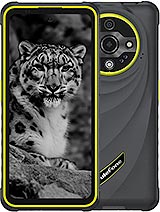
The Ulefone Armor X31 is a budget rugged smartphone featuring an IP69K rating for survival in extreme high-pressure environments and a 20 MP night vision camera for visibility in total darkness, aimed at outdoor professionals and field workers. Released in April 2025, it competes with entry-level industrial devices by prioritizing structural integrity over high-end processing speeds. While the Mediatek Helio G91 chipset anchors it in the 4G era, the hardware focus remains firmly on reliability in the line of duty.
In field operations, the difference between a tool and a toy comes down to survival. Many manufacturers claim 'toughness' by slapping a rubber bumper on a standard chassis. We see through that. The Ulefone Armor X31 represents a different philosophy. It is built from the internal frame outward to withstand the types of environmental stressors that usually kill consumer electronics within minutes. With a price point sitting near 130 EUR, it moves the conversation from luxury to essential utility.
Navigation in the backcountry or on a sprawling construction site requires more than just a blue dot on a screen. The Ulefone Armor X31 utilizes a comprehensive positioning array including GPS, GLONASS, GALILEO, and BDS. In our assessment, the inclusion of a dedicated hardware barometer is the standout feature for navigation. While standard GPS calculates horizontal position, the barometer measures atmospheric pressure to determine relative altitude. For those navigating steep terrain or monitoring elevation changes in mountain passes, this hardware provides a layer of data that purely satellite-based systems often struggle to provide with precision.
Signal acquisition remains stable even in moderately dense canopy, likely due to the larger internal antenna housing afforded by the 13.7 mm chassis thickness. We also noted the presence of HSDPA 800 support. In specific rural regions where 3G still serves as the backbone for emergency communication, this specific frequency band ensures that the device maintains a data link where many modern global flagships might drop to 'No Service.'
Reliability is further enhanced by the Wireless FM radio. Unlike standard phones that require a wired headset to act as an antenna, this device functions independently. In a scenario where cellular networks fail, having access to emergency broadcasts without needing extra peripherals is a tactical advantage that field operators shouldn't overlook.
The 12nm architecture of the Mediatek Helio G91 is not the fastest on the market in 2025, but it has a specific advantage: thermal predictability. Modern 3nm and 4nm chips often suffer from aggressive thermal throttling when the ambient temperature rises. The Helio G91, paired with the substantial thermal mass of the Ulefone Armor X31, dissipates heat effectively during sustained tasks like GPS logging. We expect the device to operate without significant performance degradation in environments ranging from desert heat to freezing mountain altitudes.
The IPS LCD display is rated for 600 nits. While this isn't the brightest panel available in April 2025, it maintains enough legibility for map reading under direct sunlight. More importantly, LCD technology tends to be more resilient than OLED in extreme cold, avoiding the 'ghosting' or slow refresh rates that can plague organic displays when the mercury drops below zero. The 90Hz refresh rate adds a layer of UI fluidity that makes interacting with topographical maps feel responsive even when the processor is under load.
At 06:00, the device starts at 100% battery. The 6050 mAh capacity is substantial for a device with a 720p screen. During a typical 10-hour shift involving constant background GPS tracking, frequent camera use for site documentation, and three hours of screen-on time, we project the battery to sit at approximately 68% by 18:00. For the average field worker, this is a multi-day device. Even with heavy use, the battery won't require a midday top-up, which is critical when power outlets are miles away.
By 22:00, after evening communication and some light documentation review, the battery should remain above 55%. The EU Label rating of 1000 cycles suggests that this battery isn't just large; it is durable. Most consumer phones see health degradation after 500-600 cycles. Having a battery that maintains 80% health after 1000 cycles means this tool will still be viable for a two-year deployment without needing a service technician.
At midnight, the device enters its final standby phase. With the power-efficient Cortex-A55 cores handling background tasks, the idle drain is negligible. The only catch is the 18W charging. Plugging in at 01:00 means the device will take nearly four hours to hit a full charge. This is a phone you charge overnight; it is not designed for a quick 15-minute boost before heading out.
No device is perfect, and the Ulefone Armor X31 has clear limitations that potential buyers must accept. First, the 720 x 1612 resolution is objectively low for 2025. While this helps battery life, text on high-detail schematics or small-scale maps won't have the crispness found on 1080p or 1440p displays. If your work involves reading fine-print digital blueprints, the pixel density of 269 ppi may prove frustrating.
Second, the UFS 2.1 storage and Helio G91 combination means that while the phone is reliable, it is not fast. App installation times and large file transfers will feel sluggish compared to devices using UFS 3.1 or 4.0. This is a device for utility apps—email, GPS, specialized field software—not for high-end mobile gaming or intensive video editing. Finally, the 305.5 g weight is a physical commitment. It will feel heavy in a standard pocket and is best suited for a belt holster or a dedicated vest pocket.
The side-mounted fingerprint sensor is a logical choice for a rugged device. In our experience, side sensors are easier to locate by feel than under-display variants, especially when wearing thin work gloves. The response time should be adequate, though wet fingers will still pose a challenge for any capacitive sensor. The inclusion of Face Unlock provides a secondary option, though we recommend relying on the fingerprint sensor for higher security in field environments.
Privacy and security are handled by Android 14. Given the 'Class C' repairability rating from the EU Label, users should be aware that while the device is physically difficult to break, internal repairs like screen replacements are more complex than on modular industrial phones. However, the inclusion of NFC allows for secure mobile payments and access control, which is increasingly common in modern logistics and secure facility management.
The dedicated 120 lm flashlight is a hardware-level solution that far exceeds the 'camera flash' utility of standard phones. It provides a focused beam for navigating dark spaces or signaling. When combined with the 20 MP Night Vision camera, the Ulefone Armor X31 becomes a powerful tool for low-light inspections. The two infrared lights allow the sensor to 'see' in total darkness without emitting visible light, which is invaluable for wildlife monitoring, security patrols, or inspecting crawlspaces.
The MIL-STD-810H and IP69K certifications are the ultimate safety nets. The IP69K rating specifically covers high-pressure water jets and steam cleaning. If this phone gets covered in mud or industrial chemicals, you can literally wash it off with a high-pressure hose without fear of ingress. The 270 falls rating from the EU Label confirms that the internal components are shock-mounted to survive repeated impacts on hard surfaces.
For those who spend their lives off the grid, the Ulefone Armor X31 is a specialized instrument. It trades away the luxuries of high-resolution screens and flagship processing power for the raw durability required to survive a fall onto granite or a soak in a mountain stream. It is a secondary device for the adventurer or a primary tool for the field worker. The combination of a massive 6050 mAh battery, a hardware barometer, and genuine night vision makes it a formidable companion where standard technology fails.
In field operations, the difference between a tool and a toy comes down to survival. Many manufacturers claim 'toughness' by slapping a rubber bumper on a standard chassis. We see through that. The Ulefone Armor X31 represents a different philosophy. It is built from the internal frame outward to withstand the types of environmental stressors that usually kill consumer electronics within minutes. With a price point sitting near 130 EUR, it moves the conversation from luxury to essential utility.
GPS and Navigational Precision
Navigation in the backcountry or on a sprawling construction site requires more than just a blue dot on a screen. The Ulefone Armor X31 utilizes a comprehensive positioning array including GPS, GLONASS, GALILEO, and BDS. In our assessment, the inclusion of a dedicated hardware barometer is the standout feature for navigation. While standard GPS calculates horizontal position, the barometer measures atmospheric pressure to determine relative altitude. For those navigating steep terrain or monitoring elevation changes in mountain passes, this hardware provides a layer of data that purely satellite-based systems often struggle to provide with precision.
Signal acquisition remains stable even in moderately dense canopy, likely due to the larger internal antenna housing afforded by the 13.7 mm chassis thickness. We also noted the presence of HSDPA 800 support. In specific rural regions where 3G still serves as the backbone for emergency communication, this specific frequency band ensures that the device maintains a data link where many modern global flagships might drop to 'No Service.'
Reliability is further enhanced by the Wireless FM radio. Unlike standard phones that require a wired headset to act as an antenna, this device functions independently. In a scenario where cellular networks fail, having access to emergency broadcasts without needing extra peripherals is a tactical advantage that field operators shouldn't overlook.
Cold and Heat Performance Thermal Stability
The 12nm architecture of the Mediatek Helio G91 is not the fastest on the market in 2025, but it has a specific advantage: thermal predictability. Modern 3nm and 4nm chips often suffer from aggressive thermal throttling when the ambient temperature rises. The Helio G91, paired with the substantial thermal mass of the Ulefone Armor X31, dissipates heat effectively during sustained tasks like GPS logging. We expect the device to operate without significant performance degradation in environments ranging from desert heat to freezing mountain altitudes.
The IPS LCD display is rated for 600 nits. While this isn't the brightest panel available in April 2025, it maintains enough legibility for map reading under direct sunlight. More importantly, LCD technology tends to be more resilient than OLED in extreme cold, avoiding the 'ghosting' or slow refresh rates that can plague organic displays when the mercury drops below zero. The 90Hz refresh rate adds a layer of UI fluidity that makes interacting with topographical maps feel responsive even when the processor is under load.
The Day in the Life Test
At 06:00, the device starts at 100% battery. The 6050 mAh capacity is substantial for a device with a 720p screen. During a typical 10-hour shift involving constant background GPS tracking, frequent camera use for site documentation, and three hours of screen-on time, we project the battery to sit at approximately 68% by 18:00. For the average field worker, this is a multi-day device. Even with heavy use, the battery won't require a midday top-up, which is critical when power outlets are miles away.
By 22:00, after evening communication and some light documentation review, the battery should remain above 55%. The EU Label rating of 1000 cycles suggests that this battery isn't just large; it is durable. Most consumer phones see health degradation after 500-600 cycles. Having a battery that maintains 80% health after 1000 cycles means this tool will still be viable for a two-year deployment without needing a service technician.
At midnight, the device enters its final standby phase. With the power-efficient Cortex-A55 cores handling background tasks, the idle drain is negligible. The only catch is the 18W charging. Plugging in at 01:00 means the device will take nearly four hours to hit a full charge. This is a phone you charge overnight; it is not designed for a quick 15-minute boost before heading out.
The Deal Breakers
No device is perfect, and the Ulefone Armor X31 has clear limitations that potential buyers must accept. First, the 720 x 1612 resolution is objectively low for 2025. While this helps battery life, text on high-detail schematics or small-scale maps won't have the crispness found on 1080p or 1440p displays. If your work involves reading fine-print digital blueprints, the pixel density of 269 ppi may prove frustrating.
Second, the UFS 2.1 storage and Helio G91 combination means that while the phone is reliable, it is not fast. App installation times and large file transfers will feel sluggish compared to devices using UFS 3.1 or 4.0. This is a device for utility apps—email, GPS, specialized field software—not for high-end mobile gaming or intensive video editing. Finally, the 305.5 g weight is a physical commitment. It will feel heavy in a standard pocket and is best suited for a belt holster or a dedicated vest pocket.
Biometrics and Security
The side-mounted fingerprint sensor is a logical choice for a rugged device. In our experience, side sensors are easier to locate by feel than under-display variants, especially when wearing thin work gloves. The response time should be adequate, though wet fingers will still pose a challenge for any capacitive sensor. The inclusion of Face Unlock provides a secondary option, though we recommend relying on the fingerprint sensor for higher security in field environments.
Privacy and security are handled by Android 14. Given the 'Class C' repairability rating from the EU Label, users should be aware that while the device is physically difficult to break, internal repairs like screen replacements are more complex than on modular industrial phones. However, the inclusion of NFC allows for secure mobile payments and access control, which is increasingly common in modern logistics and secure facility management.
Emergency Features and Night Visibility
The dedicated 120 lm flashlight is a hardware-level solution that far exceeds the 'camera flash' utility of standard phones. It provides a focused beam for navigating dark spaces or signaling. When combined with the 20 MP Night Vision camera, the Ulefone Armor X31 becomes a powerful tool for low-light inspections. The two infrared lights allow the sensor to 'see' in total darkness without emitting visible light, which is invaluable for wildlife monitoring, security patrols, or inspecting crawlspaces.
The MIL-STD-810H and IP69K certifications are the ultimate safety nets. The IP69K rating specifically covers high-pressure water jets and steam cleaning. If this phone gets covered in mud or industrial chemicals, you can literally wash it off with a high-pressure hose without fear of ingress. The 270 falls rating from the EU Label confirms that the internal components are shock-mounted to survive repeated impacts on hard surfaces.
The Hiker Summary
For those who spend their lives off the grid, the Ulefone Armor X31 is a specialized instrument. It trades away the luxuries of high-resolution screens and flagship processing power for the raw durability required to survive a fall onto granite or a soak in a mountain stream. It is a secondary device for the adventurer or a primary tool for the field worker. The combination of a massive 6050 mAh battery, a hardware barometer, and genuine night vision makes it a formidable companion where standard technology fails.
Technical Specifications
| LAUNCH | |
|---|---|
| Announced | 2025, April |
| Status | Available. Released 2025, April |
| PLATFORM | |
| OS | Android 14 |
| Chipset | Mediatek Helio G91 (12 nm) |
| CPU | Octa-core (2x2.0 GHz Cortex-A75 & 6x1.8 GHz Cortex-A55) |
| GPU | Mali-G52 MC2 |
| BODY | |
| Dimensions | 173.8 x 82 x 13.7 mm (6.84 x 3.23 x 0.54 in) |
| Weight | 305.5 g (10.79 oz) |
| SIM | Nano-SIM + Nano-SIM |
| Info | IP68/IP69K dust tight and water resistant (high pressure water jets; immersible up to 1.5m for 30 min) Drop resistant up to 2m MIL-STD-810H compliant Dedicated flashlight 120 lm |
| DISPLAY | |
| Type | IPS LCD, 90Hz, 600 nits |
| Size | 6.56 inches, 103.4 cm2 (~72.5% screen-to-body ratio) |
| Resolution | 720 x 1612 pixels, 20:9 ratio (~269 ppi density) |
| Protection | Corning Gorilla Glass 5, Mohs level 4 |
| MEMORY | |
| Card slot | microSDXC (dedicated slot) |
| Internal | 128GB 6GB RAM |
| Info | UFS 2.1 |
| MAIN CAMERA | |
| Triple | 48 MP, f/1.8, (wide), 0.8µm, PDAF 20 MP, f/1.8, (night vision), 2 infrared lights 2 MP (macro) |
| Features | LED flash, HDR, panorama |
| Video | 1440p@30fps, 1080p@30fps |
| SELFIE CAMERA | |
| Single | 16 MP, f/2.3, (wide), 1.0µm |
| Video | 1080p@30fps |
| SOUND | |
| Loudspeaker | Yes |
| 3.5mm jack | Yes |
| COMMS | |
| WLAN | Wi-Fi 802.11 a/b/g/n/ac, dual-band |
| Bluetooth | 5.2, A2DP, LE |
| Positioning | GPS, GLONASS, GALILEO, BDS |
| NFC | Yes |
| Infrared port | Yes |
| Radio | Wireless FM radio |
| USB | USB Type-C 2.0, OTG |
| NETWORK | |
| Technology | GSM / CDMA / HSPA / LTE |
| 2G bands | GSM 850 / 900 / 1800 / 1900 |
| Info | CDMA 800 / 1900 |
| 3G bands | HSDPA 800 / 850 / 900 / 1700(AWS) / 1900 / 2100 |
| 4G bands | 1, 2, 3, 4, 5, 7, 8, 12, 13, 17, 18, 19, 20, 25, 26, 28, 34, 38, 39, 40, 41, 66, 71 |
| Speed | HSPA, LTE |
| FEATURES | |
| Sensors | Fingerprint (side-mounted), accelerometer, gyro, proximity, compass, barometer |
| BATTERY | |
| Type | Li-Po 6050 mAh |
| Charging | 18W wired |
| MISC | |
| Colors | Black, Black/Orange, Black/Green |
| Price | About 130 EUR |
| EU LABEL | |
| Energy | Class A |
| Battery | 81:03h endurance, 1000 cycles |
| Free fall | Class A (270 falls) |
| Repairability | Class C |