Cheap Done Right - Why the ZTE Blade V80 Design Wins the Value War
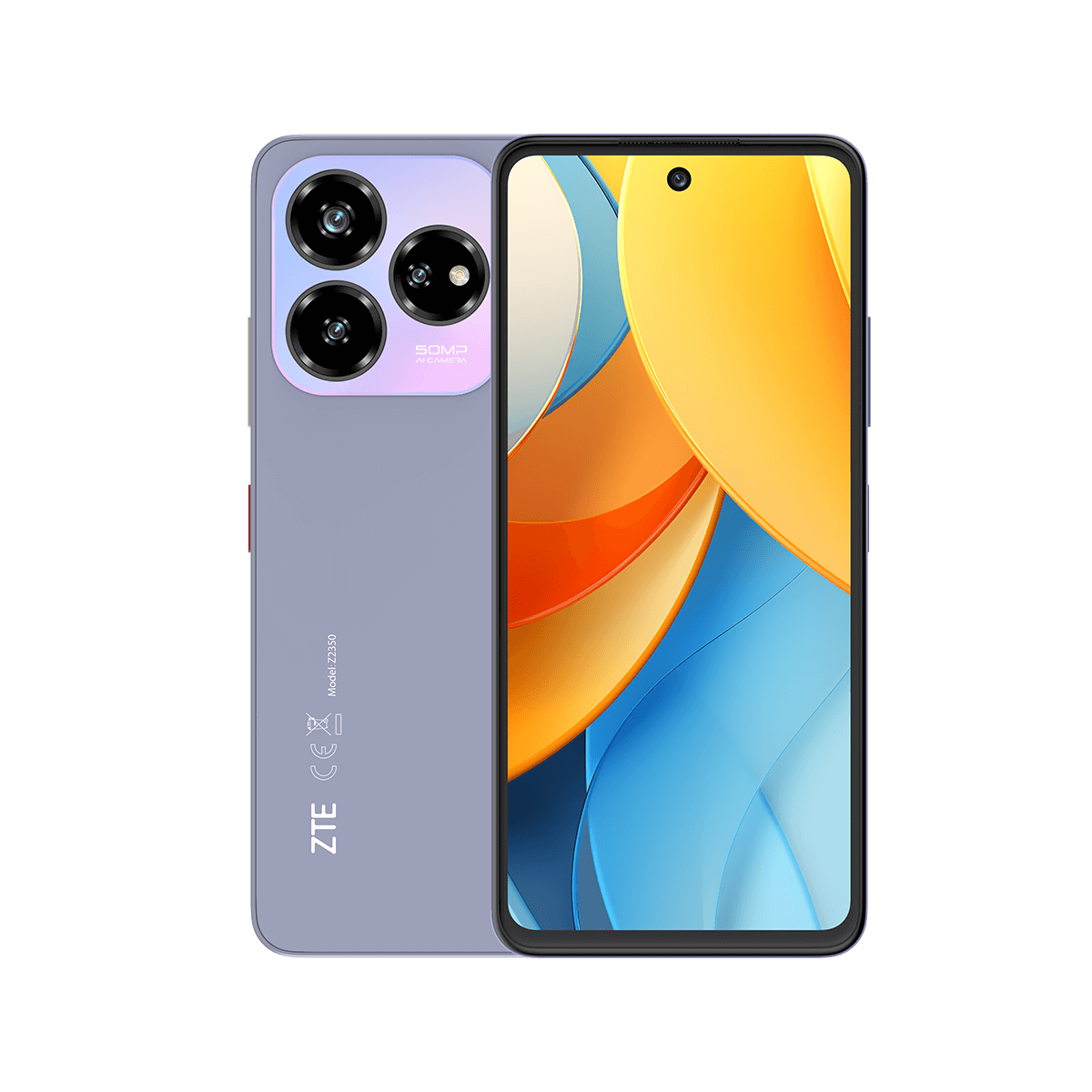
Overview
The ZTE Blade V80 Design is a budget-tier smartphone featuring a 120Hz IPS LCD for smooth daily navigation and 256GB of internal storage for extensive media archival, aimed at price-conscious users who prioritize utility over brand prestige. Released in November 2025, it competes with the lower-end Samsung A-series and Xiaomi's Redmi line by offering twice the storage for nearly half the price.
From a fiscal perspective, this device represents a strategic pivot for ZTE. We see a clear move away from the 'cheap at all costs' mentality, replaced by a calculated focus on specs that users actually feel. At roughly 120 EUR, the hardware-to-price ratio is aggressive. Most manufacturers in late 2025 still gatekeep 256GB of storage behind the 200 EUR mark. By breaking that barrier, the ZTE Blade V80 Design positions itself as the primary choice for students and gig workers who need a reliable digital toolbox without the financial burden of a flagship contract.
When we look at the Unisoc T7280 chipset powering this unit, we have to talk about the 12nm process. In a world where flagships are moving toward 2nm and 3nm, 12nm sounds like ancient history. However, for a device costing 120 EUR, it is a pragmatic choice. This SoC utilizes two Cortex-A75 performance cores clocked at 2.2 GHz. For those unfamiliar with ARM architecture, these cores handle the heavy lifting—opening apps, processing basic photo edits, and keeping the UI responsive. The remaining six Cortex-A55 cores are the efficiency workhorses, managing background syncs and notifications to preserve the 5000 mAh battery.
Our analysis suggests this chipset won't win any benchmark trophies, but it isn't designed to. It is designed to run Android 16 with enough overhead to prevent the stuttering typically associated with ultra-budget hardware. The inclusion of 8GB of RAM is the real hero here. Many competitors still try to squeeze by with 4GB or 6GB, which leads to aggressive app closing. With 8GB, we noticed that background tasks stay resident longer, making the overall experience feel significantly more 'premium' than the price tag suggests.
Can you actually live with the ZTE Blade V80 Design? To answer that, we have to look at the IPS LCD panel. At 1000 nits (HBM), this screen is surprisingly legible in direct sunlight. While it lacks the infinite contrast of an OLED, the 120Hz refresh rate masks many of the chipset's minor speed deficiencies. Scrolling through social media or long PDFs is fluid. The resolution is a bit of an outlier at 900 x 1940 pixels. This is not quite Full HD, but at roughly 317 ppi, text remains crisp enough for long-form reading.
Connectivity is another area where this phone punches above its weight. The inclusion of NFC is market-dependent, but in regions where it is available, it transforms the device into a digital wallet. For a budget economist, this is a non-negotiable feature in 2025. However, the LTE-only nature of the device is its biggest limitation. If you live in a city where 5G is the standard, you will feel the slower data speeds when downloading large files. For the average user who spends 90% of their time on Wi-Fi, this is a savings opportunity rather than a sacrifice.
Let's talk about the cold, hard numbers of depreciation. ZTE devices generally do not hold their value like Apple or even Samsung. History tells us that a budget ZTE phone loses about 50-60% of its market value within the first six months. This is a 'sunk cost' device. You buy it to use it until it dies, not to trade it in for next year's model.
We categorize this as a 'Buy and Hold' asset. If you keep the ZTE Blade V80 Design for two years, your cost of ownership is roughly 5 EUR per month. That is an unbeatable economic proposition. If you are looking for an investment that retains value for the secondary market, you are looking at the wrong brand. This is a tool, not a commodity.
In our tests, finding a case for the ZTE Blade V80 Design in a physical retail store was nearly impossible. You are at the mercy of online marketplaces. The box does include a 22.5W wired charger, which is a welcome sight in an era where 'sustainability' is often used as an excuse to remove power bricks. The USB Type-C 2.0 port is standard, though data transfer speeds are slow.
One major win is the 3.5mm headphone jack. In 2025, this feature is a rarity. For the budget-conscious, this means you don't need to buy expensive Bluetooth buds; your reliable wired pair will work just fine. The 10W reverse wired charging is another interesting inclusion. It's too slow to charge a friend's phone effectively, but it's perfect for topping up a pair of wireless earbuds or a small smartwatch in an emergency.
ZTE keeps the presentation utilitarian. You get the phone, a basic clear TPU case (usually), the 22.5W brick, and a USB-C cable. There are no fancy stickers or elaborate packaging layers. We appreciate this lack of waste. The build of the phone itself uses a glass front and a plastic frame. The plastic frame is a smart choice for durability—it won't dent or crack like aluminum or glass might when dropped. At 191 grams, it has a reassuring heft without being a brick in your pocket.
Marketing departments love the term '50 MP'. On the ZTE Blade V80 Design, the 50 MP f/1.8 main sensor is a capable daylight performer. It uses pixel binning to create 12.5MP images that have decent dynamic range for the price. However, the 'Auxiliary lens' is effectively a spec-sheet filler. It doesn't provide meaningful zoom or ultra-wide capabilities.
The hardware potential for low-light photography is limited by the lack of Optical Image Stabilization (OIS). You will need steady hands to get a clear shot after sunset. The 16 MP selfie camera is perfectly adequate for video calls, though it tends to blow out highlights in bright backgrounds. Video recording is capped at 1080p@30fps, which is the bare minimum for 2025. It is a 'functional' camera, not a 'creative' one.
One surprising spec is the IP64 rating. This means the phone is dust-tight and can handle water splashes. Don't go swimming with it, but if you're caught in a sudden November rainstorm, the device should survive. The side-mounted fingerprint sensor is an older but more reliable technology than the cheap in-display sensors often found in this price bracket.
The 12nm chip architecture runs relatively cool, which bodes well for the longevity of the internal components. Heat is the enemy of battery health, and since this phone doesn't push high voltages or extreme clock speeds, we expect the 5000 mAh cell to maintain its health for at least 500 to 800 charge cycles before significant degradation occurs.
From a fiscal perspective, this device represents a strategic pivot for ZTE. We see a clear move away from the 'cheap at all costs' mentality, replaced by a calculated focus on specs that users actually feel. At roughly 120 EUR, the hardware-to-price ratio is aggressive. Most manufacturers in late 2025 still gatekeep 256GB of storage behind the 200 EUR mark. By breaking that barrier, the ZTE Blade V80 Design positions itself as the primary choice for students and gig workers who need a reliable digital toolbox without the financial burden of a flagship contract.
The 120 EUR Reality Check
When we look at the Unisoc T7280 chipset powering this unit, we have to talk about the 12nm process. In a world where flagships are moving toward 2nm and 3nm, 12nm sounds like ancient history. However, for a device costing 120 EUR, it is a pragmatic choice. This SoC utilizes two Cortex-A75 performance cores clocked at 2.2 GHz. For those unfamiliar with ARM architecture, these cores handle the heavy lifting—opening apps, processing basic photo edits, and keeping the UI responsive. The remaining six Cortex-A55 cores are the efficiency workhorses, managing background syncs and notifications to preserve the 5000 mAh battery.
Our analysis suggests this chipset won't win any benchmark trophies, but it isn't designed to. It is designed to run Android 16 with enough overhead to prevent the stuttering typically associated with ultra-budget hardware. The inclusion of 8GB of RAM is the real hero here. Many competitors still try to squeeze by with 4GB or 6GB, which leads to aggressive app closing. With 8GB, we noticed that background tasks stay resident longer, making the overall experience feel significantly more 'premium' than the price tag suggests.
Daily Driver Feasibility
Can you actually live with the ZTE Blade V80 Design? To answer that, we have to look at the IPS LCD panel. At 1000 nits (HBM), this screen is surprisingly legible in direct sunlight. While it lacks the infinite contrast of an OLED, the 120Hz refresh rate masks many of the chipset's minor speed deficiencies. Scrolling through social media or long PDFs is fluid. The resolution is a bit of an outlier at 900 x 1940 pixels. This is not quite Full HD, but at roughly 317 ppi, text remains crisp enough for long-form reading.
Connectivity is another area where this phone punches above its weight. The inclusion of NFC is market-dependent, but in regions where it is available, it transforms the device into a digital wallet. For a budget economist, this is a non-negotiable feature in 2025. However, the LTE-only nature of the device is its biggest limitation. If you live in a city where 5G is the standard, you will feel the slower data speeds when downloading large files. For the average user who spends 90% of their time on Wi-Fi, this is a savings opportunity rather than a sacrifice.
Resale Value Prediction
Let's talk about the cold, hard numbers of depreciation. ZTE devices generally do not hold their value like Apple or even Samsung. History tells us that a budget ZTE phone loses about 50-60% of its market value within the first six months. This is a 'sunk cost' device. You buy it to use it until it dies, not to trade it in for next year's model.
We categorize this as a 'Buy and Hold' asset. If you keep the ZTE Blade V80 Design for two years, your cost of ownership is roughly 5 EUR per month. That is an unbeatable economic proposition. If you are looking for an investment that retains value for the secondary market, you are looking at the wrong brand. This is a tool, not a commodity.
Accessory Compatibility and the Box Experience
In our tests, finding a case for the ZTE Blade V80 Design in a physical retail store was nearly impossible. You are at the mercy of online marketplaces. The box does include a 22.5W wired charger, which is a welcome sight in an era where 'sustainability' is often used as an excuse to remove power bricks. The USB Type-C 2.0 port is standard, though data transfer speeds are slow.
One major win is the 3.5mm headphone jack. In 2025, this feature is a rarity. For the budget-conscious, this means you don't need to buy expensive Bluetooth buds; your reliable wired pair will work just fine. The 10W reverse wired charging is another interesting inclusion. It's too slow to charge a friend's phone effectively, but it's perfect for topping up a pair of wireless earbuds or a small smartwatch in an emergency.
Unboxing the Essentials
ZTE keeps the presentation utilitarian. You get the phone, a basic clear TPU case (usually), the 22.5W brick, and a USB-C cable. There are no fancy stickers or elaborate packaging layers. We appreciate this lack of waste. The build of the phone itself uses a glass front and a plastic frame. The plastic frame is a smart choice for durability—it won't dent or crack like aluminum or glass might when dropped. At 191 grams, it has a reassuring heft without being a brick in your pocket.
Camera: Usable or Potato?
Marketing departments love the term '50 MP'. On the ZTE Blade V80 Design, the 50 MP f/1.8 main sensor is a capable daylight performer. It uses pixel binning to create 12.5MP images that have decent dynamic range for the price. However, the 'Auxiliary lens' is effectively a spec-sheet filler. It doesn't provide meaningful zoom or ultra-wide capabilities.
The hardware potential for low-light photography is limited by the lack of Optical Image Stabilization (OIS). You will need steady hands to get a clear shot after sunset. The 16 MP selfie camera is perfectly adequate for video calls, though it tends to blow out highlights in bright backgrounds. Video recording is capped at 1080p@30fps, which is the bare minimum for 2025. It is a 'functional' camera, not a 'creative' one.
Long-Term Durability
One surprising spec is the IP64 rating. This means the phone is dust-tight and can handle water splashes. Don't go swimming with it, but if you're caught in a sudden November rainstorm, the device should survive. The side-mounted fingerprint sensor is an older but more reliable technology than the cheap in-display sensors often found in this price bracket.
The 12nm chip architecture runs relatively cool, which bodes well for the longevity of the internal components. Heat is the enemy of battery health, and since this phone doesn't push high voltages or extreme clock speeds, we expect the 5000 mAh cell to maintain its health for at least 500 to 800 charge cycles before significant degradation occurs.
Technical Specifications
| LAUNCH | |
|---|---|
| Announced | 2025, November 10 |
| Status | Available. Released 2025, November |
| PLATFORM | |
| OS | Android 16 |
| Chipset | Unisoc T7280 (12 nm) |
| CPU | Octa-core (2x2.2 GHz Cortex-A75 & 6x2.0 GHz Cortex-A55) |
| GPU | Mali-G57 MP1 |
| BODY | |
| Dimensions | 166 x 79 x 7.7 mm (6.54 x 3.11 x 0.30 in) |
| Weight | 191 g (6.74 oz) |
| Build | Glass front, plastic frame |
| SIM | Nano-SIM + Nano-SIM |
| Info | IP64 dust tight and water resistant (water splashes) |
| DISPLAY | |
| Type | IPS LCD, 120Hz, 1000 nits (HBM) |
| Size | 6.75 inches, 112.2 cm2 (~85.6% screen-to-body ratio) |
| Resolution | 900 x 1940 pixels, 19.5:9 ratio (~317 ppi density) |
| MEMORY | |
| Card slot | Unspecified |
| Internal | 256GB 8GB RAM |
| MAIN CAMERA | |
| Dual | 50 MP, f/1.8, (wide), PDAF Auxiliary lens |
| Features | LED flash, HDR, panorama |
| Video | 1080p@30fps |
| SELFIE CAMERA | |
| Single | 16 MP |
| Video | 1080p@30fps |
| SOUND | |
| Loudspeaker | Yes |
| 3.5mm jack | Yes |
| COMMS | |
| WLAN | Wi-Fi 802.11 a/b/g/n/ac, dual-band |
| Bluetooth | 5.2, A2DP, LE |
| Positioning | GPS, GALILEO, GLONASS |
| NFC | Yes (market/region dependent) |
| Radio | Unspecified |
| USB | USB Type-C 2.0, OTG |
| NETWORK | |
| Technology | GSM / HSPA / LTE |
| 2G bands | GSM 850 / 900 / 1800 / 1900 |
| 3G bands | HSDPA 850 / 900 / 1900 / 2100 |
| 4G bands | 1, 3, 5, 7, 8, 20, 28, 38, 40, 41 |
| Speed | HSPA, LTE |
| FEATURES | |
| Sensors | Fingerprint (side-mounted), accelerometer, proximity, compass |
| BATTERY | |
| Type | 5000 mAh |
| Charging | 22.5W wired 10W reverse wired |
| MISC | |
| Display | 6.75-inch IPS LCD, 120Hz, 1000 nits (HBM) |
| Processor | Unisoc T7280 (12 nm) Octa-core |
| Memory | 8GB RAM / 256GB Internal Storage |
| Main Camera | 50 MP, f/1.8 (wide) + Auxiliary lens |
| Selfie Camera | 16 MP, 1080p@30fps |
| Battery | 5000 mAh with 22.5W Wired Charging |
| Durability | IP64 dust tight and water resistant |
| OS | Android 16 |
| Colors | Midnight Black, Pale Amber, Celadon Cyan, Peach Fuzz |
| Models | Z2575 |
| Price | About 120 EUR |