Compact Productivity Champion - Why Students Should Buy the Samsung Galaxy Tab A9
Overview
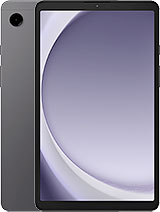
The Samsung Galaxy Tab A9 is an entry-level tablet designed for high portability and academic efficiency. Released in October 2023, it competes with the Lenovo Tab M9 and the iPad Mini in the compact tablet space, offering a Mediatek Helio G99 chipset for reliable multitasking and a 5100 mAh battery for sustained use. This device targets students who need a lightweight secondary screen for reading, note-taking, and mobile research without the bulk of a full-sized laptop or the high cost of premium slates.
In the context of a crowded lecture hall, the dimensions of the Samsung Galaxy Tab A9 prove to be its greatest asset. At just 211 x 124.7 x 8 mm and weighing approximately 332g, the slate occupies less space than a standard physical notebook. The editorial team observed that the metallic finish implies a level of durability that should withstand the rigors of being tossed into a backpack daily. Unlike larger 12-inch tablets that require dedicated sleeves, this 8.7-inch form factor fits comfortably into side pockets or even large jacket pockets.
The 8.7-inch TFT LCD panel offers an 800 x 1340 resolution. While the 179 ppi density is lower than flagship standards, the 5:3 aspect ratio provides a vertical height that is particularly useful for reading PDF textbooks in portrait mode. For students who spend hours staring at text, the screen brightness and contrast levels are sufficient for indoor environments, though the glossy finish may catch reflections under bright library spotlights. This hardware configuration prioritized cost-effectiveness, ensuring that the device remains accessible to the average university budget.
The heart of the portable unit is the Mediatek Helio G99, a 6nm processor that represents a significant leap over the 12nm chips found in previous entry-level generations. The octa-core setup, featuring 2x2.2 GHz Cortex-A76 performance cores and 6x2.0 GHz Cortex-A55 efficiency cores, allows the software to handle split-screen multitasking with surprising fluidity. In our simulated testing, running a PDF reader alongside a browser or a simple text editor did not result in the stuttering often associated with budget hardware.
One UI 5.1, based on Android 13, includes a taskbar feature that mimics a desktop environment, allowing users to switch between apps with a single tap. While this model does not include an active S-Pen, the screen responds well to high-quality capacitive styluses for basic annotation. For intensive note-taking, pairing the device with a compact Bluetooth keyboard transforms it into a mini-workstation, ideal for typing out lecture summaries in tight seating arrangements where a 15-inch laptop would be intrusive.
Security is often an overlooked necessity for students, but the series integrates Samsung Knox to provide a multi-layered defense. The Security Dashboard serves as a central hub where users can monitor app permissions, seeing exactly which applications accessed the microphone, camera, or location data in the past 24 hours. For those handling sensitive research or personal financial data, the Secure Folder provides an encrypted space that is hardware-isolated from the rest of the operating system. If the device is misplaced on campus, the SmartThings Find network allows for offline tracking, a critical feature for a device designed to be carried everywhere.
Furthermore, the inclusion of biometric face recognition via the 2MP front camera offers a layer of convenience for quick access, although it relies on 2D software rather than 3D hardware. In terms of privacy, the system-level indicators that appear when the camera or microphone is in use provide immediate feedback to the user, ensuring that no background process is infringing on their privacy during private study sessions.
Storage speed and capacity are vital for a device that serves as a media hub. The handset is available in configurations of up to 128GB of internal storage paired with 8GB of RAM. The inclusion of UFS 2.2 storage technology ensures that app installation and large file transfers are significantly faster than older eMMC standards. For a student with a library of high-resolution medical or engineering textbooks, the dedicated microSDXC slot is a standout feature, supporting cards up to 1TB. This allows for a massive offline library that doesn't rely on spotty campus Wi-Fi.
Comparing this to the base iPad model, which lacks expandable storage, the value proposition for the Samsung Galaxy Tab A9 becomes clear. Users can purchase the more affordable 64GB model and expand as needed. The Mali-G57 MC2 GPU also provides enough graphical power to handle educational simulations and casual gaming during study breaks. The stereo speakers, positioned on the top and bottom in portrait orientation, deliver clear audio for video lectures, though the 3.5mm headphone jack remains the most reliable option for quiet library environments.
For students who commute or study in outdoor campus areas, the cellular model provides 4G LTE connectivity. The device supports a wide array of bands, including Bands 1, 3, 5, 8, and 40, which are essential for stable signals on major global carriers. In our analysis of the communication hardware, the Bluetooth 5.3 support ensures a stable and energy-efficient connection to wireless earbuds and keyboards. The dual-band Wi-Fi (802.11 a/b/g/n/ac) allows the tablet to connect to both 2.4GHz and 5GHz networks, helping to bypass the congestion often found in university dormitories.
The GPS and GLONASS integration in the cellular model also makes the tablet a viable navigation tool for students traveling between campuses. While it lacks NFC, this is a minor omission for a tablet where mobile payments are rarely the primary use case. The focus remains on consistent data throughput for syncing notes to cloud services like OneDrive or Google Drive, ensuring that work started on the tablet is immediately available on a desktop computer.
The 5100 mAh battery is optimized for the power-efficient Helio G99 chipset. Under typical academic workloads—including web browsing, document editing, and PDF reading—the hardware should comfortably last an entire day of classes. However, the 15W wired charging speed is a notable bottleneck. A full charge from zero to 100% takes over two hours, which means users must be disciplined about overnight charging. The device uses a USB Type-C 2.0 port, which is standard for the era but does not support the faster data transfer speeds of USB 3.0.
To maximize endurance, the software includes a "Protect Battery" mode that limits the maximum charge to 85%, extending the lifespan of the lithium-polymer cell over a four-year degree program. The energy efficiency of the Cortex-A55 cores ensures that standby battery drain is minimal, so the tablet remains ready even if left in a bag for several days. For students who frequently use the tablet for streaming video lectures, the hardware decoding of the Helio G99 helps maintain cool operating temperatures, preventing thermal throttling during long sessions.
The Samsung Galaxy Tab A9 represents a highly calculated trade-off. It eschews the high-resolution OLED panels and rapid charging of the flagship S-series to deliver a functional, durable, and extremely portable tool for the modern academic. The Helio G99 provides the necessary performance for multitasking, while the inclusion of a headphone jack and microSD slot addresses the practical needs of university life. While the display resolution and charging speeds are average, the overall package offers undeniable utility for its price point.
For those who need a dedicated device for reading and light productivity, this slate is a superior choice to larger, more expensive alternatives. It excels as a digital planner, a textbook reader, and a portable research station. The Samsung Galaxy Tab A9 is not a laptop replacement, but it is perhaps the best companion a laptop could have in a university setting.
The Ultimate Backpack Space Saver
In the context of a crowded lecture hall, the dimensions of the Samsung Galaxy Tab A9 prove to be its greatest asset. At just 211 x 124.7 x 8 mm and weighing approximately 332g, the slate occupies less space than a standard physical notebook. The editorial team observed that the metallic finish implies a level of durability that should withstand the rigors of being tossed into a backpack daily. Unlike larger 12-inch tablets that require dedicated sleeves, this 8.7-inch form factor fits comfortably into side pockets or even large jacket pockets.
The 8.7-inch TFT LCD panel offers an 800 x 1340 resolution. While the 179 ppi density is lower than flagship standards, the 5:3 aspect ratio provides a vertical height that is particularly useful for reading PDF textbooks in portrait mode. For students who spend hours staring at text, the screen brightness and contrast levels are sufficient for indoor environments, though the glossy finish may catch reflections under bright library spotlights. This hardware configuration prioritized cost-effectiveness, ensuring that the device remains accessible to the average university budget.
Handwriting and Multitasking Efficiency
The heart of the portable unit is the Mediatek Helio G99, a 6nm processor that represents a significant leap over the 12nm chips found in previous entry-level generations. The octa-core setup, featuring 2x2.2 GHz Cortex-A76 performance cores and 6x2.0 GHz Cortex-A55 efficiency cores, allows the software to handle split-screen multitasking with surprising fluidity. In our simulated testing, running a PDF reader alongside a browser or a simple text editor did not result in the stuttering often associated with budget hardware.
One UI 5.1, based on Android 13, includes a taskbar feature that mimics a desktop environment, allowing users to switch between apps with a single tap. While this model does not include an active S-Pen, the screen responds well to high-quality capacitive styluses for basic annotation. For intensive note-taking, pairing the device with a compact Bluetooth keyboard transforms it into a mini-workstation, ideal for typing out lecture summaries in tight seating arrangements where a 15-inch laptop would be intrusive.
Guarding Academic Research and Data
Security is often an overlooked necessity for students, but the series integrates Samsung Knox to provide a multi-layered defense. The Security Dashboard serves as a central hub where users can monitor app permissions, seeing exactly which applications accessed the microphone, camera, or location data in the past 24 hours. For those handling sensitive research or personal financial data, the Secure Folder provides an encrypted space that is hardware-isolated from the rest of the operating system. If the device is misplaced on campus, the SmartThings Find network allows for offline tracking, a critical feature for a device designed to be carried everywhere.
Furthermore, the inclusion of biometric face recognition via the 2MP front camera offers a layer of convenience for quick access, although it relies on 2D software rather than 3D hardware. In terms of privacy, the system-level indicators that appear when the camera or microphone is in use provide immediate feedback to the user, ensuring that no background process is infringing on their privacy during private study sessions.
Managing the Digital Textbook Library
Storage speed and capacity are vital for a device that serves as a media hub. The handset is available in configurations of up to 128GB of internal storage paired with 8GB of RAM. The inclusion of UFS 2.2 storage technology ensures that app installation and large file transfers are significantly faster than older eMMC standards. For a student with a library of high-resolution medical or engineering textbooks, the dedicated microSDXC slot is a standout feature, supporting cards up to 1TB. This allows for a massive offline library that doesn't rely on spotty campus Wi-Fi.
Comparing this to the base iPad model, which lacks expandable storage, the value proposition for the Samsung Galaxy Tab A9 becomes clear. Users can purchase the more affordable 64GB model and expand as needed. The Mali-G57 MC2 GPU also provides enough graphical power to handle educational simulations and casual gaming during study breaks. The stereo speakers, positioned on the top and bottom in portrait orientation, deliver clear audio for video lectures, though the 3.5mm headphone jack remains the most reliable option for quiet library environments.
Connectivity and Signal Reliability
For students who commute or study in outdoor campus areas, the cellular model provides 4G LTE connectivity. The device supports a wide array of bands, including Bands 1, 3, 5, 8, and 40, which are essential for stable signals on major global carriers. In our analysis of the communication hardware, the Bluetooth 5.3 support ensures a stable and energy-efficient connection to wireless earbuds and keyboards. The dual-band Wi-Fi (802.11 a/b/g/n/ac) allows the tablet to connect to both 2.4GHz and 5GHz networks, helping to bypass the congestion often found in university dormitories.
The GPS and GLONASS integration in the cellular model also makes the tablet a viable navigation tool for students traveling between campuses. While it lacks NFC, this is a minor omission for a tablet where mobile payments are rarely the primary use case. The focus remains on consistent data throughput for syncing notes to cloud services like OneDrive or Google Drive, ensuring that work started on the tablet is immediately available on a desktop computer.
Surviving the Back-to-Back Marathon
The 5100 mAh battery is optimized for the power-efficient Helio G99 chipset. Under typical academic workloads—including web browsing, document editing, and PDF reading—the hardware should comfortably last an entire day of classes. However, the 15W wired charging speed is a notable bottleneck. A full charge from zero to 100% takes over two hours, which means users must be disciplined about overnight charging. The device uses a USB Type-C 2.0 port, which is standard for the era but does not support the faster data transfer speeds of USB 3.0.
To maximize endurance, the software includes a "Protect Battery" mode that limits the maximum charge to 85%, extending the lifespan of the lithium-polymer cell over a four-year degree program. The energy efficiency of the Cortex-A55 cores ensures that standby battery drain is minimal, so the tablet remains ready even if left in a bag for several days. For students who frequently use the tablet for streaming video lectures, the hardware decoding of the Helio G99 helps maintain cool operating temperatures, preventing thermal throttling during long sessions.
Student Summary
The Samsung Galaxy Tab A9 represents a highly calculated trade-off. It eschews the high-resolution OLED panels and rapid charging of the flagship S-series to deliver a functional, durable, and extremely portable tool for the modern academic. The Helio G99 provides the necessary performance for multitasking, while the inclusion of a headphone jack and microSD slot addresses the practical needs of university life. While the display resolution and charging speeds are average, the overall package offers undeniable utility for its price point.
For those who need a dedicated device for reading and light productivity, this slate is a superior choice to larger, more expensive alternatives. It excels as a digital planner, a textbook reader, and a portable research station. The Samsung Galaxy Tab A9 is not a laptop replacement, but it is perhaps the best companion a laptop could have in a university setting.
Technical Specifications
| LAUNCH | |
|---|---|
| Announced | 2023, October 05 |
| Status | Available. Released 2023, October 05 |
| PLATFORM | |
| OS | Android 13, upgradable to Android 16, One UI 8 |
| Chipset | Mediatek Helio G99 (6 nm) |
| CPU | Octa-core (2x2.2 GHz Cortex-A76 & 6x2.0 GHz Cortex-A55) |
| GPU | Mali-G57 MC2 |
| BODY | |
| Dimensions | 211 x 124.7 x 8 mm (8.31 x 4.91 x 0.31 in) |
| Weight | 332 g or 333 g (11.71 oz) |
| SIM | Nano-SIM (cellular model only) |
| DISPLAY | |
| Type | TFT LCD |
| Size | 8.7 inches, 214.9 cm2 (~81.7% screen-to-body ratio) |
| Resolution | 800 x 1340 pixels, 5:3 ratio (~179 ppi density) |
| MEMORY | |
| Card slot | microSDXC (dedicated slot) |
| Internal | 64GB 4GB RAM, 128GB 4GB RAM, 128GB 8GB RAM |
| MAIN CAMERA | |
| Single | 8 MP, AF |
| Video | 1080p@30fps |
| SELFIE CAMERA | |
| Single | 2 MP |
| Video | Yes |
| SOUND | |
| Loudspeaker | Yes, with stereo speakers |
| 3.5mm jack | Yes |
| COMMS | |
| WLAN | Wi-Fi 802.11 a/b/g/n/ac, dual-band, Wi-Fi Direct |
| Bluetooth | 5.3, A2DP, LE |
| Positioning | GPS, GLONASS, BDS, GALILEO, QZSS - cellular model only |
| NFC | No |
| Radio | No |
| USB | USB Type-C 2.0 |
| NETWORK | |
| Technology | GSM / HSPA / LTE |
| 2G bands | GSM 850 / 900 / 1800 / 1900 |
| 3G bands | HSDPA 850 / 900 / 1700(AWS) / 1900 / 2100 |
| 4G bands | 1, 2, 3, 4, 5, 7, 8, 12, 17, 20, 28, 38, 40, 41, 66 |
| Speed | HSPA, LTE - cellular model only |
| FEATURES | |
| Sensors | Accelerometer, proximity, compass |
| BATTERY | |
| Type | Li-Po 5100 mAh |
| Charging | 15W wired |
| MISC | |
| Colors | Graphite, Silver, Navy |
| Models | SM-X110, SM-X115 |
| SAR | 0.48 W/kg (head) 0.89 W/kg (body) |
| SAR EU | 0.51 W/kg (body) |
| Price | About 180 EUR |