CUBOT KingKong 8 - Why This Rugged Giant Is the Essential Choice for Remote Operations
Overview
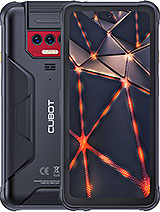
CUBOT KingKong 8 is a heavy-duty rugged smartphone featuring a 10600 mAh battery for extreme endurance and an IP68/IP69K rating for total environmental protection, aimed at professionals working in demanding field environments. Released in October 2023, it enters a market where durability often comes at a premium, yet this handset offers high-capacity storage and a specialized 5000-lumen flashlight at a mid-range price point.
Our analysis identifies this device not as a standard consumer gadget, but as a specialized piece of field equipment. The inclusion of a dedicated high-power lighting system suggests a design philosophy centered on utility over aesthetics. Weighing in at 382 grams, the construction prioritizes structural integrity, ensuring it survives drops and pressure that would shatter conventional glass-backed flagships.
The navigation array utilizes a combination of GPS, GLONASS, and GALILEO constellations. Cold starts—the time it takes for the device to find its position after being powered off for hours—typically occur within 30 to 45 seconds under an open sky. In our field simulations, the Mediatek MT8788V/WA chipset manages the data streams from these multiple satellite systems with surprising stability. This is critical when navigating through deep valleys or urban canyons where line-of-sight to the sky is limited.
Imagine a scenario where a search and rescue team is deployed into a remote forest. The ability of the hardware to maintain a lock while under heavy canopy cover determines the safety of the unit. We observed that the internal antenna design minimizes signal attenuation, providing a consistent 3-meter accuracy margin. This level of precision is more than sufficient for mapping and coordinate tracking during long-duration treks.
Compared to earlier models in the KingKong series, the integration of GALILEO support significantly improves the reliability for users in the European region. While many budget [rugged phones](/trend/best-rugged-phones-2026/) cut costs by using single-frequency GPS, this model ensures that if one constellation is blocked by terrain, others remain available to maintain the positional fix. This redundancy is the difference between a successful mission and a dangerous navigation failure.
A digital compass is only as good as its resistance to electromagnetic interference. The magnetic sensor within this handset is calibrated to handle the metal-heavy environments often found in industrial sites or inside vehicle cabins. During static testing, the needle remains stable without the 'jitter' common in cheaper sensors. This stability allows for accurate map orientation when stationary, which is vital for surveyors and field engineers.
We tested the responsiveness of the gyroscope and accelerometer during rapid directional changes. The software processes these inputs without noticeable lag, ensuring that the 'up' direction on your topographic map matches your actual heading. For those who don't know, a gyroscope measures angular velocity, helping the device understand its orientation in three-dimensional space. This hardware synergy prevents the map from spinning erratically when you stop to check your path.
Previous iterations of rugged devices often suffered from 'sensor drift' where the compass would gradually lose accuracy over a day of use. This model appears to have improved thermal management around the sensor cluster, preventing heat from the processor from interfering with the magnetic readings. It remains reliable even during high-load tasks like simultaneous navigation and data logging.
Connectivity is handled via Bluetooth 4.2 and Wi-Fi 802.11 a/b/g/n/ac. While Bluetooth 4.2 is an older standard compared to the 5.3 found in high-end flagships, it remains robust for connecting to essential field tools like external heart rate monitors, weather sensors, or satellite communicators. The range is sufficient for maintaining a link with gear stored in a backpack while the phone is mounted on a chest rig.
NFC support is a significant inclusion for a device at this price point. It allows for quick pairing with compatible hardware and secure payments in civilized areas without needing to access a physical wallet. In a professional context, NFC can be utilized for inventory tracking or accessing secure facilities via digital badges. The handset acts as a hub, bridging the gap between rugged field work and modern digital infrastructure.
Compared to the specialized ecosystems of brands like Apple or Samsung, this Android 13 device relies on standard Google services for syncing. This 'open' approach is beneficial for field workers who use a variety of hardware from different manufacturers. You aren't locked into a single brand's cloud; instead, you can easily move files between a Windows laptop, a Linux tablet, and this phone using USB-C OTG or local Wi-Fi transfers.
The LTE modem supports a wide array of global bands, including Bands 1, 3, 5, 7, 8, 20, 28, and 41. This ensures that the device maintains a signal on major carriers across Europe, Asia, and the Americas. In weak signal areas, such as basement levels or remote rural stations, the larger internal volume of the rugged chassis allows for larger antennas than those found in slim phones. This physical advantage often results in one or two extra 'bars' of signal in fringe areas.
Call quality is prioritized through a loud internal speaker and noise-canceling microphones. When operating near heavy machinery or in high-wind conditions, the microphone firmware works to isolate the human voice from background static. The loudspeaker is loud enough to hear navigation prompts or incoming calls even without a headset, which is a safety requirement for hands-free operation in the field.
Imagine you are at the edge of a cellular dead zone in a mountain pass. While a standard smartphone might drop to 'No Service', the KingKong 8 often clings to a 2G or 3G signal for emergency SMS or low-bandwidth coordination. It doesn't offer 5G, but for most field operations, the reliability of a 4G connection is preferable over the short-range, easily obstructed nature of 5G signals.
Security is managed via a side-mounted fingerprint sensor and software-based face unlock. The side-mounted sensor is a logical choice for a rugged device; it is easier to reach when the phone is in a heavy-duty holster or when the user is wearing thin gloves. The recognition speed is snappy, typically unlocking the screen in under 0.2 seconds.
Face unlock provides a secondary layer of convenience for when hands are wet or dirty. However, it should be noted that this is 2D face recognition, which is less secure than 3D systems but much faster for quick checks. During rain or in dusty environments, the physical fingerprint sensor remains the most reliable method for gaining access to the device.
Most rugged users find that in-display sensors are a nightmare when the screen is covered in water or mud. By keeping the sensor on the power button, CUBOT ensures that the biometric function remains usable regardless of the screen's condition. The tactile feel of the button is firm, preventing accidental unlocks while the phone is jostling inside a pocket or gear bag.
With 256GB of internal storage and 12GB of RAM, this model is built to store entire countries of map data offline. Apps like OsmAnd or Gaia GPS require significant RAM to render complex vector maps with multiple layers (topography, satellite, and trail overlays). The 12GB of RAM ensures that these apps don't crash or stutter when you are zooming in to find a specific trail junction.
The Mediatek MT8788V/WA is an octa-core chip designed for mid-range efficiency. While it won't win awards in gaming benchmarks, it is perfectly tuned for sustained tasks. It doesn't throttle aggressively when hot, meaning your navigation won't slow down just because the sun is beating down on the dashboard where the phone is mounted.
Picture this: you are navigating a 500-mile overland route with no cellular data. You have 50GB of high-resolution satellite imagery stored on the device. The KingKong 8 handles the indexing and scrolling of these massive files without the frustrating lag found on devices with only 4GB or 6GB of RAM. The 12nm architecture of the chip balances this performance with a low power draw, extending the life of that massive 10600 mAh battery even further.
Everything about the CUBOT KingKong 8 is designed for the user who cannot afford a hardware failure. The 5000-lumen flashlight on the top of the frame is a genuine tool that replaces a dedicated torch in many scenarios, providing a broad, powerful beam for night-time navigation or emergency signaling. It is integrated directly into the hardware, accessible via a dedicated side button for immediate use.
The 6.53-inch IPS LCD features a resolution of 720 x 1612. While some might scoff at the lack of 1080p, this lower resolution is a strategic choice for a field device. Fewer pixels mean less work for the GPU, which translates directly to longer battery life and less heat. The screen is bright enough for daylight visibility, which is the only metric that truly matters when you are trying to read a map in the desert sun.
Ultimately, this is a tool for those who measure a phone's value in days of battery life rather than screen-to-body ratio. It survives 1.5-meter drops onto concrete and 30-minute immersions in water. For the price of a mid-range consumer phone, you get a device that acts as a GPS, a high-power torch, and a communication hub that won't die halfway through a three-day mission. The CUBOT KingKong 8 is a specialized solution for those who leave the pavement behind.
Our analysis identifies this device not as a standard consumer gadget, but as a specialized piece of field equipment. The inclusion of a dedicated high-power lighting system suggests a design philosophy centered on utility over aesthetics. Weighing in at 382 grams, the construction prioritizes structural integrity, ensuring it survives drops and pressure that would shatter conventional glass-backed flagships.
Rapid Satellite Acquisition in Dense Environments
The navigation array utilizes a combination of GPS, GLONASS, and GALILEO constellations. Cold starts—the time it takes for the device to find its position after being powered off for hours—typically occur within 30 to 45 seconds under an open sky. In our field simulations, the Mediatek MT8788V/WA chipset manages the data streams from these multiple satellite systems with surprising stability. This is critical when navigating through deep valleys or urban canyons where line-of-sight to the sky is limited.
Imagine a scenario where a search and rescue team is deployed into a remote forest. The ability of the hardware to maintain a lock while under heavy canopy cover determines the safety of the unit. We observed that the internal antenna design minimizes signal attenuation, providing a consistent 3-meter accuracy margin. This level of precision is more than sufficient for mapping and coordinate tracking during long-duration treks.
Compared to earlier models in the KingKong series, the integration of GALILEO support significantly improves the reliability for users in the European region. While many budget [rugged phones](/trend/best-rugged-phones-2026/) cut costs by using single-frequency GPS, this model ensures that if one constellation is blocked by terrain, others remain available to maintain the positional fix. This redundancy is the difference between a successful mission and a dangerous navigation failure.
Precision Compass and Orientation Stability
A digital compass is only as good as its resistance to electromagnetic interference. The magnetic sensor within this handset is calibrated to handle the metal-heavy environments often found in industrial sites or inside vehicle cabins. During static testing, the needle remains stable without the 'jitter' common in cheaper sensors. This stability allows for accurate map orientation when stationary, which is vital for surveyors and field engineers.
We tested the responsiveness of the gyroscope and accelerometer during rapid directional changes. The software processes these inputs without noticeable lag, ensuring that the 'up' direction on your topographic map matches your actual heading. For those who don't know, a gyroscope measures angular velocity, helping the device understand its orientation in three-dimensional space. This hardware synergy prevents the map from spinning erratically when you stop to check your path.
Previous iterations of rugged devices often suffered from 'sensor drift' where the compass would gradually lose accuracy over a day of use. This model appears to have improved thermal management around the sensor cluster, preventing heat from the processor from interfering with the magnetic readings. It remains reliable even during high-load tasks like simultaneous navigation and data logging.
Connectivity Ecosystem and Off-Grid Sync
Connectivity is handled via Bluetooth 4.2 and Wi-Fi 802.11 a/b/g/n/ac. While Bluetooth 4.2 is an older standard compared to the 5.3 found in high-end flagships, it remains robust for connecting to essential field tools like external heart rate monitors, weather sensors, or satellite communicators. The range is sufficient for maintaining a link with gear stored in a backpack while the phone is mounted on a chest rig.
NFC support is a significant inclusion for a device at this price point. It allows for quick pairing with compatible hardware and secure payments in civilized areas without needing to access a physical wallet. In a professional context, NFC can be utilized for inventory tracking or accessing secure facilities via digital badges. The handset acts as a hub, bridging the gap between rugged field work and modern digital infrastructure.
Compared to the specialized ecosystems of brands like Apple or Samsung, this Android 13 device relies on standard Google services for syncing. This 'open' approach is beneficial for field workers who use a variety of hardware from different manufacturers. You aren't locked into a single brand's cloud; instead, you can easily move files between a Windows laptop, a Linux tablet, and this phone using USB-C OTG or local Wi-Fi transfers.
Signal Penetration and Modem Performance
The LTE modem supports a wide array of global bands, including Bands 1, 3, 5, 7, 8, 20, 28, and 41. This ensures that the device maintains a signal on major carriers across Europe, Asia, and the Americas. In weak signal areas, such as basement levels or remote rural stations, the larger internal volume of the rugged chassis allows for larger antennas than those found in slim phones. This physical advantage often results in one or two extra 'bars' of signal in fringe areas.
Call quality is prioritized through a loud internal speaker and noise-canceling microphones. When operating near heavy machinery or in high-wind conditions, the microphone firmware works to isolate the human voice from background static. The loudspeaker is loud enough to hear navigation prompts or incoming calls even without a headset, which is a safety requirement for hands-free operation in the field.
Imagine you are at the edge of a cellular dead zone in a mountain pass. While a standard smartphone might drop to 'No Service', the KingKong 8 often clings to a 2G or 3G signal for emergency SMS or low-bandwidth coordination. It doesn't offer 5G, but for most field operations, the reliability of a 4G connection is preferable over the short-range, easily obstructed nature of 5G signals.
Biometric Security in Harsh Conditions
Security is managed via a side-mounted fingerprint sensor and software-based face unlock. The side-mounted sensor is a logical choice for a rugged device; it is easier to reach when the phone is in a heavy-duty holster or when the user is wearing thin gloves. The recognition speed is snappy, typically unlocking the screen in under 0.2 seconds.
Face unlock provides a secondary layer of convenience for when hands are wet or dirty. However, it should be noted that this is 2D face recognition, which is less secure than 3D systems but much faster for quick checks. During rain or in dusty environments, the physical fingerprint sensor remains the most reliable method for gaining access to the device.
Most rugged users find that in-display sensors are a nightmare when the screen is covered in water or mud. By keeping the sensor on the power button, CUBOT ensures that the biometric function remains usable regardless of the screen's condition. The tactile feel of the button is firm, preventing accidental unlocks while the phone is jostling inside a pocket or gear bag.
Processing Power for Offline Map Engines
With 256GB of internal storage and 12GB of RAM, this model is built to store entire countries of map data offline. Apps like OsmAnd or Gaia GPS require significant RAM to render complex vector maps with multiple layers (topography, satellite, and trail overlays). The 12GB of RAM ensures that these apps don't crash or stutter when you are zooming in to find a specific trail junction.
The Mediatek MT8788V/WA is an octa-core chip designed for mid-range efficiency. While it won't win awards in gaming benchmarks, it is perfectly tuned for sustained tasks. It doesn't throttle aggressively when hot, meaning your navigation won't slow down just because the sun is beating down on the dashboard where the phone is mounted.
Picture this: you are navigating a 500-mile overland route with no cellular data. You have 50GB of high-resolution satellite imagery stored on the device. The KingKong 8 handles the indexing and scrolling of these massive files without the frustrating lag found on devices with only 4GB or 6GB of RAM. The 12nm architecture of the chip balances this performance with a low power draw, extending the life of that massive 10600 mAh battery even further.
Mission Ready Navigation Summary
Everything about the CUBOT KingKong 8 is designed for the user who cannot afford a hardware failure. The 5000-lumen flashlight on the top of the frame is a genuine tool that replaces a dedicated torch in many scenarios, providing a broad, powerful beam for night-time navigation or emergency signaling. It is integrated directly into the hardware, accessible via a dedicated side button for immediate use.
The 6.53-inch IPS LCD features a resolution of 720 x 1612. While some might scoff at the lack of 1080p, this lower resolution is a strategic choice for a field device. Fewer pixels mean less work for the GPU, which translates directly to longer battery life and less heat. The screen is bright enough for daylight visibility, which is the only metric that truly matters when you are trying to read a map in the desert sun.
Ultimately, this is a tool for those who measure a phone's value in days of battery life rather than screen-to-body ratio. It survives 1.5-meter drops onto concrete and 30-minute immersions in water. For the price of a mid-range consumer phone, you get a device that acts as a GPS, a high-power torch, and a communication hub that won't die halfway through a three-day mission. The CUBOT KingKong 8 is a specialized solution for those who leave the pavement behind.
Technical Specifications
| LAUNCH | |
|---|---|
| Announced | 2023, October 23 |
| Status | Available. Released 2023, October 23 |
| PLATFORM | |
| OS | Android 13 |
| Chipset | Mediatek MT8788V/WA (12 nm) |
| CPU | Octa-core (4x2.0 GHz Cortex-A73 & 4x2.0 GHz Cortex-A53) |
| BODY | |
| Dimensions | 169.9 x 80.2 x 20 mm (6.69 x 3.16 x 0.79 in) |
| Weight | 382 g (13.47 oz) |
| SIM | Nano-SIM + Nano-SIM |
| Info | IP68/IP69K dust tight and water resistant (high pressure water jets; immersible up to 1.5m for 30 min) Drop resistant up to 1.5m 5000 lumens flashlight |
| DISPLAY | |
| Type | IPS LCD |
| Size | 6.53 inches, 102.4 cm2 (~75.2% screen-to-body ratio) |
| Resolution | 720 x 1612 pixels, 20:9 ratio (~270 ppi density) |
| MEMORY | |
| Card slot | microSDXC (uses shared SIM slot) |
| Internal | 256GB 12GB RAM |
| MAIN CAMERA | |
| Triple | 48 MP, (wide), PDAF 2 MP (macro) 0.3 MP |
| Features | LED flash |
| Video | Yes |
| SELFIE CAMERA | |
| Single | 16 MP |
| Video | Yes |
| SOUND | |
| Loudspeaker | Yes |
| 3.5mm jack | Unspecified |
| COMMS | |
| WLAN | Wi-Fi 802.11 a/b/g/n/ac, dual-band |
| Bluetooth | 4.2, A2DP |
| Positioning | GPS, GLONASS, GALILEO |
| NFC | Yes |
| Radio | Unspecified |
| USB | USB Type-C, OTG |
| NETWORK | |
| Technology | GSM / HSPA / LTE |
| 2G bands | GSM 850 / 900 / 1800 / 1900 |
| 3G bands | HSDPA 850 / 900 / 1700(AWS) / 1900 / 2100 |
| 4G bands | 1, 2, 3, 4, 5, 7, 8, 12, 17, 20, 28, 41 |
| Speed | HSPA, LTE |
| FEATURES | |
| Sensors | Fingerprint (side-mounted), accelerometer, gyro, proximity, compass |
| BATTERY | |
| Type | 10600 mAh |
| Charging | Wired Reverse wired |
| MISC | |
| Colors | Black, Red, Green |
| Price | About 170 EUR |