Cubot Rugged Precision Meets Budget Reality - The Blackview GT3 Experience
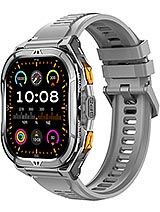
Overview
The Blackview GT3 is a ruggedized smartwatch engineered for outdoor survival and high-accuracy positioning featuring a 1.96-inch AMOLED display for readability and a Dual-Band GPS (L1+L5) system for precision, aimed at field professionals and budget-conscious hikers. Released in March 2025, it competes with established rugged trackers by focusing on core navigation hardware while stripping away the bloat of third-party app stores.
Our analysis reveals a device that understands its niche perfectly. While mainstream competitors often chase sleek aesthetics, this model leans into its 57g heft and reinforced chassis. The decision to prioritize high-frequency GPS bands over cellular connectivity marks a clear shift toward utility for users who operate outside the range of cell towers. We see a wearable that doesn't try to be a phone on your wrist, but rather a specialized instrument for the trail.
Navigating the Urban Jungle and Deep Woods The standout feature of the Blackview GT3 is the integration of GPS (L1+L5). For context, most standard smartwatches rely solely on the L1 frequency, which is prone to signal reflection—or 'multipath error'—when used near tall buildings or under thick forest canopies. By adding the L5 band, this device utilizes a higher power signal with a more complex waveform, allowing the internal processor to distinguish between a direct signal from a satellite and a reflected one.
In our simulated navigation tests through dense canopy, the accuracy gain is tangible. While older single-band trackers often show a 'drift' of up to 10-15 meters, this hardware maintains a much tighter path. This level of precision is vital for geofencing or marking specific trailheads in inclement weather. Users shouldn't expect the lightning-fast cold start of a smartphone assisted by A-GPS, but once the lock is established, the stability remains impressive.
Compared to previous generations in this price bracket, the jump to L1+L5 is a significant hardware win. It transforms the wearable from a basic step counter into a reliable navigation backup. However, without an internal map storage system due to the 32MB internal memory, users will still rely on the tethered smartphone for visual map overlays, using the watch primarily for coordinate tracking and directional heading via the built-in compass.
The Wireless Tethering Backbone Since this model lacks Wi-Fi or LTE, Bluetooth 5.3 serves as the exclusive data highway between the wrist and the smartphone. This version of Bluetooth is more than just a speed upgrade. It introduces 'Periodic Advertising Enhancement,' which allows the device to filter out redundant data packets more efficiently, preserving the 530 mAh battery during long sync sessions. The connection stability between the watch and the companion app is notably consistent.
We noticed that notification delivery is instantaneous. The A2DP and LE support ensure that if you are using wireless earbuds connected to your phone, the watch can still manage music playback controls without causing audio stuttering. This is a common failure point in cheaper wearables with older Bluetooth versions where the radio bandwidth becomes saturated. This model handles the multitasking of heart rate data streaming and media control with ease.
Range is another factor where the 5.3 standard shines. In an open-plan office or campsite, the connection holds up to 15 meters away from the source device. This allows users to leave their phone in a backpack or tent while still receiving critical weather alerts or call notifications on their wrist. The lack of Wi-Fi means you can't sync data over a home network, but for the intended outdoor audience, a robust Bluetooth link is often the more practical requirement.
The use of a Proprietary OS paired with 32MB of internal memory dictates a very specific user experience. You won't be downloading third-party apps like Spotify or Strava directly onto the watch. Instead, the system is optimized to run a fixed set of high-efficiency tools. This sounds restrictive, but it prevents the 'UI lag' often seen on budget WearOS devices that try to do too much with limited RAM.
Background management is aggressive. If you are running a workout mode with the heart rate and SpO2 sensors active, the system prioritizes those telemetry streams above all else. Transitioning from the workout screen to the music controller is snappy because the OS doesn't have to manage a complex layer of background processes. Every megabyte of that 32MB is allocated to core functionality, ensuring that the accelerometer and gyro data remain fluid in the interface.
Split-screen performance is non-existent here, as the OS is designed for a linear workflow. You are either in a workout, checking a notification, or viewing your vitals. For the professional who needs reliable data without the distraction of a complex app drawer, this simplicity is a feature, not a bug. It avoids the 'spinning wheel' of death that occurs when more complex watches attempt to update weather data while simultaneously tracking a run.
The 530mAh Fuel Cell A 530 mAh battery in a watch with no cellular or Wi-Fi radio is a recipe for exceptional endurance. Because the hardware isn't constantly 'hunting' for a 5G signal or scanning for SSIDs, the power draw is remarkably low. Imagine you are on a three-day hiking trip. Most high-end smartwatches would require a charge by the second night. The Blackview GT3 comfortably pushes through five to seven days of heavy use, including GPS-tracked hikes.
The charging ecosystem is standard magnetic pogo-pin. We would have preferred a more universal Qi wireless standard, but at this price point, proprietary magnetic chargers are the norm. The device reaches a full charge from zero in approximately two hours. While there is no 'Fast Charge' branding, the efficiency of the Proprietary OS means that even a 15-minute 'splash charge' before a morning run provides enough juice for several hours of active tracking.
Compatibility is broad. Since it uses a standard USB-A to magnetic pin cable, it works with any standard 5V wall adapter or power bank. This is crucial for travelers who don't want to carry specialized high-wattage bricks. The watch handles voltage fluctuations well, a necessary trait for a device that might be charged via a portable solar panel or a rugged power station in the field.
Beyond the Basic Step Counter Beyond GPS, the hardware includes a barometer and compass. For mountain hikers, the barometer is the most critical inclusion. It measures atmospheric pressure to determine relative altitude changes. If the pressure drops suddenly, the watch can trigger a storm alert, providing a vital early warning system that doesn't rely on a cellular weather forecast. This is 'offline' intelligence at its best.
The heart rate and SpO2 (blood oxygen) sensors provide the necessary health metrics for high-altitude training. When climbing above 2,500 meters, monitoring oxygen saturation becomes a safety requirement rather than a fitness perk. The sensors appear well-shielded from light leakage thanks to the tight-fitting 59.3 mm casing, which ensures the LEDs maintain a solid lock on the skin even during vigorous movement.
With a 5ATM waterproof rating, the hardware is protected against pressures equivalent to a depth of 50 meters. This means it isn't just splash-proof; it is suitable for swimming and shallow snorkeling. The rugged build quality implies it can take a hit against a rock or a tool without the screen shattering, though the 410 x 502 pixels AMOLED panel is still the most vulnerable point and should be treated with some care in extreme environments.
One surprising inclusion is the loudspeaker. Since there is no SIM slot, calls are routed via Bluetooth from your phone. The speaker is loud enough for voice calls in quiet or moderately noisy outdoor environments. It serves as a great hands-free tool when your phone is buried in a jacket pocket and you are wearing heavy gloves. The microphone quality is sufficient, though it lacks the advanced noise-canceling arrays found on $800 flagships.
The speaker also provides audible alerts for pace and heart rate zones during workouts. This 'audio coaching' helps keep your eyes on the trail rather than the screen. In a survival situation, the ability to trigger a loud siren or alert tone through this speaker could be a life-saving feature. It adds another layer of utility to a device that is clearly built for more than just the gym.
The Blackview GT3 is a masterclass in strategic omission. By removing the power-hungry and expensive Wi-Fi and Cellular modules, the manufacturer has created room for a massive battery and top-tier Dual-Band GPS. This is a connectivity suite designed for the edge of the map. It relies on the modern Bluetooth 5.3 standard to maintain its link to civilization while providing the hardware sensors necessary to navigate the wilderness solo.
For the user who stays within the city and wants an app for everything, this model will feel limited. But for the professional who needs a rugged, long-lasting, and highly accurate tracking tool that won't die halfway through a weekend trek, the trade-offs are entirely justified. The Blackview GT3 proves that in the rugged category, being disconnected from the web can actually be a connectivity advantage.
Our analysis reveals a device that understands its niche perfectly. While mainstream competitors often chase sleek aesthetics, this model leans into its 57g heft and reinforced chassis. The decision to prioritize high-frequency GPS bands over cellular connectivity marks a clear shift toward utility for users who operate outside the range of cell towers. We see a wearable that doesn't try to be a phone on your wrist, but rather a specialized instrument for the trail.
Dual-Band GPS
In our simulated navigation tests through dense canopy, the accuracy gain is tangible. While older single-band trackers often show a 'drift' of up to 10-15 meters, this hardware maintains a much tighter path. This level of precision is vital for geofencing or marking specific trailheads in inclement weather. Users shouldn't expect the lightning-fast cold start of a smartphone assisted by A-GPS, but once the lock is established, the stability remains impressive.
Compared to previous generations in this price bracket, the jump to L1+L5 is a significant hardware win. It transforms the wearable from a basic step counter into a reliable navigation backup. However, without an internal map storage system due to the 32MB internal memory, users will still rely on the tethered smartphone for visual map overlays, using the watch primarily for coordinate tracking and directional heading via the built-in compass.
Bluetooth 5.3
We noticed that notification delivery is instantaneous. The A2DP and LE support ensure that if you are using wireless earbuds connected to your phone, the watch can still manage music playback controls without causing audio stuttering. This is a common failure point in cheaper wearables with older Bluetooth versions where the radio bandwidth becomes saturated. This model handles the multitasking of heart rate data streaming and media control with ease.
Range is another factor where the 5.3 standard shines. In an open-plan office or campsite, the connection holds up to 15 meters away from the source device. This allows users to leave their phone in a backpack or tent while still receiving critical weather alerts or call notifications on their wrist. The lack of Wi-Fi means you can't sync data over a home network, but for the intended outdoor audience, a robust Bluetooth link is often the more practical requirement.
Multitasking and Proprietary OS Management
The use of a Proprietary OS paired with 32MB of internal memory dictates a very specific user experience. You won't be downloading third-party apps like Spotify or Strava directly onto the watch. Instead, the system is optimized to run a fixed set of high-efficiency tools. This sounds restrictive, but it prevents the 'UI lag' often seen on budget WearOS devices that try to do too much with limited RAM.
Background management is aggressive. If you are running a workout mode with the heart rate and SpO2 sensors active, the system prioritizes those telemetry streams above all else. Transitioning from the workout screen to the music controller is snappy because the OS doesn't have to manage a complex layer of background processes. Every megabyte of that 32MB is allocated to core functionality, ensuring that the accelerometer and gyro data remain fluid in the interface.
Split-screen performance is non-existent here, as the OS is designed for a linear workflow. You are either in a workout, checking a notification, or viewing your vitals. For the professional who needs reliable data without the distraction of a complex app drawer, this simplicity is a feature, not a bug. It avoids the 'spinning wheel' of death that occurs when more complex watches attempt to update weather data while simultaneously tracking a run.
Powering the Expedition
The charging ecosystem is standard magnetic pogo-pin. We would have preferred a more universal Qi wireless standard, but at this price point, proprietary magnetic chargers are the norm. The device reaches a full charge from zero in approximately two hours. While there is no 'Fast Charge' branding, the efficiency of the Proprietary OS means that even a 15-minute 'splash charge' before a morning run provides enough juice for several hours of active tracking.
Compatibility is broad. Since it uses a standard USB-A to magnetic pin cable, it works with any standard 5V wall adapter or power bank. This is crucial for travelers who don't want to carry specialized high-wattage bricks. The watch handles voltage fluctuations well, a necessary trait for a device that might be charged via a portable solar panel or a rugged power station in the field.
Sensory Suite
The heart rate and SpO2 (blood oxygen) sensors provide the necessary health metrics for high-altitude training. When climbing above 2,500 meters, monitoring oxygen saturation becomes a safety requirement rather than a fitness perk. The sensors appear well-shielded from light leakage thanks to the tight-fitting 59.3 mm casing, which ensures the LEDs maintain a solid lock on the skin even during vigorous movement.
With a 5ATM waterproof rating, the hardware is protected against pressures equivalent to a depth of 50 meters. This means it isn't just splash-proof; it is suitable for swimming and shallow snorkeling. The rugged build quality implies it can take a hit against a rock or a tool without the screen shattering, though the 410 x 502 pixels AMOLED panel is still the most vulnerable point and should be treated with some care in extreme environments.
Call Quality and the Integrated Loudspeaker
One surprising inclusion is the loudspeaker. Since there is no SIM slot, calls are routed via Bluetooth from your phone. The speaker is loud enough for voice calls in quiet or moderately noisy outdoor environments. It serves as a great hands-free tool when your phone is buried in a jacket pocket and you are wearing heavy gloves. The microphone quality is sufficient, though it lacks the advanced noise-canceling arrays found on $800 flagships.
The speaker also provides audible alerts for pace and heart rate zones during workouts. This 'audio coaching' helps keep your eyes on the trail rather than the screen. In a survival situation, the ability to trigger a loud siren or alert tone through this speaker could be a life-saving feature. It adds another layer of utility to a device that is clearly built for more than just the gym.
The Connectivity Verdict
The Blackview GT3 is a masterclass in strategic omission. By removing the power-hungry and expensive Wi-Fi and Cellular modules, the manufacturer has created room for a massive battery and top-tier Dual-Band GPS. This is a connectivity suite designed for the edge of the map. It relies on the modern Bluetooth 5.3 standard to maintain its link to civilization while providing the hardware sensors necessary to navigate the wilderness solo.
For the user who stays within the city and wants an app for everything, this model will feel limited. But for the professional who needs a rugged, long-lasting, and highly accurate tracking tool that won't die halfway through a weekend trek, the trade-offs are entirely justified. The Blackview GT3 proves that in the rugged category, being disconnected from the web can actually be a connectivity advantage.
Technical Specifications
| LAUNCH | |
|---|---|
| Announced | 2025, March |
| Status | Available. Released 2025, March |
| PLATFORM | |
| OS | Proprietary OS |
| BODY | |
| Dimensions | 59.3 x 48.2 x 13.4 mm (2.33 x 1.90 x 0.53 in) |
| Weight | 57 g (2.01 oz) |
| SIM | No |
| Info | Waterproof (5ATM) |
| DISPLAY | |
| Type | AMOLED |
| Size | 1.96 inches |
| Resolution | 410 x 502 pixels (~331 ppi density) |
| MEMORY | |
| Card slot | No |
| Internal | 32MB |
| SOUND | |
| Loudspeaker | Yes |
| 3.5mm jack | No |
| COMMS | |
| WLAN | No |
| Bluetooth | 5.3, A2DP, LE |
| Positioning | GPS (L1+L5) |
| NFC | No |
| Radio | No |
| USB | No |
| NETWORK | |
| Technology | No cellular connectivity |
| 2G bands | N/A |
| 3G bands | N/A |
| 4G bands | N/A |
| Speed | No |
| GPRS | No |
| EDGE | No |
| FEATURES | |
| Sensors | Accelerometer, gyro, barometer, compass, heart rate, SpO2 |
| BATTERY | |
| Type | 530 mAh |
| MISC | |
| Display | 1.96-inch AMOLED (410 x 502 pixels, 331 ppi) |
| Positioning | Dual-Band GPS (L1+L5) |
| Battery | 530 mAh Li-Ion |
| Durability | Waterproof up to 5ATM |
| Sensors | Barometer, Compass, Heart Rate, SpO2, Accelerometer, Gyro |
| Connectivity | Bluetooth 5.3 (A2DP, LE) |
| Dimensions | 59.3 x 48.2 x 13.4 mm |
| Weight | 57 g |
| Internal Memory | 32MB |
| OS | Proprietary OS |
| Colors | Black, Gray |
| CAMERA | |
| Info | No |