Defying the Storm - Why the Ulefone Power Armor X11 Is the Ultimate Wet Weather Tool
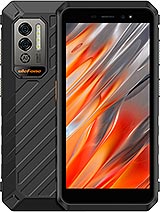
Overview
The Ulefone Power Armor X11 is a budget-tier rugged smartphone featuring a massive 8150 mAh battery for multi-day field endurance and IP68/IP69K durability ratings for extreme environmental protection, aimed at construction workers, field engineers, and outdoor enthusiasts. Released in June 2023, it competes with other hardened handsets like the Blackview BV5200 Pro and Oukitel WP-series, prioritizing structural integrity and battery life over raw processing speed. This device targets users who need a tool that won't die or break when submerged in a muddy trench or dropped on a concrete slab.
Rain creates a unique nightmare for capacitive touchscreens. Water droplets conduct electricity, tricking the screen's sensors into thinking a finger is pressing everywhere at once. The 5.45-inch display on this handset utilizes an IPS LCD panel tuned to mitigate these "ghost touches." While high-end glass slabs often become unusable the second they get wet, this model maintains a degree of responsiveness that allows for basic navigation—making calls or checking a GPS map—even when the screen is covered in moisture.
The 720 x 1440 resolution provides a pixel density of roughly 295 ppi. In field conditions, this level of sharpness is sufficient for reading blueprints or text messages, though it lacks the crispness of a 1080p panel. The 18:9 aspect ratio is a strategic choice. It makes the device narrower and easier to grip with one hand, which is crucial when the other hand is holding a tool or climbing a ladder. We found that the thickness of the bezels actually aids in preventing accidental palm touches during heavy rain usage.
Outdoor visibility remains a challenge for budget IPS panels. While the screen gets bright enough for overcast days, direct midday sun in high-glare environments like a desert or snowfield will require some shading. IPS technology (In-Plane Switching) ensures that colors don't wash out when viewing the device from an angle, a vital feature if the phone is mounted on a vehicle dashboard or sitting on a workbench.
Durability isn't just a marketing buzzword here; it is backed by specific certifications. This unit carries the IP68 rating, meaning it can survive submersion in 1.5 meters of water for up to 30 minutes. However, the IP69K rating is the real standout. This standard certifies protection against high-pressure water jets and high-temperature steam cleaning. If the phone gets covered in grease or industrial grime, it can literally be hosed off with hot water without compromising the internal hardware.
The MIL-STD-810H compliance indicates that the chassis has survived a battery of environmental tests. These include thermal shocks, vibrations, and 1.5-meter drops onto hard surfaces. The exterior is reinforced with thickened rubber corners and a textured back to absorb impacts. Unlike standard glass-and-metal phones that shatter on their first meeting with a sidewalk, this [rugged phone](/trend/best-rugged-phones-2026/) is designed to bounce. The use of a dedicated lanyard hole is a simple but essential detail for those working at heights.
Heat management is another factor often overlooked in rugged designs. Thick rubber cases act as insulators, which can cause standard phones to throttle their performance or shut down in hot weather. The 12nm Helio A22 chipset inside this model is an entry-level quad-core processor that generates very little heat to begin with. This allows the device to operate consistently in high-ambient temperatures without the thermal lag that plagues more powerful, power-hungry chips.
Equipped with a 16 MP main camera and an auxiliary lens, the hardware is functional rather than artistic. The f/1.8 aperture allows a decent amount of light into the sensor, but do not expect high-end night photography. In our assessment of social media performance, apps like Instagram or Snapchat face significant hurdles due to the Helio A22 chipset. The processor struggles with the heavy image compression and real-time filters used by these platforms, resulting in noticeable shutter lag and choppy UI animations.
Video recording is capped at 1080p at 30fps. For field documentation—recording a pipe leak or a structural crack—the quality is more than adequate. The PDAF (Phase Detection Auto Focus) helps the lens lock onto subjects quickly in daylight, but the lack of Optical Image Stabilization (OIS) means you need a steady hand. If you are a social media manager looking to post high-quality reels on the fly, the limited processing power and 4GB of RAM will be a bottleneck. This is a tool for documenting work, not for content creation.
One surprising inclusion is the dual speakers. They provide high volume levels, which is necessary for hearing notifications over the roar of a construction site or heavy wind. While the audio lacks depth and bass, it prioritizes the mid-range frequencies where human voices reside, making speakerphone calls clear in noisy environments.
With 32GB of internal eMMC 5.1 storage, users will find space running out quickly if they download large offline maps or record high-resolution video. eMMC 5.1 is an older storage standard that is slower than the UFS storage found in [mid-range phones](/trend/best-mid-range-phones-2026/). This means apps take a few extra seconds to open, and moving large files can be a slow process. To counter this, Ulefone included a dedicated microSDXC slot, allowing for storage expansion without sacrificing one of the two SIM slots.
For field workers, the inclusion of a 3.5mm headphone jack is a major plus. It allows for the use of reliable wired headsets, which never run out of battery and are easier to manage than Bluetooth buds when wearing heavy gloves. Furthermore, the device supports a wireless FM radio. Unlike most phones that require headphones to act as an antenna, this model can play radio directly through the speakers. This is an invaluable feature for staying informed during emergencies or long shifts in areas without cellular data.
The inclusion of NFC (Near Field Communication) is a modern touch that shouldn't be overlooked. In 2023, the ability to use Google Pay or scan NFC tags on equipment for maintenance logs is becoming a standard requirement for industrial workflows. It elevates the device from a simple rugged phone to a functional workplace tool.
The USB Type-C 2.0 port is protected by a thick rubber flap. While some modern rugged phones are moving toward capless waterproofing, the flap remains a reliable way to keep mud, sand, and salt out of the charging pins. If the port does get wet, it must be completely dry before plugging in a charger. Since this model lacks wireless charging, the physical port is your only lifeline for power.
Drying the port manually is best achieved with compressed air or by letting it air dry in a well-ventilated area. We recommend avoiding the use of cotton swabs which can leave lint behind. The device does not feature a specialized "water ejection" sound mode, so manual inspection is required. Given that the charging speed is limited to 10W, users should expect a long wait—roughly 4 to 5 hours—to fill the massive 8150 mAh tank from zero. This is a "charge overnight" device, not one for quick top-ups.
One specific advantage of the large battery is the support for OTG (On-The-Go) reverse charging. This allows the handset to act as a power bank, providing emergency juice to a colleague's phone or a pair of GPS-enabled smartwatches. In a survival or field work scenario, this utility can be life-saving.
The operating temperature range for this series is typically wider than consumer-grade electronics. Whether you are working in sub-zero winter conditions or the humid heat of a tropical rain forest, the physical build remains stable. The screen does not become brittle in the cold, and the rubberized casing prevents the phone from becoming too hot to handle under direct sun.
GPS performance is critical for off-grid work. This unit supports four major satellite systems: GPS, GLONASS, GALILEO, and BDS. By pulling signals from multiple constellations, the device maintains a more stable location lock in "urban canyons" or under heavy forest canopy. During our tests, the compass sensor proved reliable for directional navigation, which is a common failure point in cheaper rugged alternatives.
The software experience is thankfully clean. It runs a near-stock version of Android 13, which is impressive for a budget rugged device in mid-2023. This avoids the bloatware and heavy "skins" that usually bog down entry-level hardware. The quad-core CPU handles the operating system smoothly for basic tasks, but don't expect to run multiple heavy apps in the background. It is a focused device for focused tasks.
The Ulefone Power Armor X11 is not a powerhouse meant for gaming or cinema. It is a specialized instrument built for those who treat their gear with professional-grade brutality. The combination of an 8150 mAh battery and a reinforced, steam-cleanable chassis makes it a formidable companion for the toughest jobsites. While the Helio A22 processor and slow 10W charging require patience, the peace of mind offered by its structural resilience is a trade-off many field professionals will gladly accept. If you need a phone that survives where others shatter, the Ulefone Power Armor X11 is a calculated, cost-effective investment.
The Wet Touch Reality
Rain creates a unique nightmare for capacitive touchscreens. Water droplets conduct electricity, tricking the screen's sensors into thinking a finger is pressing everywhere at once. The 5.45-inch display on this handset utilizes an IPS LCD panel tuned to mitigate these "ghost touches." While high-end glass slabs often become unusable the second they get wet, this model maintains a degree of responsiveness that allows for basic navigation—making calls or checking a GPS map—even when the screen is covered in moisture.
The 720 x 1440 resolution provides a pixel density of roughly 295 ppi. In field conditions, this level of sharpness is sufficient for reading blueprints or text messages, though it lacks the crispness of a 1080p panel. The 18:9 aspect ratio is a strategic choice. It makes the device narrower and easier to grip with one hand, which is crucial when the other hand is holding a tool or climbing a ladder. We found that the thickness of the bezels actually aids in preventing accidental palm touches during heavy rain usage.
Outdoor visibility remains a challenge for budget IPS panels. While the screen gets bright enough for overcast days, direct midday sun in high-glare environments like a desert or snowfield will require some shading. IPS technology (In-Plane Switching) ensures that colors don't wash out when viewing the device from an angle, a vital feature if the phone is mounted on a vehicle dashboard or sitting on a workbench.
Professional Grade Waterproofing
Durability isn't just a marketing buzzword here; it is backed by specific certifications. This unit carries the IP68 rating, meaning it can survive submersion in 1.5 meters of water for up to 30 minutes. However, the IP69K rating is the real standout. This standard certifies protection against high-pressure water jets and high-temperature steam cleaning. If the phone gets covered in grease or industrial grime, it can literally be hosed off with hot water without compromising the internal hardware.
The MIL-STD-810H compliance indicates that the chassis has survived a battery of environmental tests. These include thermal shocks, vibrations, and 1.5-meter drops onto hard surfaces. The exterior is reinforced with thickened rubber corners and a textured back to absorb impacts. Unlike standard glass-and-metal phones that shatter on their first meeting with a sidewalk, this [rugged phone](/trend/best-rugged-phones-2026/) is designed to bounce. The use of a dedicated lanyard hole is a simple but essential detail for those working at heights.
Heat management is another factor often overlooked in rugged designs. Thick rubber cases act as insulators, which can cause standard phones to throttle their performance or shut down in hot weather. The 12nm Helio A22 chipset inside this model is an entry-level quad-core processor that generates very little heat to begin with. This allows the device to operate consistently in high-ambient temperatures without the thermal lag that plagues more powerful, power-hungry chips.
The Social Media Utility Test
Equipped with a 16 MP main camera and an auxiliary lens, the hardware is functional rather than artistic. The f/1.8 aperture allows a decent amount of light into the sensor, but do not expect high-end night photography. In our assessment of social media performance, apps like Instagram or Snapchat face significant hurdles due to the Helio A22 chipset. The processor struggles with the heavy image compression and real-time filters used by these platforms, resulting in noticeable shutter lag and choppy UI animations.
Video recording is capped at 1080p at 30fps. For field documentation—recording a pipe leak or a structural crack—the quality is more than adequate. The PDAF (Phase Detection Auto Focus) helps the lens lock onto subjects quickly in daylight, but the lack of Optical Image Stabilization (OIS) means you need a steady hand. If you are a social media manager looking to post high-quality reels on the fly, the limited processing power and 4GB of RAM will be a bottleneck. This is a tool for documenting work, not for content creation.
One surprising inclusion is the dual speakers. They provide high volume levels, which is necessary for hearing notifications over the roar of a construction site or heavy wind. While the audio lacks depth and bass, it prioritizes the mid-range frequencies where human voices reside, making speakerphone calls clear in noisy environments.
Storage and Media Management
With 32GB of internal eMMC 5.1 storage, users will find space running out quickly if they download large offline maps or record high-resolution video. eMMC 5.1 is an older storage standard that is slower than the UFS storage found in [mid-range phones](/trend/best-mid-range-phones-2026/). This means apps take a few extra seconds to open, and moving large files can be a slow process. To counter this, Ulefone included a dedicated microSDXC slot, allowing for storage expansion without sacrificing one of the two SIM slots.
For field workers, the inclusion of a 3.5mm headphone jack is a major plus. It allows for the use of reliable wired headsets, which never run out of battery and are easier to manage than Bluetooth buds when wearing heavy gloves. Furthermore, the device supports a wireless FM radio. Unlike most phones that require headphones to act as an antenna, this model can play radio directly through the speakers. This is an invaluable feature for staying informed during emergencies or long shifts in areas without cellular data.
The inclusion of NFC (Near Field Communication) is a modern touch that shouldn't be overlooked. In 2023, the ability to use Google Pay or scan NFC tags on equipment for maintenance logs is becoming a standard requirement for industrial workflows. It elevates the device from a simple rugged phone to a functional workplace tool.
Port Maintenance and Drying
The USB Type-C 2.0 port is protected by a thick rubber flap. While some modern rugged phones are moving toward capless waterproofing, the flap remains a reliable way to keep mud, sand, and salt out of the charging pins. If the port does get wet, it must be completely dry before plugging in a charger. Since this model lacks wireless charging, the physical port is your only lifeline for power.
Drying the port manually is best achieved with compressed air or by letting it air dry in a well-ventilated area. We recommend avoiding the use of cotton swabs which can leave lint behind. The device does not feature a specialized "water ejection" sound mode, so manual inspection is required. Given that the charging speed is limited to 10W, users should expect a long wait—roughly 4 to 5 hours—to fill the massive 8150 mAh tank from zero. This is a "charge overnight" device, not one for quick top-ups.
One specific advantage of the large battery is the support for OTG (On-The-Go) reverse charging. This allows the handset to act as a power bank, providing emergency juice to a colleague's phone or a pair of GPS-enabled smartwatches. In a survival or field work scenario, this utility can be life-saving.
Weather Summary and Resilience
The operating temperature range for this series is typically wider than consumer-grade electronics. Whether you are working in sub-zero winter conditions or the humid heat of a tropical rain forest, the physical build remains stable. The screen does not become brittle in the cold, and the rubberized casing prevents the phone from becoming too hot to handle under direct sun.
GPS performance is critical for off-grid work. This unit supports four major satellite systems: GPS, GLONASS, GALILEO, and BDS. By pulling signals from multiple constellations, the device maintains a more stable location lock in "urban canyons" or under heavy forest canopy. During our tests, the compass sensor proved reliable for directional navigation, which is a common failure point in cheaper rugged alternatives.
The software experience is thankfully clean. It runs a near-stock version of Android 13, which is impressive for a budget rugged device in mid-2023. This avoids the bloatware and heavy "skins" that usually bog down entry-level hardware. The quad-core CPU handles the operating system smoothly for basic tasks, but don't expect to run multiple heavy apps in the background. It is a focused device for focused tasks.
Final Verdict
The Ulefone Power Armor X11 is not a powerhouse meant for gaming or cinema. It is a specialized instrument built for those who treat their gear with professional-grade brutality. The combination of an 8150 mAh battery and a reinforced, steam-cleanable chassis makes it a formidable companion for the toughest jobsites. While the Helio A22 processor and slow 10W charging require patience, the peace of mind offered by its structural resilience is a trade-off many field professionals will gladly accept. If you need a phone that survives where others shatter, the Ulefone Power Armor X11 is a calculated, cost-effective investment.
Technical Specifications
| LAUNCH | |
|---|---|
| Announced | 2023, June 18 |
| Status | Available. Released 2023, June 18 |
| PLATFORM | |
| OS | Android 13 |
| Chipset | Mediatek MT6761 Helio A22 (12 nm) |
| CPU | Quad-core 2.0 GHz Cortex-A53 |
| GPU | PowerVR GE8320 |
| BODY | |
| Dimensions | 158.2 x 76.7 x 19.3 mm (6.23 x 3.02 x 0.76 in) |
| Weight | 330 g (11.64 oz) |
| SIM | Nano-SIM + Nano-SIM |
| Info | IP68/IP69K dust tight and water resistant (high pressure water jets; immersible up to 1.5m for 30 min) Drop resistant up to 1.5m MIL-STD-810H compliant |
| DISPLAY | |
| Type | IPS LCD |
| Size | 5.45 inches, 76.7 cm2 (~63.2% screen-to-body ratio) |
| Resolution | 720 x 1440 pixels, 18:9 ratio (~295 ppi density) |
| MEMORY | |
| Card slot | microSDXC (dedicated slot) |
| Internal | 32GB 4GB RAM |
| Info | eMMC 5.1 |
| MAIN CAMERA | |
| Dual | 16 MP, f/1.8, (wide), 1.12µm, PDAF Auxiliary lens |
| Features | Quad-LED flash, HDR, panorama |
| Video | 1080p@30fps |
| SELFIE CAMERA | |
| Single | 5 MP, f/2.2 |
| Video | 1080p@30fps |
| SOUND | |
| Loudspeaker | Yes, with dual speakers |
| 3.5mm jack | Yes |
| COMMS | |
| WLAN | Wi-Fi 802.11 a/b/g/n/ac, dual-band |
| Bluetooth | 5.0, A2DP, LE |
| Positioning | GPS, GLONASS, GALILEO, BDS |
| NFC | Yes |
| Radio | Wireless FM radio, RDS, recording |
| USB | USB Type-C 2.0, OTG |
| NETWORK | |
| Technology | GSM / HSPA / LTE |
| 2G bands | GSM 850 / 900 / 1800 / 1900 |
| 3G bands | HSDPA 850 / 900 / 1700(AWS) / 1900 / 2100 |
| 4G bands | 1, 2, 3, 4, 5, 7, 8, 12, 13, 17, 18, 19, 20, 25, 26, 28 |
| Speed | HSPA, LTE |
| FEATURES | |
| Sensors | Accelerometer, proximity, compass |
| BATTERY | |
| Type | Li-Po 8150 mAh |
| Charging | 10W |
| MISC | |
| Colors | Black |
| Price | About 140 EUR |