Ditch the Used Flagship Risk for the Durable Cubot A40
Overview
The Economics of Longevity vs Depreciated Power
The Cubot A40 is an ultra-durable budget smartphone designed for users who prioritize physical longevity and battery health over raw processing power. Released in July 2025, it competes with entry-level offerings from Infinix and older refurbished flagships by emphasizing a Class A free-fall rating and a 1300-cycle battery.
Smart shoppers in mid-2025 face a recurring dilemma: buy a three-year-old flagship with a dying battery or a brand-new budget device with modern efficiency. We see the Cubot A40 as a calculated response to the latter choice. While a used Galaxy S22 or iPhone 13 might offer faster frame rates, those devices usually arrive with battery health hovering around 80%. This handset, conversely, introduces a high-longevity cell rated for 1300 cycles. In simple terms, most batteries start to fail after 500 to 800 cycles. By nearly doubling that threshold, this device ensures a four-year operational lifespan before the owner needs to even consider a replacement. For a value hunter, that cuts the annual cost of ownership in half compared to a fragile used alternative.
Looking at the market landscape, the 4G-only nature of this model might seem like a step backward in 2025. However, for users in regions where 5G penetration is still patchy or for those who prioritize a stable HSPA/LTE connection for basic communication, the Unisoc T606 chipset is a sensible trade-off. It prioritizes background task management and thermal stability over peak performance, ensuring the hardware doesn't throttle during a long day of navigation or document editing.
Surviving the Concrete Jungle with Class A Certification
Build quality is where this handset separates itself from the typical plastic slabs found in the sub-$150 segment. The inclusion of a Mohs level 6 protection rating for the display is a significant upgrade. While standard glass often scratches at level 5 or shows deep grooves at level 6, this panel is engineered to withstand the daily friction of keys and coins. In our analysis of the spec sheet, this level of hardness typically requires a specialized chemical tempering process that few budget manufacturers bother with.
Beyond surface scratches, the structural integrity is backed by a Class A free-fall rating. This European standard involves a rigorous testing regime where the device must survive 270 falls from various heights without catastrophic failure. Most consumer phones are lucky to survive ten such drops before the internal ribbons or the digitizer give up. This makes the handset an excellent candidate for field workers, students, or anyone prone to accidents who doesn't want the bulk of a traditional ruggedized phone.
Compared to a 2022 flagship, which by 2025 likely has brittle adhesive and worn gaskets, the Cubot A40 offers a fresh structural seal. Although it lacks a formal IP68 rating, the high drop-survival count implies a level of internal bracing and shock absorption that simply isn't present in used premium devices. We believe the trade-off of a thicker 8.8mm chassis is worth the peace of mind.
High Refresh Rates and the Low Resolution Reality
The 120Hz IPS LCD is a polarizing choice for a budget device. On one hand, the high refresh rate provides a fluidity in scrolling that makes the Android 15 interface feel more responsive than it actually is. On the other hand, the 720 x 1640 resolution across a massive 6.88-inch canvas results in a pixel density of approximately 260 ppi. At this size, we can see individual pixels if the device is held closer than ten inches to the face. Text isn't as crisp as we would like for long-form reading.
However, there is a strategic benefit to this lower resolution. By pushing fewer pixels, the Mali-G57 MP1 GPU doesn't have to work nearly as hard. This allows the 120Hz mode to remain stable even during moderately heavy browsing. If this were a 1080p panel paired with the same Unisoc T606 chipset, we would likely see significant frame drops. The decision to prioritize smoothness over sharpness is a classic budget move that benefits the user experience during navigation and social media scrolling.
Brightness levels are adequate for indoor use, though the 6.88-inch size makes it a massive target for glare. The 83.5% screen-to-body ratio is respectable, though the notch for the 16MP selfie camera feels a bit dated in an era where hole-punches have become the standard even in the entry-level tier. Nevertheless, the sheer scale of the display makes it a solid tool for split-screen multitasking or watching video content on the go.
The Fingerprint Magnet and Handling Logistics
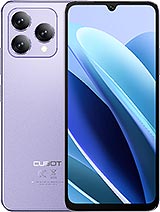
Measuring 172.3 mm in height, this is a tall device. It requires two-handed operation for almost any task beyond basic scrolling. The finish, available in Black, Purple, and Titan Grey, looks sleek in marketing photos, but the materials imply it will be a fingerprint magnet. We recommend using a matte case to maintain the aesthetic and provide a better grip. The weight isn't officially listed, but given the 5100 mAh battery and the reinforced chassis, users should expect a weight class around 210-220 grams.
Handling is further complicated by the flat edges. While they look modern and echo current design trends from 2025, they don't taper into the palm. This makes the device feel even wider than its 78.1 mm specification suggests. For users with smaller hands, this could lead to fatigue during extended use. However, the extra surface area allows for better heat dissipation, which is crucial when the 12nm Unisoc T606 is pushed to its limits during multitasking.
The button placement is standard, but the lack of a 3.5mm headphone jack is a frustration in this price bracket. Usually, budget buyers rely on wired audio to save money and avoid the battery drain of Bluetooth. Removing the jack seems like a move to push users toward TWS earbuds, which adds an extra hidden cost to the total package. Fortunately, the inclusion of NFC is a major win, allowing for contactless payments in a segment where it is often omitted.
Audio Realities and Stereo Compromises
Stereo speakers are a highlight on the spec sheet, and they do provide a wider soundstage than the mono units found on many budget rivals. However, volume doesn't always equal quality. While the dual-speaker setup helps prevent accidental muffling when holding the phone in landscape mode, the lack of dedicated bass means the audio profile is thin. It is perfectly functional for podcasts or speakerphone calls, but don't expect it to replace a dedicated Bluetooth speaker for music.
The Bluetooth 5.0 radio is another area where the device shows its age. While stable, it lacks the range and lower latency of the Bluetooth 5.3 or 5.4 standards common in 2025. If you are using this handset for gaming, you might notice a slight audio delay with wireless headphones. For a value hunter, these are the types of minor friction points that must be accepted to get the superior durability ratings and battery longevity.
Performance Reality Check for 2025
The Unisoc T606 is an entry-level workhorse, not a thoroughbred. With two performance Cortex-A75 cores and six efficiency A55 cores, it is designed for reliability. In 2025, this chipset handles Android 15 surprisingly well, thanks to the 8GB RAM variant being the likely sweet spot for most buyers. If you opt for the 4GB RAM model, expect aggressive background app closing. We strongly suggest the 256GB/8GB configuration to ensure the device stays relevant through its four-year battery life.
Gaming performance is limited to casual titles. You can run games like Mobile Legends or Subway Surfers with ease, but attempting to play heavy 3D titles from 2025 will result in low frame rates and significant heat. The 12nm process is efficient, but it can't compete with the 4nm or 5nm chips found in slightly more expensive mid-rangers. The real value here is in the 5100 mAh battery endurance. With the low-resolution screen and efficient CPU, this handset easily lasts two days on a single charge for average users.
The 1300-cycle battery rating is the star of the show. Most [budget phones](/trend/best-budget-phones-2026/) use cheaper cells that swell or lose capacity after 18 months. By using a higher-grade electrolyte and anode structure, this model ensures that the 5100 mAh capacity remains functional for much longer. This reduces the need for expensive repairs or early upgrades, which is the ultimate goal for any budget economist.
The Final Take on the Value Proposition
The Cubot A40 isn't trying to be a flagship killer; it's trying to be a flagship survivor. It trades pixels and 5G speeds for a reinforced shell and a battery that refuses to quit. While the 720p display is a weakness, and the Unisoc chipset limits high-end gaming, the overall package is incredibly resilient. For anyone who has ever cracked a screen or had a phone die at 20% battery, the structural and electrical reliability offered here is worth every penny of its entry-level price.
Ultimately, this handset is about predictability. You know it will survive a drop from a table. You know the battery will still be healthy in three years. You know you can pay for groceries using NFC. In a market full of flashy but fragile devices, this model stands as a pragmatic fortress for the budget-conscious user. The Cubot A40 is a long-term investment in a disposable world.
Technical Specifications
| LAUNCH | |
|---|---|
| Announced | 2025, July |
| Status | Available. Released 2025, July |
| PLATFORM | |
| OS | Android 15 |
| Chipset | Unisoc T606 (12 nm) |
| CPU | Octa-core (2x1.6 GHz Cortex-A75 & 6x1.6 GHz Cortex-A55) |
| GPU | Mali-G57 MP1 |
| BODY | |
| Dimensions | 172.3 x 78.1 x 8.8 mm (6.78 x 3.07 x 0.35 in) |
| Weight | - |
| SIM | Nano-SIM + Nano-SIM |
| DISPLAY | |
| Type | IPS LCD, 120Hz |
| Size | 6.88 inches, 112.4 cm2 (~83.5% screen-to-body ratio) |
| Resolution | 720 x 1640 pixels (~260 ppi density) |
| Protection | Mohs level 6 |
| MEMORY | |
| Card slot | microSDXC |
| Internal | 64GB 4GB RAM, 256GB 8GB RAM |
| MAIN CAMERA | |
| Dual | 48 MP, (wide), PDAF 2 MP, (ultrawide) |
| Features | LED flash |
| Video | Yes |
| SELFIE CAMERA | |
| Single | 16 MP |
| Video | Yes |
| SOUND | |
| Loudspeaker | Yes, with stereo speakers |
| 3.5mm jack | No |
| COMMS | |
| WLAN | Wi-Fi 802.11 a/b/g/n/ac, dual-band |
| Bluetooth | 5.0, A2DP, LE |
| Positioning | GPS, GALILEO, GLONASS, BDS |
| NFC | Yes |
| Radio | Unspecified |
| USB | USB Type-C, OTG |
| NETWORK | |
| Technology | GSM / HSPA / LTE |
| 2G bands | GSM 850 / 900 / 1800 / 1900 |
| 3G bands | HSDPA 850 / 900 / 1700(AWS) / 1900 / 2100 |
| 4G bands | 1, 2, 3, 4, 5, 7, 8, 12, 17, 20, 26, 28, 38, 39, 40, 41, 66 |
| Speed | HSPA, LTE |
| FEATURES | |
| Sensors | Accelerometer, proximity |
| BATTERY | |
| Type | 5100 mAh |
| MISC | |
| Display | 6.88-inch IPS LCD, 120Hz (720 x 1640 px) |
| Chipset | Unisoc T606 (12 nm) Octa-core |
| Memory | Up to 256GB Storage, 8GB RAM |
| Battery | 5100 mAh, 1300 cycles durability |
| Durability | Class A Free Fall (270 drops), Mohs level 6 glass |
| Main Camera | 48 MP (wide) PDAF + 2 MP (ultrawide) |
| Selfie Camera | 16 MP |
| OS | Android 15 |
| Connectivity | 4G LTE, NFC, Bluetooth 5.0, USB-C |
| Audio | Stereo Speakers, No 3.5mm jack |
| Colors | Black, Purple, Titan Grey |
| EU LABEL | |
| Energy | Class C |
| Battery | 43:53h endurance, 1300 cycles |
| Free fall | Class A (270 falls) |
| Repairability | Class B |