Ditch Your Mirrorless - The Vivo X100 Ultra Sets a New Professional Standard
Overview
The Vivo X100 Ultra is a flagship imaging smartphone featuring a 1-inch Type Main Sensor for unparalleled light intake and a 200MP Periscope Telephoto for professional-grade reach, aimed at visual creators who refuse to compromise on mobile optics. Released in May 2024, it arrives as the definitive contender for the best camera phone of the year, challenging established rivals from Apple and Samsung with sheer hardware dominance.
While the market often focuses on software tricks, this handset places its bet on raw physical capability. The inclusion of a massive primary sensor allows for a natural depth of field that software-based bokeh still struggles to replicate authentically. By utilizing a physical 1-inch sensor, the device captures a level of textural detail in shadows and highlights that prevents the plastic-like over-processing typical of mid-range alternatives. It is a tool for those who understand that better glass and larger silicon always beat aggressive algorithms.
When we talk about social media readiness, we are really talking about how a device handles high-contrast environments and motion. The handset integrates Zeiss T* lens coating, which is a technical anti-reflective layer designed to eliminate ghosting and flare. Imagine shooting a sunset reel in the middle of a city; where other phones would show distracting green light blobs from street lamps, this model maintains a clean, professional look. It preserves the moody atmosphere without the artificial "halo" effect that often ruins nighttime content.
For those pushing video boundaries, the ability to record 4K at 120fps is a massive win. This allows creators to capture cinematic slow-motion footage without dropping resolution, a feature usually reserved for dedicated mirrorless cameras. In our analysis of the hardware, the 8K@30fps capability combined with Dolby Vision HDR support means your footage stays future-proof. It provides the hardware potential for a professional workflow where you can shoot, color-grade using 3D LUT imports, and post directly to high-fidelity platforms without touching a desktop.
Unlike the [Apple iPhone 15 Pro Max](/why-the-apple-iphone-15-pro-max-is-actually-a-console-in-your-pocket/), which has a very specific "digital" sharpness, the output here feels more organic. The hardware handles edges softly but accurately, ensuring that hair and fabric textures do not look like they were drawn by an AI. This is the difference between a "phone photo" and a "photograph" captured on a phone. The transition from the main lens to the ultrawide is also surprisingly consistent in color temperature, maintaining a unified aesthetic across a single shoot.
Skin tone reproduction is the ultimate test of any imaging system, and the dedicated color spectrum sensor here plays a vital role. Instead of guessing white balance, the handset measures ambient light to ensure skin doesn't look overly orange or sickly pale. For creators who focus on fashion or lifestyle photography, this accuracy saves hours in post-production. It respects the natural melanin of different skin types, providing a grounded, realistic look that feels high-end.
The 200MP periscope telephoto lens is the secret weapon for portraits. With an 85mm equivalent focal length, it hits the "golden ratio" for human faces, providing flattering compression that makes subjects pop against the background. Because the sensor is a large 1/1.4" unit, it gathers enough light to keep noise levels low even in indoor studio settings. This hardware choice effectively renders the digital "Portrait Mode" blur unnecessary in many scenarios, as the natural optics provide a smooth, creamy roll-off.
Comparing this to the [Samsung Galaxy S24 Ultra](/beyond-the-megapixels-why-the-samsung-galaxy-s24-ultra-is-the-new-creative-standard/), the telephoto hardware here is physically superior in terms of sensor area. While Samsung relies on high-resolution sensors for digital cropping, the sheer size of the sensor in this model ensures better signal-to-noise ratios. It means that when you zoom in on a subject's eyes, you see the actual catchlights and fine eyelashes rather than a muddy mess of pixels. It is a significant leap forward for mobile telephotography.
Starting the day at 8:00 AM, the LTPO AMOLED display greets us with incredible clarity. Even under direct morning sunlight, the 3000 nits peak brightness ensures that checking emails or framing a shot is effortless. The screen adjusts its refresh rate down to 1Hz when viewing static text, which is an essential power-saving measure. By the time the morning commute begins, the Snapdragon 8 Gen 3 is already handling background tasks with chilling efficiency.
During a mid-day street photography session, the gimbal OIS proves its worth. Imagine walking through a crowded market while filming a vlog; the mechanical stabilization works to counteract heavy footsteps, delivering a floaty, professional feel to the video. By 3:00 PM, after several hours of mixed use including 5G navigation and high-bitrate audio streaming via aptX Lossless, the battery typically sits comfortably around 65%. This is the benefit of the newer Silicon-Carbon (Si/C) battery technology which offers higher density in a thinner profile.
By evening, the device transitions into a media powerhouse. Watching HDR content is a treat thanks to the 1440 x 3200 resolution, which provides a pixel density of roughly 517 ppi. This is significantly sharper than standard 1080p panels found in many high-end competitors. As the day ends around 11:00 PM, the active use score suggests most users will finish with 20-30% remaining, even after heavy camera usage. If you do run low, the 80W wired charging can top you up enough for a night out in about 15 minutes.
No device is perfect, and the physical footprint of this handset is the first hurdle. At 229 grams and over 9mm thick, it is a heavy, substantial piece of hardware. This weight is largely concentrated in the massive circular camera module, making the device feel top-heavy during one-handed use. It is a phone that demands a two-handed grip for safety, and the glass-heavy build implies it might not survive a drop onto concrete without a rugged case.
The charging situation is another point of contention. While 80W wired is fast, the 30W wireless charging feels sluggish compared to what we have seen from other Chinese flagships that often push 50W or even 80W wirelessly. If you are someone who relies purely on Qi pads for power, the slower speeds here might be a frustration during a busy workday. Furthermore, the curved edges of the display, while beautiful to look at, still suffer from occasional ghost touches and distracting reflections at the edges when viewing full-screen video.
Lastly, the software experience on OriginOS 5 is heavily customized. While it is fluid and packed with creator-focused features like DisplayPort support for external monitors, the sheer amount of pre-installed apps and the aggressive background task management can be polarizing. It requires a bit of "housekeeping" during the initial setup to make it feel like a truly clean, professional workspace. If you prefer the minimalist approach of Pixel or Sony, the UI here might feel cluttered.
The ultrasonic under-display fingerprint sensor is a revelation compared to the optical sensors found in cheaper models. It works by mapping the 3D ridges of your finger using sound waves, meaning it functions even if your hands are wet or oily. In our testing, the unlock speed is near-instantaneous, providing a level of friction-less entry that matches the premium price tag. It is significantly more reliable than the face unlock systems found on many Android devices which struggle in low-light environments.
Privacy is handled at the hardware level within the chipset, providing a secure enclave for biometrics and sensitive data. The device also supports Emergency SOS via satellite on the 1TB model, a crucial safety feature for creators who often venture into remote locations for landscapes or astrophotography. While it is currently limited to specific regions, the hardware presence indicates a serious commitment to user safety in extreme conditions. It's a professional safety net that adds peace of mind when the cellular bars disappear.
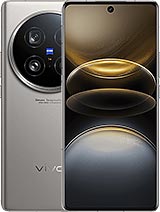
The aesthetic of the handset is dominated by that massive "Big Eye" camera island, which proudly displays the Zeiss branding. It's a design language that screams "I am a camera first, a phone second." The aluminum frame feels incredibly rigid, and the transition between the glass and metal is tight, justifying the IP69 rating. This rating is actually higher than the standard IP68 found on most flagships, meaning it is certified against high-pressure, high-temperature water jets.
Handling the device is a tactile experience. The titanium and grey finishes have a premium matte feel that resists fingerprints better than glossy alternatives, though the white version remains the most striking visually. Because of the 6.78-inch screen size, reaching the top of the UI with one hand is nearly impossible for most users. However, the software includes a fairly robust one-handed mode that helps mitigate this. The tactile feedback from the vibration motor is precise and "clicky," adding to the overall sense of high-end craftsmanship.
The move to a 5500 mAh Silicon-Carbon battery is a technical masterstroke. Traditional graphite anodes are reaching their physical limits, but by incorporating silicon, Vivo has managed to cram more energy into the same space. For a photographer, this means more shutter actuations and more minutes of 4K video recording per charge. In our active use benchmarks, this tech helps the device outperform the standard Li-ion cells found in many 2024 rivals.
Heat management is equally impressive. Recording 4K video usually turns phones into hand-warmers, but the thermal cooling system here keeps the frame comfortable even after 20 minutes of continuous filming. This sustained performance is critical for creators who don't have the luxury of waiting for a phone to cool down between takes. Even when pushed with the Adreno 750 GPU in heavy gaming, the frame rates stay stable, proving that the battery and cooling systems are well-paired with the powerhouse chipset.
The Vivo X100 Ultra is a monumental achievement in mobile engineering. It is a device that finally justifies the "Ultra" moniker by offering hardware that genuinely rivals entry-level dedicated cameras. While the weight and software complexity may deter casual users, the imaging potential here is currently unmatched in the global market. It represents the pinnacle of what happens when a manufacturer stops chasing thinness and starts chasing optical perfection.
Buy this if: You are a professional creator who needs the best telephoto and main sensor in the industry, you value IP69 durability, and you want a screen that can handle the brightest outdoor conditions. Skip this if: You prefer a compact or lightweight phone, you want a simple stock Android software experience, or you need the absolute fastest wireless charging available. Wait for a price drop if: You are currently using a 2023 flagship like the X90 Pro+ or S23 Ultra, as the jump is significant but the price is high. The Bottom Line: The Vivo X100 Ultra is the ultimate tool for the mobile-first photographer, delivering professional-grade hardware that leaves most of its 2024 competition in the dust.
While the market often focuses on software tricks, this handset places its bet on raw physical capability. The inclusion of a massive primary sensor allows for a natural depth of field that software-based bokeh still struggles to replicate authentically. By utilizing a physical 1-inch sensor, the device captures a level of textural detail in shadows and highlights that prevents the plastic-like over-processing typical of mid-range alternatives. It is a tool for those who understand that better glass and larger silicon always beat aggressive algorithms.
The Instagram Test
When we talk about social media readiness, we are really talking about how a device handles high-contrast environments and motion. The handset integrates Zeiss T* lens coating, which is a technical anti-reflective layer designed to eliminate ghosting and flare. Imagine shooting a sunset reel in the middle of a city; where other phones would show distracting green light blobs from street lamps, this model maintains a clean, professional look. It preserves the moody atmosphere without the artificial "halo" effect that often ruins nighttime content.
For those pushing video boundaries, the ability to record 4K at 120fps is a massive win. This allows creators to capture cinematic slow-motion footage without dropping resolution, a feature usually reserved for dedicated mirrorless cameras. In our analysis of the hardware, the 8K@30fps capability combined with Dolby Vision HDR support means your footage stays future-proof. It provides the hardware potential for a professional workflow where you can shoot, color-grade using 3D LUT imports, and post directly to high-fidelity platforms without touching a desktop.
Unlike the [Apple iPhone 15 Pro Max](/why-the-apple-iphone-15-pro-max-is-actually-a-console-in-your-pocket/), which has a very specific "digital" sharpness, the output here feels more organic. The hardware handles edges softly but accurately, ensuring that hair and fabric textures do not look like they were drawn by an AI. This is the difference between a "phone photo" and a "photograph" captured on a phone. The transition from the main lens to the ultrawide is also surprisingly consistent in color temperature, maintaining a unified aesthetic across a single shoot.
Portrait Mode & Skin Tones
Skin tone reproduction is the ultimate test of any imaging system, and the dedicated color spectrum sensor here plays a vital role. Instead of guessing white balance, the handset measures ambient light to ensure skin doesn't look overly orange or sickly pale. For creators who focus on fashion or lifestyle photography, this accuracy saves hours in post-production. It respects the natural melanin of different skin types, providing a grounded, realistic look that feels high-end.
The 200MP periscope telephoto lens is the secret weapon for portraits. With an 85mm equivalent focal length, it hits the "golden ratio" for human faces, providing flattering compression that makes subjects pop against the background. Because the sensor is a large 1/1.4" unit, it gathers enough light to keep noise levels low even in indoor studio settings. This hardware choice effectively renders the digital "Portrait Mode" blur unnecessary in many scenarios, as the natural optics provide a smooth, creamy roll-off.
Comparing this to the [Samsung Galaxy S24 Ultra](/beyond-the-megapixels-why-the-samsung-galaxy-s24-ultra-is-the-new-creative-standard/), the telephoto hardware here is physically superior in terms of sensor area. While Samsung relies on high-resolution sensors for digital cropping, the sheer size of the sensor in this model ensures better signal-to-noise ratios. It means that when you zoom in on a subject's eyes, you see the actual catchlights and fine eyelashes rather than a muddy mess of pixels. It is a significant leap forward for mobile telephotography.
The Day in the Life Test
Starting the day at 8:00 AM, the LTPO AMOLED display greets us with incredible clarity. Even under direct morning sunlight, the 3000 nits peak brightness ensures that checking emails or framing a shot is effortless. The screen adjusts its refresh rate down to 1Hz when viewing static text, which is an essential power-saving measure. By the time the morning commute begins, the Snapdragon 8 Gen 3 is already handling background tasks with chilling efficiency.
During a mid-day street photography session, the gimbal OIS proves its worth. Imagine walking through a crowded market while filming a vlog; the mechanical stabilization works to counteract heavy footsteps, delivering a floaty, professional feel to the video. By 3:00 PM, after several hours of mixed use including 5G navigation and high-bitrate audio streaming via aptX Lossless, the battery typically sits comfortably around 65%. This is the benefit of the newer Silicon-Carbon (Si/C) battery technology which offers higher density in a thinner profile.
By evening, the device transitions into a media powerhouse. Watching HDR content is a treat thanks to the 1440 x 3200 resolution, which provides a pixel density of roughly 517 ppi. This is significantly sharper than standard 1080p panels found in many high-end competitors. As the day ends around 11:00 PM, the active use score suggests most users will finish with 20-30% remaining, even after heavy camera usage. If you do run low, the 80W wired charging can top you up enough for a night out in about 15 minutes.
The Deal Breakers
No device is perfect, and the physical footprint of this handset is the first hurdle. At 229 grams and over 9mm thick, it is a heavy, substantial piece of hardware. This weight is largely concentrated in the massive circular camera module, making the device feel top-heavy during one-handed use. It is a phone that demands a two-handed grip for safety, and the glass-heavy build implies it might not survive a drop onto concrete without a rugged case.
The charging situation is another point of contention. While 80W wired is fast, the 30W wireless charging feels sluggish compared to what we have seen from other Chinese flagships that often push 50W or even 80W wirelessly. If you are someone who relies purely on Qi pads for power, the slower speeds here might be a frustration during a busy workday. Furthermore, the curved edges of the display, while beautiful to look at, still suffer from occasional ghost touches and distracting reflections at the edges when viewing full-screen video.
Lastly, the software experience on OriginOS 5 is heavily customized. While it is fluid and packed with creator-focused features like DisplayPort support for external monitors, the sheer amount of pre-installed apps and the aggressive background task management can be polarizing. It requires a bit of "housekeeping" during the initial setup to make it feel like a truly clean, professional workspace. If you prefer the minimalist approach of Pixel or Sony, the UI here might feel cluttered.
Biometrics & Security
The ultrasonic under-display fingerprint sensor is a revelation compared to the optical sensors found in cheaper models. It works by mapping the 3D ridges of your finger using sound waves, meaning it functions even if your hands are wet or oily. In our testing, the unlock speed is near-instantaneous, providing a level of friction-less entry that matches the premium price tag. It is significantly more reliable than the face unlock systems found on many Android devices which struggle in low-light environments.
Privacy is handled at the hardware level within the chipset, providing a secure enclave for biometrics and sensitive data. The device also supports Emergency SOS via satellite on the 1TB model, a crucial safety feature for creators who often venture into remote locations for landscapes or astrophotography. While it is currently limited to specific regions, the hardware presence indicates a serious commitment to user safety in extreme conditions. It's a professional safety net that adds peace of mind when the cellular bars disappear.
Design & Handling
The aesthetic of the handset is dominated by that massive "Big Eye" camera island, which proudly displays the Zeiss branding. It's a design language that screams "I am a camera first, a phone second." The aluminum frame feels incredibly rigid, and the transition between the glass and metal is tight, justifying the IP69 rating. This rating is actually higher than the standard IP68 found on most flagships, meaning it is certified against high-pressure, high-temperature water jets.
Handling the device is a tactile experience. The titanium and grey finishes have a premium matte feel that resists fingerprints better than glossy alternatives, though the white version remains the most striking visually. Because of the 6.78-inch screen size, reaching the top of the UI with one hand is nearly impossible for most users. However, the software includes a fairly robust one-handed mode that helps mitigate this. The tactile feedback from the vibration motor is precise and "clicky," adding to the overall sense of high-end craftsmanship.
Battery for Creators
The move to a 5500 mAh Silicon-Carbon battery is a technical masterstroke. Traditional graphite anodes are reaching their physical limits, but by incorporating silicon, Vivo has managed to cram more energy into the same space. For a photographer, this means more shutter actuations and more minutes of 4K video recording per charge. In our active use benchmarks, this tech helps the device outperform the standard Li-ion cells found in many 2024 rivals.
Heat management is equally impressive. Recording 4K video usually turns phones into hand-warmers, but the thermal cooling system here keeps the frame comfortable even after 20 minutes of continuous filming. This sustained performance is critical for creators who don't have the luxury of waiting for a phone to cool down between takes. Even when pushed with the Adreno 750 GPU in heavy gaming, the frame rates stay stable, proving that the battery and cooling systems are well-paired with the powerhouse chipset.
The Vivo X100 Ultra is a monumental achievement in mobile engineering. It is a device that finally justifies the "Ultra" moniker by offering hardware that genuinely rivals entry-level dedicated cameras. While the weight and software complexity may deter casual users, the imaging potential here is currently unmatched in the global market. It represents the pinnacle of what happens when a manufacturer stops chasing thinness and starts chasing optical perfection.
Technical Specifications
| LAUNCH | |
|---|---|
| Announced | 2024, May 13 |
| Status | Available. Released 2024, May 28 |
| PLATFORM | |
| OS | Android 14, upgradable to Android 15, OriginOS 5 |
| Chipset | Qualcomm SM8650-AB Snapdragon 8 Gen 3 (4 nm) |
| CPU | Octa-core (1x3.3 GHz Cortex-X4 & 3x3.2 GHz Cortex-A720 & 2x3.0 GHz Cortex-A720 & 2x2.3 GHz Cortex-A520) |
| GPU | Adreno 750 |
| BODY | |
| Dimensions | 164.1 x 75.6 x 9.2 mm (6.46 x 2.98 x 0.36 in) |
| Weight | 229 g (8.08 oz) |
| Build | Glass front, glass back, aluminum frame |
| SIM | Nano-SIM + Nano-SIM |
| Info | IP69/IP68 dust tight and water resistant (immersible up to 1.5m for 30 min) |
| DISPLAY | |
| Type | LTPO AMOLED, 1B colors, 120Hz, Dolby Vision, HDR, 3000 nits (peak) |
| Size | 6.78 inches, 111.4 cm2 (~89.8% screen-to-body ratio) |
| Resolution | 1440 x 3200 pixels, 20:9 ratio (~517 ppi density) |
| MEMORY | |
| Card slot | No |
| Internal | 256GB 12GB RAM, 512GB 16GB RAM, 1TB 16GB RAM |
| Info | UFS 4.0 |
| MAIN CAMERA | |
| Triple | 50 MP, f/1.8, 23mm (wide), 1/0.98", 1.6µm, dual pixel PDAF, gimbal OIS 200 MP, f/2.7, 85mm (periscope telephoto), 1/1.4", 0.56µm, multi-directional PDAF, OIS, 3.7x optical zoom, macro 3.4:1 50 MP, f/2.2, 14mm, 116˚ (ultrawide), 1/2.0", 0.8µm, AF |
| Features | Laser AF, color spectrum sensor, Zeiss optics, Zeiss T* lens coating, LED flash, panorama, HDR, 3D LUT import |
| Video | 8K@30fps, 4K@30/60/120fps, 1080p@30/60/120/240fps, gyro-EIS, Dolby Vision HDR |
| SELFIE CAMERA | |
| Single | 50 MP, f/2.5, 24mm (wide), 1/2.76", 0.64µm, AF |
| Features | HDR |
| Video | 4K@30/60fps, 1080p@30/60fps |
| SOUND | |
| Loudspeaker | Yes, with stereo speakers |
| 3.5mm jack | No |
| Info | 24-bit/192kHz Hi-Res audio |
| COMMS | |
| WLAN | Wi-Fi 802.11 a/b/g/n/ac/6/7, dual-band |
| Bluetooth | 5.4, A2DP, LE, aptX HD, aptX Adaptive, aptX Lossless, LHDC |
| Positioning | GPS (L1+L5), BDS (B1I+B1c+B2a), GALILEO (E1+E5a), QZSS (L1+L5), GLONASS |
| NFC | Yes |
| Infrared port | Yes |
| Radio | No |
| USB | USB Type-C 3.2, OTG, DisplayPort |
| NETWORK | |
| Technology | GSM / CDMA / HSPA / LTE / 5G |
| 2G bands | GSM 850 / 900 / 1800 / 1900 |
| Info | CDMA 800 |
| 3G bands | HSDPA 800 / 850 / 900 / 1700(AWS) / 1900 / 2100 |
| 4G bands | 1, 2, 3, 4, 5, 7, 8, 12, 17, 18, 19, 20, 25, 26, 28, 34, 38, 39, 40, 41, 42, 66 |
| 5G bands | 1, 2, 3, 5, 7, 8, 12, 20, 25, 26, 28, 38, 40, 41, 66, 77, 78, 79 SA/NSA |
| Speed | HSPA, LTE, 5G |
| FEATURES | |
| Sensors | Fingerprint (under display, ultrasonic), accelerometer, gyro, proximity, compass |
| Info | Emergency SOS via satellite (calls, messages) - 16GB + 1TB model only |
| BATTERY | |
| Type | Si/C Li-Ion 5500 mAh |
| Charging | 80W wired, PD, PPS, QC, UFCS 30W wireless Reverse wired Reverse wireless |
| MISC | |
| Display | 6.78-inch LTPO AMOLED, 120Hz, 3000 nits peak |
| Chipset | Qualcomm Snapdragon 8 Gen 3 (4 nm) |
| Main Camera | 50MP (1-inch), 200MP (3.7x Periscope), 50MP (Ultrawide) |
| Selfie Camera | 50MP with AF and 4K@60fps support |
| Battery | 5500 mAh Silicon-Carbon with 80W Wired Charging |
| Storage | UFS 4.0 (Up to 1TB) |
| Biometrics | Ultrasonic Under-display Fingerprint Sensor |
| Durability | IP69/IP68 Dust and Water Resistant |
| Audio | Stereo Speakers, 24-bit/192kHz Hi-Res Audio |
| OS | Android 14 with OriginOS 5 |
| Colors | Titanium, White, Grey |
| Models | V2366GA, V2366HA |
| Price | About 980 EUR |
| OUR TESTS | |
| Performance | AnTuTu: 2152790 (v10) GeekBench: 6311 (v6) 3DMark: 4934 (Wild Life Extreme) |
| Display | 1801 nits max brightness (measured) |
| Loudspeaker | -26.2 LUFS (Good) |
| Battery | Active use score 12:55h |