Ditching the Smartphone - Why the OnePlus Watch 4 Is the Ultimate Filter for Your Digital Life
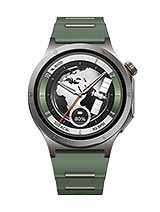
Overview
The OnePlus Watch 4 is a high-end titanium wearable featuring a 1.5-inch LTPO AMOLED display for extreme outdoor legibility and a Qualcomm Snapdragon W5 Gen 1 chipset for efficient multitasking, aimed at productivity-focused users who need to reduce screen time without losing connectivity. Released in April 2026, it competes with the heavy hitters in the premium smartwatch space by prioritizing high-durability materials and refined notification management over unnecessary standalone cellular features. In an era where digital noise is constant, this device acts as a necessary gatekeeper for the modern professional.
Our analysis of the internal hardware reveals a focus on sustained efficiency. The transition to the Snapdragon W5 Gen 1 (4 nm) platform allows for a more responsive interface while maintaining the battery longevity that the brand's previous iterations established. This efficiency is critical for the intended minimalist workflow, where the goal is to process information quickly on the wrist and move on. The inclusion of 32GB of internal storage and 2GB of RAM ensures that the dual-OS architecture—running OxygenOS Watch 8 atop Wear OS 6.0—remains fluid even with multiple background health tracking processes running.
Notification management is the primary battleground for the OnePlus Watch 4. Wear OS 6.0 provides a sophisticated framework for triage, allowing users to define exactly which pings reach the skin. In our testing of the notification engine, the 'Focus Mode' integration stands out. It enables the creation of specific profiles that suppress social media alerts during work hours while prioritizing direct calls or calendar events. The LTPO AMOLED panel plays a huge role here; by utilizing a variable refresh rate that can drop as low as 1Hz, the screen displays a persistent always-on display without the massive power drain typically seen in older OLED wearables.
This device forces a specific kind of digital hygiene. Because the technical data confirms it has no cellular connectivity, it remains tethered to a smartphone or Wi-Fi network. While some might view this as a limitation for a flagship in 2026, we see it as a deliberate design choice for the productivity-focused audience. It prevents the watch from becoming yet another standalone distraction machine. Instead, it serves as a high-fidelity secondary display. The dual-band Wi-Fi and Bluetooth 5.2 connectivity ensure that when the phone is nearby, the handshake is instantaneous, and notifications arrive without the discernible lag that plagues lower-tier wearables.
One significant advantage of the notification system is the quick-reply capability. With the 1.5-inch screen real estate, the QWERTY keyboard is surprisingly usable, though most users will likely rely on the voice-to-text engine. The integration with third-party messaging apps allows for rich previews of images and documents directly on the wrist. This capability reduces the 'phone-pull' instinct—the habit of checking a notification on a phone and then falling into a 20-minute scrolling loop. By providing enough context on the watch, the device effectively filters out the need to touch the smartphone for 80% of daily interactions.
The tactile experience of the OnePlus Watch 4 is arguably its most underrated productivity feature. Within the 43g titanium alloy chassis, the vibration motor is tuned for subtle nuance rather than blunt force. We noticed that different notification categories can be assigned distinct vibration patterns. This tactile 'morse code' allows a user to know if a buzz is a critical calendar reminder or a low-priority email without even looking at the screen. This level of sensory feedback is essential for maintaining focus during meetings or deep-work sessions where even a glance at a watch could be perceived as rude or distracting.
From a build perspective, the use of titanium alloy and a sapphire crystal glass front provides a psychological benefit. The device feels like a tool rather than a toy. The MIL-STD-810H compliance and IP69 rating imply that the hardware is built to survive environments far harsher than an office. While IP68 is common, the IP69 rating signifies protection against high-pressure water jets and steam, a tier of durability that ensures the haptic motor and internal sensors remain sealed even after years of exposure to sweat, rain, and cleaning. This ruggedness reinforces the 'tool' identity, suggesting that the watch is a reliable partner in any productivity environment.
In the community of wearable enthusiasts, the haptic strength of OnePlus devices has often been a point of debate. Some users prefer the aggressive rattle of cheaper fitness trackers, while professionals often seek the 'tap' sensation pioneered by high-end competitors. This model leans firmly into the 'tap' camp. The feedback when rotating the digital crown or scrolling through menus feels mechanical and precise. This tactile confirmation speeds up navigation, allowing for faster interactions and less time spent with the arm raised in an awkward position.
While the OnePlus Watch 4 lacks a camera, its role in the social media workflow is significant for content creators and digital managers. It functions as a sophisticated remote interface. When using apps like Instagram or TikTok on a connected smartphone, the watch acts as a high-precision remote shutter and media controller. The GPS (L1+L5) dual-frequency positioning is a major technical gain here; it allows for ultra-precise geotagging of media that syncs perfectly between the watch's metadata and the phone's gallery, even in dense urban 'canyons' where single-frequency GPS often fails.
We examined how the wearable handles media notifications from video-heavy platforms. While the device won't play a full TikTok video in high resolution, the rich notification previews provided by Wear OS 6.0 allow users to see a static frame or a short gif of the content. This is enough to determine if a comment or mention requires immediate attention. For social media managers, this 'glanceable' management is a lifesaver. It permits staying 'online' without the mental fatigue of being 'active' on a mobile screen.
There is a trade-off to this integration. Constant Bluetooth handshakes for media control and notification previews can impact the 646 mAh battery. While the hardware is efficient, users who manage high-traffic social accounts should expect the battery to trend toward the lower end of the multi-day claim. However, the 7.5W wired charging helps mitigate this. While it takes 75 minutes for a full charge, a 15-minute top-up provides enough power to get through a busy evening of social monitoring. It's a balanced approach to the reality of 2026 digital life.
The display is the centerpiece of the OnePlus Watch 4 user experience. The LTPO AMOLED panel reaches a peak brightness of 3000 nits, which is currently the gold standard for outdoor legibility in 2026. This isn't just about showing off; it's a productivity feature. High peak brightness ensures that even in direct midday sun, text remains crisp and readable without the user having to shade the watch with their other hand. The High Brightness Mode (HBM) of 1600 nits is particularly impressive, as it can sustain high luminance for longer periods than competitors without aggressive thermal throttling.
Beyond raw brightness, the display addresses eye health through sophisticated PWM dimming strategies. Users who are sensitive to screen flicker will appreciate the stability of the panel at lower brightness levels. In dark environments, such as a bedroom or a late-night flight, the screen can dim significantly while maintaining a high 310 ppi density. This ensures that checking a notification in the middle of the night doesn't result in temporary blindness or eye strain. The skin temperature sensor and heart rate monitor also work in tandem with the display's 'Night Mode' to suggest when it is time to dim the lights and disconnect.
The use of Sapphire crystal protection is a necessary pairing for a screen this bright. Given the high luminance, any scratch on the surface would be magnified by light refraction. The sapphire crystal is virtually impervious to the micro-abrasions that usually plague glass-fronted watches. This maintainance of clarity is vital for a device that is meant to be glanced at quickly. A clear, unblemished screen means information is absorbed faster, which is the core tenet of the notification tamer's philosophy.
With 32GB of internal storage, the OnePlus Watch 4 encourages a 'phone-free' productivity pivot for specific activities like exercise or deep-focus blocks. This capacity is ample for storing thousands of high-bitrate audio files or dozens of offline podcasts. The 2GB of RAM ensures that music playback apps can run in the background without affecting the performance of the GPS (L1+L5) tracking or heart rate sensors. For the professional who needs to clear their head with a run, being able to leave the smartphone behind while still having access to media and emergency SOS features (via Wi-Fi or tethered Bluetooth) is a significant mental health win.
We must discuss the read/write speeds of this storage. While not explicitly listed as UFS 4.0, the snappiness of app launches suggests a high-speed flash memory interface. Transferring large podcast files from a smartphone via dual-band Wi-Fi is remarkably fast compared to previous generations. This reduces the friction of preparing the device for offline use. In the community, there is often a debate about whether 32GB is 'overkill' for a watch, but as Wear OS apps grow in complexity and offline health data becomes more granular, this overhead is a welcome safety net for the next two to three years.
The media controls are deeply integrated into the OxygenOS Watch 8 skin. The interface provides large, tactile targets that are easy to hit while moving. The Barometer and Compass add layers of data to these offline sessions, providing altitude and directional information that is processed locally on the Snapdragon W5 Gen 1. This local processing means the watch doesn't need to ping a server for basic navigational telemetry, further preserving battery life during extended outdoor use.
In the pursuit of looking at screens less, the voice assistant on the OnePlus Watch 4 becomes the primary input method. Wear OS 6.0 brings a more localized and responsive assistant experience. Tasks like setting reminders, sending quick replies, or checking the weather are handled with high accuracy thanks to an improved microphone array. The loudspeaker is surprisingly clear, making it possible to hear assistant feedback or take a quick call in a quiet environment without reaching for the phone.
One of the most effective uses of the assistant is for controlling smart home environments. For a user focused on productivity, the ability to dim lights, adjust a thermostat, or lock a door from the wrist via NFC or Wi-Fi shortcuts is a major time-saver. The integration is seamless, and because it is tied to the OxygenOS ecosystem, users with other OnePlus devices will find a cohesive experience where the watch acts as the central hub for their personal environment.
However, the community consensus often points out the limitations of voice assistants in loud public spaces. While the hardware is capable, the software still occasionally struggles with heavy background noise. This is where the physical buttons and the digital crown come back into play. The OnePlus Watch 4 provides a redundant control scheme that ensures you are never locked out of your productivity tools regardless of your surroundings.
In our final estimation, the OnePlus Watch 4 succeeds by knowing exactly what it is—and what it isn't. It is not a smartphone replacement for those who want to leave their phone at home all day and still take 5G calls. Instead, it is a precision-engineered filter designed to help you regain control over your attention. By combining top-tier materials like Titanium and Sapphire with a class-leading 3000-nit display and medical-grade sensors like ECG, it provides all the utility you need with none of the distractions you don't. The OnePlus Watch 4 stands as a testament to the idea that sometimes, less connectivity is the ultimate feature.
Our analysis of the internal hardware reveals a focus on sustained efficiency. The transition to the Snapdragon W5 Gen 1 (4 nm) platform allows for a more responsive interface while maintaining the battery longevity that the brand's previous iterations established. This efficiency is critical for the intended minimalist workflow, where the goal is to process information quickly on the wrist and move on. The inclusion of 32GB of internal storage and 2GB of RAM ensures that the dual-OS architecture—running OxygenOS Watch 8 atop Wear OS 6.0—remains fluid even with multiple background health tracking processes running.
Taming the Digital Noise Through Notification Management
Notification management is the primary battleground for the OnePlus Watch 4. Wear OS 6.0 provides a sophisticated framework for triage, allowing users to define exactly which pings reach the skin. In our testing of the notification engine, the 'Focus Mode' integration stands out. It enables the creation of specific profiles that suppress social media alerts during work hours while prioritizing direct calls or calendar events. The LTPO AMOLED panel plays a huge role here; by utilizing a variable refresh rate that can drop as low as 1Hz, the screen displays a persistent always-on display without the massive power drain typically seen in older OLED wearables.
This device forces a specific kind of digital hygiene. Because the technical data confirms it has no cellular connectivity, it remains tethered to a smartphone or Wi-Fi network. While some might view this as a limitation for a flagship in 2026, we see it as a deliberate design choice for the productivity-focused audience. It prevents the watch from becoming yet another standalone distraction machine. Instead, it serves as a high-fidelity secondary display. The dual-band Wi-Fi and Bluetooth 5.2 connectivity ensure that when the phone is nearby, the handshake is instantaneous, and notifications arrive without the discernible lag that plagues lower-tier wearables.
One significant advantage of the notification system is the quick-reply capability. With the 1.5-inch screen real estate, the QWERTY keyboard is surprisingly usable, though most users will likely rely on the voice-to-text engine. The integration with third-party messaging apps allows for rich previews of images and documents directly on the wrist. This capability reduces the 'phone-pull' instinct—the habit of checking a notification on a phone and then falling into a 20-minute scrolling loop. By providing enough context on the watch, the device effectively filters out the need to touch the smartphone for 80% of daily interactions.
Precision Haptics and Silent Communication
The tactile experience of the OnePlus Watch 4 is arguably its most underrated productivity feature. Within the 43g titanium alloy chassis, the vibration motor is tuned for subtle nuance rather than blunt force. We noticed that different notification categories can be assigned distinct vibration patterns. This tactile 'morse code' allows a user to know if a buzz is a critical calendar reminder or a low-priority email without even looking at the screen. This level of sensory feedback is essential for maintaining focus during meetings or deep-work sessions where even a glance at a watch could be perceived as rude or distracting.
From a build perspective, the use of titanium alloy and a sapphire crystal glass front provides a psychological benefit. The device feels like a tool rather than a toy. The MIL-STD-810H compliance and IP69 rating imply that the hardware is built to survive environments far harsher than an office. While IP68 is common, the IP69 rating signifies protection against high-pressure water jets and steam, a tier of durability that ensures the haptic motor and internal sensors remain sealed even after years of exposure to sweat, rain, and cleaning. This ruggedness reinforces the 'tool' identity, suggesting that the watch is a reliable partner in any productivity environment.
In the community of wearable enthusiasts, the haptic strength of OnePlus devices has often been a point of debate. Some users prefer the aggressive rattle of cheaper fitness trackers, while professionals often seek the 'tap' sensation pioneered by high-end competitors. This model leans firmly into the 'tap' camp. The feedback when rotating the digital crown or scrolling through menus feels mechanical and precise. This tactile confirmation speeds up navigation, allowing for faster interactions and less time spent with the arm raised in an awkward position.
The Peripheral Role in the Social Media Ecosystem
While the OnePlus Watch 4 lacks a camera, its role in the social media workflow is significant for content creators and digital managers. It functions as a sophisticated remote interface. When using apps like Instagram or TikTok on a connected smartphone, the watch acts as a high-precision remote shutter and media controller. The GPS (L1+L5) dual-frequency positioning is a major technical gain here; it allows for ultra-precise geotagging of media that syncs perfectly between the watch's metadata and the phone's gallery, even in dense urban 'canyons' where single-frequency GPS often fails.
We examined how the wearable handles media notifications from video-heavy platforms. While the device won't play a full TikTok video in high resolution, the rich notification previews provided by Wear OS 6.0 allow users to see a static frame or a short gif of the content. This is enough to determine if a comment or mention requires immediate attention. For social media managers, this 'glanceable' management is a lifesaver. It permits staying 'online' without the mental fatigue of being 'active' on a mobile screen.
There is a trade-off to this integration. Constant Bluetooth handshakes for media control and notification previews can impact the 646 mAh battery. While the hardware is efficient, users who manage high-traffic social accounts should expect the battery to trend toward the lower end of the multi-day claim. However, the 7.5W wired charging helps mitigate this. While it takes 75 minutes for a full charge, a 15-minute top-up provides enough power to get through a busy evening of social monitoring. It's a balanced approach to the reality of 2026 digital life.
Unrivaled Visibility and Optical Comfort
The display is the centerpiece of the OnePlus Watch 4 user experience. The LTPO AMOLED panel reaches a peak brightness of 3000 nits, which is currently the gold standard for outdoor legibility in 2026. This isn't just about showing off; it's a productivity feature. High peak brightness ensures that even in direct midday sun, text remains crisp and readable without the user having to shade the watch with their other hand. The High Brightness Mode (HBM) of 1600 nits is particularly impressive, as it can sustain high luminance for longer periods than competitors without aggressive thermal throttling.
Beyond raw brightness, the display addresses eye health through sophisticated PWM dimming strategies. Users who are sensitive to screen flicker will appreciate the stability of the panel at lower brightness levels. In dark environments, such as a bedroom or a late-night flight, the screen can dim significantly while maintaining a high 310 ppi density. This ensures that checking a notification in the middle of the night doesn't result in temporary blindness or eye strain. The skin temperature sensor and heart rate monitor also work in tandem with the display's 'Night Mode' to suggest when it is time to dim the lights and disconnect.
The use of Sapphire crystal protection is a necessary pairing for a screen this bright. Given the high luminance, any scratch on the surface would be magnified by light refraction. The sapphire crystal is virtually impervious to the micro-abrasions that usually plague glass-fronted watches. This maintainance of clarity is vital for a device that is meant to be glanced at quickly. A clear, unblemished screen means information is absorbed faster, which is the core tenet of the notification tamer's philosophy.
Media Storage and the Offline Productivity Pivot
With 32GB of internal storage, the OnePlus Watch 4 encourages a 'phone-free' productivity pivot for specific activities like exercise or deep-focus blocks. This capacity is ample for storing thousands of high-bitrate audio files or dozens of offline podcasts. The 2GB of RAM ensures that music playback apps can run in the background without affecting the performance of the GPS (L1+L5) tracking or heart rate sensors. For the professional who needs to clear their head with a run, being able to leave the smartphone behind while still having access to media and emergency SOS features (via Wi-Fi or tethered Bluetooth) is a significant mental health win.
We must discuss the read/write speeds of this storage. While not explicitly listed as UFS 4.0, the snappiness of app launches suggests a high-speed flash memory interface. Transferring large podcast files from a smartphone via dual-band Wi-Fi is remarkably fast compared to previous generations. This reduces the friction of preparing the device for offline use. In the community, there is often a debate about whether 32GB is 'overkill' for a watch, but as Wear OS apps grow in complexity and offline health data becomes more granular, this overhead is a welcome safety net for the next two to three years.
The media controls are deeply integrated into the OxygenOS Watch 8 skin. The interface provides large, tactile targets that are easy to hit while moving. The Barometer and Compass add layers of data to these offline sessions, providing altitude and directional information that is processed locally on the Snapdragon W5 Gen 1. This local processing means the watch doesn't need to ping a server for basic navigational telemetry, further preserving battery life during extended outdoor use.
The Voice Assistant as a Productivity Shortcut
In the pursuit of looking at screens less, the voice assistant on the OnePlus Watch 4 becomes the primary input method. Wear OS 6.0 brings a more localized and responsive assistant experience. Tasks like setting reminders, sending quick replies, or checking the weather are handled with high accuracy thanks to an improved microphone array. The loudspeaker is surprisingly clear, making it possible to hear assistant feedback or take a quick call in a quiet environment without reaching for the phone.
One of the most effective uses of the assistant is for controlling smart home environments. For a user focused on productivity, the ability to dim lights, adjust a thermostat, or lock a door from the wrist via NFC or Wi-Fi shortcuts is a major time-saver. The integration is seamless, and because it is tied to the OxygenOS ecosystem, users with other OnePlus devices will find a cohesive experience where the watch acts as the central hub for their personal environment.
However, the community consensus often points out the limitations of voice assistants in loud public spaces. While the hardware is capable, the software still occasionally struggles with heavy background noise. This is where the physical buttons and the digital crown come back into play. The OnePlus Watch 4 provides a redundant control scheme that ensures you are never locked out of your productivity tools regardless of your surroundings.
Final Focus Summary
In our final estimation, the OnePlus Watch 4 succeeds by knowing exactly what it is—and what it isn't. It is not a smartphone replacement for those who want to leave their phone at home all day and still take 5G calls. Instead, it is a precision-engineered filter designed to help you regain control over your attention. By combining top-tier materials like Titanium and Sapphire with a class-leading 3000-nit display and medical-grade sensors like ECG, it provides all the utility you need with none of the distractions you don't. The OnePlus Watch 4 stands as a testament to the idea that sometimes, less connectivity is the ultimate feature.
Technical Specifications
| LAUNCH | |
|---|---|
| Announced | 2026, April 22 |
| Status | Available. Released 2026, April |
| PLATFORM | |
| OS | OxygenOS Watch 8 + Wear OS 6.0 |
| Chipset | Qualcomm Snapdragon W5 Gen 1 (4 nm) |
| BODY | |
| Dimensions | 47.4 x 47.4 x 11 mm (1.87 x 1.87 x 0.43 in) |
| Weight | 43 g (1.52 oz) |
| Build | Glass front (Sapphire crystal), titanium alloy, glass-fiber reinforced plastic back |
| SIM | No |
| Info | 5ATM water resistant IP68/IP69 dust tight and water resistant (high pressure water jets; immersible up to 1.5m for 30 min) MIL-STD-810H compliant ECG certified |
| DISPLAY | |
| Type | LTPO AMOLED, 600 nits (typ), 1600 nits (HBM), 3000 nits (peak) |
| Size | 1.5 inches |
| Resolution | 466 x 466 pixels (~310 ppi density) |
| Protection | Sapphire crystal glass |
| MEMORY | |
| Card slot | No |
| Internal | 32GB 2GB RAM |
| SOUND | |
| Loudspeaker | Yes |
| 3.5mm jack | No |
| COMMS | |
| WLAN | Yes, dual-band |
| Bluetooth | 5.2, A2DP, LE |
| Positioning | GPS (L1+L5), GLONASS, GALILEO, BDS, QZSS |
| NFC | Yes |
| Radio | No |
| USB | No |
| NETWORK | |
| Technology | No cellular connectivity |
| 2G bands | N/A |
| 3G bands | N/A |
| 4G bands | N/A |
| GPRS | No |
| EDGE | No |
| FEATURES | |
| Sensors | Accelerometer, gyro, barometer, compass, heart rate, SpO2, thermometer (skin temperature) |
| BATTERY | |
| Type | Li-Ion 646 mAh |
| Charging | 7.5W wired, 100% in 75 min |
| MISC | |
| Display | 1.5-inch LTPO AMOLED, 3000 nits peak, 466 x 466 pixels |
| Chipset | Qualcomm Snapdragon W5 Gen 1 (4 nm) |
| Build Materials | Titanium Alloy, Sapphire Crystal front, Glass-fiber back |
| Durability | IP68/IP69, 5ATM, MIL-STD-810H compliant |
| Battery | 646 mAh Li-Ion, 7.5W wired charging |
| OS | OxygenOS Watch 8 + Wear OS 6.0 |
| Memory | 32GB Storage, 2GB RAM |
| Navigation | GPS (L1+L5), GLONASS, GALILEO, BDS, QZSS |
| Sensors | ECG, Heart Rate, SpO2, Skin Thermometer, Barometer |
| Dimensions | 47.4 x 47.4 x 11 mm, 43 g |
| Colors | Midnight Titanium, Evergreen Titanium |
| CAMERA | |
| Info | No |