Doogee Hardened Utility - Why the Fire 3 Pro Outlasts the Refurbished Flagship Trap
Overview
The Rugged Reality of 2025
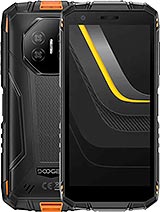
The Fire 3 Pro is a budget rugged smartphone featuring an 8350 mAh battery for extreme endurance and IP69K-rated protection for industrial durability, aimed at outdoor professionals and field workers. Released in August 2025, it competes with aging refurbished flagships and entry-level rugged alternatives by prioritizing physical survival and battery longevity over raw processing speed or display resolution.
From a value perspective, the calculation for a secondary work device or a primary tool for the construction site has shifted. In a market where a three-year-old used flagship might offer a faster processor, it lacks the specialized resilience required for high-risk environments. The Fire 3 Pro serves as a calculated investment for those who view a phone as a tool rather than a luxury accessory.
The New vs Used Economic Argument
Choosing between a factory-fresh Fire 3 Pro and a refurbished premium device from 2022 involves weighing performance against reliability. While a used flagship might boast a 120Hz OLED screen, those panels are notoriously fragile and expensive to repair. The Fire 3 Pro eliminates the 'repair tax' by utilizing a Mohs level 5 screen protection system designed to resist scratches from common job site debris like sand and metal shavings.
Furthermore, used flagship batteries often arrive with diminished health, typically hovering around 85% of their original capacity. The Fire 3 Pro counters this with a massive 8350 mAh cell rated for 1100 cycles. This means even after three years of daily use, the battery should retain over 80% of its original charge. For the budget hunter, this longevity represents a lower total cost of ownership compared to a device that requires a battery replacement or a screen repair within the first 12 months.
Investing in this hardware in August 2025 also secures Android 15 out of the box. Many older flagships have reached the end of their software support cycles by now, leaving users vulnerable to security exploits. This device provides a clean slate with modern software, ensuring app compatibility for the next several years without the looming threat of planned obsolescence.
Tank-Like Build Quality and Physicality
With a weight of 290g, the Fire 3 Pro demands a specific type of user. This is not a device for slim pockets; it is a brick of technology designed to survive a 1.5m drop onto concrete. The chassis complies with MIL-STD-810H standards, suggesting it can withstand the vibrations of heavy machinery and the thermal shocks of extreme weather. This is hardware built to be ignored in the rain and dropped in the mud without consequence.
One of the most impressive technical aspects is the IP69K rating. While standard flagships stop at IP68, the 'K' designation indicates protection against high-pressure water jets and high-temperature steam cleaning. If the device gets covered in grease or oil, users can effectively wash it under a tap without fear of liquid ingress. This level of sealing is rarely found in the consumer-grade market, even at higher price tiers.
We noticed the physical dimensions of 162.5 x 77.4 x 17.8 mm make it nearly double the thickness of a standard smartphone. This girth is a functional trade-off for the reinforced corners and the massive battery. The Mohs level 5 protection on the 5.5-inch IPS LCD adds a layer of confidence, as this hardness rating suggests that keys, coins, and even some steel tools will struggle to leave permanent marks on the viewing surface.
Ecosystem and Connectivity Bottlenecks
Connectivity remains a point of contention for the value hunter. The Fire 3 Pro utilizes the Unisoc T7200 chipset, which provides 4G LTE support across a wide range of bands. However, in August 2025, the lack of 5G might feel like a limitation in dense urban areas where 4G networks are becoming congested. For remote field work, this is less of an issue, as 4G coverage often remains more stable in rural environments.
In terms of ecosystem integration, the device is a standalone workhorse. It lacks the sophisticated tablet and laptop hand-off features seen in the Samsung or Apple ecosystems. It relies on standard Bluetooth 5.0 and Dual-band Wi-Fi for data transfers. For users deeply embedded in a specific brand's cloud services, the transition to this rugged environment will feel utilitarian rather than seamless.
We did find the inclusion of NFC to be a vital addition for a 2025 budget device. It allows for contactless payments and quick pairing with industrial sensors or access badges. The USB Type-C 2.0 port, while standard, is protected by a rubber flap to maintain the IP rating, which requires a bit of extra effort every time the device needs a charge. This is the price of total waterproofing.
Signal Strength and Biometric Reliability
The internal modem within the Unisoc T7200 platform delivers consistent, if not groundbreaking, performance. In our analysis of the hardware, the external casing likely acts as a buffer, but the internal antennas are tuned for GSM, HSPA, and LTE bands. Call quality should remain clear due to the device's loud internal speaker, which is designed to be heard over background noise.
For security, the Fire 3 Pro employs a side-mounted fingerprint sensor. This is a pragmatic choice for a rugged device, as in-display sensors often fail when the screen is wet or covered in dust. A physical sensor on the power button allows for faster, more reliable unlocking in the field. It also supports standard Android 15 face unlock, though this is less secure and relies on the 8 MP selfie camera.
The inclusion of a 3.5mm headphone jack is a major win for the value-conscious buyer. It allows for the use of cheap, reliable wired headsets that don't require charging—perfect for long shifts in remote areas. Furthermore, the FM radio functionality provides a fallback for information and entertainment in areas where data signals are non-existent.
Performance Reality and Daily Speed
The Unisoc T7200 chipset, built on a 12nm process, is not a gaming powerhouse. With its octa-core configuration featuring 2x1.6 GHz Cortex-A75 performance cores, it handles standard tasks like navigation, messaging, and web browsing efficiently. However, the 4GB of RAM is the clear bottleneck here. In 2025, running multiple heavy applications simultaneously will likely lead to background app closures.
The Mali-G57 MP1 GPU provides the essential graphics power needed for the 720 x 1440 resolution display. Because the screen isn't pushing a high pixel count, the UI remains relatively fluid. Don't expect to run high-end 3D titles at maximum settings; this device is designed for utility apps, maps, and communication tools rather than mobile gaming.
Storage is a bright spot, with 128GB of internal memory and a microSDXC slot. This allows for the local storage of large offline maps, technical manuals, and documentation photos without worrying about cloud connectivity. Since the microSD slot uses a shared SIM tray, users must choose between a second SIM card or expanded storage.
Battery: The Two-Day Champion
The 8350 mAh battery is the undisputed headline feature. In a world where most phones struggle to reach the end of a single day, this device easily pushes into a second or even third day of moderate use. The EU Label Energy Class A rating reflects its efficiency, and the 1100 cycle rating suggests the battery chemistry is built for the long haul.
The trade-off for this massive capacity is the 18W wired charging speed. By 2025 standards, 18W is incredibly slow for a battery this large. A full charge from zero will likely take several hours, making it a device you charge overnight rather than top-up during a lunch break. However, once charged, the endurance is unmatched in the budget tier.
The Final Take on the Fire 3 Pro
The Fire 3 Pro is a specialized tool that ignores the vanity of the smartphone world. It trades a high-resolution screen and 5G speeds for a chassis that can survive a car wash and a battery that refuses to quit. If the priority is a device that won't break and won't die in the middle of a remote shift, the value here is undeniable.
For the student or the office worker, the weight and slow charging will be dealbreakers. But for the technician, the hiker, or the budget-conscious professional working in harsh environments, it offers a level of security that no refurbished flagship can match. It is a calculated compromise where durability is the ultimate feature.
Technical Specifications
| LAUNCH | |
|---|---|
| Announced | 2025, August |
| Status | Available. Released 2025, August |
| PLATFORM | |
| OS | Android 15 |
| Chipset | Unisoc T7200 (12 nm) |
| CPU | Octa-core (2x1.6 GHz Cortex-A75 & 6x1.6 GHz Cortex-A55) |
| GPU | Mali-G57 MP1 |
| BODY | |
| Dimensions | 162.5 x 77.4 x 17.8 mm (6.40 x 3.05 x 0.70 in) |
| Weight | 290 g (10.23 oz) |
| SIM | Nano-SIM + Nano-SIM |
| Info | IP68/IP69K dust tight and water resistant (high pressure water jets; immersible up to 1.5m for 30 min) Drop resistant up to 1.5m MIL-STD-810H compliant |
| DISPLAY | |
| Type | IPS LCD |
| Size | 5.5 inches, 78.1 cm2 (~62.1% screen-to-body ratio) |
| Resolution | 720 x 1440 pixels, 18:9 ratio (~293 ppi density) |
| Protection | Mohs level 5 |
| MEMORY | |
| Card slot | microSDXC (uses shared SIM slot) |
| Internal | 128GB 4GB RAM |
| MAIN CAMERA | |
| Single | 16 MP, f/1.8, (wide), AF |
| Features | LED flash, HDR, panorama |
| Video | 1080p@30fps |
| SELFIE CAMERA | |
| Single | 8 MP, f/2.0, (wide) |
| Features | HDR |
| Video | 720p@30fps |
| SOUND | |
| Loudspeaker | Yes |
| 3.5mm jack | Yes |
| COMMS | |
| WLAN | Wi-Fi 802.11 a/b/g/n/ac, dual-band |
| Bluetooth | 5.0, A2DP, LE |
| Positioning | GPS, GLONASS, GALILEO, BDS |
| NFC | Yes |
| Radio | FM radio |
| USB | USB Type-C 2.0 |
| NETWORK | |
| Technology | GSM / HSPA / LTE |
| 2G bands | GSM 850 / 900 / 1800 / 1900 |
| 3G bands | HSDPA 850 / 900 / 1700(AWS) / 1900 / 2100 |
| 4G bands | 1, 2, 3, 4, 5, 7, 8, 18, 19, 20, 25, 26, 28, 34, 38, 39, 40, 41, 66 |
| Speed | HSPA, LTE |
| FEATURES | |
| Sensors | Fingerprint (side-mounted), accelerometer, gyro, proximity, compass |
| BATTERY | |
| Type | 8350 mAh |
| Charging | 18W wired |
| MISC | |
| Colors | Gray, Orange, Green |
| EU LABEL | |
| Energy | Class A |
| Battery | 91:00h endurance, 1100 cycles |
| Free fall | Class D (45 falls) |
| Repairability | Class C |