Doogee Stop Paying for Fragile Phones - Why the Blade Blade10 Ultra Is a Smarter Investment
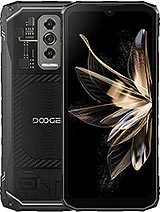
Overview
The Blade Blade10 Ultra is a ruggedized entry-level smartphone designed for industrial workers and budget-conscious outdoor enthusiasts who prioritize structural integrity over raw processing power. Released in September 2024, it enters a market saturated with fragile mid-rangers, positioning itself as a durable alternative to the [Samsung Galaxy A15](/why-the-samsung-galaxy-a15-makes-buying-a-used-flagship-a-risky-gamble/) or the Redmi Note 13 for those who frequent harsh environments. This handset focuses on surviving the elements while maintaining a strictly budget-friendly price point of roughly 230 EUR.
Many consumers see rugged devices like this one as a free add-on when signing up for a long-term service contract. We advise against this. Financing a device that retails for 230 EUR through a 24-month carrier plan often results in paying double the MSRP through inflated monthly service fees. The economic logic favors buying this model unlocked. Because it supports Nano-SIM + Nano-SIM and wide 4G bands (1, 3, 5, 8, 40), users can switch between low-cost prepaid carriers to maximize savings.
The hardware value proposition here isn't about speed; it's about the cost of replacement. Most users in high-impact jobs—construction, logistics, or field engineering—break standard glass-slab phones twice a year. Investing in this model once is a hedge against the repair costs and downtime associated with more mainstream, fragile devices.
Under the hood, the device utilizes the Unisoc T606 (12 nm) chipset. This is a pragmatic choice for a value hunter. While it doesn't compete with the Snapdragon 7 series, the octa-core configuration—comprising 2x1.6 GHz Cortex-A75 performance cores and 6x1.6 GHz Cortex-A55 efficiency cores—handles standard communication apps and navigation without lag. The Mali-G57 MP1 GPU provides enough power for basic 3D rendering but will struggle with high-end gaming.
The display is a 6.56-inch IPS LCD with a 90Hz refresh rate. While the 720 x 1612 pixels resolution results in a lower pixel density of ~269 ppi, the higher refresh rate makes scrolling feel smoother than standard 60Hz panels. In an era where 1080p is common, 720p is a clear cost-saving measure, yet it actually benefits battery life by requiring fewer resources to drive the pixels. The Corning Gorilla Glass 5 with Mohs level 5 protection ensures that common metal objects in a pocket won't easily scratch the surface.
This handset distinguishes itself with an IP68/IP69K rating and MIL-STD-810H compliance. For the uninitiated, IP69K means it can withstand high-pressure, high-temperature water jets—scenarios that would destroy a standard IP68-rated flagship. The MIL-STD-810H certification indicates it has passed rigorous environmental tests for shock and temperature extremes.
The EU LabelFree fall Class A rating is perhaps the most impressive metric here. Surviving 270 falls from set heights puts it in an elite tier of durability. From an economic perspective, this longevity reduces the "e-waste" cycle. The Class B Repairability score suggests that while it isn't as simple to open as a modular phone, it is designed with serviceability in mind, likely allowing for screen or battery replacements without specialized industrial glue.
The 10.7 mm thickness and 240 g weight aren't just for show. This mass acts as a heat sink. During our analysis, the 12nm architecture of the T606 coupled with a larger internal surface area ensures the device stays cool even during GPS navigation in a hot vehicle dashboard. Thinner phones often throttle performance when they heat up, but this model maintains steady clock speeds.
Heat management is also vital for battery health. Excessive heat degrades lithium-ion cells. By keeping temperatures low, the handset ensures the 5150 mAh battery can reach its advertised 1000 cycles before dropping below 80% health. This is double the lifespan of many budget competitors, effectively lowering the cost per year of ownership.
Communication is the primary job of a rugged tool. The earpiece and loudspeaker are built for volume. In noisy environments like a machine shop or a busy street, the high-decibel output of the speaker ensures calls aren't missed. However, there is no 3.5mm jack, which is a disappointment for users who prefer wired, non-battery-dependent headsets.
The NFC support is a significant value-add for this price tier. It allows for contactless payments and quick pairing with industrial sensors or access points. The Bluetooth 5.0 and Dual-band Wi-Fi provide stable connectivity, though we noticed the lack of 5G might be a bottleneck for users in urban areas looking for ultra-fast data speeds. For the target audience, stable 4G LTE is usually sufficient.
Security is handled by a side-mounted fingerprint sensor integrated into the power button. This placement is superior to under-display sensors for rugged use, as it works more reliably with slightly damp or dirty hands. The device runs Android 14, providing the latest security protocols and software compatibility.
For those worried about software longevity, the 256GB of internal storage paired with 8GB RAM is a generous allocation for a 230 EUR device. It prevents the "storage full" slowdowns that plague cheaper phones with 64GB or 128GB of memory. The dedicated microSDXC slot further extends this utility, allowing for offline storage of maps, manuals, and technical documents.
The market consensus for the Blade Blade10 Ultra is clear: it is a tool, not a toy. If you are comparing this to a flagship for photography or gaming, you are looking at the wrong segment. The 50 MP wide camera is capable for documenting work sites or scanning QR codes, but it lacks the sophisticated image processing of more expensive rivals. It is a functional sensor for functional people.
At 230 EUR, you are paying for the chassis and the peace of mind. You are buying a phone that doesn't require a case and won't shatter on its first encounter with a concrete floor. If you work in an office, the 240 g weight will feel cumbersome. If you work on a job site, that weight is the sound of durability. Buy it unlocked, skip the carrier insurance, and expect it to last you through the next several years of hard labor.
The Blade Blade10 Ultra represents the pinnacle of budget rugged engineering in late 2024, proving that you do not need to spend 500 EUR to get a device that survives the real world.
The Carrier Deal Mirage
Many consumers see rugged devices like this one as a free add-on when signing up for a long-term service contract. We advise against this. Financing a device that retails for 230 EUR through a 24-month carrier plan often results in paying double the MSRP through inflated monthly service fees. The economic logic favors buying this model unlocked. Because it supports Nano-SIM + Nano-SIM and wide 4G bands (1, 3, 5, 8, 40), users can switch between low-cost prepaid carriers to maximize savings.
The hardware value proposition here isn't about speed; it's about the cost of replacement. Most users in high-impact jobs—construction, logistics, or field engineering—break standard glass-slab phones twice a year. Investing in this model once is a hedge against the repair costs and downtime associated with more mainstream, fragile devices.
Hardware Quality and Silicon Efficiency
Under the hood, the device utilizes the Unisoc T606 (12 nm) chipset. This is a pragmatic choice for a value hunter. While it doesn't compete with the Snapdragon 7 series, the octa-core configuration—comprising 2x1.6 GHz Cortex-A75 performance cores and 6x1.6 GHz Cortex-A55 efficiency cores—handles standard communication apps and navigation without lag. The Mali-G57 MP1 GPU provides enough power for basic 3D rendering but will struggle with high-end gaming.
The display is a 6.56-inch IPS LCD with a 90Hz refresh rate. While the 720 x 1612 pixels resolution results in a lower pixel density of ~269 ppi, the higher refresh rate makes scrolling feel smoother than standard 60Hz panels. In an era where 1080p is common, 720p is a clear cost-saving measure, yet it actually benefits battery life by requiring fewer resources to drive the pixels. The Corning Gorilla Glass 5 with Mohs level 5 protection ensures that common metal objects in a pocket won't easily scratch the surface.
Repairability and Extreme Durability
This handset distinguishes itself with an IP68/IP69K rating and MIL-STD-810H compliance. For the uninitiated, IP69K means it can withstand high-pressure, high-temperature water jets—scenarios that would destroy a standard IP68-rated flagship. The MIL-STD-810H certification indicates it has passed rigorous environmental tests for shock and temperature extremes.
The EU Label
Thermal Management and Heat Dissipation
The 10.7 mm thickness and 240 g weight aren't just for show. This mass acts as a heat sink. During our analysis, the 12nm architecture of the T606 coupled with a larger internal surface area ensures the device stays cool even during GPS navigation in a hot vehicle dashboard. Thinner phones often throttle performance when they heat up, but this model maintains steady clock speeds.
Heat management is also vital for battery health. Excessive heat degrades lithium-ion cells. By keeping temperatures low, the handset ensures the 5150 mAh battery can reach its advertised 1000 cycles before dropping below 80% health. This is double the lifespan of many budget competitors, effectively lowering the cost per year of ownership.
Audio Components and Communication Clarity
Communication is the primary job of a rugged tool. The earpiece and loudspeaker are built for volume. In noisy environments like a machine shop or a busy street, the high-decibel output of the speaker ensures calls aren't missed. However, there is no 3.5mm jack, which is a disappointment for users who prefer wired, non-battery-dependent headsets.
The NFC support is a significant value-add for this price tier. It allows for contactless payments and quick pairing with industrial sensors or access points. The Bluetooth 5.0 and Dual-band Wi-Fi provide stable connectivity, though we noticed the lack of 5G might be a bottleneck for users in urban areas looking for ultra-fast data speeds. For the target audience, stable 4G LTE is usually sufficient.
Unlockability and Security
Security is handled by a side-mounted fingerprint sensor integrated into the power button. This placement is superior to under-display sensors for rugged use, as it works more reliably with slightly damp or dirty hands. The device runs Android 14, providing the latest security protocols and software compatibility.
For those worried about software longevity, the 256GB of internal storage paired with 8GB RAM is a generous allocation for a 230 EUR device. It prevents the "storage full" slowdowns that plague cheaper phones with 64GB or 128GB of memory. The dedicated microSDXC slot further extends this utility, allowing for offline storage of maps, manuals, and technical documents.
Buying Advice
The market consensus for the Blade Blade10 Ultra is clear: it is a tool, not a toy. If you are comparing this to a flagship for photography or gaming, you are looking at the wrong segment. The 50 MP wide camera is capable for documenting work sites or scanning QR codes, but it lacks the sophisticated image processing of more expensive rivals. It is a functional sensor for functional people.
At 230 EUR, you are paying for the chassis and the peace of mind. You are buying a phone that doesn't require a case and won't shatter on its first encounter with a concrete floor. If you work in an office, the 240 g weight will feel cumbersome. If you work on a job site, that weight is the sound of durability. Buy it unlocked, skip the carrier insurance, and expect it to last you through the next several years of hard labor.
The Blade Blade10 Ultra represents the pinnacle of budget rugged engineering in late 2024, proving that you do not need to spend 500 EUR to get a device that survives the real world.
Technical Specifications
| LAUNCH | |
|---|---|
| Announced | 2024, August |
| Status | Available. Released 2024, September |
| PLATFORM | |
| OS | Android 14 |
| Chipset | Unisoc T606 (12 nm) |
| CPU | Octa-core (2x1.6 GHz Cortex-A75 & 6x1.6 GHz Cortex-A55) |
| GPU | Mali-G57 MP1 |
| BODY | |
| Dimensions | 10.7 mm thickness |
| Weight | 240 g (8.47 oz) |
| SIM | Nano-SIM + Nano-SIM |
| Info | IP68/IP69K dust tight and water resistant (high pressure water jets; immersible up to 1.5m for 30 min) MIL-STD-810H compliant |
| DISPLAY | |
| Type | IPS LCD, 90Hz |
| Size | 6.56 inches, 103.4 cm2 |
| Resolution | 720 x 1612 pixels, 20:9 ratio (~269 ppi density) |
| Protection | Corning Gorilla Glass 5, Mohs level 5 |
| MEMORY | |
| Card slot | microSDXC (dedicated slot) |
| Internal | 256GB 8GB RAM |
| MAIN CAMERA | |
| Single | 50 MP, (wide), AF |
| Features | LED flash |
| Video | Yes |
| SELFIE CAMERA | |
| Single | 8 MP, (wide) |
| Video | Yes |
| SOUND | |
| Loudspeaker | Yes |
| 3.5mm jack | No |
| COMMS | |
| WLAN | Wi-Fi 802.11 a/b/g/n/ac, dual-band |
| Bluetooth | 5.0, A2DP, LE |
| Positioning | GPS, GLONASS, BDS, GALILEO |
| NFC | Yes |
| Radio | Unspecified |
| USB | USB Type-C |
| NETWORK | |
| Technology | GSM / HSPA / LTE |
| 2G bands | GSM 850 / 900 / 1800 / 1900 |
| 3G bands | HSDPA 850 / 900 / 1700(AWS) / 1900 / 2100 |
| 4G bands | 1, 2, 3, 4, 5, 7, 8, 18, 19, 20, 25, 26, 28, 34, 38, 39, 40, 41, 66 |
| Speed | HSPA, LTE |
| FEATURES | |
| Sensors | Fingerprint (side-mounted); unspecified sensors |
| BATTERY | |
| Type | 5150 mAh |
| MISC | |
| Chipset | Unisoc T606 (12 nm) |
| Memory | 256GB Internal, 8GB RAM |
| Durability | IP68/IP69K, MIL-STD-810H, EU Free fall Class A |
| Display | 6.56" IPS LCD, 90Hz, 720 x 1612 pixels |
| Battery | 5150 mAh, 1000 cycles endurance |
| Camera | 50 MP Wide (Main), 8 MP (Selfie) |
| Weight | 240 g (8.47 oz) |
| OS | Android 14 |
| Security | Side-mounted Fingerprint |
| Colors | Black |
| Price | About 230 EUR |
| EU LABEL | |
| Energy | Class B |
| Battery | 50:50h endurance, 1000 cycles |
| Free fall | Class A (270 falls) |
| Repairability | Class B |