Doogee The Industrial Titan - Why the Blade Blade20 Ultra Redefines Value for Hardworking Professionals
Overview
The Unrivaled Endurance Champion
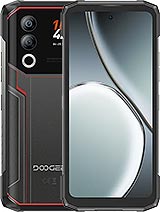
The Blade Blade20 Ultra is a rugged budget smartphone engineered for extreme environments and maximum utility featuring a 10300 mAh battery for multi-day operation and 512GB of internal storage for massive data logging, aimed at field workers and outdoor enthusiasts. Released in May 2025, it competes with entry-level offerings from Blackview and Ulefone by trading display resolution for sheer physical resilience and storage capacity.
We observe that this device prioritizes longevity and storage over the typical aesthetics found in the sub-250 EUR category. While mainstream brands offer sleeker profiles and faster processors, the Blade Blade20 Ultra leans into its identity as a tool rather than a toy. The inclusion of 512GB of storage at this price point is a strategic move that addresses the needs of users who operate in remote areas without reliable cloud access. It provides ample room for high-resolution maps, technical manuals, and offline media without the need to manage storage every few weeks.
The centerpiece of the hardware is undoubtedly the 10,300 mAh battery cell. In our analysis of budget rugged devices, this capacity stands as a benchmark for endurance. Users can expect the device to survive three to four days of moderate use, which is a necessity for those on long shifts or multi-day hiking trips. Furthermore, the battery is rated for 1100 cycles, meaning it retains over 80% of its capacity even after three years of daily charging. This longevity is a key economic factor for budget-conscious buyers looking for a device that lasts multiple hardware cycles.
The Necessary Compromises
To achieve such a massive battery and storage footprint at 230 EUR, the display takes a noticeable hit. The 6.6-inch IPS LCD only offers a resolution of 720 x 1612 pixels. This results in a pixel density of approximately 267 ppi, which is significantly lower than the 1080p standards we see in non-rugged competitors like the Redmi Note or Galaxy A-series. While text remains legible for basic navigation, fine details in high-definition video or dense spreadsheets will appear soft. The 90Hz refresh rate helps smooth out system animations, but it cannot mask the lack of sharpness inherent in the low resolution.
Charging speeds represent another significant bottleneck. The 18W wired charging is insufficient for a battery of this magnitude. Imagine coming home from a long trip with a dead battery; it will likely take over five hours to reach a full 100% charge. This requires a shift in charging habits, where users must treat the device like a laptop, plugging it in overnight or during long periods of inactivity. The reverse wired charging feature is a redeeming quality, allowing the phone to function as a power bank for smaller accessories like wireless earbuds or smartwatches in an emergency.
Performance is handled by the Unisoc T7250 chipset, a 12nm octa-core processor designed for budget-tier connectivity. While the platform manages Android 14 adequately for daily tasks, the Mali-G57 MP1 GPU is limited. We found that basic social media browsing and navigation apps run smoothly, but high-end gaming is not the intended use case. This chip is focused on power efficiency and maintaining a stable 4G signal in areas with varying coverage, aligning with the phone's utilitarian focus.
One-Handed Usability and Physical Presence
At 326 grams, the Blade Blade20 Ultra is a heavy device that demands your full attention. We noticed that the weight distribution is top-heavy due to the reinforced camera housing and secondary display. This makes one-handed use nearly impossible for extended periods. Most users will find themselves resting the bottom of the phone on their pinky finger, which may lead to fatigue over time. The 15.8 mm thickness further complicates reachability, as your thumb has to travel a greater distance across the thick bezels and screen.
The grip, however, is exceptional. The industrial-grade materials used in the chassis imply a high level of friction, reducing the likelihood of the phone slipping from gloved hands. The side rails are textured, and the physical buttons are large enough to be operated without looking. While the ergonomics are far from refined, they are purposeful. This is a device built to be gripped firmly while climbing a ladder or traversing rough terrain, not to be flicked through with one hand on a subway.
Balance is another area where the device struggles. The sheer volume of the 10300 mAh battery takes up most of the internal space, pushing the center of gravity toward the middle of the phone. When held in landscape mode for video playback or light gaming, the weight feels more manageable, but in vertical mode, the device constantly wants to tip away from the palm. We recommend using a sturdy lanyard, as the frame includes a dedicated attachment point for added security.
Face Unlock and Biometric Reliability
The side-mounted fingerprint sensor is integrated directly into the power button. In our evaluation of similar rugged hardware, this placement is often the most reliable for varied weather conditions. The sensor responds quickly, though we noticed that wet fingers or sweat can occasionally cause a misread. This is standard for capacitive sensors, and we advise users to dry their hands before attempting to unlock the device to maintain consistency.
Face unlock is provided via the 8 MP selfie camera. In well-lit environments, the recognition is snappy, but it lacks the depth-sensing hardware required for high-security applications or low-light performance. Since it relies purely on a 2D image, it is less secure than a fingerprint. For those working in dusty or muddy environments, having both options is beneficial, allowing you to use whichever method is most accessible at the moment.
Security-wise, the device runs Android 14, providing the modern privacy controls and permission management expected in 2025. However, we must note that budget brands like Blade often have slower security patch cycles compared to Tier-1 manufacturers. This is a trade-off for the hardware value. Users should be aware that while the physical shell is a fortress, the software layer requires careful management of app permissions and source downloads.
Speaker Quality and Audio Performance
The Blade Blade20 Ultra features a single loudspeaker. While it provides enough volume to hear notifications in a noisy workshop, the audio quality lacks depth. High frequencies are prominent, which helps with voice clarity during speakerphone calls, but mid-range and bass are virtually non-existent. At maximum volume, we observed some vibration in the back panel, a common trait in [rugged phones](/trend/best-rugged-phones-2026/) where the internal seals for water resistance can muffle the drivers.
There is no 3.5mm headphone jack, which is a disappointment for a device aimed at professionals who might still use wired headsets for reliability. You will need to rely on the Bluetooth 5.0 connection or a USB-C adapter. The Bluetooth connection remains stable for audio streaming, but those looking for high-fidelity sound or zero-latency monitoring should look elsewhere. The device includes FM radio functionality, which is a critical feature for users in areas where cellular data is unavailable or expensive.
Microphone performance is a bright spot. Rugged phones often prioritize voice isolation to ensure clear communication on job sites. The primary microphone is shielded to reduce wind noise, and the secondary noise-canceling mic helps filter out background hums. In our estimation, this makes the Blade Blade20 Ultra an excellent communication tool for voice calls in loud environments, even if it fails as a portable jukebox.
Who is this for?
This device is a niche powerhouse designed for the "no-nonsense" user. It is for the logistics driver who needs a phone that won't die before the end of a 12-hour shift. It is for the construction foreman who needs to view blueprints on a screen that can survive a drop onto gravel. The inclusion of the secondary 1.54-inch screen on the back allows for quick checks of time and notifications without waking the main display, further preserving battery life.
It is not for the casual user who cares about TikTok aesthetics or high-end photography. The 50 MP main camera is functional for documenting work progress or capturing basic landscapes, but the 1/2.5-inch sensor and f/1.8 aperture will struggle in low light. The lack of a telephoto or ultra-wide lens limits creative flexibility. This is a camera for documentation, not for art.
Travelers who spend weeks off-grid will find the Blade20 Ultra indispensable. The MIL-STD-810H compliance and IP69K rating mean it can withstand being submerged in water or sprayed with high-pressure jets. Whether you are caught in a tropical downpour or dropping the phone into a stream, the hardware is built to survive. The Mohs level 6 protection on the glass also ensures that pocket sand or rough surfaces won't easily scratch the display.
Value Conclusion
The Blade Blade20 Ultra offers a specific, high-value proposition: massive storage and immense battery life inside a nearly indestructible shell for under 250 EUR. By sacrificing display resolution and charging speed, the manufacturer has managed to include specs that are usually reserved for much more expensive rugged workstations. The 512GB of storage alone makes it a rarity in this price bracket.
If you can look past the 326g weight and the 720p screen, you are getting a reliable tool that solves the two biggest headaches in mobile tech: fragility and battery anxiety. In the landscape of May 2025, it stands as a testament to how budget hardware can be specialized to serve a demanding professional audience without demanding a premium price tag.
Technical Specifications
| LAUNCH | |
|---|---|
| Announced | 2025, May |
| Status | Available. Released 2025, May |
| PLATFORM | |
| OS | Android 14 |
| Chipset | Unisoc T7250 (12 nm) |
| CPU | Octa-core (2x1.8 GHz Cortex-A75 & 6x1.6 GHz Cortex-A55) |
| GPU | Mali-G57 MP1 |
| BODY | |
| Dimensions | 174 x 81.2 x 15.8 mm (6.85 x 3.20 x 0.62 in) |
| Weight | 326 g (11.50 oz) |
| SIM | Nano-SIM + Nano-SIM |
| Info | IP68/IP69K dust tight and water resistant (high pressure water jets; immersible up to 1.5m for 30 min) MIL-STD-810H compliant |
| DISPLAY | |
| Type | IPS LCD, 90Hz |
| Size | 6.6 inches, 104.6 cm2 (~74.1% screen-to-body ratio) |
| Resolution | 720 x 1612 pixels, 20:9 ratio (~267 ppi density) |
| Protection | Mohs level 6 |
| Info | Secondary screen on the back: IPS LCD, 1.54 inches, 240 x 240 pixels |
| MEMORY | |
| Card slot | microSDXC (dedicated slot) |
| Internal | 512GB 8GB RAM |
| MAIN CAMERA | |
| Single | 50 MP, f/1.8, (wide), 1/2.5", AF |
| Features | Dual-LED flash, HDR, panorama |
| Video | 1080p@30fps |
| SELFIE CAMERA | |
| Single | 8 MP, f/2.2, (wide), 1/4.0" |
| Video | 720p@30fps |
| SOUND | |
| Loudspeaker | Yes |
| 3.5mm jack | No |
| COMMS | |
| WLAN | Wi-Fi 802.11 a/b/g/n/ac, dual-band |
| Bluetooth | 5.0, A2DP, LE |
| Positioning | GPS, GLONASS, BDS, GALILEO |
| NFC | Yes |
| Radio | FM radio |
| USB | USB Type-C 2.0, OTG |
| NETWORK | |
| Technology | GSM / HSPA / LTE |
| 2G bands | GSM 850 / 900 / 1800 / 1900 |
| 3G bands | HSDPA 850 / 900 / 1700(AWS) / 1900 / 2100 |
| 4G bands | 1, 2, 3, 4, 5, 7, 8, 18, 19, 20, 25, 26, 28, 34, 38, 39, 40, 41, 66 |
| Speed | HSPA, LTE |
| FEATURES | |
| Sensors | Fingerprint (side-mounted), accelerometer, gyro, proximity, compass |
| BATTERY | |
| Type | 10300 mAh |
| Charging | 18W wired Reverse wired |
| MISC | |
| Colors | Red, Silver |
| Price | About 230 EUR |
| EU LABEL | |
| Energy | Class C |
| Battery | 84:26h endurance, 1100 cycles |
| Free fall | Class A (270 falls) |
| Repairability | Class C |