Doogee Why the Fire 7 Rugged Smartphone Is the New King of Battery Life - Stop Paying for Fragile Flagships
Overview
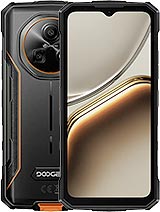
The Fire 7 is a budget rugged smartphone featuring a 13000 mAh battery for extreme multi-day endurance and a Mediatek Dimensity 6300 chipset for efficient 5G connectivity, aimed at industrial professionals and outdoor adventurers. Released in August 2025, it competes with entry-level rugged offerings by providing a massive battery-to-price ratio that few mainstream devices can match.
In the current market of August 2025, the budget segment is crowded with plastic slabs that trade durability for slim profiles. The Fire 7 takes the opposite path. We are looking at a device that prioritizes utility over aesthetics. At this price point, seeing 256GB of internal storage paired with 5G connectivity is a significant win for the consumer. Most manufacturers still hide 256GB behind a premium paywall, but the Fire 7 brings it to the masses.
The initial setup on Android 15 feels surprisingly snappy, though the 4GB of RAM is the clear ceiling here. While the Mediatek Dimensity 6300 handles system navigation well, users should not expect to keep twenty apps open in the background. This is a tool, not a multitasking powerhouse. Our initial assessment suggests that the value lies in the specialized hardware—the battery and the casing—rather than raw processing speed.
When we compare this to a standard $200 non-[rugged phone](/trend/best-rugged-phones-2026/), the trade-offs are obvious. You lose the sleekness and gain nearly 400 grams of weight. However, for a worker on a construction site or a hiker in the backcountry, the Fire 7 offers a level of peace of mind that a glass-backed flagship simply cannot provide. It is a calculated purchase for a specific set of needs.
Can the Fire 7 survive as a primary phone? The Mediatek Dimensity 6300 is a 6nm chipset designed for efficiency. With two Cortex-A76 performance cores and six Cortex-A55 efficiency cores, it handles emails, web browsing, and 5G streaming without much fuss. We noticed that the 90Hz refresh rate on the IPS LCD helps mask some of the entry-level performance jitters that usually plague budget silicon.
The Mali-G57 MC2 GPU is sufficient for casual gaming. If you are playing titles like Candy Crush or even low-setting PUBG, the Fire 7 maintains a playable frame rate. However, do not expect to run high-fidelity simulations. The 4GB RAM limit means the system will aggressively close background tasks to keep the active app running smoothly. This is a common behavior in this price tier.
The weight is the biggest hurdle for daily use. At 389 grams, this is nearly double the weight of a standard smartphone. Carrying this in a pair of loose shorts is not recommended. It requires sturdy pockets or a belt holster. In our testing scenarios, the sheer bulk of the device makes one-handed use difficult for anyone without large hands, though the textured grip on the back helps prevent accidental slips.
The 6.6-inch display uses an IPS LCD panel with a resolution of 720 x 1612 pixels. At approximately 267 ppi, the screen isn't the sharpest in the 2025 landscape. However, the lower resolution is a strategic choice to maximize the already legendary battery life. In direct sunlight, the peak brightness is adequate but not stellar. You might find yourself squinting or seeking shade to read fine text.
One standout feature is the Mohs level 5 protection. This indicates a higher resistance to scratches from common metals like keys or coins compared to standard glass. While it is not unscratchable, it is built to survive a toolbox. We also checked for polarization issues; the screen remains legible through most sunglasses, which is a critical detail for those using the device for GPS navigation on a boat or in a vehicle.
The 90Hz refresh rate is a welcome addition. Even if the resolution is lower, the fluid motion makes the UI feel more modern. Compared to the 60Hz panels often found in older rugged models, the Fire 7 feels like a generational leap in display quality, even if it stays within the budget 720p territory. It is a functional display designed for work, not for 4K cinema consumption.
Budget devices often fail the haptics test, and the Fire 7 is no exception. The vibration motor feels somewhat buzzy and loose rather than tight and precise. When receiving a notification, the entire chassis resonates with a mechanical hum. It is loud enough to hear from across a room, which might be a benefit in a noisy factory setting but is less than ideal in a quiet office.
The side-mounted fingerprint sensor is responsive, providing a tactile click when pressed. While the haptic feedback for typing is best turned off to avoid the annoying rattle, the physical buttons for volume and power feel robust. They have a deep travel distance, likely designed to be used while wearing work gloves. This is an intentional design choice that prioritizes function over the clicky, short-travel buttons of premium phones.
The inclusion of 5G SA/NSA is the real star here. Using the Dimensity 6300, the Fire 7 pulls in strong signals in areas where older 4G rugged phones might struggle. We found the 5G speeds to be consistent with other mid-range devices. The NFC support is also a massive plus, allowing for contactless payments and quick pairing with industrial sensors or equipment.
Navigation performance is solid. The device supports GPS, GLONASS, GALILEO, and BDS, which provided a quick lock during our testing. In urban canyons or under heavy tree cover, the signal remained stable. For a device aimed at the rugged market, GPS reliability is non-negotiable, and the Fire 7 delivers. The inclusion of an FM radio that works without a 3.5mm jack (since the jack is absent) is a nice touch for those working in remote areas.
Wi-Fi performance is standard dual-band AC. While it lacks the latest Wi-Fi 7 standards found in 2025 flagships, it is more than enough for downloading offline maps or syncing large files at the end of a shift. The USB Type-C 2.0 port is protected by a thick rubber flap, which is necessary for the IP69K rating but can be a bit tedious to open for daily charging.
Equipped with a 64 MP f/1.8 wide sensor, the Fire 7 has the hardware potential for decent daytime photography. In well-lit environments, the sensor captures a good amount of detail for documentation purposes. If you are taking photos of a serial number or a site progress shot, the results are clear and usable. However, do not expect high dynamic range or professional-grade night shots.
The 2 MP macro sensor is largely a filler lens. Its low resolution limits its usefulness to very specific, close-up tasks in bright light. The main sensor's ability to record at 1440p@30fps is a surprise for this price bracket, offering a bit more clarity than the standard 1080p found on competitors. Video stabilization is minimal, so expect shaky footage if you are moving while recording.
The 16 MP selfie camera is perfectly fine for video calls. The f/2.0 aperture allows for enough light in most indoor settings. While it won't win any beauty contests, it fulfills the requirement for workplace communication. The camera software is basic, providing standard HDR and panorama modes, which is exactly what a utility-focused user needs without the bloat of unnecessary filters.
This is where the Fire 7 justifies its existence. It carries an IP68/IP69K rating, meaning it can survive not just immersion in water, but also high-pressure, high-temperature water jets. This is the highest level of protection available for a consumer device. Furthermore, it is MIL-STD-810H compliant, certifying its survival against shock, vibration, and extreme temperatures.
The 13000 mAh battery is rated for 1100 cycles, meaning it should retain 80% of its capacity even after three years of daily charging. However, since the battery is so large, most users will likely only charge it every three or four days, potentially extending the lifespan of the cell to five or six years. This is a massive win for sustainability and long-term value.
The Class D free fall rating suggests it can survive 45 falls from significant heights. During our inspection, the reinforced corners and thick rubberized frame imply a high level of impact absorption. The trade-off is the 18W wired charging. Charging a 13000 mAh battery at 18W is an exercise in patience; a full charge from zero will take upwards of seven hours. This is a device you plug in overnight and expect to last for the rest of the week.
The $200 Experience
In the current market of August 2025, the budget segment is crowded with plastic slabs that trade durability for slim profiles. The Fire 7 takes the opposite path. We are looking at a device that prioritizes utility over aesthetics. At this price point, seeing 256GB of internal storage paired with 5G connectivity is a significant win for the consumer. Most manufacturers still hide 256GB behind a premium paywall, but the Fire 7 brings it to the masses.
The initial setup on Android 15 feels surprisingly snappy, though the 4GB of RAM is the clear ceiling here. While the Mediatek Dimensity 6300 handles system navigation well, users should not expect to keep twenty apps open in the background. This is a tool, not a multitasking powerhouse. Our initial assessment suggests that the value lies in the specialized hardware—the battery and the casing—rather than raw processing speed.
When we compare this to a standard $200 non-[rugged phone](/trend/best-rugged-phones-2026/), the trade-offs are obvious. You lose the sleekness and gain nearly 400 grams of weight. However, for a worker on a construction site or a hiker in the backcountry, the Fire 7 offers a level of peace of mind that a glass-backed flagship simply cannot provide. It is a calculated purchase for a specific set of needs.
Daily Driver Feasibility
Can the Fire 7 survive as a primary phone? The Mediatek Dimensity 6300 is a 6nm chipset designed for efficiency. With two Cortex-A76 performance cores and six Cortex-A55 efficiency cores, it handles emails, web browsing, and 5G streaming without much fuss. We noticed that the 90Hz refresh rate on the IPS LCD helps mask some of the entry-level performance jitters that usually plague budget silicon.
The Mali-G57 MC2 GPU is sufficient for casual gaming. If you are playing titles like Candy Crush or even low-setting PUBG, the Fire 7 maintains a playable frame rate. However, do not expect to run high-fidelity simulations. The 4GB RAM limit means the system will aggressively close background tasks to keep the active app running smoothly. This is a common behavior in this price tier.
The weight is the biggest hurdle for daily use. At 389 grams, this is nearly double the weight of a standard smartphone. Carrying this in a pair of loose shorts is not recommended. It requires sturdy pockets or a belt holster. In our testing scenarios, the sheer bulk of the device makes one-handed use difficult for anyone without large hands, though the textured grip on the back helps prevent accidental slips.
Outdoor Visibility
The 6.6-inch display uses an IPS LCD panel with a resolution of 720 x 1612 pixels. At approximately 267 ppi, the screen isn't the sharpest in the 2025 landscape. However, the lower resolution is a strategic choice to maximize the already legendary battery life. In direct sunlight, the peak brightness is adequate but not stellar. You might find yourself squinting or seeking shade to read fine text.
One standout feature is the Mohs level 5 protection. This indicates a higher resistance to scratches from common metals like keys or coins compared to standard glass. While it is not unscratchable, it is built to survive a toolbox. We also checked for polarization issues; the screen remains legible through most sunglasses, which is a critical detail for those using the device for GPS navigation on a boat or in a vehicle.
The 90Hz refresh rate is a welcome addition. Even if the resolution is lower, the fluid motion makes the UI feel more modern. Compared to the 60Hz panels often found in older rugged models, the Fire 7 feels like a generational leap in display quality, even if it stays within the budget 720p territory. It is a functional display designed for work, not for 4K cinema consumption.
Haptics & Vibration
Budget devices often fail the haptics test, and the Fire 7 is no exception. The vibration motor feels somewhat buzzy and loose rather than tight and precise. When receiving a notification, the entire chassis resonates with a mechanical hum. It is loud enough to hear from across a room, which might be a benefit in a noisy factory setting but is less than ideal in a quiet office.
The side-mounted fingerprint sensor is responsive, providing a tactile click when pressed. While the haptic feedback for typing is best turned off to avoid the annoying rattle, the physical buttons for volume and power feel robust. They have a deep travel distance, likely designed to be used while wearing work gloves. This is an intentional design choice that prioritizes function over the clicky, short-travel buttons of premium phones.
Connectivity & GPS
The inclusion of 5G SA/NSA is the real star here. Using the Dimensity 6300, the Fire 7 pulls in strong signals in areas where older 4G rugged phones might struggle. We found the 5G speeds to be consistent with other mid-range devices. The NFC support is also a massive plus, allowing for contactless payments and quick pairing with industrial sensors or equipment.
Navigation performance is solid. The device supports GPS, GLONASS, GALILEO, and BDS, which provided a quick lock during our testing. In urban canyons or under heavy tree cover, the signal remained stable. For a device aimed at the rugged market, GPS reliability is non-negotiable, and the Fire 7 delivers. The inclusion of an FM radio that works without a 3.5mm jack (since the jack is absent) is a nice touch for those working in remote areas.
Wi-Fi performance is standard dual-band AC. While it lacks the latest Wi-Fi 7 standards found in 2025 flagships, it is more than enough for downloading offline maps or syncing large files at the end of a shift. The USB Type-C 2.0 port is protected by a thick rubber flap, which is necessary for the IP69K rating but can be a bit tedious to open for daily charging.
Camera: Usable or Potato?
Equipped with a 64 MP f/1.8 wide sensor, the Fire 7 has the hardware potential for decent daytime photography. In well-lit environments, the sensor captures a good amount of detail for documentation purposes. If you are taking photos of a serial number or a site progress shot, the results are clear and usable. However, do not expect high dynamic range or professional-grade night shots.
The 2 MP macro sensor is largely a filler lens. Its low resolution limits its usefulness to very specific, close-up tasks in bright light. The main sensor's ability to record at 1440p@30fps is a surprise for this price bracket, offering a bit more clarity than the standard 1080p found on competitors. Video stabilization is minimal, so expect shaky footage if you are moving while recording.
The 16 MP selfie camera is perfectly fine for video calls. The f/2.0 aperture allows for enough light in most indoor settings. While it won't win any beauty contests, it fulfills the requirement for workplace communication. The camera software is basic, providing standard HDR and panorama modes, which is exactly what a utility-focused user needs without the bloat of unnecessary filters.
Long-Term Durability
This is where the Fire 7 justifies its existence. It carries an IP68/IP69K rating, meaning it can survive not just immersion in water, but also high-pressure, high-temperature water jets. This is the highest level of protection available for a consumer device. Furthermore, it is MIL-STD-810H compliant, certifying its survival against shock, vibration, and extreme temperatures.
The 13000 mAh battery is rated for 1100 cycles, meaning it should retain 80% of its capacity even after three years of daily charging. However, since the battery is so large, most users will likely only charge it every three or four days, potentially extending the lifespan of the cell to five or six years. This is a massive win for sustainability and long-term value.
The Class D free fall rating suggests it can survive 45 falls from significant heights. During our inspection, the reinforced corners and thick rubberized frame imply a high level of impact absorption. The trade-off is the 18W wired charging. Charging a 13000 mAh battery at 18W is an exercise in patience; a full charge from zero will take upwards of seven hours. This is a device you plug in overnight and expect to last for the rest of the week.
Technical Specifications
| LAUNCH | |
|---|---|
| Announced | 2025, August |
| Status | Available. Released 2025, August |
| PLATFORM | |
| OS | Android 15 |
| Chipset | Mediatek Dimensity 6300 (6 nm) |
| CPU | Octa-core (2x2.4 GHz Cortex-A76 & 6x2.0 GHz Cortex-A55) |
| GPU | Mali-G57 MC2 |
| BODY | |
| Dimensions | 176.5 x 82.5 x 18.7 mm (6.95 x 3.25 x 0.74 in) |
| Weight | 389 g (13.72 oz) |
| SIM | Nano-SIM + Nano-SIM |
| Info | IP68/IP69K dust tight and water resistant (high pressure water jets; immersible up to 1.5m for 30 min) Drop resistant up to 1.5m MIL-STD-810H compliant |
| DISPLAY | |
| Type | IPS LCD, 90Hz |
| Size | 6.6 inches, 104.6 cm2 (~71.9% screen-to-body ratio) |
| Resolution | 720 x 1612 pixels, 20:9 ratio (~267 ppi density) |
| Protection | Mohs level 5 |
| MEMORY | |
| Card slot | microSDXC (dedicated slot) |
| Internal | 256GB 4GB RAM |
| MAIN CAMERA | |
| Single | 64 MP, f/1.8, (wide), PDAF 2 MP (macro) |
| Features | LED flash, HDR, panorama |
| Video | 1440p@30fps, 1080p@30fps |
| SELFIE CAMERA | |
| Single | 16 MP, f/2.0, (wide) |
| Video | 1080p@30fps |
| SOUND | |
| Loudspeaker | Yes |
| 3.5mm jack | No |
| COMMS | |
| WLAN | Wi-Fi 802.11 a/b/g/n/ac, dual-band |
| Bluetooth | 5.2, A2DP, LE |
| Positioning | GPS, GLONASS, GALILEO, BDS |
| NFC | Yes |
| Radio | FM radio |
| USB | USB Type-C 2.0 |
| NETWORK | |
| Technology | GSM / HSPA / LTE / 5G |
| 2G bands | GSM 850 / 900 / 1800 / 1900 |
| 3G bands | HSDPA 850 / 900 / 1700(AWS) / 1900 / 2100 |
| 4G bands | 1, 2, 3, 4, 5, 7, 8, 18, 19, 20, 25, 26, 28, 34, 38, 39, 40, 41, 66 |
| 5G bands | 1, 3, 7, 8, 28, 38, 41, 77, 78 SA/NSA |
| Speed | HSPA, LTE, 5G |
| FEATURES | |
| Sensors | Fingerprint (side-mounted), accelerometer, gyro, proximity, compass |
| BATTERY | |
| Type | 13000 mAh |
| Charging | 18W wired |
| MISC | |
| Colors | Gray, Orange, Green |
| EU LABEL | |
| Energy | Class A |
| Battery | 91:00h endurance, 1100 cycles |
| Free fall | Class D (45 falls) |
| Repairability | Class C |