Doogee Why the U11 U11 Pro Is the Definitive Value King for Secondary Screens
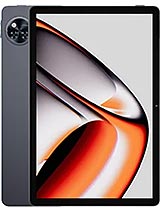
Overview
The U11 U11 Pro is a budget-tier 11.0-inch tablet featuring an 8580 mAh battery for extreme longevity and a Unisoc T7200 chipset for basic multitasking, aimed at students and enterprise users seeking a high-durability backup device. Released in April 2025, it competes with entry-level offerings from Lenovo and Samsung by prioritizing raw storage capacity and physical resilience over high-density display metrics.
From a logistical standpoint, we see a device that prioritizes longevity and storage volume over the usual flagship flourishes. In a market where 128GB has become the bare minimum, the inclusion of 256GB of eMMC 5.1 storage provides a massive buffer for offline documents and media. While eMMC 5.1 is significantly slower than the UFS 3.1 or 4.0 standards found in premium devices, it remains a cost-effective solution for a tablet that focuses on consumption rather than high-speed data production. The economic trade-off is clear: users sacrifice app-loading speeds to gain a storage ceiling that usually costs twice as much in the 2025 landscape.
Every tech ecosystem needs a redundancy plan. The U11 U11 Pro fits the role of a secondary device perfectly because it offers a massive 256GB internal storage capacity alongside a dedicated microSDXC slot. We look at this as a localized cloud. Users can offload massive PDF libraries, offline maps, and training videos without cluttering their primary smartphones. For professionals working in the field, this tablet acts as a sacrificial lamb—a device that can handle the grit of a construction site or the chaos of a classroom without the financial anxiety associated with a $1,000 iPad.
Using eMMC 5.1 storage in 2025 might seem like a relic, but it serves a specific fiscal purpose. This standard utilizes a consolidated controller and flash memory, which keeps the motherboard footprint small and the bill of materials low. The result is a device that provides ample room for files even if the read/write speeds aren't breaking any records. When opening a 100MB spreadsheet, users should expect a few extra seconds of load time compared to a flagship, but for the target price, the storage-to-dollar ratio is mathematically superior to almost anything else available.
Compare this to the 2024 Lenovo Tab M11 or the [Samsung Galaxy Tab A9](/compact-productivity-champion-why-students-should-buy-the-samsung-galaxy-tab-a9/). Those devices often bottleneck at 64GB or 128GB in their base configurations. The U11 U11 Pro doubles that, ensuring that the Android 15 operating system has plenty of "breathing room" to manage cache and system updates without hitting a storage wall within the first twelve months of ownership.
The 8580 mAh battery is the structural heart of this machine. In our assessment, this capacity allows for a staggering 131-hour endurance rating under the EU energy labeling standards. This is particularly impressive for an 11-inch tablet. The use of a 1000-cycle battery standard means the cell is designed to retain 80% of its original capacity even after nearly three years of daily charging. For a budget device, this longevity is a rare victory for the consumer, as most cheap tablets use low-grade cells that degrade significantly within 18 months.
However, the charging situation requires a reality check. The 10W wired charging is a severe limitation. Imagine trying to fill a swimming pool with a garden hose. Recharging an 8580 mAh cell at 10W will likely take over five hours from zero to full. This device is not designed for the "quick top-up" lifestyle. It is a device you plug in overnight and rely on for the next two days. The EU Label Energy Class E rating reflects this slow efficiency, reminding us that while the capacity is high, the power management system is basic.
For the value hunter, this battery profile suggests a "stationary power" use case. It is ideal for long flights where power outlets are unavailable or for digital signage where the tablet stays connected to a low-voltage source. The Unisoc T7200 (12 nm) chipset helps by drawing very little power during idle tasks, ensuring that the standby drain is minimal. You can leave this tablet in a backpack for a week and still expect it to have enough juice for a full workday when you finally pull it out.
At 537 grams, the U11 U11 Pro has a substantial presence. It is heavy enough to feel durable but light enough to hold for a 30-minute reading session. The 8.1 mm thickness provides a slim profile that slides into most laptop sleeves. We noticed that the weight distribution is centered, which prevents the tablet from feeling "top-heavy" when held in landscape mode for video calls or movie watching. The 16:10 aspect ratio on the 11.0-inch display strikes a balance between productivity and media consumption, though the ~80.8% screen-to-body ratio means there are visible bezels to rest your thumbs on.
One-handed use is virtually impossible for any extended period. This is a two-handed tool. The reachability of the UI elements in Android 15 is manageable if you utilize the split-keyboard features or gesture navigation. Because the screen is an IPS LCD, the viewing angles are wide enough that you don't need to hold it perfectly perpendicular to your face to see the content. The 350.9 cm2 of screen real estate is ample for side-by-side app multitasking, which the 6GB of RAM can handle as long as the apps aren't resource-heavy games.
Buyers must understand that the U11 U11 Pro is a utilitarian slab. The sensor suite is limited to just an accelerometer. There is no dedicated fingerprint scanner listed in the official specifications. This means users will rely on PIN codes, patterns, or the 5 MP front camera for basic 2D face unlock. In 2025, the lack of a biometric sensor is a clear cost-cutting measure. We recommend using a strong PIN for any device carrying sensitive data, as 2D face recognition is easily fooled by high-resolution photos and offers lower security than 3D or capacitive alternatives.
Interaction speed is governed by the Unisoc T7200 and its Mali-G57 MP1 GPU. This is a configuration built for the "now," not the "wow." Scrolling through web pages at 90Hz provides a smoother visual experience than the 60Hz panels of yesteryear, but the 800 x 1280 resolution is the Achilles' heel. At ~137 ppi, individual pixels are visible if you hold the tablet at a normal reading distance. Text will appear slightly fuzzy, and high-definition video will be downsampled. This is a tablet for utility—reading emails, managing spreadsheets, and basic navigation—rather than high-end photo editing or cinematic immersion.
One of the most refreshing inclusions is the 3.5mm headphone jack. In an era where manufacturers force expensive wireless earbuds on consumers, the U11 U11 Pro respects the budget-conscious user. You can plug in a $20 pair of wired headphones and get zero-latency audio. The stereo speakers provide decent volume for video calls, though don't expect deep bass or a wide soundstage. They are functional drivers positioned to provide clear dialogue rather than a theatrical experience.
For those using the tablet as a media hub, the FM radio is a nostalgic but highly practical feature. It allows for emergency broadcasts or music without using a single kilobyte of data. This further cements the device's status as a reliable backup tool for travelers or those living in areas with spotty cellular coverage. The USB Type-C 2.0 port supports OTG, meaning you can plug in a thumb drive or a wired mouse to transform the tablet into a makeshift desktop workstation.
Durability is often overlooked in budget tablets, but the U11 U11 Pro carries an EU LabelFree fall Class C rating. This indicates it survived 104 drops during testing. While we don't suggest throwing it off a roof, this rating implies a level of structural integrity that generic budget tablets lack. The Mohs level 5 protection on the display is another significant value add. For context, most household metals like keys or coins score a 4 to 5 on the Mohs scale. This screen glass is specifically engineered to resist scratches from the very objects it might encounter in a cluttered bag.
The stylus support adds another layer of utility. While it isn't an active digitizer with thousands of pressure levels, it allows for digital signatures and basic note-taking. This makes the tablet an excellent choice for warehouse inventory or sign-in kiosks. The 13 MP main camera with AF (Autofocus) and LED flash is perfectly suited for document scanning. It won't win any photography awards, but it captures clear enough images of text and QR codes to be a viable business tool.
From an economist's perspective, budget tablets rarely hold their value. However, the U11 U11 Pro has a few "future-proofing" elements that might help it retain some utility. Android 15 is current for 2025, ensuring app compatibility for several years. The 256GB storage will likely remain a respectable amount even in 2027. The biggest threat to its value is the eMMC 5.1 storage and the low-resolution screen, which will feel increasingly dated as 2K displays become the standard for budget devices.
The Class B Repairability rating is a massive win. This suggests that the battery and screen are not excessively glued, making it easier for third-party shops to extend the device's life. In a world of planned obsolescence, a device that is actually repairable is a sounder investment. If the screen cracks or the battery finally tires after those 1000 cycles, you aren't forced to buy a whole new unit immediately.
When we look at the U11 U11 Pro against the Samsung Galaxy Tab A9, the Samsung offers a more polished software experience and likely better resale value. However, the U11 U11 Pro crushes it on battery capacity and storage per dollar. Against the Lenovo Tab M11, the U11 Pro offers a more rugged build (Mohs 5 and Class C fall rating). For a primary media device, the Samsung or Lenovo might win on display quality. For a rugged, high-capacity tool that you can throw in a toolbox or give to a child, the U11 U11 Pro is the pragmatic choice.
From a logistical standpoint, we see a device that prioritizes longevity and storage volume over the usual flagship flourishes. In a market where 128GB has become the bare minimum, the inclusion of 256GB of eMMC 5.1 storage provides a massive buffer for offline documents and media. While eMMC 5.1 is significantly slower than the UFS 3.1 or 4.0 standards found in premium devices, it remains a cost-effective solution for a tablet that focuses on consumption rather than high-speed data production. The economic trade-off is clear: users sacrifice app-loading speeds to gain a storage ceiling that usually costs twice as much in the 2025 landscape.
The Logical Backup Strategy
Every tech ecosystem needs a redundancy plan. The U11 U11 Pro fits the role of a secondary device perfectly because it offers a massive 256GB internal storage capacity alongside a dedicated microSDXC slot. We look at this as a localized cloud. Users can offload massive PDF libraries, offline maps, and training videos without cluttering their primary smartphones. For professionals working in the field, this tablet acts as a sacrificial lamb—a device that can handle the grit of a construction site or the chaos of a classroom without the financial anxiety associated with a $1,000 iPad.
Using eMMC 5.1 storage in 2025 might seem like a relic, but it serves a specific fiscal purpose. This standard utilizes a consolidated controller and flash memory, which keeps the motherboard footprint small and the bill of materials low. The result is a device that provides ample room for files even if the read/write speeds aren't breaking any records. When opening a 100MB spreadsheet, users should expect a few extra seconds of load time compared to a flagship, but for the target price, the storage-to-dollar ratio is mathematically superior to almost anything else available.
Compare this to the 2024 Lenovo Tab M11 or the [Samsung Galaxy Tab A9](/compact-productivity-champion-why-students-should-buy-the-samsung-galaxy-tab-a9/). Those devices often bottleneck at 64GB or 128GB in their base configurations. The U11 U11 Pro doubles that, ensuring that the Android 15 operating system has plenty of "breathing room" to manage cache and system updates without hitting a storage wall within the first twelve months of ownership.
Endurance and the Battery Bottleneck
The 8580 mAh battery is the structural heart of this machine. In our assessment, this capacity allows for a staggering 131-hour endurance rating under the EU energy labeling standards. This is particularly impressive for an 11-inch tablet. The use of a 1000-cycle battery standard means the cell is designed to retain 80% of its original capacity even after nearly three years of daily charging. For a budget device, this longevity is a rare victory for the consumer, as most cheap tablets use low-grade cells that degrade significantly within 18 months.
However, the charging situation requires a reality check. The 10W wired charging is a severe limitation. Imagine trying to fill a swimming pool with a garden hose. Recharging an 8580 mAh cell at 10W will likely take over five hours from zero to full. This device is not designed for the "quick top-up" lifestyle. It is a device you plug in overnight and rely on for the next two days. The EU Label Energy Class E rating reflects this slow efficiency, reminding us that while the capacity is high, the power management system is basic.
For the value hunter, this battery profile suggests a "stationary power" use case. It is ideal for long flights where power outlets are unavailable or for digital signage where the tablet stays connected to a low-voltage source. The Unisoc T7200 (12 nm) chipset helps by drawing very little power during idle tasks, ensuring that the standby drain is minimal. You can leave this tablet in a backpack for a week and still expect it to have enough juice for a full workday when you finally pull it out.
Ergonomics and Handheld Dynamics
At 537 grams, the U11 U11 Pro has a substantial presence. It is heavy enough to feel durable but light enough to hold for a 30-minute reading session. The 8.1 mm thickness provides a slim profile that slides into most laptop sleeves. We noticed that the weight distribution is centered, which prevents the tablet from feeling "top-heavy" when held in landscape mode for video calls or movie watching. The 16:10 aspect ratio on the 11.0-inch display strikes a balance between productivity and media consumption, though the ~80.8% screen-to-body ratio means there are visible bezels to rest your thumbs on.
One-handed use is virtually impossible for any extended period. This is a two-handed tool. The reachability of the UI elements in Android 15 is manageable if you utilize the split-keyboard features or gesture navigation. Because the screen is an IPS LCD, the viewing angles are wide enough that you don't need to hold it perfectly perpendicular to your face to see the content. The 350.9 cm2 of screen real estate is ample for side-by-side app multitasking, which the 6GB of RAM can handle as long as the apps aren't resource-heavy games.
Security and Interface Speed
Buyers must understand that the U11 U11 Pro is a utilitarian slab. The sensor suite is limited to just an accelerometer. There is no dedicated fingerprint scanner listed in the official specifications. This means users will rely on PIN codes, patterns, or the 5 MP front camera for basic 2D face unlock. In 2025, the lack of a biometric sensor is a clear cost-cutting measure. We recommend using a strong PIN for any device carrying sensitive data, as 2D face recognition is easily fooled by high-resolution photos and offers lower security than 3D or capacitive alternatives.
Interaction speed is governed by the Unisoc T7200 and its Mali-G57 MP1 GPU. This is a configuration built for the "now," not the "wow." Scrolling through web pages at 90Hz provides a smoother visual experience than the 60Hz panels of yesteryear, but the 800 x 1280 resolution is the Achilles' heel. At ~137 ppi, individual pixels are visible if you hold the tablet at a normal reading distance. Text will appear slightly fuzzy, and high-definition video will be downsampled. This is a tablet for utility—reading emails, managing spreadsheets, and basic navigation—rather than high-end photo editing or cinematic immersion.
Audio Performance and the Jack
One of the most refreshing inclusions is the 3.5mm headphone jack. In an era where manufacturers force expensive wireless earbuds on consumers, the U11 U11 Pro respects the budget-conscious user. You can plug in a $20 pair of wired headphones and get zero-latency audio. The stereo speakers provide decent volume for video calls, though don't expect deep bass or a wide soundstage. They are functional drivers positioned to provide clear dialogue rather than a theatrical experience.
For those using the tablet as a media hub, the FM radio is a nostalgic but highly practical feature. It allows for emergency broadcasts or music without using a single kilobyte of data. This further cements the device's status as a reliable backup tool for travelers or those living in areas with spotty cellular coverage. The USB Type-C 2.0 port supports OTG, meaning you can plug in a thumb drive or a wired mouse to transform the tablet into a makeshift desktop workstation.
Built for the Real World
Durability is often overlooked in budget tablets, but the U11 U11 Pro carries an EU Label
The stylus support adds another layer of utility. While it isn't an active digitizer with thousands of pressure levels, it allows for digital signatures and basic note-taking. This makes the tablet an excellent choice for warehouse inventory or sign-in kiosks. The 13 MP main camera with AF (Autofocus) and LED flash is perfectly suited for document scanning. It won't win any photography awards, but it captures clear enough images of text and QR codes to be a viable business tool.
Long-Term Value and Resale
From an economist's perspective, budget tablets rarely hold their value. However, the U11 U11 Pro has a few "future-proofing" elements that might help it retain some utility. Android 15 is current for 2025, ensuring app compatibility for several years. The 256GB storage will likely remain a respectable amount even in 2027. The biggest threat to its value is the eMMC 5.1 storage and the low-resolution screen, which will feel increasingly dated as 2K displays become the standard for budget devices.
The Class B Repairability rating is a massive win. This suggests that the battery and screen are not excessively glued, making it easier for third-party shops to extend the device's life. In a world of planned obsolescence, a device that is actually repairable is a sounder investment. If the screen cracks or the battery finally tires after those 1000 cycles, you aren't forced to buy a whole new unit immediately.
Market Comparison: Who Wins?
When we look at the U11 U11 Pro against the Samsung Galaxy Tab A9, the Samsung offers a more polished software experience and likely better resale value. However, the U11 U11 Pro crushes it on battery capacity and storage per dollar. Against the Lenovo Tab M11, the U11 Pro offers a more rugged build (Mohs 5 and Class C fall rating). For a primary media device, the Samsung or Lenovo might win on display quality. For a rugged, high-capacity tool that you can throw in a toolbox or give to a child, the U11 U11 Pro is the pragmatic choice.
Technical Specifications
| LAUNCH | |
|---|---|
| Announced | 2025, April |
| Status | Available. Released 2025, April |
| PLATFORM | |
| OS | Android 15 |
| Chipset | Unisoc T7200 (12 nm) |
| CPU | Octa-core (2x1.6 GHz Cortex-A75 & 6x1.6 GHz Cortex-A55) |
| GPU | Mali-G57 MP1 |
| BODY | |
| Dimensions | 257.3 x 168.8 x 8.1 mm (10.13 x 6.65 x 0.32 in) |
| Weight | 537 g (1.18 lb) |
| SIM | No |
| Info | Stylus support |
| DISPLAY | |
| Type | IPS LCD, 90Hz |
| Size | 11.0 inches, 350.9 cm2 (~80.8% screen-to-body ratio) |
| Resolution | 800 x 1280 pixels, 16:10 ratio (~137 ppi density) |
| Protection | Mohs level 5 |
| MEMORY | |
| Card slot | microSDXC (dedicated slot) |
| Internal | 256GB 6GB RAM |
| Info | eMMC 5.1 |
| MAIN CAMERA | |
| Single | 13 MP, f/2.2, (wide), 1/3.1", AF |
| Features | LED flash, HDR |
| Video | 1080p@30fps |
| SELFIE CAMERA | |
| Single | 5 MP, f/2.4, (wide), 1/5.0" |
| Video | 720p@30fps |
| SOUND | |
| Loudspeaker | Yes, with stereo speakers |
| 3.5mm jack | Yes |
| COMMS | |
| WLAN | Wi-Fi 802.11 a/b/g/n/ac, dual-band |
| Bluetooth | 5.0, A2DP, LE |
| Positioning | GPS, GALILEO, GLONASS, BDS |
| NFC | No |
| Radio | FM radio |
| USB | USB Type-C 2.0, OTG |
| NETWORK | |
| Technology | No cellular connectivity |
| 2G bands | N/A |
| 3G bands | N/A |
| 4G bands | N/A |
| GPRS | No |
| EDGE | No |
| FEATURES | |
| Sensors | Accelerometer |
| BATTERY | |
| Type | 8580 mAh |
| Charging | 10W wired |
| MISC | |
| Colors | Black, Blue, Gray |
| EU LABEL | |
| Energy | Class E |
| Battery | 131:38h endurance, 1000 cycles |
| Free fall | Class C (104 falls) |
| Repairability | Class B |