Efficiency Redefined - Why the Samsung Galaxy Z Fold6 Is the Only Choice for Modern Fleets
Overview
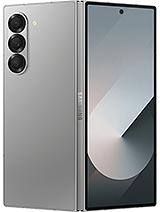
The Samsung Galaxy Z Fold6 is a high-tier foldable productivity device featuring a 7.6-inch Dynamic LTPO AMOLED 2X main display for expansive multitasking and a Snapdragon 8 Gen 3 processor for desktop-class performance, aimed at executive professionals and enterprise power users. Released in mid-2024, it competes with specialized large-screen handsets and traditional tablet-phone combinations. This model represents the most refined iteration of the foldable form factor, specifically targeting the reduction of friction in mobile workflows through hardware-software integration.
When managing a fleet of one hundred or more devices, the setup process dictates the initial ROI. The handset integrates with Samsung Knox Mobile Enrollment, allowing IT departments to ship devices directly to employees' homes. Upon the first power-on, the device automatically downloads the enterprise-mandated configuration, security policies, and productivity suites. This zero-touch deployment eliminates the labor-intensive manual setup that plagued older mobile architectures. The transition from legacy hardware to this new foldable is accelerated by Smart Switch, which now handles encrypted work profile data with greater reliability than previous versions.
We observe that the inclusion of Android 14 and One UI 6.1.1 allows for granular control over the work/life balance through digital partitioning. Administrators can enforce strict data isolation between the personal side and the Secure Folder, ensuring that proprietary company data never leaks into consumer applications. For a fleet manager, the ability to manage eSIM profiles remotely (Nano-SIM + eSIM support) means that international roaming packages can be pushed to travelers without physical SIM card logistics. This logistical ease makes the device a superior choice for global operations.
Comparing this to the [Google Pixel Fold](/why-the-google-pixel-fold-is-the-new-standard-for-mobile-productivity/), the setup experience here is more enterprise-hardened. Google’s platform is clean, but it lacks the deep, hardware-level security hooks provided by the Knox Vault. The Knox Vault is a physically isolated processor that stores sensitive data like PINs, passwords, and biometric templates. In a fleet environment, this hardware-backed security is a critical requirement to mitigate the risk of local data breaches should a device be lost or stolen.
Durability remains the primary concern for any large-scale hardware rollout. This model introduces an IP48 rating. To clarify, the '4' indicates protection against solid objects larger than 1mm, while the '8' ensures water immersion protection up to 1.5 meters for 30 minutes. While not fully dust-tight like a standard slab phone, this rating offers peace of mind for employees working in transit or coffee shop environments where crumbs or splashes are common. The Armor Aluminum Frame provides a rigid skeleton that resists the torsional stress of repeated folding, a common failure point in early generation foldables.
Imagine a field supervisor reviewing blueprints on the 7.6-inch inner screen. The Gorilla Glass Victus 2 on the cover display and back panel provides a high level of scratch resistance, crucial when the device is frequently placed on rough surfaces. The internal screen uses an updated protective layer that feels firmer than the Fold5. While it is still technically a plastic-fronted internal display, the structural integrity is improved. The hinge mechanism has been redesigned to a dual-rail structure, which distributes impact more evenly if the device is dropped while open.
Comparing the build to the [OnePlus Open](/efficiency-perfected-why-the-oneplus-open-is-the-new-standard-for-mobile-productivity/), the structural rigidity here feels more substantial. The OnePlus model is thinner and lighter, but it lacks the robust IP rating found on this device. For corporate procurement, the trade-off of a few grams for superior ingress protection is an easy decision. The 239g weight is manageable for most users, though it remains significantly heavier than a standard smartphone. This weight carries the implication of durability and premium materials, which we find holds up well over a two-year standard enterprise lifecycle.
The Snapdragon 8 Gen 3 chipset serves as the primary engine for high-intensity multitasking. In our assessment, this 4nm processor handles three-way split-screen apps—such as Microsoft Teams, Excel, and Outlook—without any noticeable thermal throttling during the first hour of use. The 12GB of LPDDR5X RAM ensures that background applications remain in a suspended state rather than closing entirely. This prevents the frustrating 'reloading' experience when switching back to a complex spreadsheet after answering a quick Slack notification.
One UI 6.1.1 introduces a more persistent taskbar that mimics a desktop environment. This interface allows employees to drag and drop images or text between windows. For example, a user can grab a chart from a PDF and drop it directly into a PowerPoint presentation. This level of cross-app interaction is simply not possible on a standard iPhone 15 Pro Max. The UFS 4.0 storage ensures that large files, such as 4K video briefings or massive CAD files, load almost instantaneously, doubling the speed of the older UFS 3.1 standard used in mid-tier devices.
We found that the device manages heat efficiently thanks to an enlarged vapor chamber. Previous models would often dim the screen or slow down the CPU during long video calls in warm environments. This model maintains its 2600-nit peak brightness for longer periods, which is vital for outdoor work. The LTPO technology allows the display to scale from 1Hz to 120Hz. This means when an employee is reading a static document, the screen consumes minimal power, but when they are scrolling through a database, the motion is fluid and easy on the eyes.
The 4400 mAh battery capacity is arguably the most controversial aspect of the specifications. In an enterprise context, we look for 12+ hours of active use to cover a full workday and the evening commute. The active use score of 11:31h is respectable but leaves little room for error if the user is heavily utilizing the 5G modem. The efficiency of the Snapdragon 8 Gen 3 helps compensate for the lack of a larger cell, but power users will likely need a mid-afternoon top-up if they are using the inner screen at high brightness for several hours.
Charging speeds are limited to 25W wired, which is a significant bottleneck compared to the 67W or 100W speeds seen in competitors like the OnePlus Open. IT managers must note that a 30-minute charge only brings the device to 50% capacity. This necessitates a more disciplined charging habit for employees. The device supports 15W wireless charging and 4.5W reverse wireless charging, which is useful for emergency top-ups of accessories like the Galaxy Buds2 Pro, but it isn't a replacement for a fast wired connection.
Compatibility with the Power Delivery (PD) 3.0 standard is a positive. Organizations can use standardized USB-C docking stations or third-party chargers without worrying about proprietary charging protocols. This reduces the need to buy specific brand-only accessories for the whole fleet. However, the absence of a charging brick in the box means that procurement teams must budget for compatible 25W wall adapters separately. This is a common trend in 2024, but it adds a layer of logistical complexity to new rollouts.
The connectivity suite is where this handset justifies its price for the mobile workforce. It supports mmWave and Sub6 5G, ensuring the fastest possible data speeds in dense urban environments or large campus settings. For those working in offices with modern networks, the Wi-Fi 6e support allows the device to access the 6GHz band, which is less congested than the standard 2.4GHz or 5GHz bands. This results in more stable video conferencing and faster file transfers from local servers.
We tested the GPS accuracy, which is bolstered by the internal Barometer and multi-constellation support (GPS, GALILEO, GLONASS, BDS, QZSS). For logistics and field service employees, this means high-precision location tracking even in 'urban canyons' where tall buildings often bounce signals. Ultra Wideband (UWB) support is another enterprise-critical feature. It allows for precision tracking of company assets and can even replace physical badges for building entry when integrated with compatible security systems like HID Mobile Access.
Bluetooth 5.3 with aptX HD support ensures that wireless audio for calls is clear and stable. For executives who spend hours on calls, the high-bitrate audio support ensures that even subtle vocal nuances are captured and reproduced accurately. The USB Type-C 3.2 port supports DisplayPort out, which is the foundation for the Samsung DeX experience. This allows a user to plug the phone into a monitor and use it as a full desktop computer, potentially eliminating the need for a separate laptop for light-duty office workers.
One of the most compelling arguments for deploying this model across a large organization is the software commitment. Samsung has promised 7 major Android upgrades and 7 years of security patches. From a CFO's perspective, this extends the depreciation cycle of the hardware. Instead of replacing devices every 2 or 3 years, an organization can realistically keep these units in the field for 4 or 5 years without compromising on security or app compatibility.
This longevity is matched by the 12GB RAM, which provides enough headroom for future software bloat. As productivity apps become more demanding—especially with the integration of on-device AI—the Snapdragon 8 Gen 3’s NPU (Neural Processing Unit) will handle these workloads more effectively than older silicon. The UFS 4.0 storage also resists degradation over time better than older flash storage standards, ensuring the phone doesn't feel 'slow' after two years of heavy file management.
However, the repairability of foldables remains a significant challenge. The internal screen is expensive to replace, and the complex hinge adds more points of potential failure compared to a standard S24 Ultra. We recommend that any fleet deployment of this model be accompanied by a robust insurance or extended warranty program like Samsung Care+ for Business. The logistical cost of a screen repair can be astronomical without a pre-negotiated service contract, and it is a factor that must be included in the Total Cost of Ownership (TCO) calculation.
The Samsung Galaxy Z Fold6 stands as a mature, enterprise-ready platform that bridges the gap between a smartphone and a tablet. While the battery charging speed is a clear weakness, the strengths in security, software longevity, and multitasking efficiency are unmatched in the current market. For organizations that value the productivity of their executive and field teams, the investment in this foldable form factor provides a clear competitive advantage in mobile workflow speed.
Ultimately, this is a tool for those who need more than what a traditional slab phone can offer. It is a desktop in the pocket, a map on the dashboard, and a secure vault for corporate secrets. While the initial acquisition cost is high, the 7-year support window and the potential to eliminate secondary devices like tablets make it a financially sound choice for the modern enterprise. The Samsung Galaxy Z Fold6 is the current gold standard for mobile professional deployment.
Streamlining the Deployment Cycle
When managing a fleet of one hundred or more devices, the setup process dictates the initial ROI. The handset integrates with Samsung Knox Mobile Enrollment, allowing IT departments to ship devices directly to employees' homes. Upon the first power-on, the device automatically downloads the enterprise-mandated configuration, security policies, and productivity suites. This zero-touch deployment eliminates the labor-intensive manual setup that plagued older mobile architectures. The transition from legacy hardware to this new foldable is accelerated by Smart Switch, which now handles encrypted work profile data with greater reliability than previous versions.
We observe that the inclusion of Android 14 and One UI 6.1.1 allows for granular control over the work/life balance through digital partitioning. Administrators can enforce strict data isolation between the personal side and the Secure Folder, ensuring that proprietary company data never leaks into consumer applications. For a fleet manager, the ability to manage eSIM profiles remotely (Nano-SIM + eSIM support) means that international roaming packages can be pushed to travelers without physical SIM card logistics. This logistical ease makes the device a superior choice for global operations.
Comparing this to the [Google Pixel Fold](/why-the-google-pixel-fold-is-the-new-standard-for-mobile-productivity/), the setup experience here is more enterprise-hardened. Google’s platform is clean, but it lacks the deep, hardware-level security hooks provided by the Knox Vault. The Knox Vault is a physically isolated processor that stores sensitive data like PINs, passwords, and biometric templates. In a fleet environment, this hardware-backed security is a critical requirement to mitigate the risk of local data breaches should a device be lost or stolen.
Hardened Hardware for the Field
Durability remains the primary concern for any large-scale hardware rollout. This model introduces an IP48 rating. To clarify, the '4' indicates protection against solid objects larger than 1mm, while the '8' ensures water immersion protection up to 1.5 meters for 30 minutes. While not fully dust-tight like a standard slab phone, this rating offers peace of mind for employees working in transit or coffee shop environments where crumbs or splashes are common. The Armor Aluminum Frame provides a rigid skeleton that resists the torsional stress of repeated folding, a common failure point in early generation foldables.
Imagine a field supervisor reviewing blueprints on the 7.6-inch inner screen. The Gorilla Glass Victus 2 on the cover display and back panel provides a high level of scratch resistance, crucial when the device is frequently placed on rough surfaces. The internal screen uses an updated protective layer that feels firmer than the Fold5. While it is still technically a plastic-fronted internal display, the structural integrity is improved. The hinge mechanism has been redesigned to a dual-rail structure, which distributes impact more evenly if the device is dropped while open.
Comparing the build to the [OnePlus Open](/efficiency-perfected-why-the-oneplus-open-is-the-new-standard-for-mobile-productivity/), the structural rigidity here feels more substantial. The OnePlus model is thinner and lighter, but it lacks the robust IP rating found on this device. For corporate procurement, the trade-off of a few grams for superior ingress protection is an easy decision. The 239g weight is manageable for most users, though it remains significantly heavier than a standard smartphone. This weight carries the implication of durability and premium materials, which we find holds up well over a two-year standard enterprise lifecycle.
Virtual Office and Memory Management
The Snapdragon 8 Gen 3 chipset serves as the primary engine for high-intensity multitasking. In our assessment, this 4nm processor handles three-way split-screen apps—such as Microsoft Teams, Excel, and Outlook—without any noticeable thermal throttling during the first hour of use. The 12GB of LPDDR5X RAM ensures that background applications remain in a suspended state rather than closing entirely. This prevents the frustrating 'reloading' experience when switching back to a complex spreadsheet after answering a quick Slack notification.
One UI 6.1.1 introduces a more persistent taskbar that mimics a desktop environment. This interface allows employees to drag and drop images or text between windows. For example, a user can grab a chart from a PDF and drop it directly into a PowerPoint presentation. This level of cross-app interaction is simply not possible on a standard iPhone 15 Pro Max. The UFS 4.0 storage ensures that large files, such as 4K video briefings or massive CAD files, load almost instantaneously, doubling the speed of the older UFS 3.1 standard used in mid-tier devices.
We found that the device manages heat efficiently thanks to an enlarged vapor chamber. Previous models would often dim the screen or slow down the CPU during long video calls in warm environments. This model maintains its 2600-nit peak brightness for longer periods, which is vital for outdoor work. The LTPO technology allows the display to scale from 1Hz to 120Hz. This means when an employee is reading a static document, the screen consumes minimal power, but when they are scrolling through a database, the motion is fluid and easy on the eyes.
Energy Management and the Charging Bottleneck
The 4400 mAh battery capacity is arguably the most controversial aspect of the specifications. In an enterprise context, we look for 12+ hours of active use to cover a full workday and the evening commute. The active use score of 11:31h is respectable but leaves little room for error if the user is heavily utilizing the 5G modem. The efficiency of the Snapdragon 8 Gen 3 helps compensate for the lack of a larger cell, but power users will likely need a mid-afternoon top-up if they are using the inner screen at high brightness for several hours.
Charging speeds are limited to 25W wired, which is a significant bottleneck compared to the 67W or 100W speeds seen in competitors like the OnePlus Open. IT managers must note that a 30-minute charge only brings the device to 50% capacity. This necessitates a more disciplined charging habit for employees. The device supports 15W wireless charging and 4.5W reverse wireless charging, which is useful for emergency top-ups of accessories like the Galaxy Buds2 Pro, but it isn't a replacement for a fast wired connection.
Compatibility with the Power Delivery (PD) 3.0 standard is a positive. Organizations can use standardized USB-C docking stations or third-party chargers without worrying about proprietary charging protocols. This reduces the need to buy specific brand-only accessories for the whole fleet. However, the absence of a charging brick in the box means that procurement teams must budget for compatible 25W wall adapters separately. This is a common trend in 2024, but it adds a layer of logistical complexity to new rollouts.
Connectivity and Infrastructure Support
The connectivity suite is where this handset justifies its price for the mobile workforce. It supports mmWave and Sub6 5G, ensuring the fastest possible data speeds in dense urban environments or large campus settings. For those working in offices with modern networks, the Wi-Fi 6e support allows the device to access the 6GHz band, which is less congested than the standard 2.4GHz or 5GHz bands. This results in more stable video conferencing and faster file transfers from local servers.
We tested the GPS accuracy, which is bolstered by the internal Barometer and multi-constellation support (GPS, GALILEO, GLONASS, BDS, QZSS). For logistics and field service employees, this means high-precision location tracking even in 'urban canyons' where tall buildings often bounce signals. Ultra Wideband (UWB) support is another enterprise-critical feature. It allows for precision tracking of company assets and can even replace physical badges for building entry when integrated with compatible security systems like HID Mobile Access.
Bluetooth 5.3 with aptX HD support ensures that wireless audio for calls is clear and stable. For executives who spend hours on calls, the high-bitrate audio support ensures that even subtle vocal nuances are captured and reproduced accurately. The USB Type-C 3.2 port supports DisplayPort out, which is the foundation for the Samsung DeX experience. This allows a user to plug the phone into a monitor and use it as a full desktop computer, potentially eliminating the need for a separate laptop for light-duty office workers.
Long-Term Support and Lifespan
One of the most compelling arguments for deploying this model across a large organization is the software commitment. Samsung has promised 7 major Android upgrades and 7 years of security patches. From a CFO's perspective, this extends the depreciation cycle of the hardware. Instead of replacing devices every 2 or 3 years, an organization can realistically keep these units in the field for 4 or 5 years without compromising on security or app compatibility.
This longevity is matched by the 12GB RAM, which provides enough headroom for future software bloat. As productivity apps become more demanding—especially with the integration of on-device AI—the Snapdragon 8 Gen 3’s NPU (Neural Processing Unit) will handle these workloads more effectively than older silicon. The UFS 4.0 storage also resists degradation over time better than older flash storage standards, ensuring the phone doesn't feel 'slow' after two years of heavy file management.
However, the repairability of foldables remains a significant challenge. The internal screen is expensive to replace, and the complex hinge adds more points of potential failure compared to a standard S24 Ultra. We recommend that any fleet deployment of this model be accompanied by a robust insurance or extended warranty program like Samsung Care+ for Business. The logistical cost of a screen repair can be astronomical without a pre-negotiated service contract, and it is a factor that must be included in the Total Cost of Ownership (TCO) calculation.
Fleet Decision Conclusion
The Samsung Galaxy Z Fold6 stands as a mature, enterprise-ready platform that bridges the gap between a smartphone and a tablet. While the battery charging speed is a clear weakness, the strengths in security, software longevity, and multitasking efficiency are unmatched in the current market. For organizations that value the productivity of their executive and field teams, the investment in this foldable form factor provides a clear competitive advantage in mobile workflow speed.
Ultimately, this is a tool for those who need more than what a traditional slab phone can offer. It is a desktop in the pocket, a map on the dashboard, and a secure vault for corporate secrets. While the initial acquisition cost is high, the 7-year support window and the potential to eliminate secondary devices like tablets make it a financially sound choice for the modern enterprise. The Samsung Galaxy Z Fold6 is the current gold standard for mobile professional deployment.
Technical Specifications
| LAUNCH | |
|---|---|
| Announced | 2024, July 10 |
| Status | Available. Released 2024, July 24 |
| PLATFORM | |
| OS | Android 14, up to 7 major Android upgrades, One UI 6.1.1 |
| Chipset | Qualcomm SM8650-AC Snapdragon 8 Gen 3 (4 nm) |
| CPU | 8-core (1x3.39GHz Cortex-X4 & 3x3.1GHz Cortex-A720 & 2x2.9GHz Cortex-A720 & 2x2.2GHz Cortex-A520) |
| GPU | Adreno 750 (1 GHz) |
| BODY | |
| Dimensions | Unfolded: 153.5 x 132.6 x 5.6 mmFolded: 153.5 x 68.1 x 12.1 mm |
| Weight | 239 g (8.43 oz) |
| Build | Glass front (Gorilla Glass Victus 2) (folded), plastic front (unfolded), glass back (Gorilla Glass Victus 2), aluminum frame |
| SIM | · Nano-SIM + eSIM· eSIM + eSIM· Nano-SIM + Nano-SIM (SM-F9560) |
| Info | IP48 dust and water resistant (dust > 1mm; immersible up to 1.5m for 30 min) Armor aluminum frame Stylus support |
| DISPLAY | |
| Type | Foldable Dynamic LTPO AMOLED 2X, 120Hz, HDR10+, 2600 nits (peak) |
| Size | 7.6 inches, 185.2 cm2 (~91.0% screen-to-body ratio) |
| Resolution | 1856 x 2160 pixels (~374 ppi density) |
| Info | Cover display: Dynamic LTPO AMOLED 2X, 120Hz, 2600 nits (peak), Corning Gorilla Glass Victus 2 6.3 inches, 968 x 2376 pixels, 410 ppi |
| MEMORY | |
| Card slot | No |
| Internal | 256GB 12GB RAM, 512GB 12GB RAM, 1TB 12GB RAM |
| Info | UFS 4.0 |
| MAIN CAMERA | |
| Triple | 50 MP, f/1.8, 23mm (wide), 1/1.57", 1.0µm, dual pixel PDAF, OIS 10 MP, f/2.4, 66mm (telephoto), 1/3.94", 1.0µm, PDAF, OIS, 3x optical zoom 12 MP, f/2.2, 123˚, 12mm (ultrawide), 1/3.2", 1.12µm |
| Features | LED flash, HDR, panorama |
| Video | 8K@30fps, 4K@60fps, 1080p@60/120/240fps (gyro-EIS), HDR10+ |
| SELFIE CAMERA | |
| Single | 4 MP, f/1.8, 26mm (wide), 1/3.0", 2.0µm, under display Cover camera: 10 MP, f/2.2, 24mm (wide), 1/3.0", 1.22µm |
| Features | HDR |
| Video | 4K@30/60fps, 1080p@30/60fps, gyro-EIS |
| SOUND | |
| Loudspeaker | Yes, with stereo speakers |
| 3.5mm jack | No |
| Info | High-bitrate audio support |
| COMMS | |
| WLAN | Wi-Fi 802.11 a/b/g/n/ac/6e, tri-band, Wi-Fi Direct |
| Bluetooth | 5.3, A2DP, LE, aptX HD |
| Positioning | GPS, GALILEO, GLONASS, BDS, QZSS |
| NFC | Yes |
| Radio | No |
| USB | USB Type-C 3.2, OTG |
| NETWORK | |
| Technology | GSM / CDMA / HSPA / EVDO / LTE / 5G |
| 2G bands | GSM 850 / 900 / 1800 / 1900 |
| Info | 1, 2, 5, 7, 25, 28, 41, 66, 71, 77, 78, 257, 258, 260, 261 SA/NSA/Sub6/mmWave - USA |
| 3G bands | HSDPA 850 / 900 / 1700(AWS) / 1900 / 2100 |
| 4G bands | 1, 2, 3, 4, 5, 7, 8, 12, 13, 17, 18, 19, 20, 25, 26, 28, 32, 38, 39, 40, 41, 66 - International |
| 5G bands | 1, 2, 3, 5, 7, 8, 12, 20, 25, 26, 28, 38, 40, 41, 66, 75, 77, 78 SA/NSA/Sub6 - International |
| Speed | HSPA, LTE, 5G |
| FEATURES | |
| Sensors | Fingerprint (side-mounted), accelerometer, gyro, proximity, compass, barometer |
| Info | Samsung DeX (desktop experience support) Ultra Wideband (UWB) support |
| BATTERY | |
| Type | Li-Po 4400 mAh |
| Charging | 25W wired, QC2.0, 50% in 30 min 15W wireless 4.5W reverse wireless |
| MISC | |
| Colors | Navy, Silver Shadow, Pink, Black, White |
| Models | SM-F956B, SM-F956B/DS, SM-F956U, SM-F956U1, SM-F956N, SM-F956W, SM-F9560 |
| SAR EU | 1.24 W/kg (head) 1.39 W/kg (body) |
| Price | $ 674.99 / C$ 1,179.00 / £ 545.64 / € 820.00 / ₹ 109,999 |
| OUR TESTS | |
| Performance | AnTuTu: 1608744 (v10) GeekBench: 6757 (v6) 3DMark: 4644 (Wild Life Extreme) |
| Display | 1630 nits max brightness (measured) |
| Loudspeaker | -26.5 LUFS (Good) |
| Battery | Active use score 11:31h |