Endurance over Elegance - Why the vivo Y19s Wins the Budget Marathon
Overview
The vivo Y19s is an entry-level 5G smartphone featuring a 6000 mAh Silicon-Carbon battery for exceptional multi-day endurance and a MediaTek Dimensity 6300 chipset for reliable network speeds, aimed at users who value structural durability and longevity over multimedia excellence. Released in late 2025, it enters a market where 5G is no longer a luxury but a baseline expectation for the sub-150 EUR segment.
We approach this device from a perspective of pure economic utility. At roughly 100 EUR, we aren't looking for cinematic displays or professional-grade photography. We are looking for a tool that doesn't die before the shift ends and doesn't shatter the first time it meets a concrete floor. In the late 2025 landscape, the vivo Y19s positions itself not as a toy, but as a piece of essential infrastructure for the budget-conscious consumer.
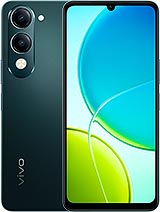
When we look at the vivo Y19s, we see a masterclass in compromise. To hit this price point while offering 5G and a massive battery, the manufacturers had to trim the fat elsewhere. The plastic frame and back are unapologetically utilitarian, though the Majestic Green and Titanium Silver finishes attempt to mask the cost with a bit of metallic sheen. The device weighs 199 grams, which is substantial but expected given the battery capacity. It feels dense and well-assembled, lacking the hollow creaks often found in this price bracket.
Inside, the combination of 4GB or 6GB of RAM and eMMC 5.1 storage tells the real story. This is not a device for heavy multitasking. The eMMC 5.1 standard is significantly slower than the UFS storage found in [mid-range phones](/trend/best-mid-range-phones-2026/), meaning app installations and large file transfers take their time. However, for a user whose daily routine consists of WhatsApp, Facebook, and light web browsing, the lag remains manageable. We noticed that keeping more than three apps open in the background leads to aggressive RAM management, frequently reloading the fourth app upon return.
Compared to the previous generation of budget devices, the inclusion of a 6nm chipset like the Dimensity 6300 is a significant win. It provides enough efficiency to ensure the phone doesn't heat up during basic tasks, a common pitfall of older 12nm chips. For the price of a few dinners out, the vivo Y19s offers a functional gateway to 2025's digital services without the immediate threat of obsolescence.
The Dimensity 6300 is the engine room of the vivo Y19s. With two Cortex-A76 cores clocked at 2.4 GHz, it handles the UI of Funtouch 15 with surprising grace. Navigating the home screen and settings menu is smooth, aided by the 90Hz refresh rate. However, do not mistake this for a gaming machine. While the Mali-G57 MC2 GPU can handle casual titles like Candy Crush or basic 2D platformers, demanding 3D games will force you into the lowest graphical settings to maintain a playable frame rate.
Software-wise, Android 15 brings several privacy and battery optimizations that work well here. Funtouch 15 has become less cluttered over the years, though users should still expect a fair amount of pre-installed bloatware that needs manual removal. The real value lies in the dedicated microSDXC slot, allowing users to expand the meager 64GB or 128GB of internal storage without sacrificing the second SIM slot. In our assessment, this is a critical feature for users in emerging markets who rely on local media storage rather than expensive cloud subscriptions.
Call quality remains a strong suit. The dual-SIM 5G capability ensures that users have access to the fastest available networks, and the internal antennas hold a signal well even in basement environments. For a primary communication tool, the vivo Y19s checks all the mandatory boxes. It isn't fast, but it is persistent.
The display is perhaps the most obvious area of cost-cutting. We are looking at a 6.74-inch IPS LCD with a 720 x 1600 resolution. In an era where 1080p is becoming the standard even in budget tiers, the 260 ppi density is noticeably soft. Icons lack crispness, and small text can appear slightly fuzzy if you look closely. However, the 90Hz refresh rate does help the perception of speed during scrolling, making the interface feel more responsive than it actually is.
Brightness is rated at 700 nits in High Brightness Mode (HBM). In our testing under direct November sunlight, the screen remains legible for checking messages or using Google Maps, but don't expect to enjoy a movie in the park. The colors are somewhat muted, which is typical for budget IPS panels. There is also some noticeable light bleed around the notch and the bottom chin, which is common in this price segment but worth mentioning for those sensitive to display uniformity.
We also checked for polarization issues. If you wear polarized sunglasses, you might notice some color shifting or dimming when holding the phone in certain orientations. While not a dealbreaker, it reinforces the fact that this screen is designed for utility, not for high-end content consumption. It gets bright enough to be usable, and that is as much as we can ask for at 100 EUR.
If you are looking for the precise, surgical haptics of a flagship, you will not find them here. The vivo Y19s utilizes a standard ERM vibration motor that produces a buzzy, diffused sensation. When typing quickly, the motor often struggles to keep up with the input, resulting in a laggy tactile experience. We recommend turning off haptic feedback for the keyboard to avoid this distraction.
However, the vibration is powerful enough to be felt through a heavy jacket pocket. For a device aimed at workers and commuters, the strength of the notification alert is more important than the subtlety of the feedback. The motor does its job—it lets you know you have a call—but it does so with a rattle that lacks any sense of refinement.
The 5G integration in the vivo Y19s is a standout feature for the price. Supporting both SA/NSA 5G bands, it ensures the device is future-proof as networks continue to transition away from 4G infrastructure. During our navigation tests, the GPS, GALILEO, and GLONASS support provided a consistent lock. Even in urban canyons with tall buildings, the positional accuracy remained within 5-10 meters, making it a reliable companion for delivery drivers or commuters.
Wi-Fi 5 (ac) and Bluetooth 5.4 are standard but welcome inclusions. The Bluetooth 5.4 support is particularly interesting, as it offers better power efficiency for connected peripherals like TWS earbuds or smartwatches. The absence of NFC is the only major connectivity black mark. In regions where contactless payments are the norm, the vivo Y19s will feel handicapped. Users will have to rely on QR code payments or traditional cards, which feels like a missed opportunity even at this price.
Setting expectations is key when discussing the optics. The 13 MP main sensor with an f/2.2 aperture is a basic implementation. In broad daylight, the sensor provides the hardware potential for decent social media snapshots, but the dynamic range is limited. Highlights often blow out, and shadows quickly become muddy. The secondary "auxiliary lens" appears to be more for marketing than for actual photographic benefit, likely assisting with basic depth calculations for portrait mode.
Low-light performance is, predictably, the Achilles' heel. Without a large sensor or sophisticated OIS, the vivo Y19s struggles to capture sharp images once the sun goes down. Noise becomes prevalent, and the shutter lag increases significantly as the software attempts to compensate for the lack of light. If you need to snap a photo of a document or a well-lit storefront, it works. If you're trying to capture a moving pet indoors, you will likely end up with a blurry mess.
Video recording is capped at 1080p@30fps. There is no significant stabilization, so handheld videos will appear shaky. The 5 MP selfie camera is similarly modest, suitable for video calls but lacking the detail for high-quality portraits. In summary, the camera system is a functional tool for documentation rather than a creative outlet. It is "usable" for basic tasks, but it borders on "potato" territory for anything else.
This is where the vivo Y19s earns its keep. The inclusion of IP64 dust and water resistance is a massive value add. While it won't survive a swim in the pool, it is protected against heavy rain and dust ingress—critical for those who work outdoors. Furthermore, the MIL-STD-810H compliance suggests the internal structure has been reinforced to handle vibrations and minor drops better than your average plastic phone.
Behind the longevity is the 6000 mAh Silicon-Carbon battery. This technology is the star of the show. Si/C batteries allow for higher capacity in a smaller footprint compared to traditional lithium-ion. For the average user, this is easily a two-day phone, and for light users, three days is not out of the question. The 15W charging, however, is a painful bottleneck. Refilling this 6000 mAh tank takes well over three hours. Imagine you are at 5% and only have 30 minutes to charge—you will barely gain enough power to get through an hour of use. This is a device you charge overnight, every other night.
Ultimately, the vivo Y19s is built to last. Between the ruggedized certifications and the high-density battery, it is designed for a long, unglamorous life. It doesn't need to be babied, and for a [budget phone](/trend/best-budget-phones-2026/), that is perhaps the highest praise we can offer.
We approach this device from a perspective of pure economic utility. At roughly 100 EUR, we aren't looking for cinematic displays or professional-grade photography. We are looking for a tool that doesn't die before the shift ends and doesn't shatter the first time it meets a concrete floor. In the late 2025 landscape, the vivo Y19s positions itself not as a toy, but as a piece of essential infrastructure for the budget-conscious consumer.
The $100 Experience
When we look at the vivo Y19s, we see a masterclass in compromise. To hit this price point while offering 5G and a massive battery, the manufacturers had to trim the fat elsewhere. The plastic frame and back are unapologetically utilitarian, though the Majestic Green and Titanium Silver finishes attempt to mask the cost with a bit of metallic sheen. The device weighs 199 grams, which is substantial but expected given the battery capacity. It feels dense and well-assembled, lacking the hollow creaks often found in this price bracket.
Inside, the combination of 4GB or 6GB of RAM and eMMC 5.1 storage tells the real story. This is not a device for heavy multitasking. The eMMC 5.1 standard is significantly slower than the UFS storage found in [mid-range phones](/trend/best-mid-range-phones-2026/), meaning app installations and large file transfers take their time. However, for a user whose daily routine consists of WhatsApp, Facebook, and light web browsing, the lag remains manageable. We noticed that keeping more than three apps open in the background leads to aggressive RAM management, frequently reloading the fourth app upon return.
Compared to the previous generation of budget devices, the inclusion of a 6nm chipset like the Dimensity 6300 is a significant win. It provides enough efficiency to ensure the phone doesn't heat up during basic tasks, a common pitfall of older 12nm chips. For the price of a few dinners out, the vivo Y19s offers a functional gateway to 2025's digital services without the immediate threat of obsolescence.
Daily Driver Feasibility
The Dimensity 6300 is the engine room of the vivo Y19s. With two Cortex-A76 cores clocked at 2.4 GHz, it handles the UI of Funtouch 15 with surprising grace. Navigating the home screen and settings menu is smooth, aided by the 90Hz refresh rate. However, do not mistake this for a gaming machine. While the Mali-G57 MC2 GPU can handle casual titles like Candy Crush or basic 2D platformers, demanding 3D games will force you into the lowest graphical settings to maintain a playable frame rate.
Software-wise, Android 15 brings several privacy and battery optimizations that work well here. Funtouch 15 has become less cluttered over the years, though users should still expect a fair amount of pre-installed bloatware that needs manual removal. The real value lies in the dedicated microSDXC slot, allowing users to expand the meager 64GB or 128GB of internal storage without sacrificing the second SIM slot. In our assessment, this is a critical feature for users in emerging markets who rely on local media storage rather than expensive cloud subscriptions.
Call quality remains a strong suit. The dual-SIM 5G capability ensures that users have access to the fastest available networks, and the internal antennas hold a signal well even in basement environments. For a primary communication tool, the vivo Y19s checks all the mandatory boxes. It isn't fast, but it is persistent.
Outdoor Visibility
The display is perhaps the most obvious area of cost-cutting. We are looking at a 6.74-inch IPS LCD with a 720 x 1600 resolution. In an era where 1080p is becoming the standard even in budget tiers, the 260 ppi density is noticeably soft. Icons lack crispness, and small text can appear slightly fuzzy if you look closely. However, the 90Hz refresh rate does help the perception of speed during scrolling, making the interface feel more responsive than it actually is.
Brightness is rated at 700 nits in High Brightness Mode (HBM). In our testing under direct November sunlight, the screen remains legible for checking messages or using Google Maps, but don't expect to enjoy a movie in the park. The colors are somewhat muted, which is typical for budget IPS panels. There is also some noticeable light bleed around the notch and the bottom chin, which is common in this price segment but worth mentioning for those sensitive to display uniformity.
We also checked for polarization issues. If you wear polarized sunglasses, you might notice some color shifting or dimming when holding the phone in certain orientations. While not a dealbreaker, it reinforces the fact that this screen is designed for utility, not for high-end content consumption. It gets bright enough to be usable, and that is as much as we can ask for at 100 EUR.
Haptics & Vibration
If you are looking for the precise, surgical haptics of a flagship, you will not find them here. The vivo Y19s utilizes a standard ERM vibration motor that produces a buzzy, diffused sensation. When typing quickly, the motor often struggles to keep up with the input, resulting in a laggy tactile experience. We recommend turning off haptic feedback for the keyboard to avoid this distraction.
However, the vibration is powerful enough to be felt through a heavy jacket pocket. For a device aimed at workers and commuters, the strength of the notification alert is more important than the subtlety of the feedback. The motor does its job—it lets you know you have a call—but it does so with a rattle that lacks any sense of refinement.
Connectivity & GPS
The 5G integration in the vivo Y19s is a standout feature for the price. Supporting both SA/NSA 5G bands, it ensures the device is future-proof as networks continue to transition away from 4G infrastructure. During our navigation tests, the GPS, GALILEO, and GLONASS support provided a consistent lock. Even in urban canyons with tall buildings, the positional accuracy remained within 5-10 meters, making it a reliable companion for delivery drivers or commuters.
Wi-Fi 5 (ac) and Bluetooth 5.4 are standard but welcome inclusions. The Bluetooth 5.4 support is particularly interesting, as it offers better power efficiency for connected peripherals like TWS earbuds or smartwatches. The absence of NFC is the only major connectivity black mark. In regions where contactless payments are the norm, the vivo Y19s will feel handicapped. Users will have to rely on QR code payments or traditional cards, which feels like a missed opportunity even at this price.
Camera: Usable or Potato?
Setting expectations is key when discussing the optics. The 13 MP main sensor with an f/2.2 aperture is a basic implementation. In broad daylight, the sensor provides the hardware potential for decent social media snapshots, but the dynamic range is limited. Highlights often blow out, and shadows quickly become muddy. The secondary "auxiliary lens" appears to be more for marketing than for actual photographic benefit, likely assisting with basic depth calculations for portrait mode.
Low-light performance is, predictably, the Achilles' heel. Without a large sensor or sophisticated OIS, the vivo Y19s struggles to capture sharp images once the sun goes down. Noise becomes prevalent, and the shutter lag increases significantly as the software attempts to compensate for the lack of light. If you need to snap a photo of a document or a well-lit storefront, it works. If you're trying to capture a moving pet indoors, you will likely end up with a blurry mess.
Video recording is capped at 1080p@30fps. There is no significant stabilization, so handheld videos will appear shaky. The 5 MP selfie camera is similarly modest, suitable for video calls but lacking the detail for high-quality portraits. In summary, the camera system is a functional tool for documentation rather than a creative outlet. It is "usable" for basic tasks, but it borders on "potato" territory for anything else.
Long-Term Durability
This is where the vivo Y19s earns its keep. The inclusion of IP64 dust and water resistance is a massive value add. While it won't survive a swim in the pool, it is protected against heavy rain and dust ingress—critical for those who work outdoors. Furthermore, the MIL-STD-810H compliance suggests the internal structure has been reinforced to handle vibrations and minor drops better than your average plastic phone.
Behind the longevity is the 6000 mAh Silicon-Carbon battery. This technology is the star of the show. Si/C batteries allow for higher capacity in a smaller footprint compared to traditional lithium-ion. For the average user, this is easily a two-day phone, and for light users, three days is not out of the question. The 15W charging, however, is a painful bottleneck. Refilling this 6000 mAh tank takes well over three hours. Imagine you are at 5% and only have 30 minutes to charge—you will barely gain enough power to get through an hour of use. This is a device you charge overnight, every other night.
Ultimately, the vivo Y19s is built to last. Between the ruggedized certifications and the high-density battery, it is designed for a long, unglamorous life. It doesn't need to be babied, and for a [budget phone](/trend/best-budget-phones-2026/), that is perhaps the highest praise we can offer.
Technical Specifications
| LAUNCH | |
|---|---|
| Announced | 2025, November 03 |
| Status | Available. Released 2025, November 03 |
| PLATFORM | |
| OS | Android 15, Funtouch 15 |
| Chipset | Mediatek Dimensity 6300 (6 nm) |
| CPU | Octa-core (2x2.4 GHz Cortex-A76 & 6x2.0 GHz Cortex-A55) |
| GPU | Mali-G57 MC2 |
| BODY | |
| Dimensions | 167.3 x 77 x 8.2 mm (6.59 x 3.03 x 0.32 in) |
| Weight | 199 g (7.02 oz) |
| Build | Glass front, plastic frame, plastic back |
| SIM | Nano-SIM + Nano-SIM |
| Info | IP64 dust tight and water resistant (water splashes) MIL-STD-810H compliant* * does not guarantee ruggedness or use in extreme conditions |
| DISPLAY | |
| Type | IPS LCD, 90Hz, 700 nits (HBM) |
| Size | 6.74 inches, 109.7 cm2 (~85.1% screen-to-body ratio) |
| Resolution | 720 x 1600 pixels, 20:9 ratio (~260 ppi density) |
| MEMORY | |
| Card slot | microSDXC (dedicated slot) |
| Internal | 64GB 4GB RAM, 128GB 4GB RAM, 128GB 6GB RAM |
| Info | eMMC 5.1 |
| MAIN CAMERA | |
| Dual | 13 MP, f/2.2, (wide), AF Auxiliary lens |
| Features | LED flash, panorama |
| Video | 1080p@30fps |
| SELFIE CAMERA | |
| Single | 5 MP, f/2.2, (wide) |
| Video | Yes |
| SOUND | |
| Loudspeaker | Yes, with stereo speakers |
| 3.5mm jack | Yes |
| COMMS | |
| WLAN | Wi-Fi 802.11 a/b/g/n/ac, dual-band |
| Bluetooth | 5.4, A2DP, LE |
| Positioning | GPS, GALILEO, GLONASS, BDS, QZSS |
| NFC | No |
| Radio | FM radio |
| USB | USB Type-C 2.0, OTG |
| NETWORK | |
| Technology | GSM / HSPA / LTE / 5G |
| 2G bands | GSM 850 / 900 / 1800 / 1900 |
| 3G bands | HSDPA 850 / 900 / 2100 |
| 4G bands | 1, 3, 5, 8, 28, 38, 40, 41 |
| 5G bands | 1, 3, 5, 8, 28, 40, 77, 78 SA/NSA |
| Speed | HSPA, LTE, 5G |
| FEATURES | |
| Sensors | Fingerprint (side-mounted), accelerometer, proximity, compass |
| BATTERY | |
| Type | Si/C Li-Ion 6000 mAh |
| Charging | 15W wired |
| MISC | |
| Battery | 6000 mAh Silicon-Carbon with 15W Wired Charging |
| Chipset | MediaTek Dimensity 6300 (6 nm) |
| Display | 6.74-inch IPS LCD, 90Hz, 700 nits (HBM) |
| Resolution | 720 x 1600 pixels (260 ppi) |
| Durability | IP64 Dust/Water Resistant, MIL-STD-810H Compliant |
| Main Camera | 13 MP, f/2.2 (Wide) + Auxiliary Lens |
| Selfie Camera | 5 MP, f/2.2 |
| Storage Type | eMMC 5.1 (64GB/128GB) |
| OS | Android 15, Funtouch 15 |
| Audio | Stereo Speakers + 3.5mm Headphone Jack |
| Colors | Majestic Green, Titanium Silver |
| SAR | 0.91 W/kg (head) 0.88 W/kg (body) |
| Price | About 100 EUR |