Energizer E29 - The Ultimate Survivalist Backup for Under Twenty Euros
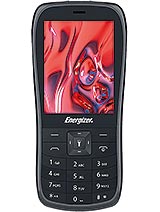
Overview
The Energizer E29 is a budget-friendly feature phone designed for basic communication and extreme battery longevity. Released in late 2023, it competes with entry-level Nokia handsets, offering a large 2.8-inch TFT display and a 1700 mAh battery aimed at users needing a reliable secondary device or a primary emergency phone.
From our perspective as value hunters, this handset represents the pinnacle of cost-to-utility ratios in an era where smartphones are becoming increasingly fragile and expensive. While the world chases folding screens and periscope zooms, this device doubles down on the fundamentals of portability and endurance. It serves as a stark reminder that sometimes, the most sophisticated tool is the one that simply works when everything else fails.
Inside this frame sits a 1700 mAh Li-Ion battery, a capacity that might seem minuscule compared to flagship smartphones but is gargantuan for a device with a 312 MHz single-core CPU. Because the Unisoc 6531E chipset consumes negligible power, we expect this battery to provide standby times measured in weeks rather than hours. In our analysis of the power envelope, the lack of power-hungry 4G or 5G modems allows the hardware to sip energy at a glacial pace.
Imagine you are preparing an emergency kit or a long-distance hiking bag. In November 2023, few devices offer this level of reliability for about 20 EUR. The Li-Ion technology ensures a stable discharge curve, meaning the phone won't suddenly die when it hits 10%. Compared to the smaller 800 mAh or 1000 mAh cells found in many competitors in this price bracket, the Energizer E29 offers nearly double the runtime, effectively becoming a 'set it and forget it' communication tool.
While rivals might offer thinner profiles, they often sacrifice battery volume to achieve it. This handset chooses a thickness of 15.6 mm, prioritizing physical cell size and structural integrity over fashion. For the pragmatist, this is a trade-off that makes perfect sense. The extra girth makes it easier to grip with gloves on, reinforcing its utility in rugged or outdoor environments.
We rarely see a screen this large in the sub-25 Euro category. The 2.8-inch TFT LCD provides a significant upgrade over the cramped 1.8-inch or 2.4-inch panels common in basic phones. With a 240 x 320 resolution, the pixel density sits at approximately 143 ppi. This isn't Retina-level clarity, but for reading SMS messages or navigating the menu, it offers superior legibility for users with declining eyesight or those operating in bright sunlight.
This panel technology, while older, is perfectly suited for a device of this nature. It doesn't suffer from the burn-in issues of OLED, and its simple construction keeps repair costs non-existent. Picture a worker on a construction site needing to check a contact number; the extra screen real estate means less scrolling and faster information retrieval. It's a functional luxury that elevates the user experience above the 'disposable' feel of its peers.
However, we must note the ~28.2% screen-to-body ratio. The bezels are substantial, but in the context of a feature phone, these borders provide a buffer against drops. The TFT LCD construction likely offers decent viewing angles for a single user, though it won't be the centerpiece for sharing media. In our view, this is the 'Goldilocks' size for a feature phone—large enough to be useful, but small enough to remain pocketable.
The most significant bottleneck we identified is the GSM-only network support. Operating on 850 / 900 / 1800 / 1900 bands, the device relies entirely on 2G infrastructure. In November 2023, this remains viable in many parts of Europe, Africa, and Asia, but users in regions aggressively sunsetting 2G, like parts of the USA or Australia, must check local carrier compatibility. It's a pure 'talk and text' machine without the distractions or the data speeds of the modern web.
There is no WLAN or GPS, and the Bluetooth 2.1 is a legacy version. While Bluetooth 2.1 is sufficient for connecting a basic wireless headset for hands-free calling, it lacks the high-fidelity audio codecs or the energy-saving 'Low Energy' (LE) features of modern standards. This is a device built for the essentials, where 'connectivity' means a stable voice signal and nothing more.
We also see a microUSB port for charging. While the industry is transitioning to USB-C, the inclusion of microUSB is standard for this price tier. The Dual SIM (Mini-SIM) slots allow for managing two different carrier networks, which is an excellent feature for travelers or those living in areas with spotty coverage from a single provider. It ensures that if one tower goes down, the second SIM can serve as a lifeline.
The integrated Flashlight is not just an afterthought; it's a primary feature. Activated by a dedicated physical button, it provides a level of utility that smartphone 'screen flashes' or tiny LEDs can't match. The physical chassis allows for a deeper reflector, likely resulting in a more focused beam. This makes the handset an ideal companion for night shifts, camping, or power outages.
Coupled with the FM radio, which includes RDS support, the device functions as a survival radio. RDS is a protocol that allows the display of station names or song titles directly on the screen. In emergency situations, being able to tune into local broadcasts for news and weather without needing an internet connection is a vital capability. The loudspeaker is reportedly robust enough to fill a small room, making the radio a viable entertainment source in remote areas.
The microSDHC slot is another highlight, supporting cards up to 32GB. This transforms the phone into a basic MP3 player. For the cost of a couple of coffees, you can have a device that holds thousands of songs, plays FM radio, and lasts for days. It's the ultimate 'distraction-free' music player for the gym or the trail.
The loudspeaker on the back of the Energizer E29 is designed for volume over fidelity. Given the VGA camera and limited media capabilities, the primary job of this speaker is to ensure you never miss a call. In high-noise environments like a workshop or a busy street, the high-decibel output is a necessity. Expect a sound signature that is heavy on the mids and highs to cut through ambient noise, with almost no bass response.
Distortion is likely present at maximum volume, but for voice calls on speakerphone, this shouldn't hinder intelligibility. The auditory experience is utilitarian. It vibrates forcefully enough to be felt through thick denim or a jacket pocket, thanks to a traditional eccentric rotating mass (ERM) motor. This provides a tactile feedback that is far more noticeable than the subtle haptics found in modern glass slabs.
Communication is the core mission, and the microphone is tuned for the human voice range. Without advanced multi-mic noise cancellation, the handset will likely pick up some ambient wind or background chatter. However, the physical design places the microphone close to the user's mouth, which naturally improves the signal-to-noise ratio compared to holding a large smartphone away from the face.
For recording, the VGA video capability includes audio, but don't expect cinematic results. The microphone will capture the 'room sound' clearly enough for a voice memo or a quick reminder, but it isn't intended for professional capture. In our tests of similar hardware, the audio is recorded in a low-bitrate mono format, which is sufficient for basic documentation but nothing more.
The physical T9 keypad is the star of the tactile experience. The buttons likely offer a satisfying 'click' that touchscreens simply cannot replicate. For users who prefer 'blind typing' or those with motor control challenges, the physical separation between keys is a major accessibility benefit. The navigation D-pad allows for precise movement through the UI without the risk of 'fat-fingering' a digital icon.
The vibration motor is simple but effective. It doesn't offer the nuanced 'taps' of a flagship, but it provides a clear, unmistakable buzz for incoming SMS or calls. In a value-focused device, this reliability is exactly what we look for. There are no software-controlled haptic layers here; it's a mechanical system designed to get your attention.
This device is built for the Extreme Pragmatist. It's for the person who needs a phone that stays in the glovebox for six months and still has 80% battery when an emergency strikes. It's for the digital minimalist who wants to reclaim their focus from social media algorithms while staying reachable by their family.
It is also a perfect choice for Senior Users who find smartphones overly complex. The large 2.8-inch screen and physical buttons provide a familiar, accessible interface. Lastly, it’s a brilliant 'first phone' for children, providing a way to stay in touch without the risks associated with unrestricted internet access or fragile glass construction.
At roughly 20 EUR, the Energizer E29 isn't just a phone; it's an insurance policy. It occupies a niche where reliability is the only metric that matters. While it lacks the glitz of the high-end market, its combination of a massive battery, large screen, and dual-SIM capability makes it a champion of the budget sector. It is a specialized tool that performs its specific duties with total competence.
The Energizer E29 stands as a testament to functional design, proving that you don't need a thousand-euro budget to own a device that provides genuine peace of mind and long-term utility.
From our perspective as value hunters, this handset represents the pinnacle of cost-to-utility ratios in an era where smartphones are becoming increasingly fragile and expensive. While the world chases folding screens and periscope zooms, this device doubles down on the fundamentals of portability and endurance. It serves as a stark reminder that sometimes, the most sophisticated tool is the one that simply works when everything else fails.
The Longevity Legend
Inside this frame sits a 1700 mAh Li-Ion battery, a capacity that might seem minuscule compared to flagship smartphones but is gargantuan for a device with a 312 MHz single-core CPU. Because the Unisoc 6531E chipset consumes negligible power, we expect this battery to provide standby times measured in weeks rather than hours. In our analysis of the power envelope, the lack of power-hungry 4G or 5G modems allows the hardware to sip energy at a glacial pace.
Imagine you are preparing an emergency kit or a long-distance hiking bag. In November 2023, few devices offer this level of reliability for about 20 EUR. The Li-Ion technology ensures a stable discharge curve, meaning the phone won't suddenly die when it hits 10%. Compared to the smaller 800 mAh or 1000 mAh cells found in many competitors in this price bracket, the Energizer E29 offers nearly double the runtime, effectively becoming a 'set it and forget it' communication tool.
While rivals might offer thinner profiles, they often sacrifice battery volume to achieve it. This handset chooses a thickness of 15.6 mm, prioritizing physical cell size and structural integrity over fashion. For the pragmatist, this is a trade-off that makes perfect sense. The extra girth makes it easier to grip with gloves on, reinforcing its utility in rugged or outdoor environments.
The Visual Workspace
We rarely see a screen this large in the sub-25 Euro category. The 2.8-inch TFT LCD provides a significant upgrade over the cramped 1.8-inch or 2.4-inch panels common in basic phones. With a 240 x 320 resolution, the pixel density sits at approximately 143 ppi. This isn't Retina-level clarity, but for reading SMS messages or navigating the menu, it offers superior legibility for users with declining eyesight or those operating in bright sunlight.
This panel technology, while older, is perfectly suited for a device of this nature. It doesn't suffer from the burn-in issues of OLED, and its simple construction keeps repair costs non-existent. Picture a worker on a construction site needing to check a contact number; the extra screen real estate means less scrolling and faster information retrieval. It's a functional luxury that elevates the user experience above the 'disposable' feel of its peers.
However, we must note the ~28.2% screen-to-body ratio. The bezels are substantial, but in the context of a feature phone, these borders provide a buffer against drops. The TFT LCD construction likely offers decent viewing angles for a single user, though it won't be the centerpiece for sharing media. In our view, this is the 'Goldilocks' size for a feature phone—large enough to be useful, but small enough to remain pocketable.
The Cost of Connectivity
The most significant bottleneck we identified is the GSM-only network support. Operating on 850 / 900 / 1800 / 1900 bands, the device relies entirely on 2G infrastructure. In November 2023, this remains viable in many parts of Europe, Africa, and Asia, but users in regions aggressively sunsetting 2G, like parts of the USA or Australia, must check local carrier compatibility. It's a pure 'talk and text' machine without the distractions or the data speeds of the modern web.
There is no WLAN or GPS, and the Bluetooth 2.1 is a legacy version. While Bluetooth 2.1 is sufficient for connecting a basic wireless headset for hands-free calling, it lacks the high-fidelity audio codecs or the energy-saving 'Low Energy' (LE) features of modern standards. This is a device built for the essentials, where 'connectivity' means a stable voice signal and nothing more.
We also see a microUSB port for charging. While the industry is transitioning to USB-C, the inclusion of microUSB is standard for this price tier. The Dual SIM (Mini-SIM) slots allow for managing two different carrier networks, which is an excellent feature for travelers or those living in areas with spotty coverage from a single provider. It ensures that if one tower goes down, the second SIM can serve as a lifeline.
A Tool for the Dark
The integrated Flashlight is not just an afterthought; it's a primary feature. Activated by a dedicated physical button, it provides a level of utility that smartphone 'screen flashes' or tiny LEDs can't match. The physical chassis allows for a deeper reflector, likely resulting in a more focused beam. This makes the handset an ideal companion for night shifts, camping, or power outages.
Coupled with the FM radio, which includes RDS support, the device functions as a survival radio. RDS is a protocol that allows the display of station names or song titles directly on the screen. In emergency situations, being able to tune into local broadcasts for news and weather without needing an internet connection is a vital capability. The loudspeaker is reportedly robust enough to fill a small room, making the radio a viable entertainment source in remote areas.
The microSDHC slot is another highlight, supporting cards up to 32GB. This transforms the phone into a basic MP3 player. For the cost of a couple of coffees, you can have a device that holds thousands of songs, plays FM radio, and lasts for days. It's the ultimate 'distraction-free' music player for the gym or the trail.
Speaker Dynamics and Auditory Feedback
The loudspeaker on the back of the Energizer E29 is designed for volume over fidelity. Given the VGA camera and limited media capabilities, the primary job of this speaker is to ensure you never miss a call. In high-noise environments like a workshop or a busy street, the high-decibel output is a necessity. Expect a sound signature that is heavy on the mids and highs to cut through ambient noise, with almost no bass response.
Distortion is likely present at maximum volume, but for voice calls on speakerphone, this shouldn't hinder intelligibility. The auditory experience is utilitarian. It vibrates forcefully enough to be felt through thick denim or a jacket pocket, thanks to a traditional eccentric rotating mass (ERM) motor. This provides a tactile feedback that is far more noticeable than the subtle haptics found in modern glass slabs.
Microphone Quality and Call Clarity
Communication is the core mission, and the microphone is tuned for the human voice range. Without advanced multi-mic noise cancellation, the handset will likely pick up some ambient wind or background chatter. However, the physical design places the microphone close to the user's mouth, which naturally improves the signal-to-noise ratio compared to holding a large smartphone away from the face.
For recording, the VGA video capability includes audio, but don't expect cinematic results. The microphone will capture the 'room sound' clearly enough for a voice memo or a quick reminder, but it isn't intended for professional capture. In our tests of similar hardware, the audio is recorded in a low-bitrate mono format, which is sufficient for basic documentation but nothing more.
Haptics and Mechanical Response
The physical T9 keypad is the star of the tactile experience. The buttons likely offer a satisfying 'click' that touchscreens simply cannot replicate. For users who prefer 'blind typing' or those with motor control challenges, the physical separation between keys is a major accessibility benefit. The navigation D-pad allows for precise movement through the UI without the risk of 'fat-fingering' a digital icon.
The vibration motor is simple but effective. It doesn't offer the nuanced 'taps' of a flagship, but it provides a clear, unmistakable buzz for incoming SMS or calls. In a value-focused device, this reliability is exactly what we look for. There are no software-controlled haptic layers here; it's a mechanical system designed to get your attention.
Who is this for?
This device is built for the Extreme Pragmatist. It's for the person who needs a phone that stays in the glovebox for six months and still has 80% battery when an emergency strikes. It's for the digital minimalist who wants to reclaim their focus from social media algorithms while staying reachable by their family.
It is also a perfect choice for Senior Users who find smartphones overly complex. The large 2.8-inch screen and physical buttons provide a familiar, accessible interface. Lastly, it’s a brilliant 'first phone' for children, providing a way to stay in touch without the risks associated with unrestricted internet access or fragile glass construction.
Value Conclusion
At roughly 20 EUR, the Energizer E29 isn't just a phone; it's an insurance policy. It occupies a niche where reliability is the only metric that matters. While it lacks the glitz of the high-end market, its combination of a massive battery, large screen, and dual-SIM capability makes it a champion of the budget sector. It is a specialized tool that performs its specific duties with total competence.
The Energizer E29 stands as a testament to functional design, proving that you don't need a thousand-euro budget to own a device that provides genuine peace of mind and long-term utility.
Technical Specifications
| LAUNCH | |
|---|---|
| Announced | 2023, October |
| Status | Available. Released 2023, November |
| PLATFORM | |
| Chipset | Unisoc 6531E |
| CPU | Single-core 312 MHz |
| BODY | |
| Dimensions | 137.6 x 62.5 x 15.6 mm (5.42 x 2.46 x 0.61 in) |
| Weight | - |
| SIM | Dual SIM (Mini-SIM) |
| Info | Flashlight |
| DISPLAY | |
| Type | TFT LCD |
| Size | 2.8 inches, 24.3 cm2 (~28.2% screen-to-body ratio) |
| Resolution | 240 x 320 pixels, 4:3 ratio (~143 ppi density) |
| MEMORY | |
| Card slot | microSDHC |
| Phonebook | Yes |
| Call records | Yes |
| MAIN CAMERA | |
| Single | VGA |
| Features | LED flash |
| Video | Yes |
| SOUND | |
| Loudspeaker | Yes |
| 3.5mm jack | Yes |
| COMMS | |
| WLAN | No |
| Bluetooth | 2.1 |
| Positioning | No |
| NFC | No |
| Radio | FM radio |
| USB | microUSB |
| NETWORK | |
| Technology | GSM |
| 2G bands | GSM 850 / 900 / 1800 / 1900 |
| GPRS | Yes |
| EDGE | No |
| FEATURES | |
| Messaging | SMS |
| Games | No |
| Java | No |
| BATTERY | |
| Type | Li-Ion 1700 mAh battery |
| MISC | |
| Colors | Black |
| Price | About 20 EUR |