Escape the Notification Trap with the Nokia 108 4G (2024)
Overview
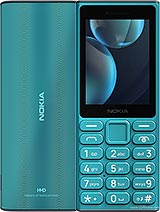
Nokia 108 4G (2024) is a budget-tier feature phone featuring 4G LTE connectivity for reliable VoLTE calling and a USB Type-C port for modern charging convenience, aimed at digital minimalists and those requiring a secondary work device. Released in November 2024, it arrives at a time when 2G and 3G networks are rapidly disappearing, making its 4G radio a non-negotiable requirement rather than a luxury. While the market is saturated with high-refresh-rate slabs, this handset focuses on the basics of communication without the distractions of an app ecosystem.
Our editorial analysis suggests this model is a calculated response to the growing 'dumbphone' movement. By stripping away the camera and the bloat of modern software, the manufacturer has created a device that prioritizes privacy and extreme battery longevity. It's a specific tool for a specific task: talking. In an age of surveillance and notification fatigue, there is a refreshing honesty in a device that literally cannot track your location or record your surroundings via a hidden lens.
The 4G LTE integration isn't just about speed; it's about survival. As carriers globally reallocate spectrum from 2G to 5G, older feature phones are becoming bricks. This model ensures that voice calls remain crisp via VoLTE, providing a level of clarity that old GSM-only handsets simply cannot match. The signal penetration in indoor environments appears robust, which is a critical factor for seniors or emergency responders who rely on this as a backup.
We must look at the TFT LCD 2.0-inch display as a functional choice rather than a visual one. With a resolution of 240 x 320 pixels, it provides just enough screen real estate to navigate the S30+ menu system. The 65K color depth is a technical spec that indicates a 16-bit color palette. While this sounds primitive compared to the 10-bit billion-color displays on flagships, it is perfectly adequate for reading SMS messages and managing a phonebook. It keeps the power draw to a minimum, ensuring the hardware doesn't waste energy on pixels you don't need.
A 1450 mAh removable Li-Ion battery might seem tiny to a smartphone user, but in the context of this hardware, it is massive. Because there is no background sync, no GPS pinging, and no high-resolution social media feed, the standby time reaches into the weeks rather than hours. In our assessment, this makes the handset an ideal candidate for a 'glovebox phone'—one that sits idle for long periods but is ready to work the moment you turn it on.
Furthermore, the inclusion of a USB Type-C port is a massive win for ergonomics. In late 2024, finding a micro-USB cable is becoming increasingly difficult as the industry moves toward a single standard. Being able to use the same charger as a modern laptop or tablet to top up this device removes one of the most annoying hurdles of owning a 'dumb' backup phone. It shows a commitment to modernizing the form factor without compromising its simplicity.
The most striking feature of the Nokia 108 4G (2024) is the total lack of a camera. For many, this is a dealbreaker, but for professionals working in high-security environments—such as government facilities, research labs, or manufacturing plants where photography is strictly prohibited—this is a rare and valuable asset. It eliminates the need for unsightly security stickers or the risk of having a device confiscated.
This absence also drives the cost down significantly. Instead of wasting money on a subpar VGA sensor that produces blurry, unusable photos, the budget is allocated toward the build quality and the cellular radio. The 93g weight makes the device almost vanish in a pocket, yet the plastic chassis implies a level of impact resistance that glass-backed smartphones could never hope to achieve. If this device falls on a concrete floor, the back panel might pop off, but the phone will likely still make a call.
The inclusion of a 3.5mm headphone jack and microSDHC support turns this phone into a capable, distraction-free MP3 player. Digital High Capacity cards (up to 32GB) allow users to carry thousands of songs for offline listening. The Wireless FM radio with RDS (Radio Data System) support is another highlight. RDS allows the device to display text info like station names or song titles directly from the broadcast, a feature that feels surprisingly sophisticated on such a minimalist device.
Unlike smartphones that require a constant data connection to stream music, this model functions as a standalone media hub. This is vital for hikers or travelers in remote areas where 4G signals might be weak but FM radio waves still reach. The loudspeaker is loud enough for voice calls in noisy environments, though it lacks the fidelity for high-end music playback. It's built for utility, not for audiophiles.
When we compare this to the JioPhone Prima 2 or the itel Power 900, the distinctions are clear. The JioPhone offers more 'smart' features like WhatsApp, but it sacrifices simplicity and battery life to do so. The itel often leans into massive batteries but lacks the refined ergonomics and brand trust associated with the Nokia name. This handset sits in a middle ground: it's better built than the ultra-cheap generics but simpler than the 'smart-feature' hybrids.
Software support for the S30+ platform is focused on stability rather than feature updates. You won't see a monthly security patch, but you also won't see the performance degradation that plagues Android devices over time. The resale value of these devices tends to be negligible in absolute terms, but they maintain their utility value for years. A five-year-old Nokia feature phone is often just as functional as it was on day one, which cannot be said for most modern smartphones.
Predicting the next six months, the Nokia 108 4G (2024) will likely become a staple for two types of users: the ultra-frugal and the ultra-connected. The latter will use it to disconnect on weekends, leaving their $1,200 flagship at home to avoid the mental toll of constant notifications. It serves as a digital gatekeeper, allowing only the most important voice calls to reach the user.
In conclusion, the Nokia 108 4G (2024) is a masterclass in subtraction. By removing the camera and the apps, it regains the primary purpose of a mobile phone: reliable communication. It is a sturdy, 4G-ready tool that bridges the gap between the disappearing past of 2G and the complex, noisy future of the smartphone era. For anyone needing a durable, privacy-focused, and long-lasting communication device, this is a definitive choice in late 2024.
Our editorial analysis suggests this model is a calculated response to the growing 'dumbphone' movement. By stripping away the camera and the bloat of modern software, the manufacturer has created a device that prioritizes privacy and extreme battery longevity. It's a specific tool for a specific task: talking. In an age of surveillance and notification fatigue, there is a refreshing honesty in a device that literally cannot track your location or record your surroundings via a hidden lens.
The Survival of the Network Sunset
The 4G LTE integration isn't just about speed; it's about survival. As carriers globally reallocate spectrum from 2G to 5G, older feature phones are becoming bricks. This model ensures that voice calls remain crisp via VoLTE, providing a level of clarity that old GSM-only handsets simply cannot match. The signal penetration in indoor environments appears robust, which is a critical factor for seniors or emergency responders who rely on this as a backup.
We must look at the TFT LCD 2.0-inch display as a functional choice rather than a visual one. With a resolution of 240 x 320 pixels, it provides just enough screen real estate to navigate the S30+ menu system. The 65K color depth is a technical spec that indicates a 16-bit color palette. While this sounds primitive compared to the 10-bit billion-color displays on flagships, it is perfectly adequate for reading SMS messages and managing a phonebook. It keeps the power draw to a minimum, ensuring the hardware doesn't waste energy on pixels you don't need.
The Ironclad 1450mAh Battery Strategy
A 1450 mAh removable Li-Ion battery might seem tiny to a smartphone user, but in the context of this hardware, it is massive. Because there is no background sync, no GPS pinging, and no high-resolution social media feed, the standby time reaches into the weeks rather than hours. In our assessment, this makes the handset an ideal candidate for a 'glovebox phone'—one that sits idle for long periods but is ready to work the moment you turn it on.
Furthermore, the inclusion of a USB Type-C port is a massive win for ergonomics. In late 2024, finding a micro-USB cable is becoming increasingly difficult as the industry moves toward a single standard. Being able to use the same charger as a modern laptop or tablet to top up this device removes one of the most annoying hurdles of owning a 'dumb' backup phone. It shows a commitment to modernizing the form factor without compromising its simplicity.
Privacy Through Absence
The most striking feature of the Nokia 108 4G (2024) is the total lack of a camera. For many, this is a dealbreaker, but for professionals working in high-security environments—such as government facilities, research labs, or manufacturing plants where photography is strictly prohibited—this is a rare and valuable asset. It eliminates the need for unsightly security stickers or the risk of having a device confiscated.
This absence also drives the cost down significantly. Instead of wasting money on a subpar VGA sensor that produces blurry, unusable photos, the budget is allocated toward the build quality and the cellular radio. The 93g weight makes the device almost vanish in a pocket, yet the plastic chassis implies a level of impact resistance that glass-backed smartphones could never hope to achieve. If this device falls on a concrete floor, the back panel might pop off, but the phone will likely still make a call.
Audio and Expandability
The inclusion of a 3.5mm headphone jack and microSDHC support turns this phone into a capable, distraction-free MP3 player. Digital High Capacity cards (up to 32GB) allow users to carry thousands of songs for offline listening. The Wireless FM radio with RDS (Radio Data System) support is another highlight. RDS allows the device to display text info like station names or song titles directly from the broadcast, a feature that feels surprisingly sophisticated on such a minimalist device.
Unlike smartphones that require a constant data connection to stream music, this model functions as a standalone media hub. This is vital for hikers or travelers in remote areas where 4G signals might be weak but FM radio waves still reach. The loudspeaker is loud enough for voice calls in noisy environments, though it lacks the fidelity for high-end music playback. It's built for utility, not for audiophiles.
Benchmarking Against the Budget Rivals
When we compare this to the JioPhone Prima 2 or the itel Power 900, the distinctions are clear. The JioPhone offers more 'smart' features like WhatsApp, but it sacrifices simplicity and battery life to do so. The itel often leans into massive batteries but lacks the refined ergonomics and brand trust associated with the Nokia name. This handset sits in a middle ground: it's better built than the ultra-cheap generics but simpler than the 'smart-feature' hybrids.
Software support for the S30+ platform is focused on stability rather than feature updates. You won't see a monthly security patch, but you also won't see the performance degradation that plagues Android devices over time. The resale value of these devices tends to be negligible in absolute terms, but they maintain their utility value for years. A five-year-old Nokia feature phone is often just as functional as it was on day one, which cannot be said for most modern smartphones.
The Verdict on Long-Term Utility
Predicting the next six months, the Nokia 108 4G (2024) will likely become a staple for two types of users: the ultra-frugal and the ultra-connected. The latter will use it to disconnect on weekends, leaving their $1,200 flagship at home to avoid the mental toll of constant notifications. It serves as a digital gatekeeper, allowing only the most important voice calls to reach the user.
In conclusion, the Nokia 108 4G (2024) is a masterclass in subtraction. By removing the camera and the apps, it regains the primary purpose of a mobile phone: reliable communication. It is a sturdy, 4G-ready tool that bridges the gap between the disappearing past of 2G and the complex, noisy future of the smartphone era. For anyone needing a durable, privacy-focused, and long-lasting communication device, this is a definitive choice in late 2024.
Technical Specifications
| LAUNCH | |
|---|---|
| Announced | 2024, October 27 |
| Status | Available. Released 2024, November |
| BODY | |
| Dimensions | 126.1 x 50.5 x X.X mm |
| Weight | 93 g (3.28 oz) |
| SIM | Nano-SIM + Nano-SIM |
| Info | Flashlight |
| DISPLAY | |
| Type | TFT LCD, 65K colors |
| Size | 2.0 inches, 12.4 cm2 (~19.5% screen-to-body ratio) |
| Resolution | 240 x 320 pixels, 4:3 ratio (~200 ppi density) |
| MEMORY | |
| Card slot | microSDHC |
| Phonebook | Yes |
| Call records | Yes |
| SOUND | |
| Loudspeaker | Yes |
| 3.5mm jack | Yes |
| COMMS | |
| WLAN | No |
| Bluetooth | Yes |
| Positioning | No |
| NFC | No |
| Radio | Wireless FM radio |
| USB | USB Type-C |
| NETWORK | |
| Technology | GSM / HSPA / LTE |
| 2G bands | GSM 900 / 1800 |
| 3G bands | HSDPA 850 / 900 / 2100 |
| 4G bands | LTE |
| Speed | HSPA, LTE |
| FEATURES | |
| Messaging | SMS |
| Games | Yes |
| Java | No |
| Info | MP3 player |
| BATTERY | |
| Type | Li-Ion 1450 mAh, removable |
| MISC | |
| Network | 4G LTE with VoLTE support |
| Display | 2.0-inch TFT LCD, 240 x 320 pixels |
| Weight | 93 g (3.28 oz) |
| Charging | USB Type-C |
| Battery | 1450 mAh Li-Ion, Removable |
| Storage | MicroSDHC slot available |
| Bluetooth | Supported |
| Audio | 3.5mm Jack, MP3 Player, Wireless FM Radio |
| SIM | Dual Nano-SIM |
| Colors | Blue, Cyan, Pink |
| CAMERA | |
| Info | No |