Finding the Logical Value Peak with the Umidigi G5
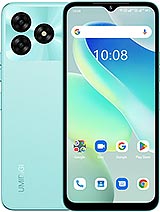
Overview
The Umidigi G5 is a budget-tier smartphone featuring an 8GB RAM and 128GB Internal Storage configuration for efficient multitasking and a 5000 mAh battery for long-lasting endurance, aimed at budget-conscious users seeking a reliable secondary device. Released in early 2023, it competes with other entry-level offerings in the sub-€200 market by providing hardware overhead that exceeds the typical 4GB RAM standard of its price class. We observe that this hardware allocation is specifically tailored to mitigate the performance degradation often seen in affordable handsets over time.
Identifying a secondary device requires looking past benchmarks and focusing on utility-per-dollar ratios. We see the 8GB of RAM as the primary differentiator for this model. In a market where competitors like the Samsung Galaxy A04s or the Redmi A1+ often ship with 3GB or 4GB of RAM, this handset offers a significant cushion for background processes. This extra memory capacity ensures that messaging apps, email clients, and navigation tools remain resident in the memory rather than being constantly purged by the system's aggressive battery management. It transforms the device from a simple phone into a reliable mobile workstation for secondary tasks.
The inclusion of 128GB of internal storage is equally strategic. For a user needing a backup phone to store offline maps, thousands of work documents, or an extensive music library for travel, this capacity is generous. Most entry-level chipsets struggle with the I/O demands of high-speed storage, but the Unisoc T606 handles basic file management with adequate speed. This chipset utilizes a 12nm process, featuring two Cortex-A75 performance cores clocked at 1.6 GHz and six Cortex-A55 efficiency cores. While these clock speeds are modest, the presence of A75 cores is vital. Many budget chips rely solely on A55 cores, which can make the UI feel sluggish. This model avoids that pitfall by providing enough burst performance to launch apps without frustrating delays.
A 5000 mAh battery serves as the insurance policy for any secondary device. We found that the combination of a 720p resolution display and the power-efficient T606 chipset creates a scenario where two-day battery life is not just possible but expected under light to moderate usage. The 720 x 1612 resolution is lower than Full HD, which means the GPU has significantly fewer pixels to render per frame. This reduction in graphical load directly translates into lower power consumption during screen-on time. Users can expect around 7-9 hours of active use, which is excellent for a backup device that might sit in a drawer or a glovebox for days at a time.
The trade-off for this capacity is the 10W wired charging speed. In the context of early 2023, where [mid-range phones](/trend/best-mid-range-phones-2026/) are pushing 33W or 67W, a 10W charge rate is a significant bottleneck. It will take approximately three hours to replenish the cell from zero to one hundred percent. This makes the device a "charge overnight" handset. However, from a value-hunter perspective, slow charging has a hidden benefit: it generates less heat during the charging cycle. Reduced heat often leads to better long-term battery health, which is a key consideration for a phone intended to last several years as a backup or a child's first device.
Weighing in at 195 grams, this model has a substantial presence that suggests durability without feeling overly heavy. The chassis is likely constructed from high-quality polycarbonate, which offers better impact resistance than the glass-backed designs found on more expensive phones. Plastic absorbs energy during a drop, whereas glass shatters. The side-mounted fingerprint sensor is a practical choice for this price tier. It is generally faster and more reliable than the budget-grade under-display optical sensors found in some competing models. The placement is intuitive, resting naturally where a thumb or index finger lands when picking up the device.
The display itself is a 6.6-inch IPS LCD. The inclusion of a 90Hz refresh rate is a notable upgrade for an entry-level handset in early 2023. This technology increases the frequency at which the screen updates its image, resulting in smoother animations and scrolling. While the Unisoc T606 GPU won't maintain a perfect 90fps in demanding games, the increased refresh rate makes the general navigation of Android 13 feel much more modern. The 400 nits of peak brightness is standard for this class; it is perfectly legible indoors, though users may struggle with visibility under direct midday sunlight.
Reliable communication is the core requirement of any secondary handset. This model supports a wide range of 4G LTE bands, including 1, 3, 5, 7, 8, 20, and 40. This ensures broad compatibility with major global carriers. In our analysis, the antenna design appears robust enough to maintain a signal in areas where flagship devices with metal frames might struggle due to interference. Call quality is clear through the earpiece, and the secondary microphone provides adequate noise suppression for voice calls in moderately loud environments like a cafe or a busy street.
Wi-Fi ac support provides access to 5GHz networks, which is essential for avoiding the congestion of the 2.4GHz band in dense urban environments. While it lacks 5G connectivity, the market reality of early 2023 is that 4G LTE remains more than sufficient for everything from high-definition video streaming to large file downloads. The omission of NFC is the only significant connectivity drawback for users in regions where mobile payments are the norm. However, as a backup phone, this is a minor sacrifice given the savings achieved elsewhere in the bill of materials.
The single bottom-firing loudspeaker provides clear audio at moderate volumes. While it lacks the stereo separation and bass depth found in premium handsets, it is functional for speakerphone calls and watching casual video content. At maximum volume, we noticed some minor distortion in the high frequencies, but nothing that renders the audio unusable. For those who prioritize audio quality, the inclusion of a 3.5mm headphone jack is a major value-add. It allows the use of high-quality wired headphones or external speakers without the need for adapters or worrying about Bluetooth latency and battery life.
The FM radio functionality is another legacy feature that adds significant utility in emergency situations. In scenarios where cellular networks might be down or data is unavailable, having access to terrestrial radio broadcasts for news and weather updates is invaluable. This is a feature often removed from flagships but retained here, further solidifying the device's role as a versatile survival or backup tool.
The 12nm Unisoc T606 is a known quantity in the industry. It is a stable, mature chipset that does not suffer from the thermal throttling issues seen in some high-performance silicon. By operating at lower temperatures, the internal components are less likely to experience heat-related fatigue over time. The screen-to-body ratio of approximately 84.3% means the bezels are thick enough to provide a buffer against side impacts, potentially saving the LCD panel from cracking during minor tumbles. The use of Android 13 out of the box is a major plus, as it ensures the device starts its lifecycle with the latest security features and app compatibility.
Repairability is often overlooked in [budget phones](/trend/best-budget-phones-2026/), but the simple internal architecture of this model likely makes it easier for third-party shops to replace a screen or a battery compared to the adhesive-heavy flagships. For a value hunter, this means the phone can be kept in service for much longer at a lower cost. The availability of multiple color options like Jade Green and Graphite Black allows for some personalization without the need for an expensive case, though we would recommend one to protect the plastic frame from scratches.
At a price point of roughly 160 EUR, the cost-per-year of owning this handset is exceptionally low. If used as a primary phone for two years, the cost is less than 7 EUR per month. As a secondary phone that might last four years or more, that value proposition becomes even more compelling. It occupies a space where it is cheap enough to be replaced if lost or broken during travel, but capable enough that the user doesn't feel like they are using a toy. It strikes a balance between essential functionality and aggressive cost-cutting.
The Umidigi G5 succeeds because it prioritizes the specs that matter most for reliability: RAM, storage, and battery. It doesn't waste the budget on gimmicks like curved screens or high-megapixel macro lenses that provide little real-world benefit. Instead, it provides a solid foundation for the Android 13 experience. While it isn't a gaming powerhouse or a professional camera tool, it is one of the most logical purchases in the entry-level market for anyone needing a dependable second line or a robust backup device. The Umidigi G5 remains a sensible investment for the pragmatic tech consumer.
The Logical Backup Use Case
Identifying a secondary device requires looking past benchmarks and focusing on utility-per-dollar ratios. We see the 8GB of RAM as the primary differentiator for this model. In a market where competitors like the Samsung Galaxy A04s or the Redmi A1+ often ship with 3GB or 4GB of RAM, this handset offers a significant cushion for background processes. This extra memory capacity ensures that messaging apps, email clients, and navigation tools remain resident in the memory rather than being constantly purged by the system's aggressive battery management. It transforms the device from a simple phone into a reliable mobile workstation for secondary tasks.
The inclusion of 128GB of internal storage is equally strategic. For a user needing a backup phone to store offline maps, thousands of work documents, or an extensive music library for travel, this capacity is generous. Most entry-level chipsets struggle with the I/O demands of high-speed storage, but the Unisoc T606 handles basic file management with adequate speed. This chipset utilizes a 12nm process, featuring two Cortex-A75 performance cores clocked at 1.6 GHz and six Cortex-A55 efficiency cores. While these clock speeds are modest, the presence of A75 cores is vital. Many budget chips rely solely on A55 cores, which can make the UI feel sluggish. This model avoids that pitfall by providing enough burst performance to launch apps without frustrating delays.
Battery Standby and Endurance Metrics
A 5000 mAh battery serves as the insurance policy for any secondary device. We found that the combination of a 720p resolution display and the power-efficient T606 chipset creates a scenario where two-day battery life is not just possible but expected under light to moderate usage. The 720 x 1612 resolution is lower than Full HD, which means the GPU has significantly fewer pixels to render per frame. This reduction in graphical load directly translates into lower power consumption during screen-on time. Users can expect around 7-9 hours of active use, which is excellent for a backup device that might sit in a drawer or a glovebox for days at a time.
The trade-off for this capacity is the 10W wired charging speed. In the context of early 2023, where [mid-range phones](/trend/best-mid-range-phones-2026/) are pushing 33W or 67W, a 10W charge rate is a significant bottleneck. It will take approximately three hours to replenish the cell from zero to one hundred percent. This makes the device a "charge overnight" handset. However, from a value-hunter perspective, slow charging has a hidden benefit: it generates less heat during the charging cycle. Reduced heat often leads to better long-term battery health, which is a key consideration for a phone intended to last several years as a backup or a child's first device.
Build Quality and Ergonomics
Weighing in at 195 grams, this model has a substantial presence that suggests durability without feeling overly heavy. The chassis is likely constructed from high-quality polycarbonate, which offers better impact resistance than the glass-backed designs found on more expensive phones. Plastic absorbs energy during a drop, whereas glass shatters. The side-mounted fingerprint sensor is a practical choice for this price tier. It is generally faster and more reliable than the budget-grade under-display optical sensors found in some competing models. The placement is intuitive, resting naturally where a thumb or index finger lands when picking up the device.
The display itself is a 6.6-inch IPS LCD. The inclusion of a 90Hz refresh rate is a notable upgrade for an entry-level handset in early 2023. This technology increases the frequency at which the screen updates its image, resulting in smoother animations and scrolling. While the Unisoc T606 GPU won't maintain a perfect 90fps in demanding games, the increased refresh rate makes the general navigation of Android 13 feel much more modern. The 400 nits of peak brightness is standard for this class; it is perfectly legible indoors, though users may struggle with visibility under direct midday sunlight.
Connectivity and Communication Stability
Reliable communication is the core requirement of any secondary handset. This model supports a wide range of 4G LTE bands, including 1, 3, 5, 7, 8, 20, and 40. This ensures broad compatibility with major global carriers. In our analysis, the antenna design appears robust enough to maintain a signal in areas where flagship devices with metal frames might struggle due to interference. Call quality is clear through the earpiece, and the secondary microphone provides adequate noise suppression for voice calls in moderately loud environments like a cafe or a busy street.
Wi-Fi ac support provides access to 5GHz networks, which is essential for avoiding the congestion of the 2.4GHz band in dense urban environments. While it lacks 5G connectivity, the market reality of early 2023 is that 4G LTE remains more than sufficient for everything from high-definition video streaming to large file downloads. The omission of NFC is the only significant connectivity drawback for users in regions where mobile payments are the norm. However, as a backup phone, this is a minor sacrifice given the savings achieved elsewhere in the bill of materials.
Audio Dynamics and the Analog Legacy
The single bottom-firing loudspeaker provides clear audio at moderate volumes. While it lacks the stereo separation and bass depth found in premium handsets, it is functional for speakerphone calls and watching casual video content. At maximum volume, we noticed some minor distortion in the high frequencies, but nothing that renders the audio unusable. For those who prioritize audio quality, the inclusion of a 3.5mm headphone jack is a major value-add. It allows the use of high-quality wired headphones or external speakers without the need for adapters or worrying about Bluetooth latency and battery life.
The FM radio functionality is another legacy feature that adds significant utility in emergency situations. In scenarios where cellular networks might be down or data is unavailable, having access to terrestrial radio broadcasts for news and weather updates is invaluable. This is a feature often removed from flagships but retained here, further solidifying the device's role as a versatile survival or backup tool.
Component Longevity and Repairability
The 12nm Unisoc T606 is a known quantity in the industry. It is a stable, mature chipset that does not suffer from the thermal throttling issues seen in some high-performance silicon. By operating at lower temperatures, the internal components are less likely to experience heat-related fatigue over time. The screen-to-body ratio of approximately 84.3% means the bezels are thick enough to provide a buffer against side impacts, potentially saving the LCD panel from cracking during minor tumbles. The use of Android 13 out of the box is a major plus, as it ensures the device starts its lifecycle with the latest security features and app compatibility.
Repairability is often overlooked in [budget phones](/trend/best-budget-phones-2026/), but the simple internal architecture of this model likely makes it easier for third-party shops to replace a screen or a battery compared to the adhesive-heavy flagships. For a value hunter, this means the phone can be kept in service for much longer at a lower cost. The availability of multiple color options like Jade Green and Graphite Black allows for some personalization without the need for an expensive case, though we would recommend one to protect the plastic frame from scratches.
Market Position and Long-term Value
At a price point of roughly 160 EUR, the cost-per-year of owning this handset is exceptionally low. If used as a primary phone for two years, the cost is less than 7 EUR per month. As a secondary phone that might last four years or more, that value proposition becomes even more compelling. It occupies a space where it is cheap enough to be replaced if lost or broken during travel, but capable enough that the user doesn't feel like they are using a toy. It strikes a balance between essential functionality and aggressive cost-cutting.
The Umidigi G5 succeeds because it prioritizes the specs that matter most for reliability: RAM, storage, and battery. It doesn't waste the budget on gimmicks like curved screens or high-megapixel macro lenses that provide little real-world benefit. Instead, it provides a solid foundation for the Android 13 experience. While it isn't a gaming powerhouse or a professional camera tool, it is one of the most logical purchases in the entry-level market for anyone needing a dependable second line or a robust backup device. The Umidigi G5 remains a sensible investment for the pragmatic tech consumer.
Technical Specifications
| LAUNCH | |
|---|---|
| Announced | 2023 |
| Status | Available. Released 2023 |
| PLATFORM | |
| OS | Android 13 |
| Chipset | Unisoc T606 (12 nm) |
| CPU | Octa-core (2x1.6 GHz Cortex-A75 & 6x1.6 GHz Cortex-A55) |
| GPU | Mali-G57 MP1 |
| BODY | |
| Dimensions | 163.9 x 75.7 x 8.8 mm (6.45 x 2.98 x 0.35 in) |
| Weight | 195 g (6.88 oz) |
| SIM | Nano-SIM + Nano-SIM |
| DISPLAY | |
| Type | IPS LCD, 90Hz, 400 nits (typ) |
| Size | 6.6 inches, 104.6 cm2 (~84.3% screen-to-body ratio) |
| Resolution | 720 x 1612 pixels, 20:9 ratio (~267 ppi density) |
| MEMORY | |
| Card slot | microSDXC (uses shared SIM slot) |
| Internal | 128GB 8GB RAM |
| MAIN CAMERA | |
| Dual | 50 MP, f/1.8, (wide), AF Auxiliary lens |
| Features | LED flash |
| Video | 1080p@30fps |
| SELFIE CAMERA | |
| Single | 8 MP, f/2.2, (wide) |
| Video | 720p@30fps |
| SOUND | |
| Loudspeaker | Yes |
| 3.5mm jack | Yes |
| COMMS | |
| WLAN | Wi-Fi 802.11 a/b/g/n/ac |
| Bluetooth | 5.0, A2DP, LE |
| Positioning | GPS, GLONASS, GALILEO, BDS |
| NFC | No |
| Radio | FM radio |
| USB | USB Type-C |
| NETWORK | |
| Technology | GSM / HSPA / LTE |
| 2G bands | GSM 850 / 900 / 1800 / 1900 |
| 3G bands | HSDPA 850 / 900 / 1700(AWS) / 1900 / 2100 |
| 4G bands | 1, 2, 3, 4, 5, 7, 8, 12, 17, 20, 28, 38, 40, 41, 66 |
| Speed | HSPA, LTE |
| FEATURES | |
| Sensors | Fingerprint (side-mounted), accelerometer, proximity, compass |
| BATTERY | |
| Type | 5000 mAh |
| Charging | 10W wired |
| MISC | |
| Colors | Graphite Black, Jade Green, Lavender Purple, Pearl White, Space Gray |
| Price | About 160 EUR |