Forget Fragile Flagships - The Ulefone Armor 26 Ultra Is a Relentless Survival Tool for the Wild
Overview
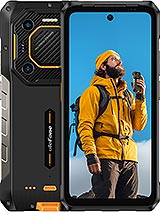
The Ulefone Armor 26 Ultra is a high-end rugged smartphone featuring a 15600 mAh battery for extreme endurance and a 200 MP main sensor for detailed site documentation, aimed at field engineers and outdoor professionals. Released in April 2024, it enters a market where durability often sacrifices performance, yet this model attempts to bridge that gap with a Dimensity 8020 chipset and 120W fast charging. While traditional flagship buyers look for slim bezels, this handset targets those who prioritize staying connected in environments that would destroy a glass-sandwich phone within minutes.
When we look at the physical construction, the Ulefone Armor 26 Ultra is not a device; it is a piece of equipment. With a thickness of 25.5 mm and a staggering weight of 609 g, it demands a heavy-duty holster rather than a pocket. The chassis is a mix of reinforced metal rails and impact-absorbent TPU, designed to meet MIL-STD-810H standards. Unlike consumer-grade phones that claim 'water resistance,' this model carries an IP69K rating. This means it can withstand high-pressure water jets and high-temperature steam cleaning (80-100°C), a necessity for workers in industrial sanitization or heavy machinery maintenance.
We noted the structural integrity is further validated by the EU LabelFree fall Class A rating. This certification indicates the hardware survived 270 falls from varying heights, a metric far exceeding the standard 'drop-proof' marketing fluff. The front is protected by Corning Gorilla Glass 5 with a Mohs level 4 surface rating. In the context of the field, this ensures that while the screen might still scratch if rubbed against high-hardness minerals, it is significantly less likely to shatter during a tumble onto jagged rocks. The dedicated accessory connector on the side allows for the attachment of specialized tools like endoscopes or microscopes, expanding its utility from a communication device to a diagnostic workstation.
The 6.78-inch IPS LCD offers a 120Hz refresh rate, which we found provides fluid navigation even when scrolling through dense topographic maps. While an IPS panel lacks the infinite contrast of OLED, it remains more legible under direct sunlight when pushed to its peak brightness. At 396 ppi, the resolution is crisp enough for reviewing blueprints or fine print on technical documents. The display is framed by substantial bezels, which provide a 'buffer zone' for the glass, reducing the likelihood of edge impacts causing catastrophic failure.
Deep within the hardware is a Barometer, a sensor often omitted in modern city-focused handsets. This allows the device to measure atmospheric pressure, providing accurate altitude readings when GPS signals are obstructed by dense forest canopies or canyon walls. Combined with dual-band GPS (L1+L5), the positioning accuracy is significantly higher than standard single-band receivers, making it a reliable companion for land surveyors. We also appreciated the inclusion of a 3.5mm jack, allowing users to use wired headsets for communication in loud environments where Bluetooth latency or battery drain is a concern.
A typical 24-hour cycle with this model starts with a 6:00 AM alarm. The massive rear speaker, which resembles a dedicated Bluetooth unit more than a phone speaker, ensures that no sleep is deep enough to miss a call. By 9:00 AM, after a commute utilizing 5G Sub6 connectivity for tethering a laptop, the battery has only dropped to 98%. Unlike standard phones that hit 90% by brunch, the massive capacity here means the percentage indicator moves at a glacial pace. Throughout a work day involving heavy camera use for site photos and continuous GPS tracking, the drain is minimal.
By 6:00 PM, while colleagues are scrambling for power banks, this model typically sits around 80%. Even with a full evening of high-definition streaming or light gaming via the Mali-G77 MC9 GPU, the device ends the day with over 70% remaining. This isn't just a 'one-day' phone; for most users, it's a 'four-day' phone. The peace of mind that comes from knowing you can forget to charge for two nights straight is a luxury that no iPhone or Pixel can currently offer. It changes the user's relationship with electricity.
Honesty is required when discussing the weight. At 609 grams, using this model with one hand is an athletic feat. Holding it for a 20-minute video call will lead to wrist fatigue. It is twice the weight of an iPhone 15 Pro Max. This is a deliberate trade-off, but one that many will find impossible to live with daily. Furthermore, while the 200 MP main camera sounds impressive on paper, the processing speed is a bottleneck. There is a noticeable delay between pressing the shutter and the image being saved, as the Dimensity 8020 works to process that massive data stream.
Another point of contention is the thickness. At over an inch thick, it will not fit in slim-fit jeans or standard car phone mounts. You will need to invest in a heavy-duty dashboard clamp specifically designed for industrial tablets or rugged units. Finally, while the software is a relatively clean version of Android 13, Ulefone's history with long-term OS updates is spotty. Do not expect Android 15 or 16 to arrive on this device. You are buying it for what it is today, not what it might become via software updates.
The side-mounted fingerprint sensor is snappy. We prefer this placement for rugged devices because it is easier to locate by feel while wearing work gear compared to an under-display sensor. It acts as both a power button and a biometric gateway, allowing for near-instant access even with slightly damp hands. The Face Unlock feature is present, utilizing the 50 MP front camera, but since it lacks IR hardware mapping, it is less secure than the fingerprint reader and struggles in low-light conditions.
Privacy controls are standard for the Android 13 era, featuring the Privacy Dashboard and granular permission toggles. Given that this phone is likely to be used in enterprise or government field work, the inclusion of a physical 'Custom Key' is a major security and utility win. This button can be mapped to PTT (Push-To-Talk) applications or to instantly launch a specific encrypted communication app, ensuring that security-critical tools are never more than a click away.
The 15600 mAh Li-Po battery is the undisputed champion of the spec sheet. To put that in perspective, a standard flagship usually carries 5000 mAh. This is effectively three phones' worth of power in one shell. In our assessment, this allows for over 150 hours of endurance in mixed-use scenarios. When the battery finally does run dry, the 120W wired charging is a revelation. It can push enough current to reach a significant charge in under an hour, which is unheard of for batteries this large. Most competitors with 10k+ mAh batteries take three to four hours to charge.
Support for 33W wireless charging via a specialized docking station adds a layer of convenience for office or vehicle use. By simply dropping the handset onto the pogo-pin dock, users can top up without fumbling with rubber port covers, which helps maintain the integrity of the water-resistant seals over time. The 1000 cycle battery health rating is also crucial; it means the cell is designed to retain 80% of its original capacity even after nearly three years of daily full discharges, ensuring the device lasts as long as its reinforced shell.
Working in the rain or in cold climates is where the display calibration shines. The 'Glove Mode' increases the sensitivity of the capacitive layer, allowing for navigation with standard work gloves. We found this essential for field engineers who cannot constantly de-glove to answer a call or check a schematic. The screen also handles 'wet touch' better than most, using algorithms to distinguish between a stray water droplet and a purposeful finger press. It isn't perfect—heavy downpours will still cause ghost touches—but it is significantly more usable than a standard consumer phone.
In summary, the Ulefone Armor 26 Ultra is a specialized instrument. It discards the obsession with thinness and elegance in favor of raw utility and survival. It is built for the person who spends their day in high-vis vests, climbing towers, or trekking through remote terrain where a dead battery or a cracked screen isn't just an inconvenience—it's a safety risk. For that specific user, there is arguably no better tool on the market in early 2024.
Build & Armor
When we look at the physical construction, the Ulefone Armor 26 Ultra is not a device; it is a piece of equipment. With a thickness of 25.5 mm and a staggering weight of 609 g, it demands a heavy-duty holster rather than a pocket. The chassis is a mix of reinforced metal rails and impact-absorbent TPU, designed to meet MIL-STD-810H standards. Unlike consumer-grade phones that claim 'water resistance,' this model carries an IP69K rating. This means it can withstand high-pressure water jets and high-temperature steam cleaning (80-100°C), a necessity for workers in industrial sanitization or heavy machinery maintenance.
We noted the structural integrity is further validated by the EU Label
Outdoor Utility
The 6.78-inch IPS LCD offers a 120Hz refresh rate, which we found provides fluid navigation even when scrolling through dense topographic maps. While an IPS panel lacks the infinite contrast of OLED, it remains more legible under direct sunlight when pushed to its peak brightness. At 396 ppi, the resolution is crisp enough for reviewing blueprints or fine print on technical documents. The display is framed by substantial bezels, which provide a 'buffer zone' for the glass, reducing the likelihood of edge impacts causing catastrophic failure.
Deep within the hardware is a Barometer, a sensor often omitted in modern city-focused handsets. This allows the device to measure atmospheric pressure, providing accurate altitude readings when GPS signals are obstructed by dense forest canopies or canyon walls. Combined with dual-band GPS (L1+L5), the positioning accuracy is significantly higher than standard single-band receivers, making it a reliable companion for land surveyors. We also appreciated the inclusion of a 3.5mm jack, allowing users to use wired headsets for communication in loud environments where Bluetooth latency or battery drain is a concern.
The Day in the Life Test
A typical 24-hour cycle with this model starts with a 6:00 AM alarm. The massive rear speaker, which resembles a dedicated Bluetooth unit more than a phone speaker, ensures that no sleep is deep enough to miss a call. By 9:00 AM, after a commute utilizing 5G Sub6 connectivity for tethering a laptop, the battery has only dropped to 98%. Unlike standard phones that hit 90% by brunch, the massive capacity here means the percentage indicator moves at a glacial pace. Throughout a work day involving heavy camera use for site photos and continuous GPS tracking, the drain is minimal.
By 6:00 PM, while colleagues are scrambling for power banks, this model typically sits around 80%. Even with a full evening of high-definition streaming or light gaming via the Mali-G77 MC9 GPU, the device ends the day with over 70% remaining. This isn't just a 'one-day' phone; for most users, it's a 'four-day' phone. The peace of mind that comes from knowing you can forget to charge for two nights straight is a luxury that no iPhone or Pixel can currently offer. It changes the user's relationship with electricity.
The Deal Breakers
Honesty is required when discussing the weight. At 609 grams, using this model with one hand is an athletic feat. Holding it for a 20-minute video call will lead to wrist fatigue. It is twice the weight of an iPhone 15 Pro Max. This is a deliberate trade-off, but one that many will find impossible to live with daily. Furthermore, while the 200 MP main camera sounds impressive on paper, the processing speed is a bottleneck. There is a noticeable delay between pressing the shutter and the image being saved, as the Dimensity 8020 works to process that massive data stream.
Another point of contention is the thickness. At over an inch thick, it will not fit in slim-fit jeans or standard car phone mounts. You will need to invest in a heavy-duty dashboard clamp specifically designed for industrial tablets or rugged units. Finally, while the software is a relatively clean version of Android 13, Ulefone's history with long-term OS updates is spotty. Do not expect Android 15 or 16 to arrive on this device. You are buying it for what it is today, not what it might become via software updates.
Biometrics & Security
The side-mounted fingerprint sensor is snappy. We prefer this placement for rugged devices because it is easier to locate by feel while wearing work gear compared to an under-display sensor. It acts as both a power button and a biometric gateway, allowing for near-instant access even with slightly damp hands. The Face Unlock feature is present, utilizing the 50 MP front camera, but since it lacks IR hardware mapping, it is less secure than the fingerprint reader and struggles in low-light conditions.
Privacy controls are standard for the Android 13 era, featuring the Privacy Dashboard and granular permission toggles. Given that this phone is likely to be used in enterprise or government field work, the inclusion of a physical 'Custom Key' is a major security and utility win. This button can be mapped to PTT (Push-To-Talk) applications or to instantly launch a specific encrypted communication app, ensuring that security-critical tools are never more than a click away.
Battery Endurance
The 15600 mAh Li-Po battery is the undisputed champion of the spec sheet. To put that in perspective, a standard flagship usually carries 5000 mAh. This is effectively three phones' worth of power in one shell. In our assessment, this allows for over 150 hours of endurance in mixed-use scenarios. When the battery finally does run dry, the 120W wired charging is a revelation. It can push enough current to reach a significant charge in under an hour, which is unheard of for batteries this large. Most competitors with 10k+ mAh batteries take three to four hours to charge.
Support for 33W wireless charging via a specialized docking station adds a layer of convenience for office or vehicle use. By simply dropping the handset onto the pogo-pin dock, users can top up without fumbling with rubber port covers, which helps maintain the integrity of the water-resistant seals over time. The 1000 cycle battery health rating is also crucial; it means the cell is designed to retain 80% of its original capacity even after nearly three years of daily full discharges, ensuring the device lasts as long as its reinforced shell.
Glove Mode & Wet Touch
Working in the rain or in cold climates is where the display calibration shines. The 'Glove Mode' increases the sensitivity of the capacitive layer, allowing for navigation with standard work gloves. We found this essential for field engineers who cannot constantly de-glove to answer a call or check a schematic. The screen also handles 'wet touch' better than most, using algorithms to distinguish between a stray water droplet and a purposeful finger press. It isn't perfect—heavy downpours will still cause ghost touches—but it is significantly more usable than a standard consumer phone.
In summary, the Ulefone Armor 26 Ultra is a specialized instrument. It discards the obsession with thinness and elegance in favor of raw utility and survival. It is built for the person who spends their day in high-vis vests, climbing towers, or trekking through remote terrain where a dead battery or a cracked screen isn't just an inconvenience—it's a safety risk. For that specific user, there is arguably no better tool on the market in early 2024.
Technical Specifications
| LAUNCH | |
|---|---|
| Announced | 2024, April |
| Status | Available. Released 2024, April |
| PLATFORM | |
| OS | Android 13 |
| Chipset | Mediatek Dimensity 8020 (6 nm) |
| CPU | Octa-core (4x2.6 GHz Cortex-A78 & 4x2.0 GHz Cortex-A55) |
| GPU | Mali-G77 MC9 |
| BODY | |
| Dimensions | 179 x 83 x 25.5 mm (7.05 x 3.27 x 1.00 in) |
| Weight | 609 g (1.34 lb) |
| SIM | Nano-SIM + Nano-SIM |
| Info | IP68/IP69K dust tight and water resistant (high pressure water jets; immersible up to 2m for 30 min) Drop resistant up to 1.5m MIL-STD-810H compliant Accessory connector (ulefone endoscope, microscope) |
| DISPLAY | |
| Type | IPS LCD, 120Hz |
| Size | 6.78 inches, 109.2 cm2 (~73.5% screen-to-body ratio) |
| Resolution | 1080 x 2460 pixels (~396 ppi density) |
| Protection | Corning Gorilla Glass 5, Mohs level 4 |
| MEMORY | |
| Card slot | microSDXC (dedicated slot) |
| Internal | 512GB 12GB RAM |
| Info | UFS 3.1 |
| MAIN CAMERA | |
| Quad | 200 MP, f/1.8, (wide), 1/1.4", 0.56µm, PDAF 8 MP, (telephoto), 3.2x optical zoom 50 MP, f/2.2, 117˚ (ultrawide) 64 MP, f/1.8, (night vision), 2 infrared night vision lights |
| Features | Quad-LED flash, HDR, panorama |
| Video | 4K@30fps, 1080p@30fps |
| SELFIE CAMERA | |
| Single | 50 MP, f/2.3, (wide), 1.0µm |
| Video | 1080p@30fps |
| SOUND | |
| Loudspeaker | Yes |
| 3.5mm jack | Yes |
| COMMS | |
| WLAN | Wi-Fi 802.11 a/b/g/n/ac/6, dual-band |
| Bluetooth | 5.2, A2DP, LE |
| Positioning | GPS (L1+L5), GLONASS, GALILEO, BDS, QZSS |
| NFC | Yes |
| Infrared port | Yes |
| Radio | Wireless FM radio, RDS, recording |
| USB | USB Type-C 3.1, OTG |
| NETWORK | |
| Technology | GSM / CDMA / HSPA / LTE / 5G |
| 2G bands | GSM 850 / 900 / 1800 / 1900 |
| Info | CDMA 800 / 1900 |
| 3G bands | HSDPA 850 / 900 / 1700(AWS) / 1900 / 2100 |
| 4G bands | 1, 2, 3, 4, 5, 7, 8, 12, 13, 17, 18, 19, 20, 25, 26, 28, 34, 38, 39, 40, 41, 66, 71 |
| 5G bands | 1, 2, 3, 5, 7, 8, 20, 25, 28, 38, 40, 41, 66, 71, 77, 78, 79 SA/NSA/Sub6 |
| Speed | HSPA, LTE, 5G |
| FEATURES | |
| Sensors | Fingerprint (side-mounted), accelerometer, proximity, compass, gyro, barometer |
| BATTERY | |
| Type | Li-Po 15600 mAh |
| Charging | 120W wired 33W wireless (via docking station with pins) Reverse wired |
| MISC | |
| Colors | Black |
| Price | About 540 EUR |
| EU LABEL | |
| Energy | Class B |
| Battery | 151:31h endurance, 1000 cycles |
| Free fall | Class A (270 falls) |
| Repairability | Class B |