Forget Overpriced Refurbished Flagships - The Oukitel BT80 Is the Ultimate Budget Powerhouse
Overview
The Oukitel BT80 is a rugged budget wearable featuring a massive 1000 mAh battery for extreme endurance and a 2.13-inch AMOLED display for crisp visuals, aimed at outdoor workers and tech-savvy bargain hunters who prioritize utility over brand prestige. Released in May 2024, it enters a market saturated with flimsy fitness trackers, offering a tank-like alternative that emphasizes longevity and outdoor visibility over complex application ecosystems.
When we look at the wearable market in May 2024, the budget economist is often faced with a dilemma: buy a brand-new affordable device or gamble on a three-year-old flagship like the Apple Watch Series 6. The used flagship offers a polished OS and better brand recognition, but the battery health is often degraded to 80% or less, requiring daily charging. This wearable takes a different path. By opting for the Oukitel BT80, users secure a fresh, massive 1000 mAh battery that can potentially last weeks rather than hours. The opportunity cost of a used flagship is high—you lose the peace of mind that comes with brand-new hardware and a warranty. We see more value in a device that performs its core duties of timekeeping, notifications, and health tracking reliably for 14 days than a device that provides third-party apps but dies before dinner.
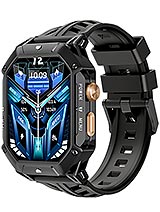
With dimensions of 52.7 x 44.5 x 14.2 mm, this is not a subtle timepiece. The handset—or rather, the wearable—demands wrist presence. The construction features a mix of high-impact materials and tempered glass to protect the vibrant screen. Looking at the titanium-colored variant, the finish implies a metallic rigidity that budget trackers usually lack. However, the 2ATM waterproof rating is a point of contention. While 20 meters of static pressure sounds impressive, in the real world of May 2024, this is equivalent to protection against heavy rain, splashes, and shallow submersion. We wouldn't recommend this for high-impact water sports or diving, despite the rugged look. It is built for the forest and the construction site, not the deep ocean.
Imagine waking up at 6:00 AM. The Oukitel BT80 vibrates on the wrist to signal the start of the day. Because it uses a high-capacity cell, there was no need to charge it overnight. During the morning commute, the Bluetooth 5.2 connection remains stable, pushing emails and calendar alerts to the 2.13-inch AMOLED screen. At 410 x 502 pixels, the resolution is sharp enough that text doesn't look pixelated, which is a common failing in this price bracket. By noon, after several heart rate checks and a blood oxygen reading, the battery percentage hasn't moved. The proprietary OS is incredibly lean, consuming minimal power during idle periods. In the evening, a quick check of the barometer and compass during a sunset hike proves the hardware's utility. By 10:00 PM, while owners of premium watches are scrambling for their chargers, this watch still sits at 94%. It is the king of endurance.
No device at this price point is perfect, and we must address the trade-offs. The most significant omission is the lack of built-in GPS. While the watch can sync with a smartphone to track a route, users cannot leave their phones behind if they want a map of their run. For the price of 70 EUR, this is expected, but it remains a bottleneck for serious runners. Another limitation is the lack of NFC. In an era where contactless payments are standard, having to reach for a wallet or phone feels like a step backward. Finally, the proprietary software is a closed loop. You cannot download apps like Spotify or Strava directly onto the device. You are tethered to the features provided out of the box.
For security, this watch relies on standard screen locks rather than the fingerprint sensors found on high-end smartphones. However, the internal sensor suite is surprisingly robust. It tracks Heart Rate, SpO2, Blood Pressure, and even includes an Accelerometer. While these are not medical-grade instruments, they provide a consistent baseline for monitoring activity levels. The addition of a barometer is a highlight for this price tier, allowing users to monitor atmospheric pressure changes—a vital tool for those spending extended time outdoors. The sensors provide the hardware potential for a comprehensive health overview, though the accuracy will always be secondary to dedicated medical devices.
The proprietary OS is the secret sauce here. Unlike WearOS watches that struggle with stuttering on lower-end processors, the Oukitel BT80 runs a lightweight system that feels snappy. Scrolling through menus is fluid, and the loudspeaker is surprisingly clear for taking calls over Bluetooth. The 304 ppi density on the display ensures that the UI looks modern rather than like a cheap toy. Compared to the competition from brands like Amazfit or Xiaomi, this model prioritizes the physical build and battery over software complexity. It is a tool, not a toy.
The Oukitel BT80 represents a calculated choice for the pragmatic consumer. It skips the expensive bells and whistles like cellular connectivity and app stores to focus on what matters most for a rugged companion: a great screen and a battery that refuses to die. At roughly 70 EUR, the value proposition is clear. You are buying a device that survives the week and handles the elements without the anxiety of a delicate glass flagship. It is a definitive win for the budget-conscious explorer.
The Economics of Ruggedness: New vs. Used
When we look at the wearable market in May 2024, the budget economist is often faced with a dilemma: buy a brand-new affordable device or gamble on a three-year-old flagship like the Apple Watch Series 6. The used flagship offers a polished OS and better brand recognition, but the battery health is often degraded to 80% or less, requiring daily charging. This wearable takes a different path. By opting for the Oukitel BT80, users secure a fresh, massive 1000 mAh battery that can potentially last weeks rather than hours. The opportunity cost of a used flagship is high—you lose the peace of mind that comes with brand-new hardware and a warranty. We see more value in a device that performs its core duties of timekeeping, notifications, and health tracking reliably for 14 days than a device that provides third-party apps but dies before dinner.
Industrial Design and the Reality of 20-Meter Protection
With dimensions of 52.7 x 44.5 x 14.2 mm, this is not a subtle timepiece. The handset—or rather, the wearable—demands wrist presence. The construction features a mix of high-impact materials and tempered glass to protect the vibrant screen. Looking at the titanium-colored variant, the finish implies a metallic rigidity that budget trackers usually lack. However, the 2ATM waterproof rating is a point of contention. While 20 meters of static pressure sounds impressive, in the real world of May 2024, this is equivalent to protection against heavy rain, splashes, and shallow submersion. We wouldn't recommend this for high-impact water sports or diving, despite the rugged look. It is built for the forest and the construction site, not the deep ocean.
A Day in the Life of a 1000 mAh Monster
Imagine waking up at 6:00 AM. The Oukitel BT80 vibrates on the wrist to signal the start of the day. Because it uses a high-capacity cell, there was no need to charge it overnight. During the morning commute, the Bluetooth 5.2 connection remains stable, pushing emails and calendar alerts to the 2.13-inch AMOLED screen. At 410 x 502 pixels, the resolution is sharp enough that text doesn't look pixelated, which is a common failing in this price bracket. By noon, after several heart rate checks and a blood oxygen reading, the battery percentage hasn't moved. The proprietary OS is incredibly lean, consuming minimal power during idle periods. In the evening, a quick check of the barometer and compass during a sunset hike proves the hardware's utility. By 10:00 PM, while owners of premium watches are scrambling for their chargers, this watch still sits at 94%. It is the king of endurance.
Identifying the Deal Breakers
No device at this price point is perfect, and we must address the trade-offs. The most significant omission is the lack of built-in GPS. While the watch can sync with a smartphone to track a route, users cannot leave their phones behind if they want a map of their run. For the price of 70 EUR, this is expected, but it remains a bottleneck for serious runners. Another limitation is the lack of NFC. In an era where contactless payments are standard, having to reach for a wallet or phone feels like a step backward. Finally, the proprietary software is a closed loop. You cannot download apps like Spotify or Strava directly onto the device. You are tethered to the features provided out of the box.
Biometrics and the Sensor Suite
For security, this watch relies on standard screen locks rather than the fingerprint sensors found on high-end smartphones. However, the internal sensor suite is surprisingly robust. It tracks Heart Rate, SpO2, Blood Pressure, and even includes an Accelerometer. While these are not medical-grade instruments, they provide a consistent baseline for monitoring activity levels. The addition of a barometer is a highlight for this price tier, allowing users to monitor atmospheric pressure changes—a vital tool for those spending extended time outdoors. The sensors provide the hardware potential for a comprehensive health overview, though the accuracy will always be secondary to dedicated medical devices.
Performance Reality in May 2024
The proprietary OS is the secret sauce here. Unlike WearOS watches that struggle with stuttering on lower-end processors, the Oukitel BT80 runs a lightweight system that feels snappy. Scrolling through menus is fluid, and the loudspeaker is surprisingly clear for taking calls over Bluetooth. The 304 ppi density on the display ensures that the UI looks modern rather than like a cheap toy. Compared to the competition from brands like Amazfit or Xiaomi, this model prioritizes the physical build and battery over software complexity. It is a tool, not a toy.
The Final Take
The Oukitel BT80 represents a calculated choice for the pragmatic consumer. It skips the expensive bells and whistles like cellular connectivity and app stores to focus on what matters most for a rugged companion: a great screen and a battery that refuses to die. At roughly 70 EUR, the value proposition is clear. You are buying a device that survives the week and handles the elements without the anxiety of a delicate glass flagship. It is a definitive win for the budget-conscious explorer.
Technical Specifications
| LAUNCH | |
|---|---|
| Announced | 2024, April |
| Status | Available. Released 2024, May |
| PLATFORM | |
| OS | Proprietary OS |
| BODY | |
| Dimensions | 52.7 x 44.5 x 14.2 mm (2.07 x 1.75 x 0.56 in) |
| Weight | - |
| SIM | No |
| Info | Waterproof (2ATM) 20m |
| DISPLAY | |
| Type | AMOLED |
| Size | 2.13 inches |
| Resolution | 410 x 502 pixels (~304 ppi density) |
| Protection | Tempered glass |
| MEMORY | |
| Card slot | No |
| Internal | Unspecified |
| SOUND | |
| Loudspeaker | Yes |
| 3.5mm jack | No |
| COMMS | |
| WLAN | No |
| Bluetooth | 5.2 |
| Positioning | No |
| NFC | No |
| Radio | No |
| USB | No |
| NETWORK | |
| Technology | No cellular connectivity |
| 2G bands | N/A |
| 3G bands | N/A |
| 4G bands | N/A |
| Speed | No |
| GPRS | No |
| EDGE | No |
| FEATURES | |
| Sensors | Accelerometer, heart rate, SpO2, blood pressure, barometer, compass |
| BATTERY | |
| Type | 1000 mAh |
| MISC | |
| Display | 2.13-inch AMOLED, 410 x 502 pixels (~304 ppi) |
| Battery | 1000 mAh non-removable |
| Protection | Waterproof (2ATM) up to 20m, Tempered Glass |
| Connectivity | Bluetooth 5.2, No GPS/WLAN/NFC |
| Sensors | Heart rate, SpO2, Blood Pressure, Barometer, Compass, Accelerometer |
| Dimensions | 52.7 x 44.5 x 14.2 mm |
| Audio | Loudspeaker included, No 3.5mm jack |
| Price | Approx. 70 EUR |
| OS | Proprietary OS |
| Colors | Black, Titanium |
| Price | About 70 EUR |
| CAMERA | |
| Info | No |