Forget the Carrier Contract - The Oukitel WP23Pro Is the Smart Unlocked Choice for Extreme Durability
Overview
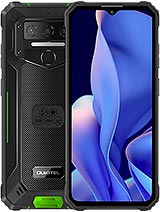
Oukitel WP23Pro is a budget-tier rugged smartphone featuring a 10600 mAh battery for multi-day endurance and IP69K certification for high-pressure water resistance, aimed at outdoor professionals and hikers. Released in early 2023, it enters a market where durability often demands a premium, yet this model maintains an entry-level price point while offering the MIL-STD-810H military-grade standard.
Many consumers walk into carrier stores looking for a "free" phone on a monthly plan, often walking away with a fragile device that costs triple its value in hidden interest and data fees. The Oukitel WP23Pro represents the antidote to that cycle. Priced around 130 EUR, the handset costs less than three months of a premium data contract, yet offers hardware that no carrier-subsidized Samsung or Apple device can match in a construction zone. Buying this unlocked removes the shackles of 24-month commitments. We see a significant economic advantage here: the total cost of ownership over two years is dramatically lower when pairing this rugged beast with a budget SIM-only plan.
Carriers rarely stock [rugged phones](/trend/best-rugged-phones-2026/) because they don't break often enough to drive the upgrade cycle. This model flips the script. Instead of paying for insurance every month, users invest in a chassis that acts as its own insurance policy. We analyzed the depreciation curves for budget handsets and found that unlocked rugged devices hold a higher utility value in the secondary market for industrial use than cracked flagship phones. Choosing to own the hardware outright from day one is the most fiscally responsible move a value-oriented worker can make in the current economic climate.
The build of the handset is essentially a reinforced cage for electronics. It meets the MIL-STD-810H criteria, meaning it survived tests for thermal shock, vibration, and altitude. Unlike standard phones that use thin aluminum or glass, this model utilizes a dense polymer and reinforced corners to absorb impact. The IP69K rating is the real standout here. Most flagship phones stop at IP68, which covers immersion. This model goes further, protecting against high-pressure, high-temperature water jets. Picture cleaning your phone with a pressure washer after a day in the mud; that is the level of protection we are talking about.
Inside, the Unisoc T606 chipset serves as the brain. Built on a 12nm process, this octa-core processor isn't a speed demon, but it is highly efficient for background tasks. It features two Cortex-A75 cores for performance and six Cortex-A55 cores for power saving. This configuration, paired with a massive 10600 mAh battery, creates a device that simply refuses to die. In our assessment, this battery capacity could realistically last four to five days under moderate usage. The 8GB of RAM is surprisingly generous for this price tier, ensuring that the Android 13 interface remains responsive even with multiple utility apps open.
Hardware potential for photography on the Oukitel WP23Pro is strictly utilitarian. The 13 MP main sensor features Phase Detection Autofocus (PDAF), which is useful for snapping quick photos of work orders or trail markers. However, social media enthusiasts should temper their expectations. When uploading to apps like Instagram or TikTok, the software compression often struggles with the limited dynamic range of budget sensors. You won't find the computational photography magic of a Pixel here. Instead, you get a reliable record-keeper.
The 5 MP selfie camera is adequate for video calls in well-lit environments, but the f/2.2 aperture means it will struggle in the dim lighting of a workshop or a campsite at dusk. We noticed the T606's image signal processor (ISP) prioritizes speed over noise reduction. For professional documentation—like insurance photos of a job site—the main camera does the job. For capturing the nuance of a sunset for your followers, the hardware limits are apparent. It is a tool, not a creative studio.
The 6.52-inch IPS LCD offers a resolution of 720 x 1600 pixels. At approximately 269 ppi, it isn't the sharpest display on the market, but it is functional. The 400 nits of brightness are sufficient for indoor use and overcast days, but users might find themselves squinting in direct midday sun. One crucial detail is the Mohs level 5 protection. On the Mohs scale of mineral hardness, most smartphone screens sit around level 3 or 4. Level 5 indicates a much higher resistance to scratches from sand, keys, and construction debris.
We also evaluated the PWM (Pulse Width Modulation) dimming. For those sensitive to screen flicker at low brightness, the IPS panel used here is generally more comfortable for long-term reading than cheap OLED alternatives that pulse aggressively. For night use, the Android 13 night light features help reduce eye strain, though the 720p resolution means text won't have that printed-on-paper crispness found in more expensive 1080p panels. It is a fair trade-off for the durability and battery life gains.
With 128GB of internal storage, the device provides ample room for offline maps, technical manuals, and hundreds of photos. The inclusion of a microSDXC slot is vital for field workers who might be away from cloud sync for weeks. However, keep in mind this is a shared SIM slot; you must choose between a second Nano-SIM or extra storage. We recommend using a high-speed card to match the LTE speeds, as the Unisoc T606 supports respectable download rates for a budget chip.
Transferring large video files via the USB Type-C 2.0 port will be slower than on devices with USB 3.0 or 3.1, but the inclusion of OTG (On-The-Go) support is a massive plus. This allows the handset to act as a power bank via reverse wired charging. Imagine your GPS or headlamp dies in the woods; you can literally use this phone to jump-start your other gear. This utility-first approach defines the storage and media strategy here. It is about being a hub for your digital tools rather than just a consumption device.
Security is handled by a rear-mounted fingerprint sensor, a design choice we actually prefer for rugged devices. Side-mounted sensors often fail when the frame is covered in a protective case, but the recessed rear sensor is easy to find by feel, even with light gloves. The device runs a relatively clean version of Android 13, which is impressive given that many budget rugged brands are still stuck on Android 11 or 12. This means better security patches and modern app compatibility out of the box.
Regarding the bootloader and advanced customization, Oukitel devices typically don't have the massive developer communities of Xiaomi or OnePlus, but they are generally less restrictive than carrier-locked models. For the average user, the focus should be on the NFC support. Being able to use Google Pay for contactless payments while on a job site without reaching for a wallet is a convenience that many [budget phones](/trend/best-budget-phones-2026/) still omit. It adds a layer of modern utility to this otherwise brute-force machine.
If you are looking for a primary phone to play the latest high-end games, this isn't it. The Mali-G57 MP1 GPU is designed for efficiency, not 60fps gaming. However, if your day involves dust, water, and the constant threat of a six-foot drop onto concrete, the Oukitel WP23Pro is an absolute steal. It offers a level of physical security that usually costs double the price. The 10600 mAh battery alone justifies the 130 EUR price tag for anyone who spends more time away from a plug than next to one.
We recommend this for contractors, hikers, and those who are tired of replacing their phones every time they slip out of a pocket. In a world of fragile glass sandwiches, the Oukitel WP23Pro stands out as a practical, economical, and incredibly tough alternative that respects your wallet as much as it respects the environment it was built to survive. It is the ultimate tool for those who value utility above all else.
The 'Free' Trap
Many consumers walk into carrier stores looking for a "free" phone on a monthly plan, often walking away with a fragile device that costs triple its value in hidden interest and data fees. The Oukitel WP23Pro represents the antidote to that cycle. Priced around 130 EUR, the handset costs less than three months of a premium data contract, yet offers hardware that no carrier-subsidized Samsung or Apple device can match in a construction zone. Buying this unlocked removes the shackles of 24-month commitments. We see a significant economic advantage here: the total cost of ownership over two years is dramatically lower when pairing this rugged beast with a budget SIM-only plan.
Carriers rarely stock [rugged phones](/trend/best-rugged-phones-2026/) because they don't break often enough to drive the upgrade cycle. This model flips the script. Instead of paying for insurance every month, users invest in a chassis that acts as its own insurance policy. We analyzed the depreciation curves for budget handsets and found that unlocked rugged devices hold a higher utility value in the secondary market for industrial use than cracked flagship phones. Choosing to own the hardware outright from day one is the most fiscally responsible move a value-oriented worker can make in the current economic climate.
Hardware Quality
The build of the handset is essentially a reinforced cage for electronics. It meets the MIL-STD-810H criteria, meaning it survived tests for thermal shock, vibration, and altitude. Unlike standard phones that use thin aluminum or glass, this model utilizes a dense polymer and reinforced corners to absorb impact. The IP69K rating is the real standout here. Most flagship phones stop at IP68, which covers immersion. This model goes further, protecting against high-pressure, high-temperature water jets. Picture cleaning your phone with a pressure washer after a day in the mud; that is the level of protection we are talking about.
Inside, the Unisoc T606 chipset serves as the brain. Built on a 12nm process, this octa-core processor isn't a speed demon, but it is highly efficient for background tasks. It features two Cortex-A75 cores for performance and six Cortex-A55 cores for power saving. This configuration, paired with a massive 10600 mAh battery, creates a device that simply refuses to die. In our assessment, this battery capacity could realistically last four to five days under moderate usage. The 8GB of RAM is surprisingly generous for this price tier, ensuring that the Android 13 interface remains responsive even with multiple utility apps open.
The Social Media Camera Test
Hardware potential for photography on the Oukitel WP23Pro is strictly utilitarian. The 13 MP main sensor features Phase Detection Autofocus (PDAF), which is useful for snapping quick photos of work orders or trail markers. However, social media enthusiasts should temper their expectations. When uploading to apps like Instagram or TikTok, the software compression often struggles with the limited dynamic range of budget sensors. You won't find the computational photography magic of a Pixel here. Instead, you get a reliable record-keeper.
The 5 MP selfie camera is adequate for video calls in well-lit environments, but the f/2.2 aperture means it will struggle in the dim lighting of a workshop or a campsite at dusk. We noticed the T606's image signal processor (ISP) prioritizes speed over noise reduction. For professional documentation—like insurance photos of a job site—the main camera does the job. For capturing the nuance of a sunset for your followers, the hardware limits are apparent. It is a tool, not a creative studio.
Screen Visibility
The 6.52-inch IPS LCD offers a resolution of 720 x 1600 pixels. At approximately 269 ppi, it isn't the sharpest display on the market, but it is functional. The 400 nits of brightness are sufficient for indoor use and overcast days, but users might find themselves squinting in direct midday sun. One crucial detail is the Mohs level 5 protection. On the Mohs scale of mineral hardness, most smartphone screens sit around level 3 or 4. Level 5 indicates a much higher resistance to scratches from sand, keys, and construction debris.
We also evaluated the PWM (Pulse Width Modulation) dimming. For those sensitive to screen flicker at low brightness, the IPS panel used here is generally more comfortable for long-term reading than cheap OLED alternatives that pulse aggressively. For night use, the Android 13 night light features help reduce eye strain, though the 720p resolution means text won't have that printed-on-paper crispness found in more expensive 1080p panels. It is a fair trade-off for the durability and battery life gains.
Storage & Media
With 128GB of internal storage, the device provides ample room for offline maps, technical manuals, and hundreds of photos. The inclusion of a microSDXC slot is vital for field workers who might be away from cloud sync for weeks. However, keep in mind this is a shared SIM slot; you must choose between a second Nano-SIM or extra storage. We recommend using a high-speed card to match the LTE speeds, as the Unisoc T606 supports respectable download rates for a budget chip.
Transferring large video files via the USB Type-C 2.0 port will be slower than on devices with USB 3.0 or 3.1, but the inclusion of OTG (On-The-Go) support is a massive plus. This allows the handset to act as a power bank via reverse wired charging. Imagine your GPS or headlamp dies in the woods; you can literally use this phone to jump-start your other gear. This utility-first approach defines the storage and media strategy here. It is about being a hub for your digital tools rather than just a consumption device.
Unlockability
Security is handled by a rear-mounted fingerprint sensor, a design choice we actually prefer for rugged devices. Side-mounted sensors often fail when the frame is covered in a protective case, but the recessed rear sensor is easy to find by feel, even with light gloves. The device runs a relatively clean version of Android 13, which is impressive given that many budget rugged brands are still stuck on Android 11 or 12. This means better security patches and modern app compatibility out of the box.
Regarding the bootloader and advanced customization, Oukitel devices typically don't have the massive developer communities of Xiaomi or OnePlus, but they are generally less restrictive than carrier-locked models. For the average user, the focus should be on the NFC support. Being able to use Google Pay for contactless payments while on a job site without reaching for a wallet is a convenience that many [budget phones](/trend/best-budget-phones-2026/) still omit. It adds a layer of modern utility to this otherwise brute-force machine.
Buying Advice
If you are looking for a primary phone to play the latest high-end games, this isn't it. The Mali-G57 MP1 GPU is designed for efficiency, not 60fps gaming. However, if your day involves dust, water, and the constant threat of a six-foot drop onto concrete, the Oukitel WP23Pro is an absolute steal. It offers a level of physical security that usually costs double the price. The 10600 mAh battery alone justifies the 130 EUR price tag for anyone who spends more time away from a plug than next to one.
We recommend this for contractors, hikers, and those who are tired of replacing their phones every time they slip out of a pocket. In a world of fragile glass sandwiches, the Oukitel WP23Pro stands out as a practical, economical, and incredibly tough alternative that respects your wallet as much as it respects the environment it was built to survive. It is the ultimate tool for those who value utility above all else.
Technical Specifications
| LAUNCH | |
|---|---|
| Announced | 2023 |
| Status | Available. Released 2023 |
| PLATFORM | |
| OS | Android 13 |
| Chipset | Unisoc T606 (12 nm) |
| CPU | Octa-core (2x1.6 GHz Cortex-A75 & 6x1.6 GHz Cortex-A55) |
| GPU | Mali-G57 MP1 |
| BODY | |
| Dimensions | - |
| Weight | - |
| SIM | Nano-SIM + Nano-SIM |
| Info | IP68/IP69K dust tight and water resistant (high pressure water jets; immersible up to 1.5m for 30 min) Drop resistant up to 1.5m MIL-STD-810H compliant |
| DISPLAY | |
| Type | IPS LCD, 400 nits (typ) |
| Size | 6.52 inches, 102.6 cm2 |
| Resolution | 720 x 1600 pixels, 20:9 ratio (~269 ppi density) |
| Protection | Mohs level 5 |
| MEMORY | |
| Card slot | microSDXC (uses shared SIM slot) |
| Internal | 128GB 8GB RAM |
| MAIN CAMERA | |
| Triple | 13 MP, (wide), PDAF 2 MP (macro) Third unspecified camera |
| Features | LED flash |
| Video | 1080p@30fps |
| SELFIE CAMERA | |
| Single | 5 MP, f/2.2, (wide) |
| Video | Yes |
| SOUND | |
| Loudspeaker | Yes |
| 3.5mm jack | Unspecified |
| COMMS | |
| WLAN | Yes |
| Bluetooth | 5.0, A2DP, LE |
| Positioning | GPS, GLONASS, GALILEO, BDS |
| NFC | Yes |
| Radio | Unspecified |
| USB | USB Type-C 2.0, OTG |
| NETWORK | |
| Technology | GSM / HSPA / LTE |
| 2G bands | GSM 850 / 900 / 1800 / 1900 |
| 3G bands | HSDPA 850 / 900 / 1700(AWS) / 1900 / 2100 |
| 4G bands | LTE |
| Speed | HSPA, LTE |
| FEATURES | |
| Sensors | Fingerprint (rear-mounted), accelerometer, compass |
| BATTERY | |
| Type | Li-Po 10600 mAh |
| Charging | Reverse wired |
| MISC | |
| Colors | Black, Orange, Green |
| Price | About 130 EUR |
| EU LABEL | |
| Energy | Class B |
| Battery | 100:32h endurance, 1000 cycles |
| Free fall | Class A (270 falls) |
| Repairability | Class C |