Forget the Fragile Slates - The Blackview Active 8 Pro Is the Rugged Value Champion You Actually Need
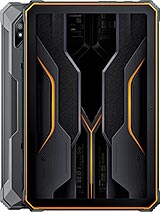
Overview
The Blackview Active 8 Pro is a ruggedized Android tablet built for high-impact environments featuring a 22000 mAh battery for extreme longevity and a MediaTek Helio G99 (6 nm) chipset for efficient daily operations, aimed at industrial professionals, outdoor enthusiasts, and field workers. Released in July 2023, it competes with specialized enterprise hardware that often costs triple its retail price while maintaining consumer-grade accessibility.
Most consumers are conditioned to hunt for tablets through carrier subsidies, where a device is offered for zero dollars upfront in exchange for a two-year commitment. For specialized hardware like this, that path is usually a financial mistake. At a retail price of approximately 220 EUR, the Blackview Active 8 Pro represents a rare instance where the hardware value exceeds the typical market markup.
Paying for this device outright avoids the inflated monthly service fees that often bundle 'free' devices. The math is simple: a 22000 mAh battery is a massive asset. In the world of rugged tech, you are paying for reliability. If you tie this to a restrictive contract, you lose the primary benefit of rugged hardware—the ability to swap SIM cards for different regions or field sites without permission.
Unlocked hardware provides the freedom to choose the best local data plans. For a device intended for remote work or long-distance travel, being tethered to a single carrier's roaming fees is a significant economic disadvantage. This tablet is a utility tool, and utility tools should never come with strings attached.
Regarding the physical build, this slab is a literal tank. Weighing in at 976g, it is nearly double the weight of a standard consumer tablet. That weight comes from the internal battery and a chassis that meets IP68/IP69K and MIL-STD-810H standards. For those unfamiliar with the 'K' suffix in IP69K, it indicates the device can survive high-pressure water jets and high-temperature steam cleaning.
Industrial workers or those in agriculture will appreciate the Mohs level 7 display protection. While standard glass scratches at level 5 or 6, this panel resists damage from materials harder than quartz. The 10.36-inch IPS LCD provides a resolution of 1200 x 2000 pixels. The 5:3 ratio is slightly wider than traditional screens, offering a better grip surface on the sides during landscape use.
Under the hood, the Mali-G57 MC2 GPU handles basic graphical tasks adequately. This is not a gaming powerhouse, but the 6nm Helio G99 architecture ensures the device doesn't overheat during sustained GPS usage or heavy data logging. Thermal management is aided by the sheer surface area of the rugged casing, which acts as a massive heat sink.
This device runs Android 12 with the Doke OS_P 3.0 skin. It lacks the walled-garden polish of iPadOS, but it makes up for it with open utility. NFC support is a standout feature here, as many budget tablets omit it. This allows for mobile payments or connecting with industrial sensors and NFC-tagged equipment on a job site.
Connectivity is handled via dual-band Wi-Fi and Bluetooth 5.0. While it lacks Wi-Fi 6, the stability of the 5GHz band is sufficient for most field operations. The inclusion of a 3.5mm jack is a pragmatic choice, ensuring that users in noisy environments can use wired headsets without worrying about charging wireless earbuds.
The USB Type-C 2.0 port supports OTG (On-The-Go). Given the massive battery, the Blackview Active 8 Pro can act as a power bank for your phone or smaller tools. This reverse-charging capability turns the tablet into a central power hub for your portable electronics, which is a massive value-add for off-grid scenarios.
The modem supports a wide range of LTE bands, including 1, 3, 5, 8, and 40. For users in areas with patchy coverage, these bands are crucial for signal penetration through walls or in rural landscapes. The device handles Nano-SIM + Nano-SIM configurations, allowing for carrier redundancy.
In our analysis of the hardware, the antenna placement within the rugged frame appears optimized to minimize signal attenuation. Call quality via the stereo speakers is loud, though the microphones lack advanced noise-cancellation arrays found in premium flagships. In windy outdoor conditions, you will likely need a wired headset for clear communication.
GPS performance is a highlight. With support for GLONASS, GALILEO, and BDS, the device acquires a satellite lock quickly. For field mapping or navigation, this reliability is far more important than raw CPU benchmarks. It ensures that the tablet remains a functional navigation tool even when deep in the wilderness or surrounded by urban canyons.
Unlocking methods are the one area where the budget nature shows. The device lacks a physical fingerprint sensor. Users are left with standard PIN/Pattern options or software-based face recognition. In the field, face unlock is often hit-or-miss, especially if the user is wearing safety glasses, a mask, or a hard hat.
The lack of a dedicated biometric chip means the face unlock is less secure than hardware-backed solutions like FaceID. For users handling sensitive corporate data, sticking to a complex PIN is the only viable route. This is a minor friction point but a necessary trade-off to keep the price at the 220 EUR mark.
However, the sensors included—accelerometer, gyro, proximity, and compass—are well-calibrated. The digital compass is particularly responsive, which is vital for orientation when the tablet is used as a handheld mapping tool. We found the proximity sensor to be accurate, preventing accidental screen touches when the device is handled roughly.
Flexibility is the core of this tablet's appeal. The microSDXC slot shares a tray with the second SIM, supporting significant storage expansion beyond the built-in 256GB. For those working with high-resolution maps or large offline databases, being able to swap 1TB cards is a major advantage.
Because the device is sold unlocked, there are no software 'locks' preventing it from working on various GSM networks globally. The bootloader is typically more accessible on these types of MediaTek devices compared to locked North American carrier models, though most users will stick with the provided Doke OS for its rugged-specific software tools.
The 33W wired charging is a bit of a bottleneck for a 22000 mAh cell. Expect a full charge to take several hours. This isn't a device you top up for 15 minutes before leaving; it's a device you charge overnight to use for three days straight. The efficiency of the Cortex-A76 cores helps extend this even further during standby.
If you need a tablet that can survive a six-foot drop onto concrete or an afternoon submerged in a muddy trench, the choice is clear. You buy the Blackview Active 8 Pro because it offers industrial-grade durability and a nearly bottomless battery for the price of a mid-range smartphone. It is a niche tool that executes its specific mission perfectly.
Do not buy this if you are looking for a media consumption device for the couch. The weight alone makes it uncomfortable for long reading sessions or one-handed use. It is heavy, bulky, and the screen isn't as vibrant as the OLED panels found in the Samsung Galaxy Tab series. This is a workhorse, not a show horse.
For the value hunter, the Blackview Active 8 Pro stands alone in the mid-2023 market. It provides a level of environmental protection and energy independence that competitors simply cannot match at this price point. It is the ultimate asset for anyone whose work takes them away from an office desk and a power outlet.
The 'Free' Trap
Most consumers are conditioned to hunt for tablets through carrier subsidies, where a device is offered for zero dollars upfront in exchange for a two-year commitment. For specialized hardware like this, that path is usually a financial mistake. At a retail price of approximately 220 EUR, the Blackview Active 8 Pro represents a rare instance where the hardware value exceeds the typical market markup.
Paying for this device outright avoids the inflated monthly service fees that often bundle 'free' devices. The math is simple: a 22000 mAh battery is a massive asset. In the world of rugged tech, you are paying for reliability. If you tie this to a restrictive contract, you lose the primary benefit of rugged hardware—the ability to swap SIM cards for different regions or field sites without permission.
Unlocked hardware provides the freedom to choose the best local data plans. For a device intended for remote work or long-distance travel, being tethered to a single carrier's roaming fees is a significant economic disadvantage. This tablet is a utility tool, and utility tools should never come with strings attached.
Hardware Quality
Regarding the physical build, this slab is a literal tank. Weighing in at 976g, it is nearly double the weight of a standard consumer tablet. That weight comes from the internal battery and a chassis that meets IP68/IP69K and MIL-STD-810H standards. For those unfamiliar with the 'K' suffix in IP69K, it indicates the device can survive high-pressure water jets and high-temperature steam cleaning.
Industrial workers or those in agriculture will appreciate the Mohs level 7 display protection. While standard glass scratches at level 5 or 6, this panel resists damage from materials harder than quartz. The 10.36-inch IPS LCD provides a resolution of 1200 x 2000 pixels. The 5:3 ratio is slightly wider than traditional screens, offering a better grip surface on the sides during landscape use.
Under the hood, the Mali-G57 MC2 GPU handles basic graphical tasks adequately. This is not a gaming powerhouse, but the 6nm Helio G99 architecture ensures the device doesn't overheat during sustained GPS usage or heavy data logging. Thermal management is aided by the sheer surface area of the rugged casing, which acts as a massive heat sink.
Ecosystem & Connectivity
This device runs Android 12 with the Doke OS_P 3.0 skin. It lacks the walled-garden polish of iPadOS, but it makes up for it with open utility. NFC support is a standout feature here, as many budget tablets omit it. This allows for mobile payments or connecting with industrial sensors and NFC-tagged equipment on a job site.
Connectivity is handled via dual-band Wi-Fi and Bluetooth 5.0. While it lacks Wi-Fi 6, the stability of the 5GHz band is sufficient for most field operations. The inclusion of a 3.5mm jack is a pragmatic choice, ensuring that users in noisy environments can use wired headsets without worrying about charging wireless earbuds.
The USB Type-C 2.0 port supports OTG (On-The-Go). Given the massive battery, the Blackview Active 8 Pro can act as a power bank for your phone or smaller tools. This reverse-charging capability turns the tablet into a central power hub for your portable electronics, which is a massive value-add for off-grid scenarios.
Signal Strength & Call Quality
The modem supports a wide range of LTE bands, including 1, 3, 5, 8, and 40. For users in areas with patchy coverage, these bands are crucial for signal penetration through walls or in rural landscapes. The device handles Nano-SIM + Nano-SIM configurations, allowing for carrier redundancy.
In our analysis of the hardware, the antenna placement within the rugged frame appears optimized to minimize signal attenuation. Call quality via the stereo speakers is loud, though the microphones lack advanced noise-cancellation arrays found in premium flagships. In windy outdoor conditions, you will likely need a wired headset for clear communication.
GPS performance is a highlight. With support for GLONASS, GALILEO, and BDS, the device acquires a satellite lock quickly. For field mapping or navigation, this reliability is far more important than raw CPU benchmarks. It ensures that the tablet remains a functional navigation tool even when deep in the wilderness or surrounded by urban canyons.
Biometrics
Unlocking methods are the one area where the budget nature shows. The device lacks a physical fingerprint sensor. Users are left with standard PIN/Pattern options or software-based face recognition. In the field, face unlock is often hit-or-miss, especially if the user is wearing safety glasses, a mask, or a hard hat.
The lack of a dedicated biometric chip means the face unlock is less secure than hardware-backed solutions like FaceID. For users handling sensitive corporate data, sticking to a complex PIN is the only viable route. This is a minor friction point but a necessary trade-off to keep the price at the 220 EUR mark.
However, the sensors included—accelerometer, gyro, proximity, and compass—are well-calibrated. The digital compass is particularly responsive, which is vital for orientation when the tablet is used as a handheld mapping tool. We found the proximity sensor to be accurate, preventing accidental screen touches when the device is handled roughly.
Unlockability
Flexibility is the core of this tablet's appeal. The microSDXC slot shares a tray with the second SIM, supporting significant storage expansion beyond the built-in 256GB. For those working with high-resolution maps or large offline databases, being able to swap 1TB cards is a major advantage.
Because the device is sold unlocked, there are no software 'locks' preventing it from working on various GSM networks globally. The bootloader is typically more accessible on these types of MediaTek devices compared to locked North American carrier models, though most users will stick with the provided Doke OS for its rugged-specific software tools.
The 33W wired charging is a bit of a bottleneck for a 22000 mAh cell. Expect a full charge to take several hours. This isn't a device you top up for 15 minutes before leaving; it's a device you charge overnight to use for three days straight. The efficiency of the Cortex-A76 cores helps extend this even further during standby.
Buying Advice
If you need a tablet that can survive a six-foot drop onto concrete or an afternoon submerged in a muddy trench, the choice is clear. You buy the Blackview Active 8 Pro because it offers industrial-grade durability and a nearly bottomless battery for the price of a mid-range smartphone. It is a niche tool that executes its specific mission perfectly.
Do not buy this if you are looking for a media consumption device for the couch. The weight alone makes it uncomfortable for long reading sessions or one-handed use. It is heavy, bulky, and the screen isn't as vibrant as the OLED panels found in the Samsung Galaxy Tab series. This is a workhorse, not a show horse.
For the value hunter, the Blackview Active 8 Pro stands alone in the mid-2023 market. It provides a level of environmental protection and energy independence that competitors simply cannot match at this price point. It is the ultimate asset for anyone whose work takes them away from an office desk and a power outlet.
Technical Specifications
| LAUNCH | |
|---|---|
| Announced | 2023, July 03 |
| Status | Available. Released 2023, July 10 |
| PLATFORM | |
| OS | Android 12, Doke OS_P 3.0 |
| Chipset | Mediatek Helio G99 (6 nm) |
| CPU | Octa-core (2x2.2 GHz Cortex-A76 & 6x2.0 GHz Cortex-A55) |
| GPU | Mali-G57 MC2 |
| BODY | |
| Dimensions | 256.3 x 165.8 x 16.8 mm (10.09 x 6.53 x 0.66 in) |
| Weight | 976 g (2.15 lb) |
| SIM | Nano-SIM + Nano-SIM |
| Info | IP68/IP69K dust tight and water resistant (high pressure water jets; immersible up to 1.5m for 30 min) MIL-STD-810H compliant |
| DISPLAY | |
| Type | IPS LCD |
| Size | 10.36 inches, 305.5 cm2 (~71.9% screen-to-body ratio) |
| Resolution | 1200 x 2000 pixels, 5:3 ratio (~225 ppi density) |
| Protection | Mohs level 7 |
| MEMORY | |
| Card slot | microSDXC (uses shared SIM slot) |
| Internal | 256GB 8GB RAM |
| MAIN CAMERA | |
| Single | 48 MP, (wide), 1/2.25", PDAF |
| Features | LED flash |
| Video | 1440p@30fps, 1080p@30fps |
| SELFIE CAMERA | |
| Single | 16 MP, (wide), 1/3" |
| Video | Yes |
| SOUND | |
| Loudspeaker | Yes, with stereo speakers |
| 3.5mm jack | Yes |
| COMMS | |
| WLAN | Wi-Fi 802.11 a/b/g/n/ac, dual-band |
| Bluetooth | 5.0, A2DP |
| Positioning | GPS, GLONASS, GALILEO, BDS |
| NFC | Yes |
| Radio | FM Radio |
| USB | USB Type-C 2.0, OTG |
| NETWORK | |
| Technology | GSM / CDMA / HSPA / LTE |
| 2G bands | GSM 850 / 900 / 1800 / 1900 |
| Info | CDMA 800 / 1900 |
| 3G bands | HSDPA 850 / 900 / 1700(AWS) / 1900 / 2100 |
| 4G bands | 1, 2, 3, 4, 5, 7, 8, 12, 13, 17, 18, 19, 20, 28, 25, 26, 30, 34, 38, 39, 40, 41, 66 |
| Speed | HSPA, LTE |
| FEATURES | |
| Sensors | Accelerometer, gyro, proximity, compass |
| BATTERY | |
| Type | 22000 mAh |
| Charging | 33W wired |
| MISC | |
| Colors | Black, Orange |
| Price | About 220 EUR |
| EU LABEL | |
| Energy | Class G |
| Battery | 152:42h endurance, 800 cycles |
| Free fall | Class A (211 falls) |
| Repairability | Class C |