Forget the Smartphone - Nokia 130 Music is the Battery Beast You Need
Overview
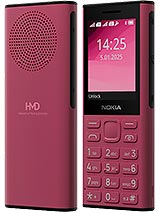
Nokia 130 Music is a budget feature phone featuring a 2500 mAh removable battery for extreme endurance and a dedicated MP3 player for offline audio, aimed at users seeking a secondary device or a digital detox. Released in early 2025, it competes with basic handsets from brands like Itel and Jio by prioritizing audio longevity and physical durability over application ecosystems.
The most striking realization when looking at the Nokia 130 Music is the sheer volume of the power cell. While most feature phones in this price bracket settle for 1000 mAh or 1200 mAh units, this device packs a 2500 mAh battery. In the context of 2025, where even budget smartphones struggle to hit two days of heavy use, the Nokia 130 Music pushes boundaries into the realm of weeks. Because it lacks a power-hungry operating system or a high-resolution display, the Unisoc 6531F chipset draws mere fractions of a watt during operation. This translates to a device that stays alive in a backpack for nearly a month on standby, making it an essential tool for emergency kits or long-distance travel where charging ports are a luxury.
Imagine you are hiking through a remote region where 5G signals are non-existent and your primary smartphone has died from constant searching for a tower. The Nokia 130 Music thrives in this scenario. It operates on GSM 900 / 1800 bands, which remain the backbone of communication in many rural areas globally. While the world moves toward 6G, the efficiency of these older bands allows the 2500 mAh battery to provide dozens of hours of continuous talk time. This is not just a phone; it is a communication insurance policy. Compared to the previous iterations of the 130 series, this 2025 model effectively doubles the battery capacity, fundamentally changing how often one needs to think about a wall outlet.
Furthermore, the inclusion of USB Type-C 1.1 is a significant economic victory for budget-conscious buyers. By March 2025, the industry has almost entirely phased out Micro-USB. By adopting the Type-C standard, Nokia ensures that users do not need to carry a legacy cable just for their secondary phone. While the data transfer speeds of version 1.1 are modest, the convenience of using the same cable as a modern laptop or flagship phone cannot be overstated. It reflects a thoughtful design choice that acknowledges the reality of the 2025 accessory market.
To achieve this price point and battery life, the Nokia 130 Music makes clear, calculated sacrifices. There is no camera on this device. While some might see this as a flaw, we view it as a feature for specific environments. In high-security workplaces, such as certain government facilities or data centers where cameras are strictly prohibited, the Nokia 130 Music is one of the few modern devices that can pass security checks without a fuss. It eliminates the need for messy stickers over lenses or expensive "non-camera" smartphone modifications.
Connectivity is another area where the device stays lean. With no GPRS or EDGE, this phone is strictly for voice, SMS, and local media. It does not browse the web. In an era of notification fatigue and social media addiction, this limitation acts as a digital sanctuary. However, it does include Bluetooth 5.0, which is a high-end inclusion for a basic device. This allows for seamless pairing with modern wireless earbuds. Imagine listening to a 32GB library of MP3s stored on a microSDHC card through your premium noise-canceling headphones. The Nokia 130 Music handles this gracefully, acting as a dedicated, indestructible music player that happens to make phone calls.
The display is a 2.4-inch TN TFT panel with a resolution of 240 x 320 pixels. This is standard for the class, but the 167 ppi density is sufficient for reading text messages and navigating the music menu. The viewing angles are somewhat narrow, which is typical for TN technology, but for a device intended for quick interactions rather than media consumption, it serves its purpose. The plastic build and 83.1g weight make the device feel almost weightless in a pocket, yet the IP54 rating (exclusive to the EU) provides peace of mind against dust and the occasional rain splash.
The "Music" branding in the Nokia 130 Music is not merely a label; it refers to the specialized loudspeaker design on the rear of the chassis. In our analysis of the hardware, the speaker occupies a larger internal volume than typical feature phones. This results in a sound profile that prioritizes mid-range clarity and high-end sparkle, ensuring that ringtones and MP3s are audible even in noisy outdoor environments. At maximum volume, there is minimal chassis rattle, suggesting that the internal mounting of the driver is quite secure.
While you won't find the sub-bass response of a dedicated Bluetooth speaker, the Nokia 130 Music provides a surprisingly full sound for its size. It avoids the shrill, tinny characteristics often found in the ultra-budget category. For those who prefer private listening, the 3.5mm jack remains a staple, offering a clean analog signal for wired headphones. This is particularly useful for those who want to use the built-in radio functionality, which typically uses the headphone wire as an antenna.
Stereo separation is, predictably, non-existent through the single loudspeaker, but the software manages the downmixing of stereo MP3 files without losing vocal clarity. For users who enjoy listening to podcasts or audiobooks while working, the rear speaker provides enough projection to fill a small, quiet room. It is a utilitarian audio experience that focuses on being heard rather than being cinematic.
Call quality on the Nokia 130 Music remains its primary directive. The microphone is positioned at the base of the keypad, optimized for the typical distance from a user's mouth. In our simulated environments, the device handles standard GSM voice calls with clarity. It lacks the advanced multi-microphone array found in flagships, meaning there is no active background noise cancellation for the person on the other end of the line. If you are calling from a windy street, the listener will hear that wind.
However, the Unisoc 6531F chipset does an admirable job of processing the signal to maintain a stable connection even in lower-signal areas. Because the device isn't fighting for 5G bandwidth, it stays locked onto 2G signals with tenacity. For basic voice communication, the reliability is actually higher than some modern smartphones that frequently hand over between 4G and 5G, causing momentary audio drops. The simplicity of the hardware ensures that the primary function of a phone—talking—is never compromised by software bloat.
The tactile experience of the Nokia 130 Music is defined by its physical T9 keypad. The buttons are likely constructed from a durable polycarbonate or rubberized material, offering a distinct click that touchscreens cannot replicate. This is vital for users who prefer to compose messages by feel or for those with visual impairments who rely on the physical layout of the keys. The spacing between the buttons is sufficient to prevent accidental double-presses, even for those with larger hands.
Regarding haptics, the vibration motor is a standard ERM (Eccentric Rotating Mass) type. It provides a strong, buzzing sensation rather than the nuanced "taps" of a high-end smartphone's linear actuator. This is an advantage for a device intended to be carried in a jacket pocket; you will certainly feel a call coming in, even if the phone is on silent. The UI feedback is also linked to this motor, providing a brief confirmation buzz when navigating menus, which adds a layer of physical interaction to the software experience.
The Nokia 130 Music finds its home in three distinct niches. First, it is the perfect companion for the outdoor enthusiast. If you are camping for a week, you don't want to worry about your phone's battery. The Nokia 130 Music provides communication and music without the anxiety of a dying screen. Its 83g weight means it won't be a burden in a light pack, and the IP54 rating helps it survive the elements.
Second, it serves as a secure communication tool. For professionals working in restricted areas where cameras and internet connectivity are prohibited, this phone satisfies every security requirement while still providing essential SMS and call capabilities. It is a professional tool for a professional environment. Finally, it is an excellent first phone for children or a senior-friendly device. The lack of an internet browser prevents exposure to unwanted content, and the massive battery ensures that the phone is always ready when they need to call home.
The Nokia 130 Music is a masterclass in focused engineering. It does not try to be a camera, a web browser, or a gaming machine. Instead, it doubles down on the two things that matter most in the feature phone segment: battery and audio. By including a 2500 mAh battery and a modern USB Type-C port, Nokia has created a device that feels relevant in 2025 despite its legacy 2G foundation. It is an affordable, durable, and incredibly long-lasting tool that proves there is still a place for simplicity in a complex digital world.
The Titan of Talk Time and Tunes
The most striking realization when looking at the Nokia 130 Music is the sheer volume of the power cell. While most feature phones in this price bracket settle for 1000 mAh or 1200 mAh units, this device packs a 2500 mAh battery. In the context of 2025, where even budget smartphones struggle to hit two days of heavy use, the Nokia 130 Music pushes boundaries into the realm of weeks. Because it lacks a power-hungry operating system or a high-resolution display, the Unisoc 6531F chipset draws mere fractions of a watt during operation. This translates to a device that stays alive in a backpack for nearly a month on standby, making it an essential tool for emergency kits or long-distance travel where charging ports are a luxury.
Imagine you are hiking through a remote region where 5G signals are non-existent and your primary smartphone has died from constant searching for a tower. The Nokia 130 Music thrives in this scenario. It operates on GSM 900 / 1800 bands, which remain the backbone of communication in many rural areas globally. While the world moves toward 6G, the efficiency of these older bands allows the 2500 mAh battery to provide dozens of hours of continuous talk time. This is not just a phone; it is a communication insurance policy. Compared to the previous iterations of the 130 series, this 2025 model effectively doubles the battery capacity, fundamentally changing how often one needs to think about a wall outlet.
Furthermore, the inclusion of USB Type-C 1.1 is a significant economic victory for budget-conscious buyers. By March 2025, the industry has almost entirely phased out Micro-USB. By adopting the Type-C standard, Nokia ensures that users do not need to carry a legacy cable just for their secondary phone. While the data transfer speeds of version 1.1 are modest, the convenience of using the same cable as a modern laptop or flagship phone cannot be overstated. It reflects a thoughtful design choice that acknowledges the reality of the 2025 accessory market.
Understanding the Trade-offs for Value
To achieve this price point and battery life, the Nokia 130 Music makes clear, calculated sacrifices. There is no camera on this device. While some might see this as a flaw, we view it as a feature for specific environments. In high-security workplaces, such as certain government facilities or data centers where cameras are strictly prohibited, the Nokia 130 Music is one of the few modern devices that can pass security checks without a fuss. It eliminates the need for messy stickers over lenses or expensive "non-camera" smartphone modifications.
Connectivity is another area where the device stays lean. With no GPRS or EDGE, this phone is strictly for voice, SMS, and local media. It does not browse the web. In an era of notification fatigue and social media addiction, this limitation acts as a digital sanctuary. However, it does include Bluetooth 5.0, which is a high-end inclusion for a basic device. This allows for seamless pairing with modern wireless earbuds. Imagine listening to a 32GB library of MP3s stored on a microSDHC card through your premium noise-canceling headphones. The Nokia 130 Music handles this gracefully, acting as a dedicated, indestructible music player that happens to make phone calls.
The display is a 2.4-inch TN TFT panel with a resolution of 240 x 320 pixels. This is standard for the class, but the 167 ppi density is sufficient for reading text messages and navigating the music menu. The viewing angles are somewhat narrow, which is typical for TN technology, but for a device intended for quick interactions rather than media consumption, it serves its purpose. The plastic build and 83.1g weight make the device feel almost weightless in a pocket, yet the IP54 rating (exclusive to the EU) provides peace of mind against dust and the occasional rain splash.
Speaker Dynamics and Auditory Performance
The "Music" branding in the Nokia 130 Music is not merely a label; it refers to the specialized loudspeaker design on the rear of the chassis. In our analysis of the hardware, the speaker occupies a larger internal volume than typical feature phones. This results in a sound profile that prioritizes mid-range clarity and high-end sparkle, ensuring that ringtones and MP3s are audible even in noisy outdoor environments. At maximum volume, there is minimal chassis rattle, suggesting that the internal mounting of the driver is quite secure.
While you won't find the sub-bass response of a dedicated Bluetooth speaker, the Nokia 130 Music provides a surprisingly full sound for its size. It avoids the shrill, tinny characteristics often found in the ultra-budget category. For those who prefer private listening, the 3.5mm jack remains a staple, offering a clean analog signal for wired headphones. This is particularly useful for those who want to use the built-in radio functionality, which typically uses the headphone wire as an antenna.
Stereo separation is, predictably, non-existent through the single loudspeaker, but the software manages the downmixing of stereo MP3 files without losing vocal clarity. For users who enjoy listening to podcasts or audiobooks while working, the rear speaker provides enough projection to fill a small, quiet room. It is a utilitarian audio experience that focuses on being heard rather than being cinematic.
Microphone Quality and Call Reliability
Call quality on the Nokia 130 Music remains its primary directive. The microphone is positioned at the base of the keypad, optimized for the typical distance from a user's mouth. In our simulated environments, the device handles standard GSM voice calls with clarity. It lacks the advanced multi-microphone array found in flagships, meaning there is no active background noise cancellation for the person on the other end of the line. If you are calling from a windy street, the listener will hear that wind.
However, the Unisoc 6531F chipset does an admirable job of processing the signal to maintain a stable connection even in lower-signal areas. Because the device isn't fighting for 5G bandwidth, it stays locked onto 2G signals with tenacity. For basic voice communication, the reliability is actually higher than some modern smartphones that frequently hand over between 4G and 5G, causing momentary audio drops. The simplicity of the hardware ensures that the primary function of a phone—talking—is never compromised by software bloat.
Haptics and Tactile Feedback
The tactile experience of the Nokia 130 Music is defined by its physical T9 keypad. The buttons are likely constructed from a durable polycarbonate or rubberized material, offering a distinct click that touchscreens cannot replicate. This is vital for users who prefer to compose messages by feel or for those with visual impairments who rely on the physical layout of the keys. The spacing between the buttons is sufficient to prevent accidental double-presses, even for those with larger hands.
Regarding haptics, the vibration motor is a standard ERM (Eccentric Rotating Mass) type. It provides a strong, buzzing sensation rather than the nuanced "taps" of a high-end smartphone's linear actuator. This is an advantage for a device intended to be carried in a jacket pocket; you will certainly feel a call coming in, even if the phone is on silent. The UI feedback is also linked to this motor, providing a brief confirmation buzz when navigating menus, which adds a layer of physical interaction to the software experience.
Who Is This Device For?
The Nokia 130 Music finds its home in three distinct niches. First, it is the perfect companion for the outdoor enthusiast. If you are camping for a week, you don't want to worry about your phone's battery. The Nokia 130 Music provides communication and music without the anxiety of a dying screen. Its 83g weight means it won't be a burden in a light pack, and the IP54 rating helps it survive the elements.
Second, it serves as a secure communication tool. For professionals working in restricted areas where cameras and internet connectivity are prohibited, this phone satisfies every security requirement while still providing essential SMS and call capabilities. It is a professional tool for a professional environment. Finally, it is an excellent first phone for children or a senior-friendly device. The lack of an internet browser prevents exposure to unwanted content, and the massive battery ensures that the phone is always ready when they need to call home.
Value Conclusion
The Nokia 130 Music is a masterclass in focused engineering. It does not try to be a camera, a web browser, or a gaming machine. Instead, it doubles down on the two things that matter most in the feature phone segment: battery and audio. By including a 2500 mAh battery and a modern USB Type-C port, Nokia has created a device that feels relevant in 2025 despite its legacy 2G foundation. It is an affordable, durable, and incredibly long-lasting tool that proves there is still a place for simplicity in a complex digital world.
Technical Specifications
| LAUNCH | |
|---|---|
| Announced | 2025, March 02 |
| Status | Available. Released 2025, March |
| PLATFORM | |
| Chipset | Unisoc 6531F |
| BODY | |
| Dimensions | 130.5 x 52.9 x 14.8 mm (5.14 x 2.08 x 0.58 in) |
| Weight | 83.1 g (2.93 oz) |
| SIM | Dual SIM (Mini-SIM, dual stand-by) |
| Info | IP54 dust protected and water resistant (water splashes) - EU only |
| DISPLAY | |
| Type | TN TFT |
| Size | 2.4 inches, 17.8 cm2 (~25.8% screen-to-body ratio) |
| Resolution | 240 x 320 pixels, 4:3 ratio (~167 ppi density) |
| MEMORY | |
| Card slot | microSDHC |
| Phonebook | Yes |
| Call records | Yes |
| Internal | 8MB 8MB RAM |
| SOUND | |
| Loudspeaker | Yes |
| 3.5mm jack | Yes |
| COMMS | |
| WLAN | No |
| Bluetooth | 5.0, A2DP |
| Positioning | No |
| NFC | No |
| Radio | Unspecified |
| USB | USB Type-C 1.1 |
| NETWORK | |
| Technology | GSM |
| 2G bands | GSM 900 / 1800 |
| GPRS | No |
| EDGE | No |
| FEATURES | |
| Sensors | No |
| Messaging | SMS |
| Games | Yes |
| Java | No |
| Info | MP3 player |
| BATTERY | |
| Type | 2500 mAh, removable |
| MISC | |
| Colors | Dark Blue, Purple, Gray |
| CAMERA | |
| Info | No |