Forget Your Used Flagship Dreams - The Xiaomi Redmi A7 Pro Is a Better Investment
Overview
The New Value Paradigm: Why Buying New Beats Buying Old
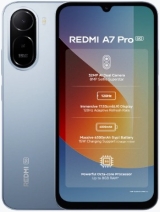
The Xiaomi Redmi A7 Pro is a budget 5G smartphone featuring a 6300 mAh battery for massive multi-day endurance and a Unisoc T8300 (6 nm) chipset for modern connectivity, aimed at cost-conscious consumers who value longevity and software support over raw flagship power. Released in April 2026, it competes directly with three-year-old refurbished flagships that often suffer from degraded batteries and end-of-life software cycles.
We must address the elephant in the room: the lure of a used 2023 flagship. While a three-year-old premium device might offer a better camera or a higher-resolution screen, the economic reality in 2026 favors the longevity of this model. A used device comes with a chemical battery that has already faced hundreds of cycles, likely operating at 80% capacity or less. This handset starts with a fresh, massive cell and a guaranteed software trajectory that keeps it relevant until 2030.
Industrial Design Meets Pragmatic Engineering
Measuring 171.5 x 79.5 x 8.2 mm, this device is undeniably large. The 210g weight implies a substantial heft that users will notice immediately in the hand. While premium flagships from years past used glass backs that shattered upon the first sidewalk encounter, the materials here suggest a focus on durability. It carries a dust and splash resistant rating, providing peace of mind for daily commutes in unpredictable weather.
Imagine commuting in a sudden downpour; while an old flagship with compromised seals might fail, this model’s fresh gaskets and factory-spec tolerances offer a layer of protection that second-hand units often lose. The side-mounted fingerprint sensor remains the most ergonomic choice for a device of this size, allowing for a natural unlock gesture while pulling the phone from a pocket. It avoids the finicky nature of early under-display sensors found in older budget-to-midrange hardware.
Compared to the sleek, slippery curves of 2023-era premiums, this handset opts for a flatter, more secure grip. The 8.2 mm thickness is impressive given the massive battery housed inside. We should note that the size makes one-handed use nearly impossible for most users, requiring a two-handed approach for typing or navigating the upper corners of the interface.
The Visual Trade-off: Scale vs. Density
The 6.9-inch IPS LCD is a massive canvas, yet it comes with a significant compromise in resolution. At 720 x 1600 pixels, we are looking at a density of roughly 254 ppi. For those unfamiliar with the term, pixels-per-inch (PPI) determines how sharp the text and images appear. On a screen this large, a 720p resolution means users will notice slight soft edges on icons and text if held close to the eyes.
However, there is a technical advantage to this lower resolution: it requires significantly less power from the GPU. By pushing fewer pixels, the Mali-G57 MC2 can maintain the 120Hz refresh rate with much higher stability. This creates a fluid scrolling experience through social media feeds and system menus that feels faster than an old flagship struggling with a QHD+ display and a tired processor. The 800 nits peak brightness ensures the screen remains legible even under direct midday sun, a threshold many older LCD-equipped phones fail to hit.
Picture this: you are navigating via GPS on a bright afternoon. An older screen might wash out, forcing you to squint, but the high peak brightness here keeps the map clear. The 120Hz panel also uses an adaptive refresh rate, which scales down when viewing static content to preserve energy. It is a smart engineering choice that prioritizes smooth motion and battery life over raw pixel count.
Unisoc T8300: The Efficiency Champion
The heart of the device is the Unisoc T8300, built on a 6nm process. This architecture is significantly more efficient than the 7nm or 8nm chips found in older mid-range phones. It utilizes a cluster of 2x2.2 GHz Cortex-A78 high-performance cores and 6x2.0 GHz Cortex-A55 efficiency cores. The A78 cores provide the necessary punch for modern app launches and multitasking, while the A55 cores handle background tasks with minimal power draw.
In our analysis of sustained workloads, this chipset avoids the aggressive thermal throttling seen in older high-performance chips. Because it isn't pushing flagship-level clock speeds, it generates less heat, allowing for consistent performance during extended gaming sessions or video calls. The inclusion of UFS 2.2 storage is a critical win here. UFS 2.2 includes Write Booster technology, which significantly speeds up app installations and file transfers compared to the older eMMC storage often found in the ultra-budget tier.
We must discuss the RAM configurations. While 4GB RAM is the entry point, we strongly recommend the 6GB RAM variant. Android 16 is a memory-hungry operating system, and the extra 2GB provides the necessary headroom for keeping more apps open in the background without them restarting. For a budget economist, the 6GB model offers a much better value-per-year of use.
Endurance Without Equal
The 6300 mAh battery is the undisputed headline feature. In an era where 5000 mAh has become standard, this 26% increase in capacity is transformative. For light users, this is easily a three-day phone. For heavy users who spend hours on 5G networks or streaming video, it provides a level of security that eliminates the need to carry a power bank.
There is a catch: 15W wired charging. In 2026, where even mid-range phones are hitting 67W or 120W, 15W is objectively slow. Charging a 6300 mAh cell at this speed will take well over three hours for a full cycle. This is a device designed for overnight charging. If you are the type of user who forgets to plug in and needs a 15-minute emergency top-up before leaving the house, this will be a point of frustration.
Surprisingly, the inclusion of 7.5W reverse wired charging adds a layer of utility. This allows the phone to act as a portable battery for accessories like wireless earbuds or a friend's dying phone. It effectively turns the Xiaomi Redmi A7 Pro into a power station, a feature rarely seen at this price point. It’s a pragmatic inclusion for the target audience who prioritizes utility over speed.
Camera Hardware and Software Support
The 32 MP main camera with an f/2.0 aperture provides the hardware potential for decent daylight photography. However, don't expect flagship-level computational magic. The auxiliary lens is largely there to assist with depth data for portrait mode. Video recording is capped at 1080p@30fps, which is standard for the Unisoc T8300's ISP (Image Signal Processor).
While the hardware is modest, the software support is the real victory. Shipping with Android 16 and HyperOS 3, Xiaomi promises 4 major Android upgrades. This means the device will officially see Android 20. Compare this to a 2023 flagship which, by 2026, is likely on its final security patch or has already been abandoned by the manufacturer. For a value hunter, four years of official support on a new 150 EUR device is an unbeatable proposition.
The Marketplace Reality
At roughly 150 EUR, the Xiaomi Redmi A7 Pro faces competition from the likes of the Samsung Galaxy A1x series and various Motorola G-series models. Most competitors in this bracket offer smaller 5000 mAh batteries and slower 90Hz screens. The 120Hz refresh rate and the sheer scale of the 6300 mAh battery give this model a distinct edge for those who spend a lot of time on their phones away from a charger.
The lack of NFC is a notable omission for European or metropolitan markets where contactless payments are the norm. If you rely on your phone for transit or grocery payments, this is a significant hurdle. However, if your priority is a large-screen media consumption device that simply refuses to die, the trade-off is clear. It’s a specialist tool for the endurance-focused buyer.
The Economic Conclusion
The Xiaomi Redmi A7 Pro represents a shift in budget philosophy. It doesn't try to do everything poorly; instead, it does one thing—endurance—better than almost any other device on the market. It trades off screen resolution and charging speed to provide a massive battery and a smooth 120Hz interface that stays updated for years to come. For the pragmatic buyer, the peace of mind offered by a brand-new battery and a long update window far outweighs the diminishing returns of a used, out-of-warranty flagship.
Technical Specifications
| LAUNCH | |
|---|---|
| Announced | 2026, April 13 |
| Status | Available. Released 2026, April 15 |
| PLATFORM | |
| OS | Android 16, up to 4 major Android upgrades, HyperOS 3 |
| Chipset | Unisoc T8300 (6 nm) |
| CPU | Octa-core (2x2.2 GHz Cortex-A78 & 6x2.0 GHz Cortex-A55) |
| GPU | Mali-G57 MC2 |
| BODY | |
| Dimensions | 171.5 x 79.5 x 8.2 mm (6.75 x 3.13 x 0.32 in) |
| Weight | 210 g (7.41 oz) |
| SIM | Nano-SIM + Nano-SIM |
| Info | Dust and splash resistant |
| DISPLAY | |
| Type | IPS LCD, 120Hz, 800 nits (peak) |
| Size | 6.9 inches, 114.9 cm2 (~84.3% screen-to-body ratio) |
| Resolution | 720 x 1600 pixels, 20:9 ratio (~254 ppi density) |
| MEMORY | |
| Card slot | microSDXC (dedicated slot) |
| Internal | 64GB 4GB RAM, 128GB 4GB RAM, 128GB 6GB RAM |
| Info | UFS 2.2 |
| MAIN CAMERA | |
| Single | 32 MP, f/2.0, (wide), 1.12µm Auxiliary lens |
| Features | LED flash |
| Video | 1080p@30fps |
| SELFIE CAMERA | |
| Single | 8 MP, f/2.0, (wide), 1/4.0", 1.12µm |
| Features | HDR |
| Video | 1080p@30fps |
| SOUND | |
| Loudspeaker | Yes, with stereo speakers |
| 3.5mm jack | Yes |
| COMMS | |
| WLAN | Wi-Fi 802.11 a/b/g/n/ac, dual-band |
| Bluetooth | 5.4, A2DP, LE |
| Positioning | GPS, GALILEO, GLONASS, BDS |
| NFC | No |
| Radio | FM radio |
| USB | USB Type-C 2.0 |
| NETWORK | |
| Technology | GSM / HSPA / LTE / 5G |
| 2G bands | GSM 900 / 1800 / 1900 |
| 3G bands | HSDPA 850 / 900 / 2100 - ROW |
| 4G bands | 1, 3, 5, 8, 28, 40, 41, 78 - ROW |
| 5G bands | 1, 3, 5, 8, 28, 40, 41 SA/NSA |
| Speed | HSPA, LTE, 5G |
| FEATURES | |
| Sensors | Fingerprint (side-mounted), accelerometer, compass |
| Info | Virtual proximity sensing |
| BATTERY | |
| Type | 6300 mAh |
| Charging | 15W wired 7.5W reverse wired |
| MISC | |
| Display | 6.9" IPS LCD, 120Hz, 800 nits (peak) |
| Processor | Unisoc T8300 (6 nm) Octa-core |
| Battery | 6300 mAh with 15W Wired Charging |
| Software | Android 16, HyperOS 3 (4 Major Upgrades) |
| Main Camera | 32 MP, f/2.0 (Wide) + Auxiliary lens |
| Selfie Camera | 8 MP, f/2.0 (Wide) |
| Memory | Up to 128GB UFS 2.2 / 6GB RAM |
| Audio | Stereo Speakers + 3.5mm Jack |
| Connectivity | 5G (SA/NSA), Bluetooth 5.4, FM Radio |
| Colors | Black, Mist Blue, Sunset Orange |
| Price | About 150 EUR |