Giant Screen Small Price - Why the Xiaomi Redmi 15C 4G Is the Ultimate Value King
Overview
The Budget Giant Enters the Arena
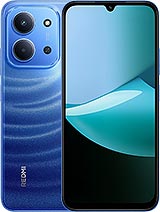
The Xiaomi Redmi 15C 4G is an entry-level smartphone featuring a massive 6.9-inch 120Hz display for immersive viewing and a 6000 mAh battery for multi-day endurance, aimed at budget-conscious users prioritizing longevity and screen real estate. Released in August 2025, it competes with the latest entry-tier offerings from Samsung and Realme by offering hardware usually reserved for the $200 price bracket at a significantly lower entry point.
From an economic perspective, this handset is a textbook example of hardware optimization. We see a clear strategy: maximize the visible and tangible features—screen size and battery capacity—while utilizing a cost-effective 12nm chipset to keep the price floor accessible. It is a calculated trade-off that serves the high-volume market segment that values utility over peak processing power.
Price vs. Specs: The Value Equation
When we break down the $119.50 price tag, the bill of materials reveals where our money is going. The inclusion of a 120Hz refresh rate on a 6.9-inch panel is the primary draw. While the 720 x 1600 resolution results in a relatively low 254 ppi density, the high refresh rate provides a perceived fluidity that masks the lack of sharpness during standard UI navigation. In the 2025 market, seeing 120Hz at this price is an aggressive move against competitors who still linger at 90Hz or even 60Hz.
The 6000 mAh battery is another significant value add. Most devices in this tier cap out at 5000 mAh. This extra 20% capacity, paired with the energy-efficient (if older) 12nm Helio G81 Ultra, means this device can easily stretch into a third day of light use. We calculate that the cost-per-hour of active screen time on this model is among the lowest in the current industry.
Where Did They Cut Corners?
No device reaches this price point without compromises. The most glaring is the 720p resolution. On a 6.9-inch canvas, the pixel structure is visible if you look closely. Small text in desktop-mode browser tabs lacks the crispness found on 1080p panels. Furthermore, the Mediatek Helio G81 Ultra utilizes older Cortex-A75 and A55 cores. While the 'Ultra' branding suggests optimization, the underlying 12nm architecture is less efficient than the 6nm chips becoming common in mid-range hardware.
We also note the use of Virtual Proximity Sensing. Instead of a dedicated infrared hardware sensor to turn off the screen during calls, the phone uses software and the accelerometer. In our experience with similar systems, this can occasionally lead to accidental screen touches during calls if the handset isn't held at a specific angle. The plastic frame and Gorilla Glass 3 (now a decade-old standard) are also cost-saving measures, though the inclusion of an IP64 rating is a welcome surprise for durability.
Resale Value Prediction
Historically, the Xiaomi Redmi 'C' series holds its value better than white-label budget brands but worse than flagship tiers. Given the current 2025 market trends, we expect this model to retain approximately 60% of its value after six months, dropping to 40% after a year. The high battery capacity and 120Hz screen make it an attractive 'second-hand' option for delivery drivers or students, which helps buoy the resale price compared to devices with smaller batteries.
If you plan to sell this in 2026, keep the silicone polymer (eco leather) back clean. Synthetic leather can show wear at the corners faster than smooth plastic, though it resists fingerprints much better. Investors in tech should view this as a utility purchase rather than a value-retaining asset.
Accessory Compatibility and Protection
Finding protection for a 6.9-inch device is crucial. Because of its 171.6 mm height, many universal pouches will not fit. However, Xiaomi typically enjoys excellent third-party case support. The Gorilla Glass 3 provides decent scratch resistance, but we strongly recommend a tempered glass screen protector to compensate for the lower impact resistance of this older glass version.
One major win is the inclusion of the 33W wired charger in the box. Many brands have moved toward 'charger-less' retail packaging even in the budget segment. The 33W Power Delivery (PD) support means you aren't tethered to proprietary cables to get decent speeds, though a full charge of the 6000 mAh cell still takes roughly 100 minutes.
Unboxing Experience
The retail packaging is functional and straightforward. Inside, you find the handset, a basic clear TPU case, the 33W power brick, a USB-C cable, and the SIM ejector tool. The presence of the 3.5mm headphone jack is a highlight for those who refuse to pay the 'Bluetooth tax' for wireless earbuds. There are no included headphones, which is standard for 2025.
Performance for the Price
The Helio G81 Ultra paired with up to 8GB of RAM handles HyperOS 2 and Android 15 with reasonable competence. The Mali-G52 MC2 GPU is not a gaming powerhouse, but it runs casual titles and social media apps without significant stutter. The 120Hz refresh rate is doing a lot of heavy lifting here, making the interface feel faster than the processor actually is.
For multitasking, the 8GB RAM variant is the only one we recommend for 2025. The 4GB version will likely see aggressive background app closures. The 50 MP main camera is capable in daylight, benefiting from a wide f/1.8 aperture, but the Auxiliary lens is largely decorative. The hardware potential is there for decent social media posts, provided the lighting is stable.
Is It Worth It?
The Xiaomi Redmi 15C 4G is a specialist in endurance and screen size. It is not for the 'power user' who needs 4K video editing or high-end 3D gaming. It is, however, an incredible tool for the 'Value Hunter' who needs a reliable, large-screen communication device that won't die before the day is over. The addition of IP64 dust and water resistance adds a layer of professional-grade durability that is rare at $119.
Ultimately, this phone is about the democratization of high-end features like 120Hz and 33W charging. While the 720p resolution is a bitter pill for some, the sheer utility of the 6000 mAh battery makes it an easy recommendation for anyone whose primary concern is staying connected for as long as possible on a single charge.
Technical Specifications
| LAUNCH | |
|---|---|
| Announced | 2025, August 01 |
| Status | Available. Released 2025, August 01 |
| PLATFORM | |
| OS | Android 15, HyperOS 2 |
| Chipset | Mediatek Helio G81 Ultra (12 nm) |
| CPU | Octa-core (2x2.0 GHz Cortex-A75 & 6x1.8 GHz Cortex-A55) |
| GPU | Mali-G52 MC2 |
| BODY | |
| Dimensions | 171.6 x 79.5 x 8 mm (6.76 x 3.13 x 0.31 in) |
| Weight | 205 g (7.23 oz) |
| Build | Glass front (Gorilla Glass 3), plastic frame, glass back or silicone polymer (eco leather) back |
| SIM | Nano-SIM + Nano-SIM |
| Info | IP64 dust tight and water resistant (water splashes) |
| DISPLAY | |
| Type | IPS LCD, 120Hz |
| Size | 6.9 inches, 114.9 cm2 (~84.3% screen-to-body ratio) |
| Resolution | 720 x 1600 pixels, 20:9 ratio (~254 ppi density) |
| Protection | Corning Gorilla Glass 3 |
| MEMORY | |
| Card slot | microSDXC (dedicated slot) |
| Internal | 128GB 4GB RAM, 128GB 6GB RAM, 128GB 8GB RAM, 256GB 4GB RAM, 256GB 8GB RAM |
| MAIN CAMERA | |
| Dual | 50 MP, f/1.8, 28mm (wide), 1/2.76", 0.64µm, PDAF Auxiliary lens |
| Features | LED flash, HDR |
| Video | 1080p@30fps |
| SELFIE CAMERA | |
| Single | 8 MP, f/2.0, (wide), 1/4.0", 1.12µm |
| Features | HDR |
| Video | 1080p@30fps |
| SOUND | |
| Loudspeaker | Yes |
| 3.5mm jack | Yes |
| COMMS | |
| WLAN | Wi-Fi 802.11 a/b/g/n/ac, dual-band |
| Bluetooth | 5.4, A2DP, LE |
| Positioning | GPS, GLONASS, GALILEO, BDS |
| NFC | Yes (market/region dependent) |
| Radio | FM radio |
| USB | USB Type-C 2.0, OTG |
| NETWORK | |
| Technology | GSM / HSPA / LTE |
| 2G bands | GSM 850 / 900 / 1800 / 1900 |
| 3G bands | HSDPA 850 / 900 / 2100 |
| 4G bands | LTE |
| Speed | HSPA, LTE |
| FEATURES | |
| Sensors | Fingerprint (side-mounted), accelerometer, compass |
| Info | Virtual proximity sensing |
| BATTERY | |
| Type | 6000 mAh |
| Charging | 33W wired, PD |
| MISC | |
| Colors | Moonlight Blue, Mint Green, Midnight Gray, Twilight Orange |
| Models | 25078RA3EA, 25078RA3EL |
| Price | $ 122.50 / £ 94.00 / € 81.64 |