High Refresh Rates on a Budget - The Tecno Spark 10C Value Play
Overview
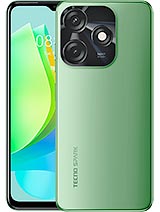
Tecno Spark 10C is an entry-level smartphone featuring a 90Hz IPS LCD for smoother navigation and a 5000mAh battery for extended usage, aimed at students and first-time smartphone buyers who prioritize battery life over raw processing power. Released in March 2023, it competes directly with the [Samsung Galaxy A14](/the-samsung-galaxy-a14-a-calculated-financial-move-for-smart-buyers/) 4G and the Redmi 12C in the competitive sub-€150 price bracket.
When we analyze the entry-level market in early 2023, the trade-offs are usually brutal. You either get a decent screen and a terrible battery, or a big battery and a chipset that chugs while opening a basic text app. The Tecno Spark 10C attempts to find the middle ground by focusing on the 'perceived speed' of a high refresh rate display. By opting for a 720p resolution instead of 1080p, the manufacturer reduces the load on the GPU, allowing that 90Hz refresh rate to feel more consistent during daily scrolling. From a value perspective, this is a calculated move to make the handset feel more expensive than its price tag suggests.
At about 120 EUR, every cent counts. We see that the build materials consist of a glass front paired with a plastic frame and back. This is standard for the tier, but the design follows the current trend of flat edges and a large, prominent camera module that mimics much more expensive flagship devices. Users should expect a device that looks modern on a desk, even if the tactile experience reveals its lightweight, plastic nature upon closer inspection. The inclusion of a 12nm chipset suggests a focus on thermal stability rather than peak performance, which is a wise choice for a device likely to be used for long hours of social media and communication.
Comparing this to the standard Spark 10 or the 10 Pro, the savings clearly come from the display resolution and the camera sensor. However, the core battery capacity remains consistent across the lineup. This strategy allows the brand to capture the ultra-budget segment without sacrificing the 'Spark' identity of having a bold design and long-lasting power. For the budget-conscious consumer, this model represents a specific tier of 'functional minimalism' where the basics are handled with just enough flair to keep the experience from feeling dated.
The hardware heart of the handset is the Unisoc T606 chipset. This is an octa-core platform built on a 12nm process, featuring two performance-oriented Cortex-A75 cores and six efficiency-focused Cortex-A55 cores. In the context of early 2023, this is a reliable entry-level choice that outperforms the older Helio G35 or G25 chips found in many competitors. The dual-core A75 cluster is what keeps the UI from stuttering during app switching. It provides the necessary burst of speed for launching the camera or a heavy web browser, while the A55 cores handle background sync and music playback with minimal power draw.
Memory configuration is a standout feature for this price point. With options for up to 8GB of RAM, the device manages background tasks significantly better than the 3GB or 4GB rivals common in this segment. More RAM means less aggressive app closing by the HIOS software, leading to a smoother user experience when jumping between WhatsApp, TikTok, and Chrome. The 128GB storage option is equally impressive for 120 EUR, as it allows users to store thousands of photos and videos without immediate reliance on a microSD card, though a dedicated slot is available for those who need it.
Graphically, the Mali-G57 MP1 handles the heavy lifting. This is a single-core GPU designed for efficiency. While it won't run high-end titles like Genshin Impact at acceptable frame rates, it is perfectly adequate for casual games like Subway Surfers or Candy Crush. The 90Hz screen helps these simpler games look fluid. For the Economist, the T606 represents the 'sweet spot' of silicon—it is cheap enough to keep the phone's price low but modern enough to support 4G LTE speeds and decent ISP (Image Signal Processor) capabilities for the camera.
Software defines the daily interaction, and this model runs Android 12 with the HIOS 8.6 skin. HIOS is known for being feature-rich, often including tools like 'Lightning Multi-Window' for better multitasking on the 6.6-inch screen. However, users should be prepared for a significant amount of pre-installed applications. In our analysis of budget skins, these extra apps often help subsidize the hardware cost, but they can clutter the app drawer. Thankfully, many of these can be disabled or uninstalled to clean up the interface.
Biometric security is handled by a side-mounted fingerprint sensor integrated into the power button. This placement is generally preferred over rear-mounted sensors in 2023 as it allows for a cleaner back design and easier access when the phone is sitting on a table. The sensor responsiveness is expected to be adequate, providing a quick unlock for the target user who is likely always on the move. There is also a face unlock feature, though it relies on the front camera and is less secure than the fingerprint method.
Connectivity is standard for the era, offering dual-band Wi-Fi and Bluetooth. The absence of NFC is a notable omission for users in regions where contactless payments are standard, but at this price, it is a common casualty of budget cuts. The signal stability should be robust given the plastic back, which is more radio-transparent than metal or thick glass. For users relying on 4G LTE for their primary internet, the T606 modem provides consistent speeds for streaming and video calls, provided the local network infrastructure is stable.
The 5000mAh battery is the undisputed champion of the spec sheet. For a device with a 720p screen and a power-efficient 12nm chip, this capacity should easily translate to two days of moderate use. Imagine a scenario where a student leaves for campus at 7 AM, uses the device for navigation, social media, and note-taking throughout the day, and returns home at 8 PM with 40% battery remaining. This 'range anxiety' relief is the primary selling point of the Spark 10C.
Charging, however, is where we see the budget constraints. The 18W wired charging is faster than the old 10W standard but significantly slower than the 33W or 65W speeds seen in the mid-range. A full charge from 0% to 100% will likely take upwards of two hours. This encourages overnight charging habits rather than quick top-ups before leaving the house. The use of a USB Type-C 2.0 port is a welcome modern touch, ensuring compatibility with most modern cables and chargers, moving away from the aging micro-USB standard.
Thermal management during charging is helped by the 12nm architecture. While the phone might get warm during an 18W session, it is unlikely to reach uncomfortable temperatures. The plastic build also dissipates heat differently than metal, often feeling less hot to the touch during peak usage. For a value hunter, the tradeoff of slower charging for massive capacity and lower price is usually an easy pill to swallow, as long as the device lasts through the workday.
In terms of audio, the inclusion of a 3.5mm headphone jack is a major win for the budget segment. It allows users to use inexpensive wired earphones without needing dongles, which is vital for users who don't want to invest in wireless buds. The single bottom-firing loudspeaker is functional for ringtones and speakerphone calls, though it will likely lack the depth and stereo separation found in more expensive models. It is a utilitarian setup designed for clear voice reproduction rather than an immersive cinematic experience.
Haptic feedback is another area where we see cost-saving. Expect a basic vibration motor that provides functional alerts for calls and messages but lacks the precise, 'clicky' feel of premium haptics. In the budget economist's view, this is a non-essential feature. As long as the vibration is strong enough to be felt in a pocket, it serves its primary purpose. The focus remains on the screen and battery, where the user gets the most visible return on their investment.
Microphone quality for calls should be standard for the class. Without secondary noise-canceling microphones, users might find that background noise in busy streets or cafes is more audible to the person on the other end of the line. However, for everyday communication and voice notes on messaging apps, the hardware is perfectly capable. The handset provides exactly what is needed for basic communication without any unnecessary frills that would drive up the MSRP.
The primary camera is a 16MP wide sensor with Phase Detection Autofocus (PDAF). In the context of early 2023, 16MP is the bare minimum for social-media-ready photos. The PDAF is a crucial addition, as it helps the lens lock onto subjects much faster than older contrast-detection systems. This means fewer blurry photos of moving pets or children. The 'Auxiliary lens' is likely a low-resolution sensor designed to help the software calculate depth for portrait mode, adding a blurred background effect to photos of people.
Video recording is capped at 1080p@30fps. This is standard for the Unisoc T606 ISP. Without optical image stabilization (OIS), users should expect some shake in handheld videos. However, for static shots or well-lit environments, the footage will be sharp enough for YouTube or Instagram. The Dual-LED flash on the rear is a nice touch, providing more uniform lighting for night shots compared to a single-LED setup. It won't turn night into day, but it helps capture readable images in dark rooms.
The 8MP selfie camera also features a Dual-LED flash, which is a signature Tecno feature. This 'front flash' is a massive advantage for users who take selfies in bars or dimly lit streets. Instead of relying on a screen-based flash that can wash out skin tones, the physical LEDs provide a warmer, more natural light source. While the 8MP resolution won't capture extreme detail, it is more than sufficient for video calls and casual social media posts. The hardware potential here is maximized for the 'social' user rather than the 'photographer'.
Durability is often an afterthought in budget reviews, but for the value hunter, it is paramount. The plastic frame and back are actually more drop-resistant than glass-sandwich phones. While plastic will scratch more easily, it won't shatter into a thousand pieces if it hits the pavement. Users should still use a protective case, but the inherent flexibility of the materials provides a level of 'ruggedness' by default. The 8.5mm thickness and 163.9mm height make for a substantial device that feels sturdy in the hand.
There is no official IP rating for water or dust resistance, which is expected at 120 EUR. Users must be cautious around rain or splashes. The side-mounted fingerprint sensor is a mechanical part that requires care to keep clean, as dust buildup can affect its accuracy over time. Internally, the 12nm T606 is a mature technology, meaning it is less likely to suffer from the manufacturing defects sometimes seen in cutting-edge 4nm or 5nm chips. It is a 'tried and true' silicon choice.
Ultimately, the Tecno Spark 10C is a tool of utility. It doesn't pretend to be a flagship, but it ensures that the parts you touch and look at the most—the screen and the battery—are prioritized. For the Senior Budget Tech Economist, the recommendation is clear: this device is for the person who needs a reliable communication tool that feels modern but doesn't require a monthly payment plan. It is the definition of 'good enough' for the mass market in March 2023.
The $120 Economic Reality
When we analyze the entry-level market in early 2023, the trade-offs are usually brutal. You either get a decent screen and a terrible battery, or a big battery and a chipset that chugs while opening a basic text app. The Tecno Spark 10C attempts to find the middle ground by focusing on the 'perceived speed' of a high refresh rate display. By opting for a 720p resolution instead of 1080p, the manufacturer reduces the load on the GPU, allowing that 90Hz refresh rate to feel more consistent during daily scrolling. From a value perspective, this is a calculated move to make the handset feel more expensive than its price tag suggests.
At about 120 EUR, every cent counts. We see that the build materials consist of a glass front paired with a plastic frame and back. This is standard for the tier, but the design follows the current trend of flat edges and a large, prominent camera module that mimics much more expensive flagship devices. Users should expect a device that looks modern on a desk, even if the tactile experience reveals its lightweight, plastic nature upon closer inspection. The inclusion of a 12nm chipset suggests a focus on thermal stability rather than peak performance, which is a wise choice for a device likely to be used for long hours of social media and communication.
Comparing this to the standard Spark 10 or the 10 Pro, the savings clearly come from the display resolution and the camera sensor. However, the core battery capacity remains consistent across the lineup. This strategy allows the brand to capture the ultra-budget segment without sacrificing the 'Spark' identity of having a bold design and long-lasting power. For the budget-conscious consumer, this model represents a specific tier of 'functional minimalism' where the basics are handled with just enough flair to keep the experience from feeling dated.
The Unisoc T606 Workhorse
The hardware heart of the handset is the Unisoc T606 chipset. This is an octa-core platform built on a 12nm process, featuring two performance-oriented Cortex-A75 cores and six efficiency-focused Cortex-A55 cores. In the context of early 2023, this is a reliable entry-level choice that outperforms the older Helio G35 or G25 chips found in many competitors. The dual-core A75 cluster is what keeps the UI from stuttering during app switching. It provides the necessary burst of speed for launching the camera or a heavy web browser, while the A55 cores handle background sync and music playback with minimal power draw.
Memory configuration is a standout feature for this price point. With options for up to 8GB of RAM, the device manages background tasks significantly better than the 3GB or 4GB rivals common in this segment. More RAM means less aggressive app closing by the HIOS software, leading to a smoother user experience when jumping between WhatsApp, TikTok, and Chrome. The 128GB storage option is equally impressive for 120 EUR, as it allows users to store thousands of photos and videos without immediate reliance on a microSD card, though a dedicated slot is available for those who need it.
Graphically, the Mali-G57 MP1 handles the heavy lifting. This is a single-core GPU designed for efficiency. While it won't run high-end titles like Genshin Impact at acceptable frame rates, it is perfectly adequate for casual games like Subway Surfers or Candy Crush. The 90Hz screen helps these simpler games look fluid. For the Economist, the T606 represents the 'sweet spot' of silicon—it is cheap enough to keep the phone's price low but modern enough to support 4G LTE speeds and decent ISP (Image Signal Processor) capabilities for the camera.
HIOS 8.6 and the Daily Experience
Software defines the daily interaction, and this model runs Android 12 with the HIOS 8.6 skin. HIOS is known for being feature-rich, often including tools like 'Lightning Multi-Window' for better multitasking on the 6.6-inch screen. However, users should be prepared for a significant amount of pre-installed applications. In our analysis of budget skins, these extra apps often help subsidize the hardware cost, but they can clutter the app drawer. Thankfully, many of these can be disabled or uninstalled to clean up the interface.
Biometric security is handled by a side-mounted fingerprint sensor integrated into the power button. This placement is generally preferred over rear-mounted sensors in 2023 as it allows for a cleaner back design and easier access when the phone is sitting on a table. The sensor responsiveness is expected to be adequate, providing a quick unlock for the target user who is likely always on the move. There is also a face unlock feature, though it relies on the front camera and is less secure than the fingerprint method.
Connectivity is standard for the era, offering dual-band Wi-Fi and Bluetooth. The absence of NFC is a notable omission for users in regions where contactless payments are standard, but at this price, it is a common casualty of budget cuts. The signal stability should be robust given the plastic back, which is more radio-transparent than metal or thick glass. For users relying on 4G LTE for their primary internet, the T606 modem provides consistent speeds for streaming and video calls, provided the local network infrastructure is stable.
Endurance versus Velocity
The 5000mAh battery is the undisputed champion of the spec sheet. For a device with a 720p screen and a power-efficient 12nm chip, this capacity should easily translate to two days of moderate use. Imagine a scenario where a student leaves for campus at 7 AM, uses the device for navigation, social media, and note-taking throughout the day, and returns home at 8 PM with 40% battery remaining. This 'range anxiety' relief is the primary selling point of the Spark 10C.
Charging, however, is where we see the budget constraints. The 18W wired charging is faster than the old 10W standard but significantly slower than the 33W or 65W speeds seen in the mid-range. A full charge from 0% to 100% will likely take upwards of two hours. This encourages overnight charging habits rather than quick top-ups before leaving the house. The use of a USB Type-C 2.0 port is a welcome modern touch, ensuring compatibility with most modern cables and chargers, moving away from the aging micro-USB standard.
Thermal management during charging is helped by the 12nm architecture. While the phone might get warm during an 18W session, it is unlikely to reach uncomfortable temperatures. The plastic build also dissipates heat differently than metal, often feeling less hot to the touch during peak usage. For a value hunter, the tradeoff of slower charging for massive capacity and lower price is usually an easy pill to swallow, as long as the device lasts through the workday.
Audio and Tactical Feedback
In terms of audio, the inclusion of a 3.5mm headphone jack is a major win for the budget segment. It allows users to use inexpensive wired earphones without needing dongles, which is vital for users who don't want to invest in wireless buds. The single bottom-firing loudspeaker is functional for ringtones and speakerphone calls, though it will likely lack the depth and stereo separation found in more expensive models. It is a utilitarian setup designed for clear voice reproduction rather than an immersive cinematic experience.
Haptic feedback is another area where we see cost-saving. Expect a basic vibration motor that provides functional alerts for calls and messages but lacks the precise, 'clicky' feel of premium haptics. In the budget economist's view, this is a non-essential feature. As long as the vibration is strong enough to be felt in a pocket, it serves its primary purpose. The focus remains on the screen and battery, where the user gets the most visible return on their investment.
Microphone quality for calls should be standard for the class. Without secondary noise-canceling microphones, users might find that background noise in busy streets or cafes is more audible to the person on the other end of the line. However, for everyday communication and voice notes on messaging apps, the hardware is perfectly capable. The handset provides exactly what is needed for basic communication without any unnecessary frills that would drive up the MSRP.
The 16MP Hardware Potential
The primary camera is a 16MP wide sensor with Phase Detection Autofocus (PDAF). In the context of early 2023, 16MP is the bare minimum for social-media-ready photos. The PDAF is a crucial addition, as it helps the lens lock onto subjects much faster than older contrast-detection systems. This means fewer blurry photos of moving pets or children. The 'Auxiliary lens' is likely a low-resolution sensor designed to help the software calculate depth for portrait mode, adding a blurred background effect to photos of people.
Video recording is capped at 1080p@30fps. This is standard for the Unisoc T606 ISP. Without optical image stabilization (OIS), users should expect some shake in handheld videos. However, for static shots or well-lit environments, the footage will be sharp enough for YouTube or Instagram. The Dual-LED flash on the rear is a nice touch, providing more uniform lighting for night shots compared to a single-LED setup. It won't turn night into day, but it helps capture readable images in dark rooms.
The 8MP selfie camera also features a Dual-LED flash, which is a signature Tecno feature. This 'front flash' is a massive advantage for users who take selfies in bars or dimly lit streets. Instead of relying on a screen-based flash that can wash out skin tones, the physical LEDs provide a warmer, more natural light source. While the 8MP resolution won't capture extreme detail, it is more than sufficient for video calls and casual social media posts. The hardware potential here is maximized for the 'social' user rather than the 'photographer'.
Structural Resilience and Durability
Durability is often an afterthought in budget reviews, but for the value hunter, it is paramount. The plastic frame and back are actually more drop-resistant than glass-sandwich phones. While plastic will scratch more easily, it won't shatter into a thousand pieces if it hits the pavement. Users should still use a protective case, but the inherent flexibility of the materials provides a level of 'ruggedness' by default. The 8.5mm thickness and 163.9mm height make for a substantial device that feels sturdy in the hand.
There is no official IP rating for water or dust resistance, which is expected at 120 EUR. Users must be cautious around rain or splashes. The side-mounted fingerprint sensor is a mechanical part that requires care to keep clean, as dust buildup can affect its accuracy over time. Internally, the 12nm T606 is a mature technology, meaning it is less likely to suffer from the manufacturing defects sometimes seen in cutting-edge 4nm or 5nm chips. It is a 'tried and true' silicon choice.
Ultimately, the Tecno Spark 10C is a tool of utility. It doesn't pretend to be a flagship, but it ensures that the parts you touch and look at the most—the screen and the battery—are prioritized. For the Senior Budget Tech Economist, the recommendation is clear: this device is for the person who needs a reliable communication tool that feels modern but doesn't require a monthly payment plan. It is the definition of 'good enough' for the mass market in March 2023.
Technical Specifications
| LAUNCH | |
|---|---|
| Announced | 2023, March 23 |
| Status | Available. Released 2023, March 29 |
| PLATFORM | |
| OS | Android 12, HIOS 8.6 |
| Chipset | Unisoc T606 (12 nm) |
| CPU | Octa-core (2x1.6 GHz Cortex-A75 & 6x1.6 GHz Cortex-A55) |
| GPU | Mali-G57 MP1 |
| BODY | |
| Dimensions | 163.9 x 75.5 x 8.5 mm (6.45 x 2.97 x 0.33 in) |
| Weight | - |
| Build | Glass front, plastic frame, plastic back |
| SIM | Nano-SIM + Nano-SIM |
| DISPLAY | |
| Type | IPS LCD, 90Hz |
| Size | 6.6 inches, 104.6 cm2 (~84.6% screen-to-body ratio) |
| Resolution | 720 x 1612 pixels, 20:9 ratio (~267 ppi density) |
| MEMORY | |
| Card slot | microSDXC (dedicated slot) |
| Internal | 64GB 4GB RAM, 128GB 4GB RAM, 128GB 8GB RAM |
| MAIN CAMERA | |
| Single | 16 MP, (wide), PDAF Auxiliary lens |
| Features | Dual-LED flash, HDR, panorama |
| Video | 1080p@30fps |
| SELFIE CAMERA | |
| Single | 8 MP, (wide) |
| Features | Dual-LED flash |
| Video | 1080p@30fps |
| SOUND | |
| Loudspeaker | Yes |
| 3.5mm jack | Yes |
| COMMS | |
| WLAN | Wi-Fi 802.11 a/b/g/n/ac, dual-band |
| Bluetooth | Yes |
| Positioning | GPS |
| NFC | No |
| Radio | FM radio |
| USB | USB Type-C 2.0 |
| NETWORK | |
| Technology | GSM / HSPA / LTE |
| 2G bands | GSM 850 / 900 / 1800 / 1900 |
| 3G bands | HSDPA 850 / 900 / 2100 |
| 4G bands | LTE |
| Speed | HSPA, LTE |
| FEATURES | |
| Sensors | Fingerprint (side-mounted), accelerometer, proximity, compass |
| BATTERY | |
| Type | 5000 mAh |
| Charging | 18W wired |
| MISC | |
| Colors | Black, Blue, Green |
| Models | KI5k, KI5m |
| Price | About 120 EUR |